
By: Kiana Abel, Public Affairs Specialist – Trinity River Restoration Program
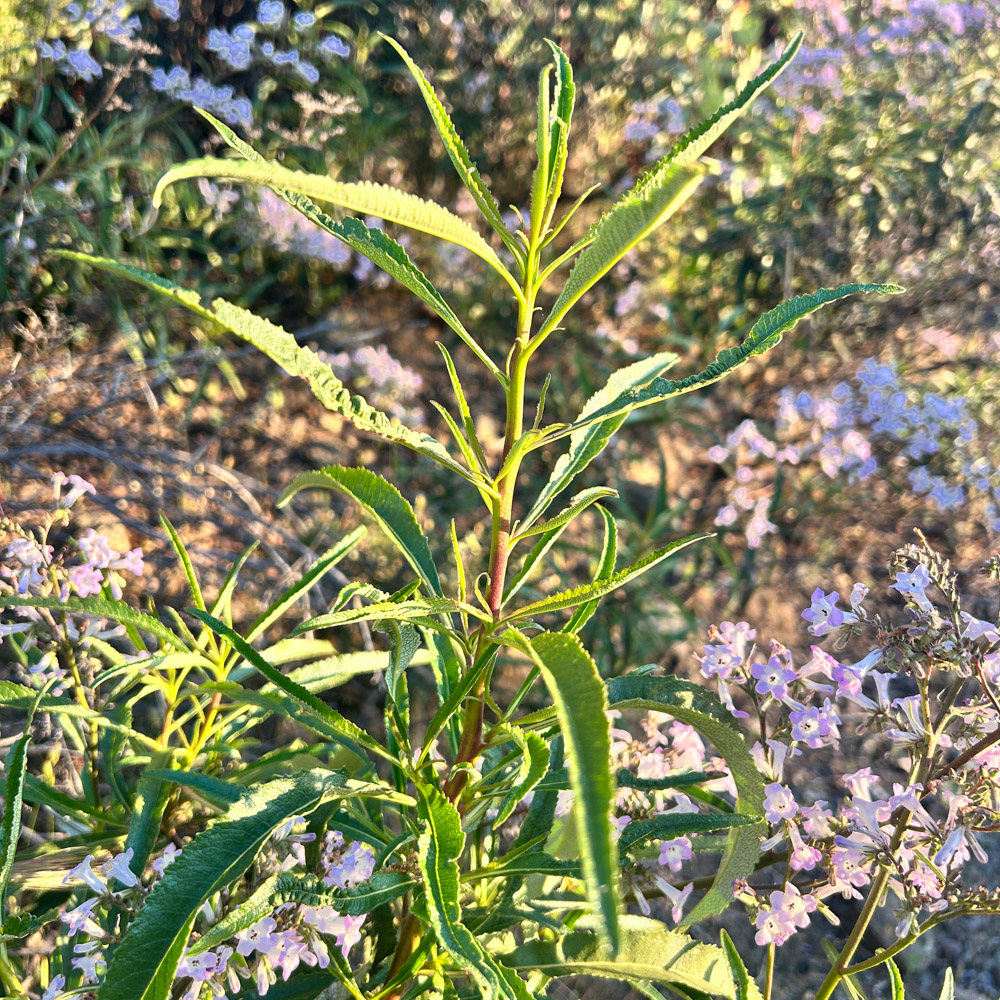
Yerba Santa, the holy herb.
Alternate Names: Mountain balm, Palo Santo, holy plant
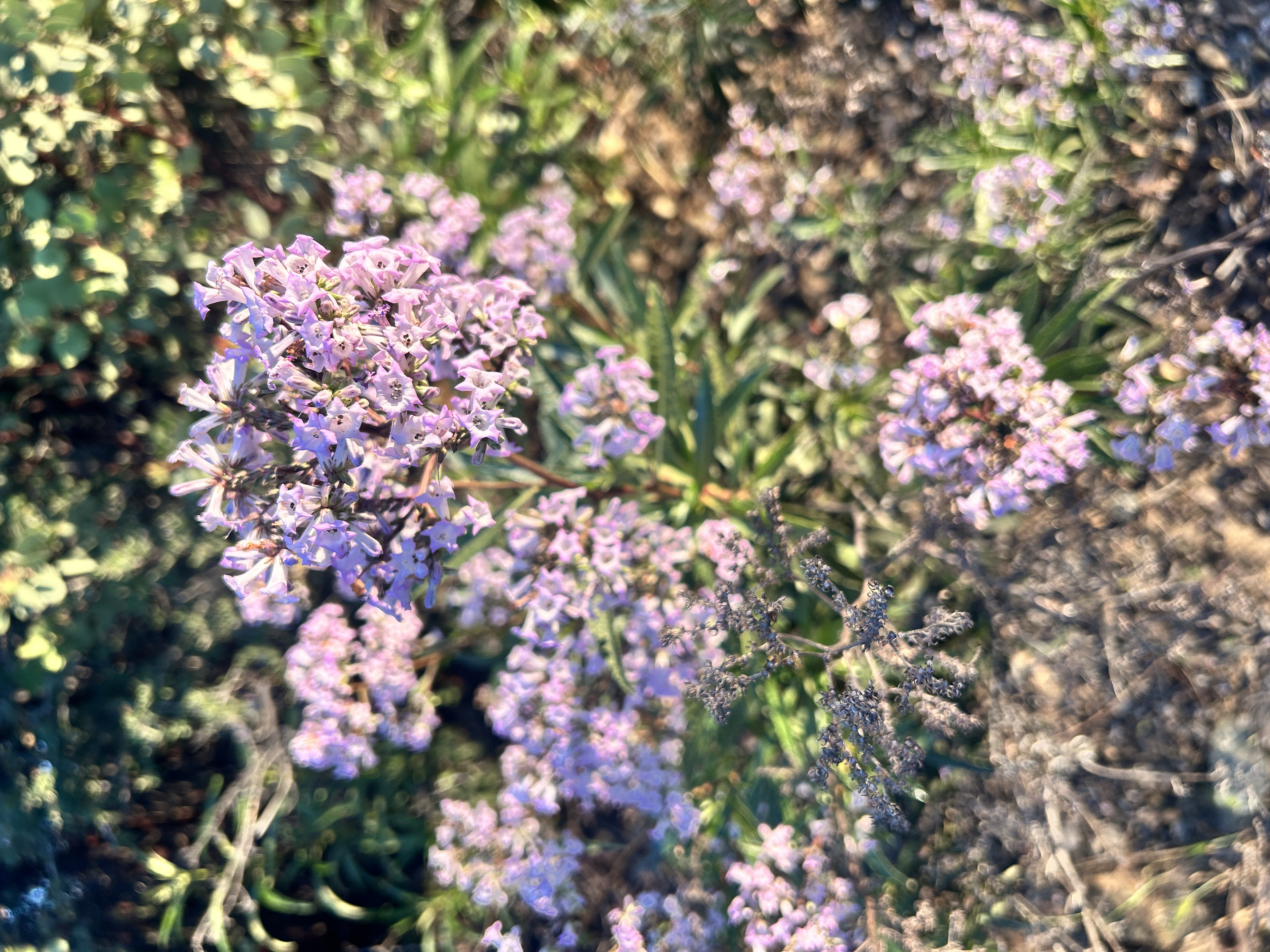
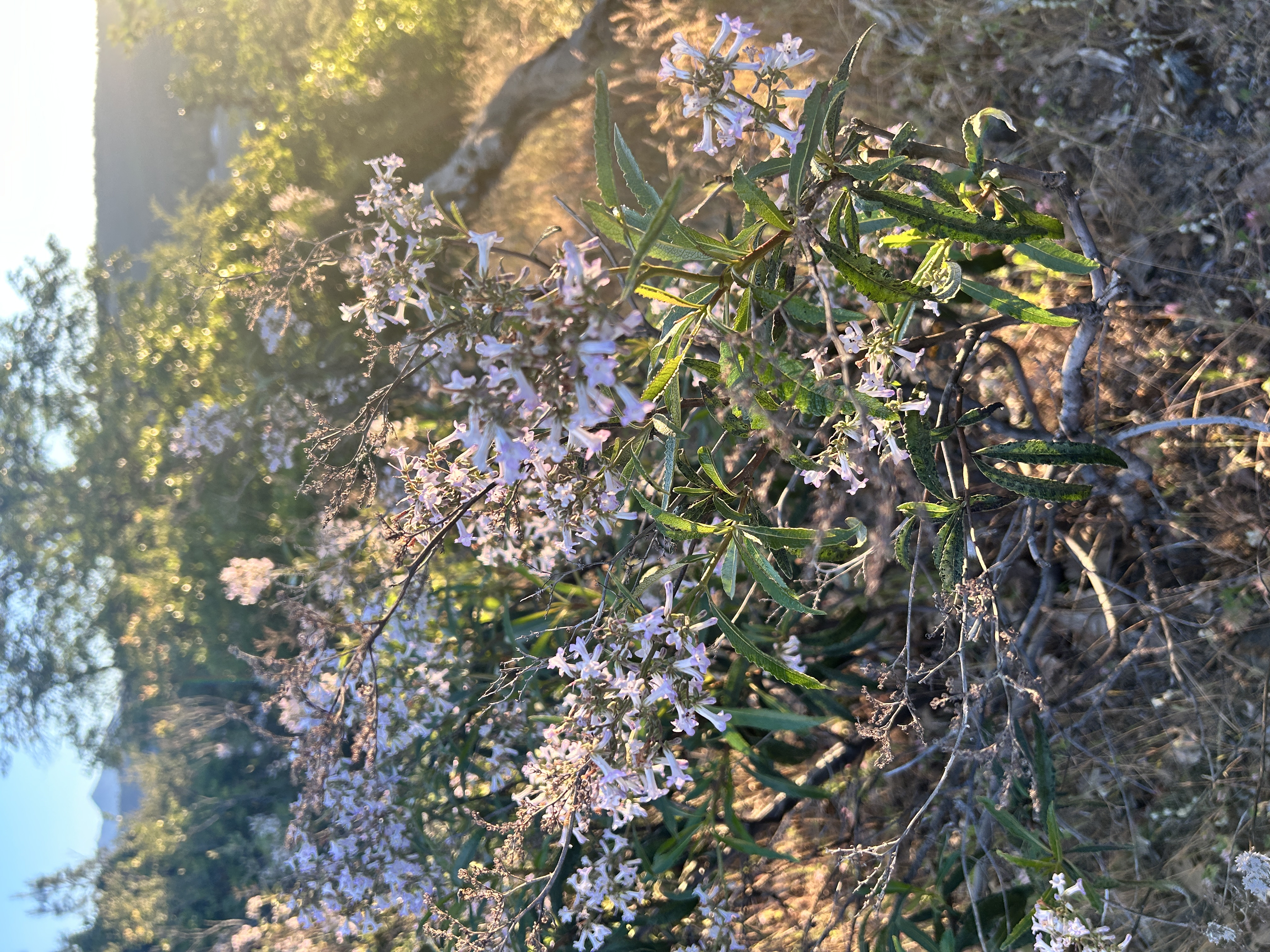
Within Trinity River watershed, one may encounter a distinctive shrub identified by its shiny, adhesive leaves and clusters of purple to white flowers. This species stands out, especially during its flowering period, when it becomes particularly noticeable among native flora. Yerba Santa (Eriodictyon californicum), whose name translates to “holy herb” in Spanish, is native to both the Trinity Watershed and the chaparral hills of California. Its importance stretches back millennia, as Indigenous peoples have used Yerba Santa as a medicinal plant, helping to aid symptoms of headache, colds, stomachache, asthma, hay fever, rheumatism and bronchial congestion.
Meet Yerba Santa: A Chaparral Specialist
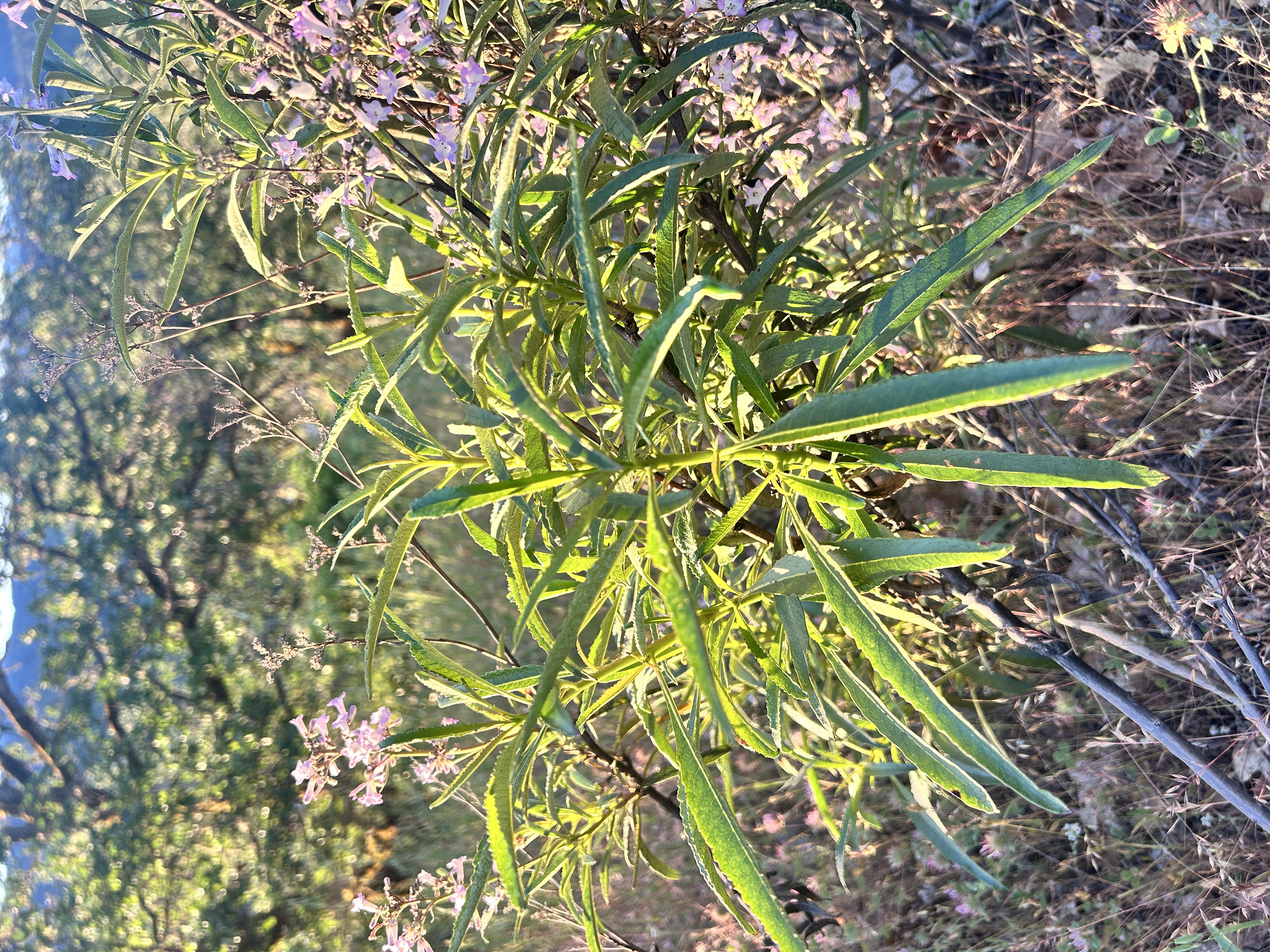
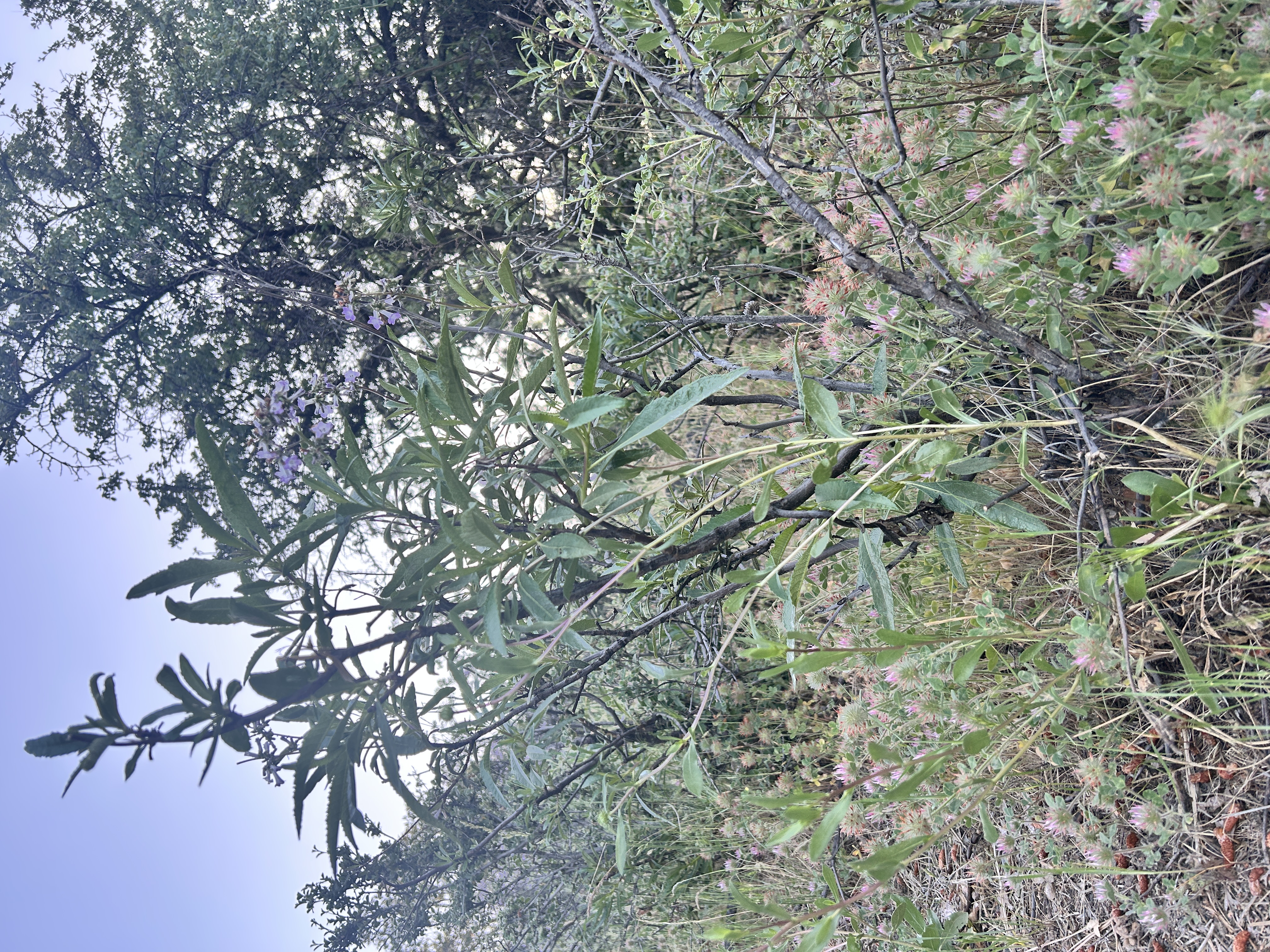
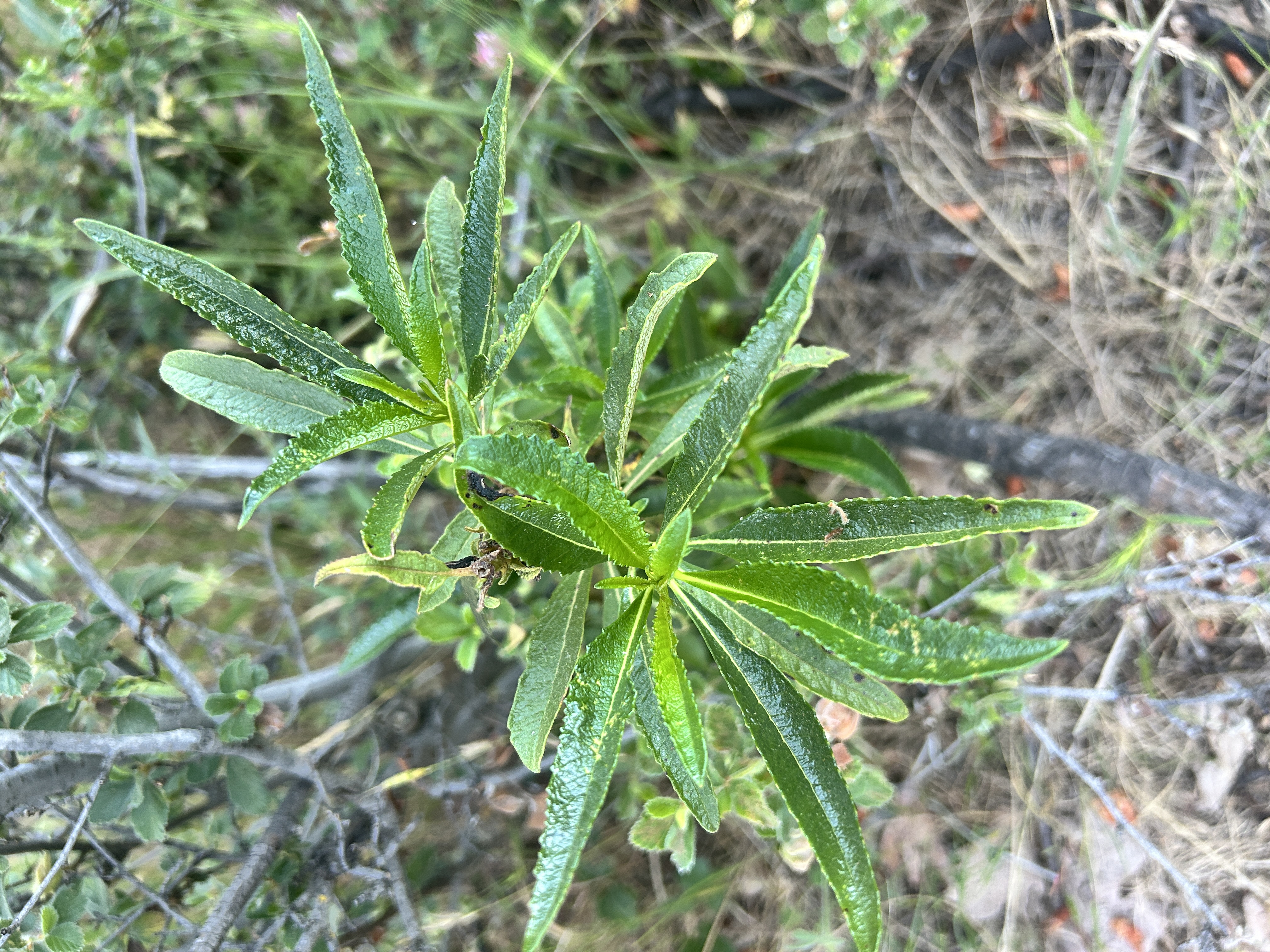
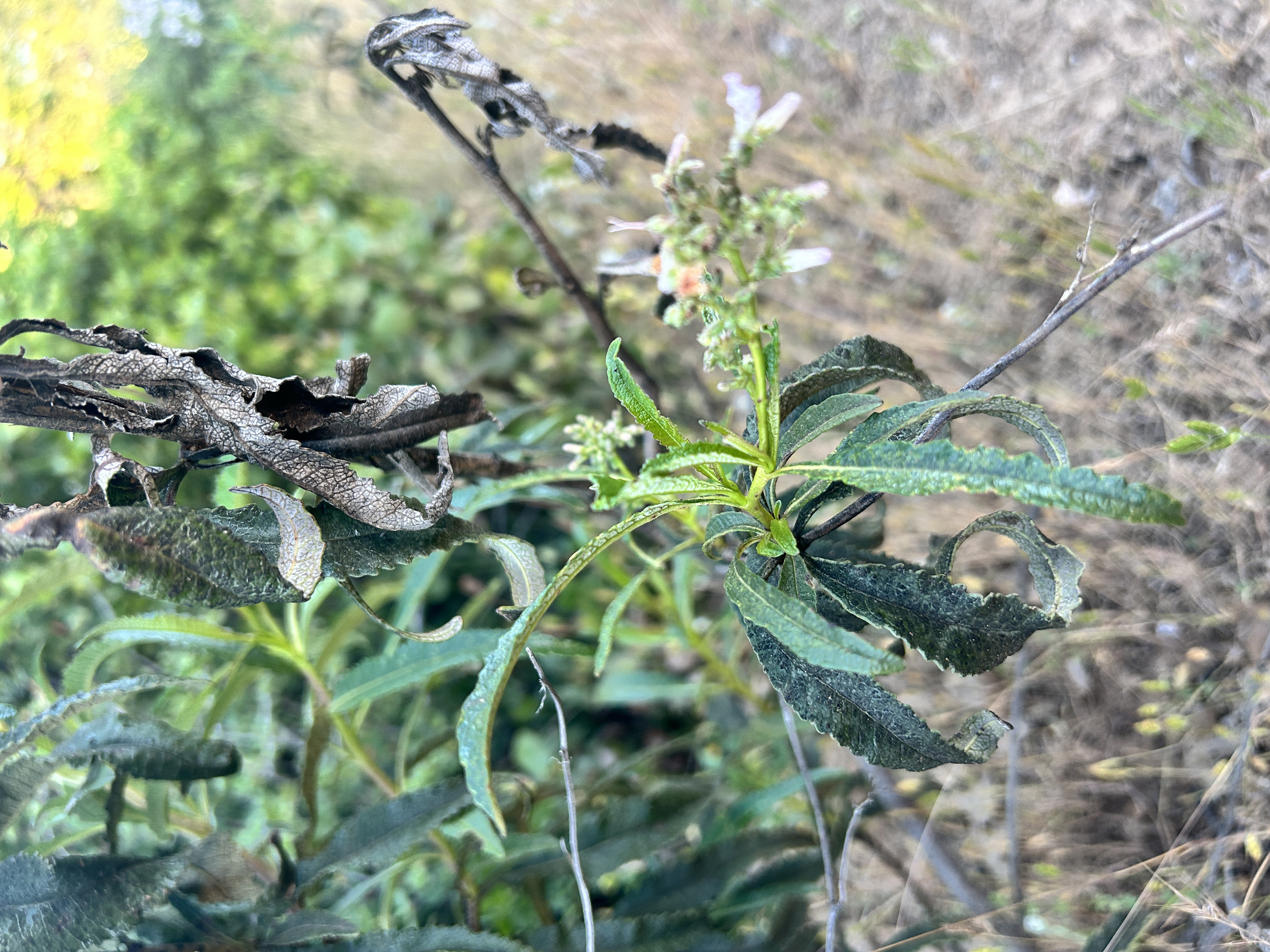
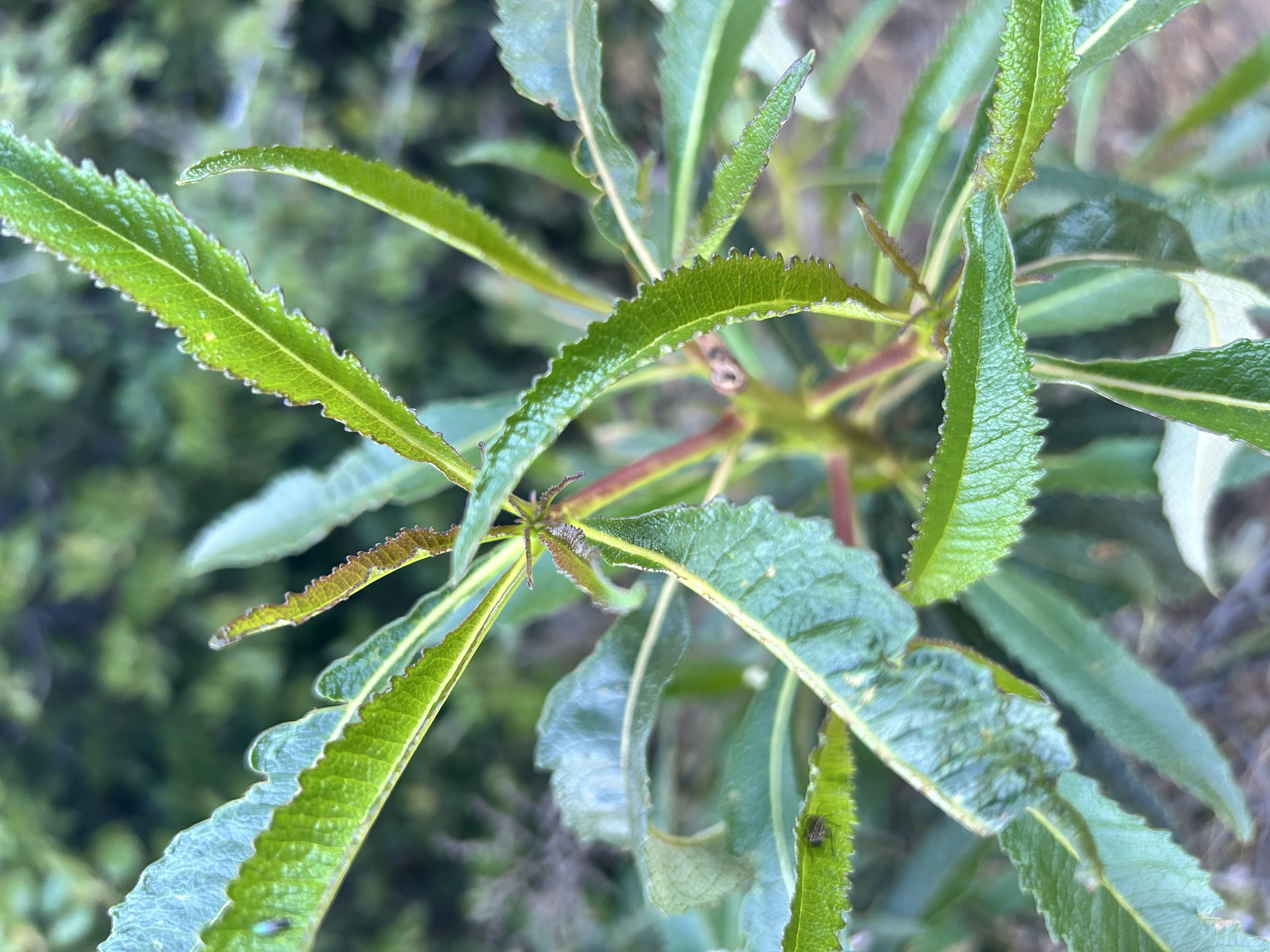
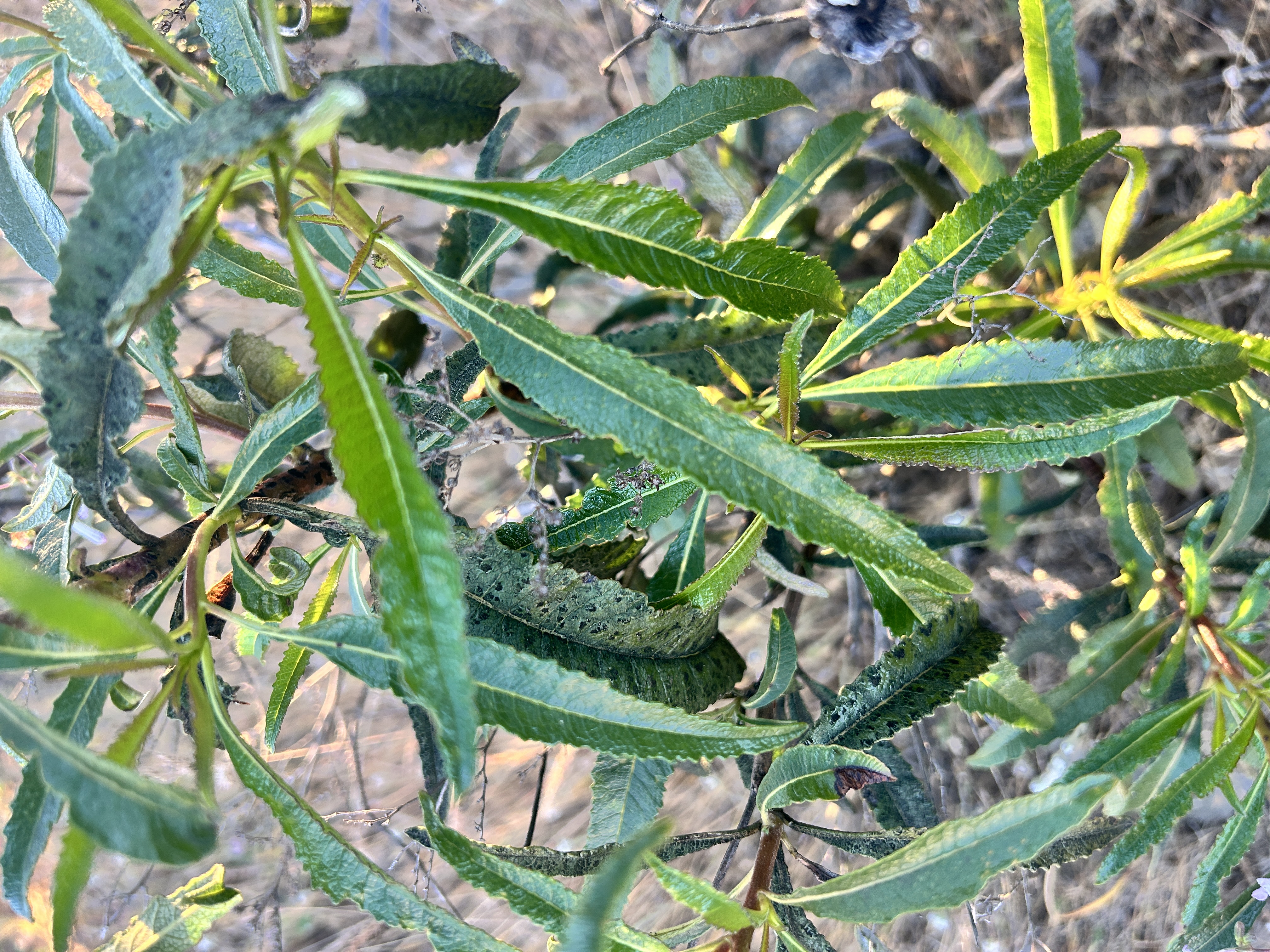
Yerba Santa is an evergreen shrub that typically grows 3–4 feet tall, with tough, leathery leaves coated in a natural resin. It’s scientific name Eriodictyon is rooted from a Greek compound word meaning “woolly net” which refers to the fuzzy underside of the leaves that acts to help the plant survive the hot, dry summers of our region by working to conserve water for the inner plant. The leaves are otherwise tough and leathery, saw toothed or straight, long, and slender (lanceolate), often sticky with resin, with alternate arrangement along the stem.
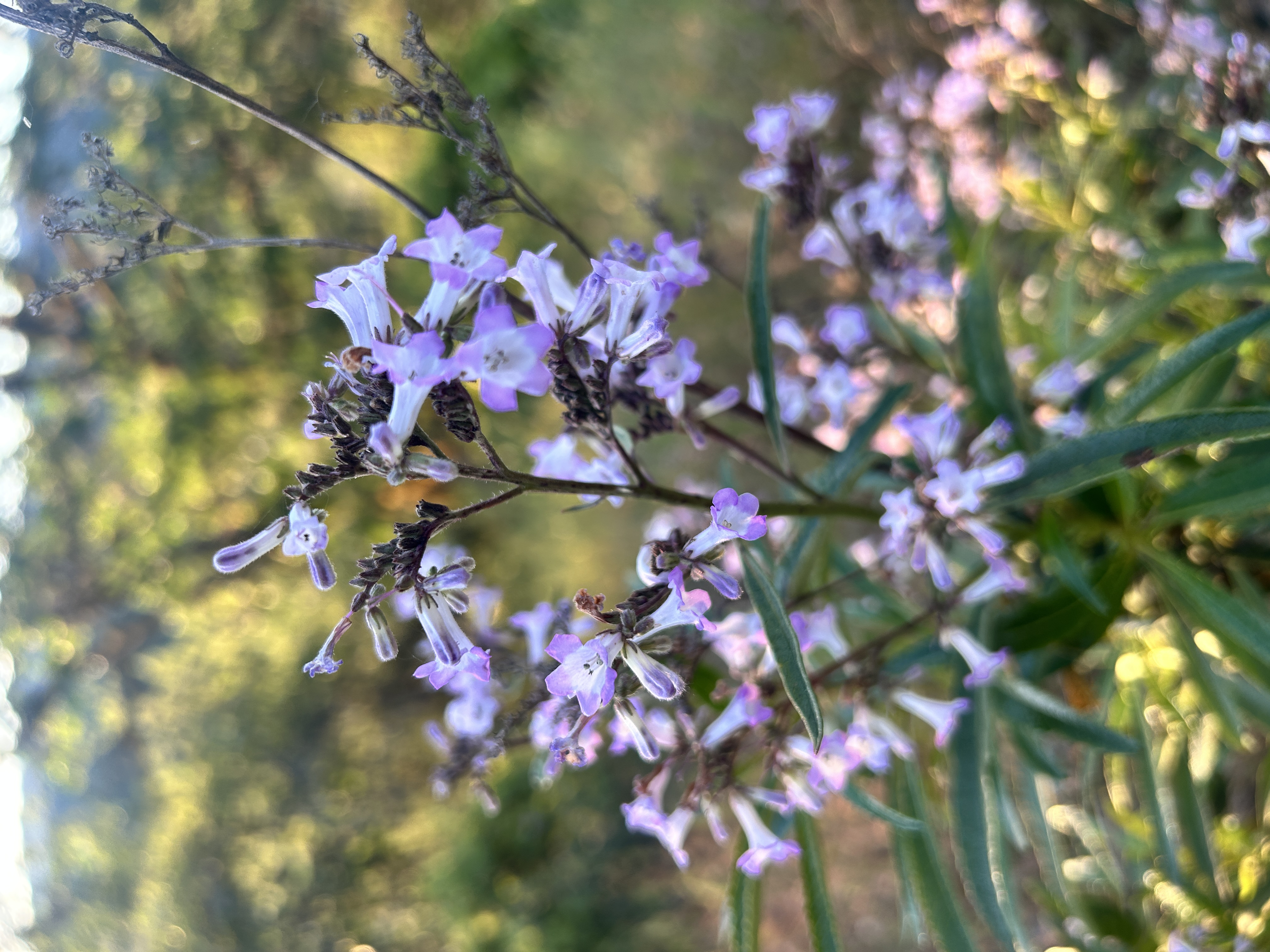
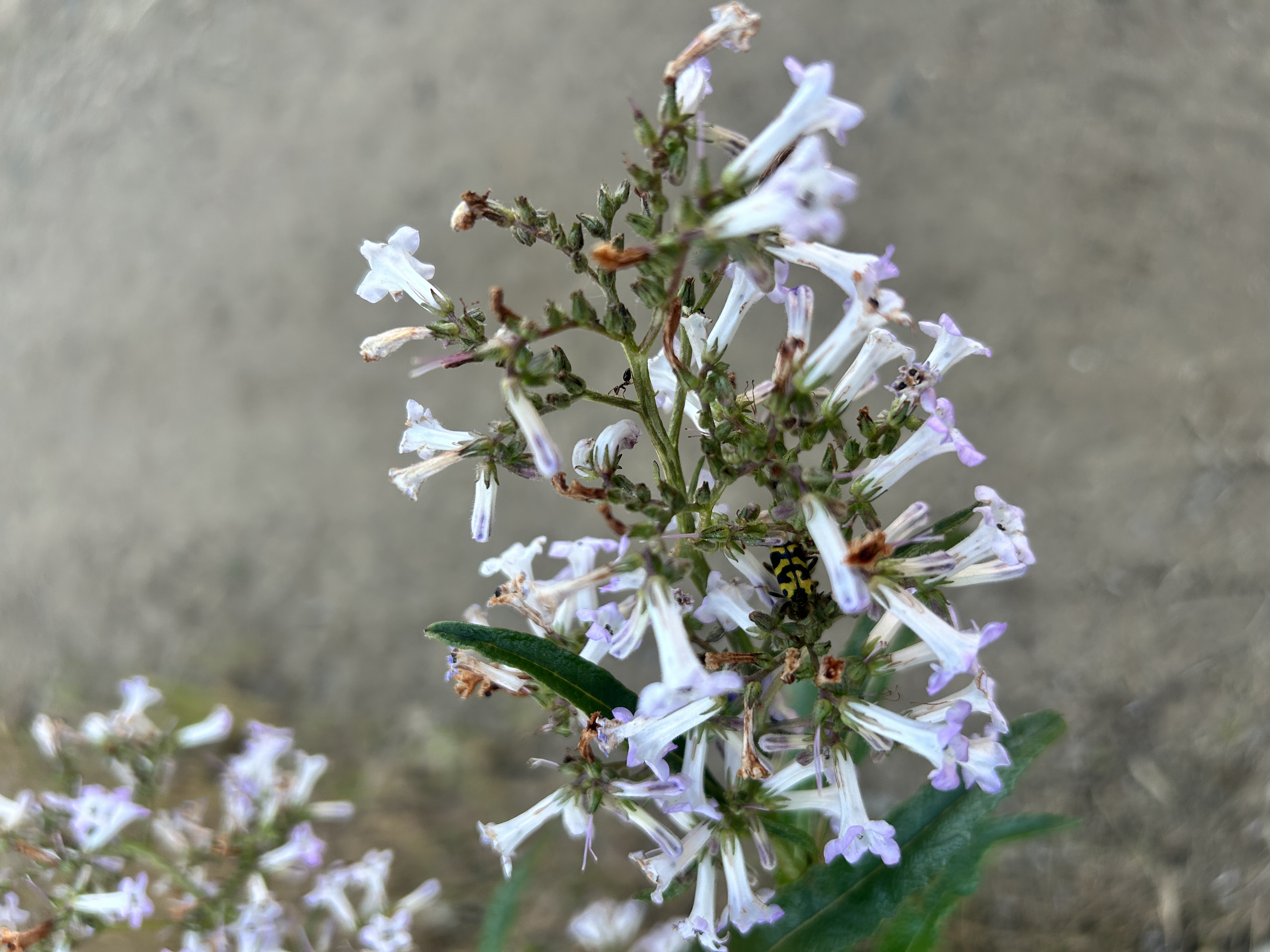
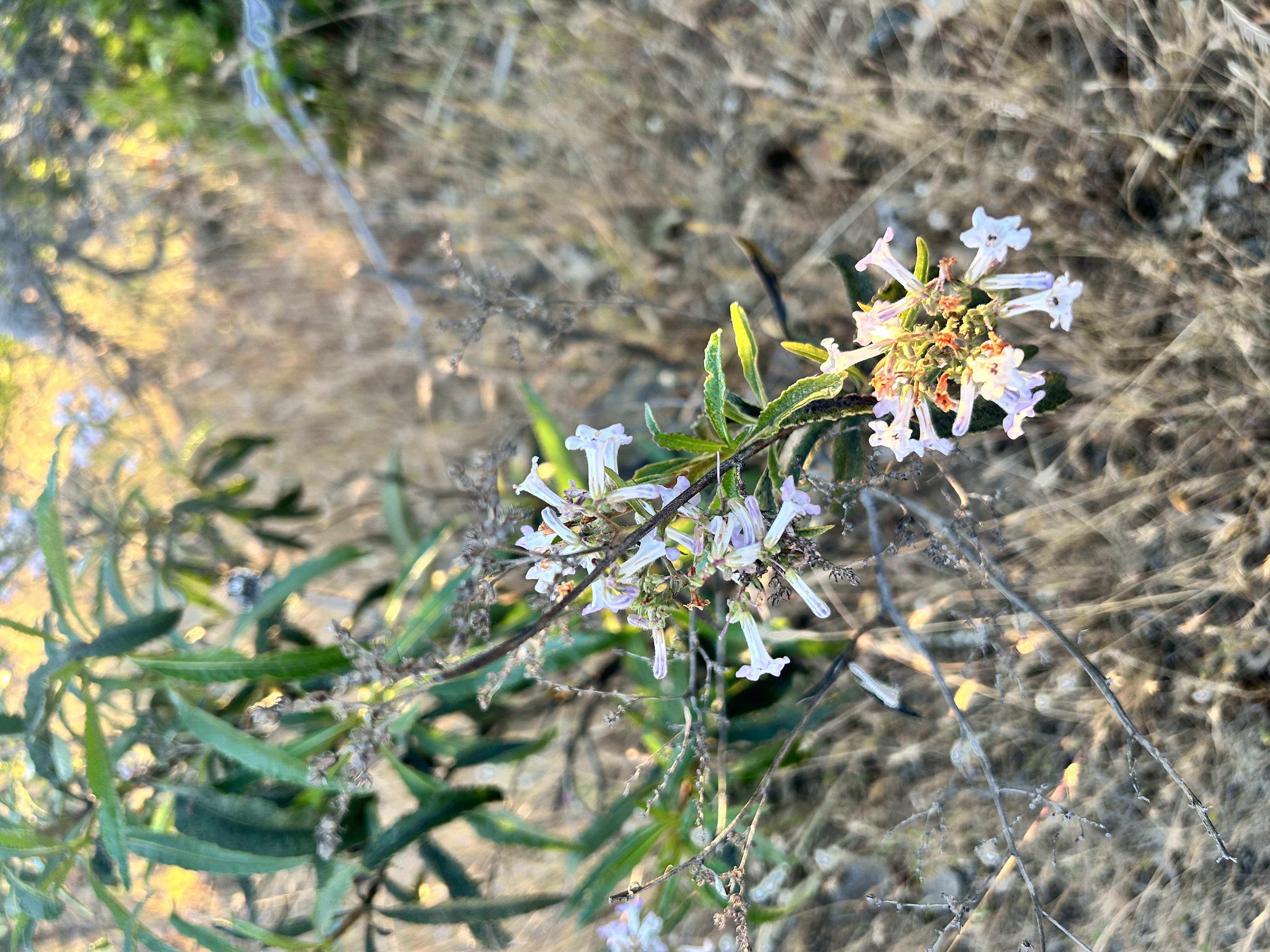
In spring, the plant produces showy, coiled clusters of trumpet‑shaped flowers ranging from white to light purple. The abundant and fragrant flowers provide a reliable nectar source for the honey bee (Apis mellifera), butterflies like the western tiger swallowtail (Papilio rutulus), hummingbirds, moths and other beneficial insects (5). It is also said that bees who visit the flowers of Yerba Santa make honey that is deliciously spicey and amber in color (1).
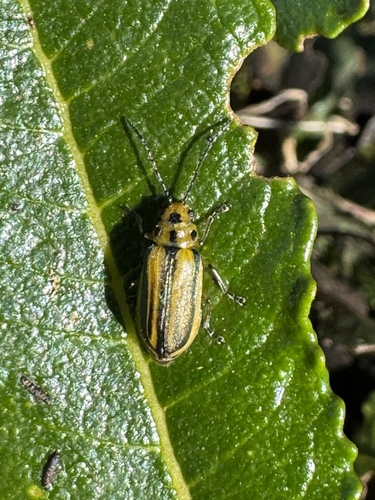
While the flowers are not specialized to a specific pollinator species, the plant does host the larvae and adults of the Yerba Santa leaf beetle (Trirhabda eriodictyonis) which feed exclusively on plants in this genus (5, 6).
Photo: Yerba Santa leaf beetle. [iNaturalist/Gina Genduso]
Yerba Santa thrives in chaparral ecosystems where fire is common and essential to the plant’s success. While two-year old plants can reproduce by rhizome each fall flowers form into seeds and disperse sometimes lying dormant in the soil for decades. Come fire season in areas effected by fire, mature Yerba Santa rebounds via rhizome and can act as a pioneer species in an otherwise barren landscape. Additionally dispersed dormant seeds can be triggered by the heat or smoke of a wildfire encouraging mass germination. For this reason, botanists can refer to E. californicum as a “fire following” species (Emery 1988).
Yerba Santa seeds are also beneficial for wildlife. A single Yerba Santa flower produces between 2 and 20 tiny nutritious seeds which ripen in late summer feeding local birds and small mammals. While the seedlings and young plants are quite palatable, the bitter compounds in mature Yerba Santa leaves discourage most large herbivores. However, during winter the plant can become an important forage crop for black-tailed deer when other food sources are minimal (1).
Deep Roots: Indigenous Knowledge and Traditional Use
Yerba Santa has long been an important and useful plant for medicine. Due to indigenous use and teachings, the plant was introduced to missionaries and early non-Indian settlers. By the late 1800s Yerba Santa was widely accepted by American physicians and seen as a very valuable source for curing ailments. Though the plant lost prominence within American medicine in the 1960s due to the requirement of clinical trials for medicines, and Yerba Santa was not invested in for clinical trial (4) .
In California, Yerba Santa leaves were gathered by many different tribes throughout the state, including ancestors of the modern Yurok and Karuk tribes (3). According to the NRCSs Yerba Santa Plant Guide, California tribes including the Salinan, Ohlone, Miwok, Pomo, and Yokuts continue to use it for various medicinal purposes (1). The Amah Mutsun Tribal Band continue to gather and prepare it in part through the activities of the Amah Mutsun Land Trust (2).
Traditionally harvest focused on young leaves. Traditional practices taught by elders encouraged those harvesting to offer words of thanks or a physical gift, like sage or tobacco prior to harvest. This respectful approach created connection between the plant and its harvester.
The leaves can be used in several ways:
- Brewed into a tea for coughs, colds, or asthma
- Chewed fresh or dried into small herbal “chew balls”
- Smoked or inhaled as a decongestant
Yerba Santa is naturally very bitter. But many have noticed that after chewing a cured leaf then drinking cool water tastes unexpectedly sweet. Today we know why: the plant’s compounds temporarily block the tongue’s bitterness receptors, making water taste almost like a mild sweet tea.
The Science Behind the Medicine
Yerba Santa leaves contain powerful plant chemicals, including rare flavanones like eriodictyol, homoeriodictyol, and sterubin. These compounds:
- Act as free‑radical scavengers (antioxidants)
- Help open bronchial airways
- Loosen mucus, acting as natural expectorants
- Block bitterness receptors on the tongue, creating that unique after‑sweetness
Researchers continue to study these compounds for potential use in cough syrups, throat lozenges, and even taste‑modifying medicines.
A Gangly Plant with Incredible Value
Yerba Santa plays an important ecological role in the Trinity River Watershed. It provides nectar for a wide range of pollinators, produces seeds that support birds and small mammals, and rebounds quickly after fire, helping stabilize and regenerate chaparral landscapes. Its long history of use by Indigenous communities, along with ongoing scientific study of its chemical compounds, highlights its continued cultural and medicinal relevance. Yes, Yerba Santa is common but also a valuable shrub that contributes to both the ecological and cultural heritage in California.
Below are a list of resources if you are interested in harvesting or cultivating this common yet important plant to our region!
References
- USDA NRCS Plant Guide. Eriodictyon californicum. https://plants.sc.egov.usda.gov/DocumentLibrary/plantguide/pdf/cs_erca6.pdf
- Amah Mutsun Land Trust. Yerba Santa: A Medicinal Plant Extraordinaire. https://amahmutsun.org/land-trust-newsevents/yerba-santa-a-medicinal-plant-extraordinaire
- Native American Ehnobotany DB. California Yerba santa. BRIT – Native American Ethnobotany Database
- NIH National Library of Medicine. Historical Uses of Bitter-Masking Agents. https://pmc.ncbi.nlm.nih.gov/articles/PMC1062165/
- Friends of Edgewood California Yerba Santa. https://friendsofedgewood.org/yerba-santa
- BugGuide Yerba Santa Leaf Beetle. https://www.bugguide.net/node/view/394942
Further Reading
USDA Forest Service. Plant of the Week: Eriodictyon species. https://www.fs.usda.gov/wildflowers/plant-of-the-week/eriodictyon_sp.shtml
Calscape. Eriodictyon californicum (California Yerba Santa). https://calscape.org/Eriodictyon-californicum-(California-Yerba-Santa)
Caring Sunshine. Ingredient Spotlight: Yerba Santa. https://caringsunshine.com/ingredients/ingredient-yerba-santa/
Edge & Salt. Yerba Santa Recipes & Explorations. https://www.ofsedgeandsalt.com/blog/2018/2/11/yerbasanta
Following Deer Creek. Medicinal Herb: Yerba Santa. https://followingdeercreek.com/medicinal-herb/
MDPI Molecules Journal. (2024). Flavanones of Yerba Santa and Their Taste-Masking Properties. https://www.mdpi.com/1420-3049/31/8/1356
MDPI Proceedings. Nutraceutical Properties of Yerba Santa. https://www.mdpi.com/2504-3900/70/1/64
Native Languages of the Americas. Yerba Santa in Indigenous Traditions. http://www.native-languages.org/yerba-santa.htm
WishGarden Herbs. Yerba Santa: A Traditional Respiratory Ally. https://www.wishgardenherbs.com/blogs/wishgarden/yerba-santa
Barbara Drake Traditional Gathering Education. Gathering Practices. https://www.barbaradrake.org/gathering
Apothecary Shoppe. Yerba Santa: Seasonal Wellness & Sensory Rituals. https://www.apothecary-shoppe.com/blogs/news/yerba-santa-seasonal-wellness-sensory-rituals

Kiana Abel, Public Affairs Specialist
As Public Affairs Specialist for the Trinity River Restoration Program, Kiana manages external communications, media relations, and stakeholder outreach. She acts as a liaison between program initiatives and the public, transforming technical findings into compelling narratives that promote understanding of restoration initiatives on the Trinity River. Kiana holds a Batchelor’s in Art History, has spent most of her career in marketing and is focused at the TRRP on bridging the gap between public awareness and resource restoration and management.