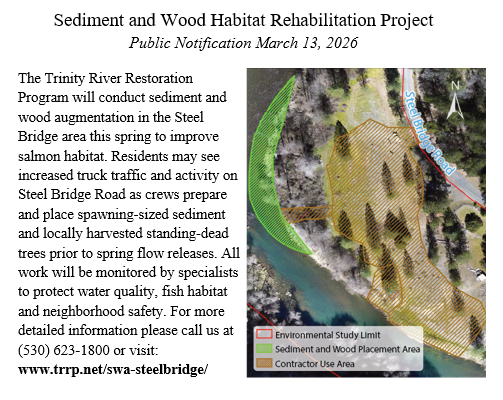
A recent synthesis of research documents (linked here) identified and recommended four additional areas within the Trinity River in need of habitat enhancement below Lewiston Dam.
Dams disrupt the natural movement of water, rocks, and wood downstream resulting in a lack of loose, well-sorted sediment and the structural complexity that salmon and steelhead need to successfully spawn, protect their eggs, and rear once hatched. To make up for the loss of these materials below a dam, river restorationists augment materials in areas identified as depleted.
Through monitoring following years of gravel augmentation, fluvial geomorphologists have learned that gravel doesn’t steadily move downstream like a conveyor belt. To address deficiencies, augmentation must occur at multiple strategic locations from the dam down to where tributary flows and sediment supplies are adequate to maintain habitat on their own. The Steel Bridge location was selected for augmentation this season (2026) because it offers the right conditions for restoring salmon habitat; including equipment access, proximity to existing riffles, and a riverbed that has become armored and lacks spawning gravel.
When large wood additions are combined with augmentation of appropriate sized sediments each can interact with the river across three scales:
- Geomorphic change scouring pools and sorting gravels and fines.
- To provide habitat (for juveniles and adults);
- Hydraulic forcing at elevated flows;
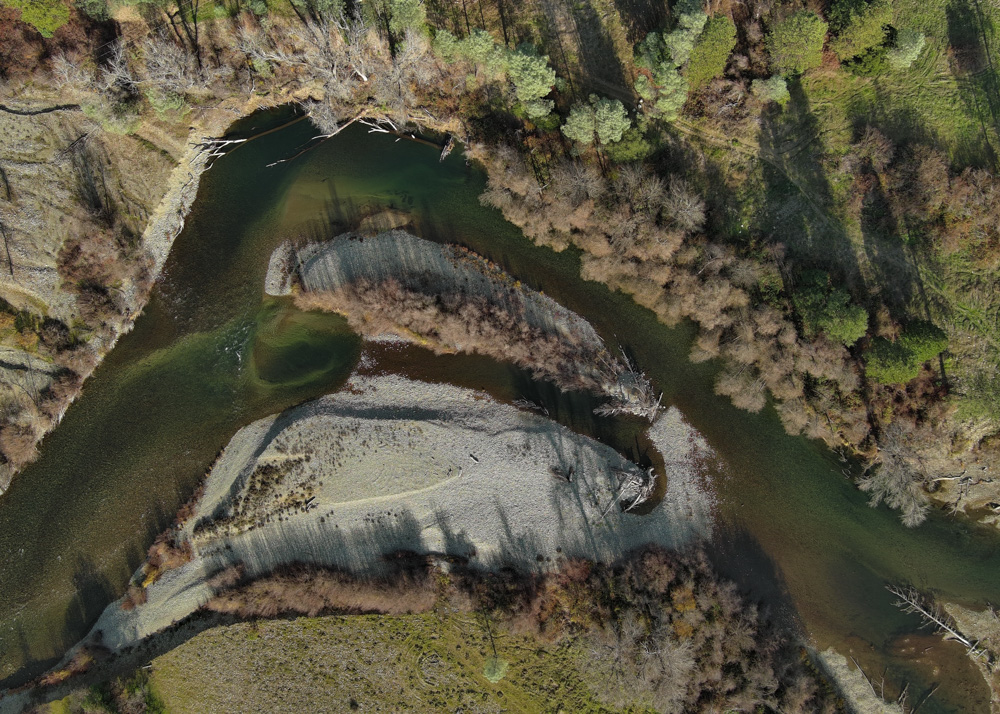
In the image to the right, constructed wood jams are forcing flows in two directions encouraging geomorphic change (center right of image), whole trees placed for habitat during construction (lower right), and whole trees being recruited from natural process and bank erosion (upper center).
Photo: Drone imagery showing sediment and wood interacting with flow at Oregon Gulch. [Aaron Martin, Yurok Tribal Fisheries Department]
By adding appropriate sizes of sediment and placing locally harvested trees into the river, we can help the river rebuild vital habitat for spawning, support food webs, enhance river health and natural processes. These materials are typically placed prior to higher flow periods, allowing the river to naturally distribute them to form complexity and create dynamic habitat for Trinity River salmonids.
Project Specifics
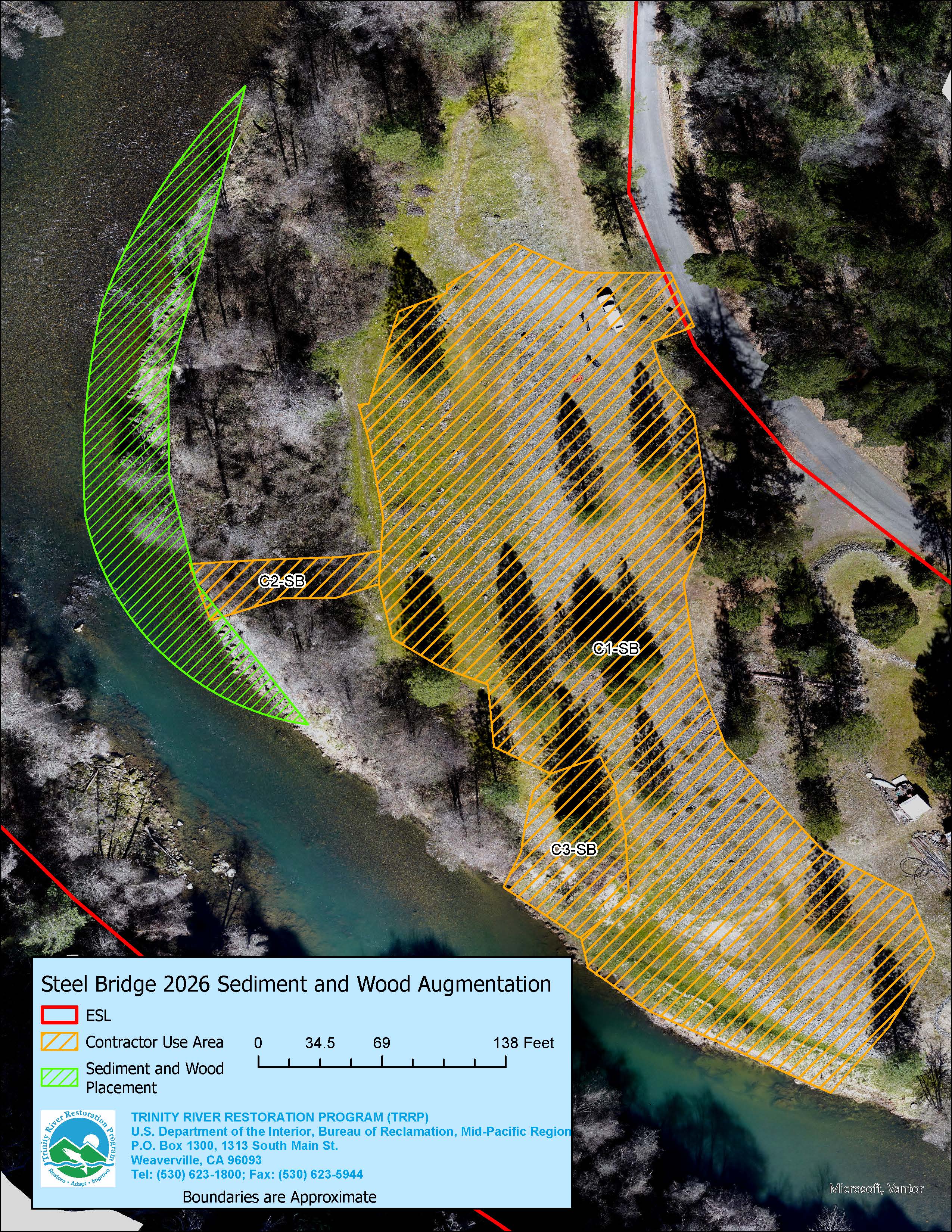
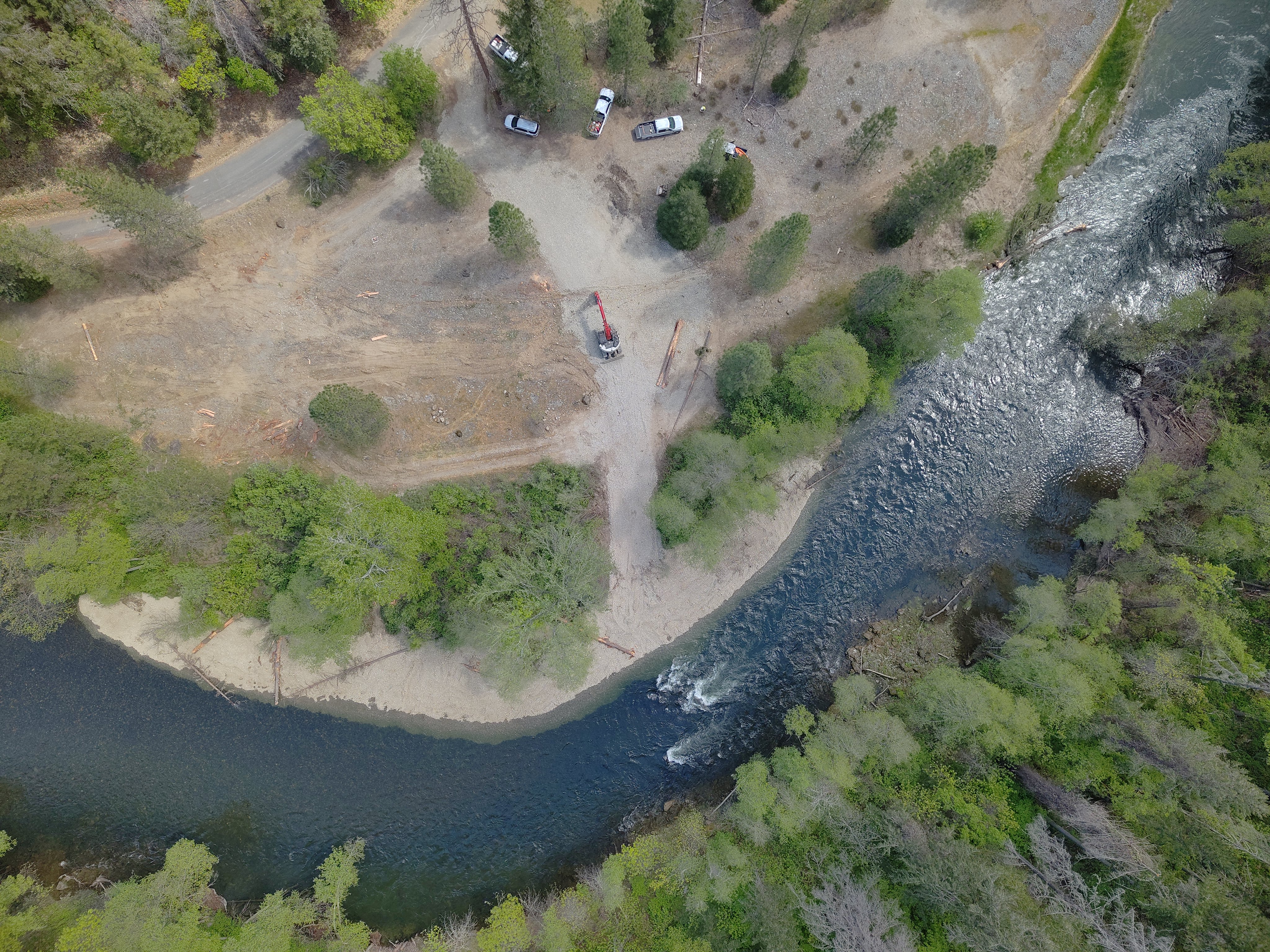
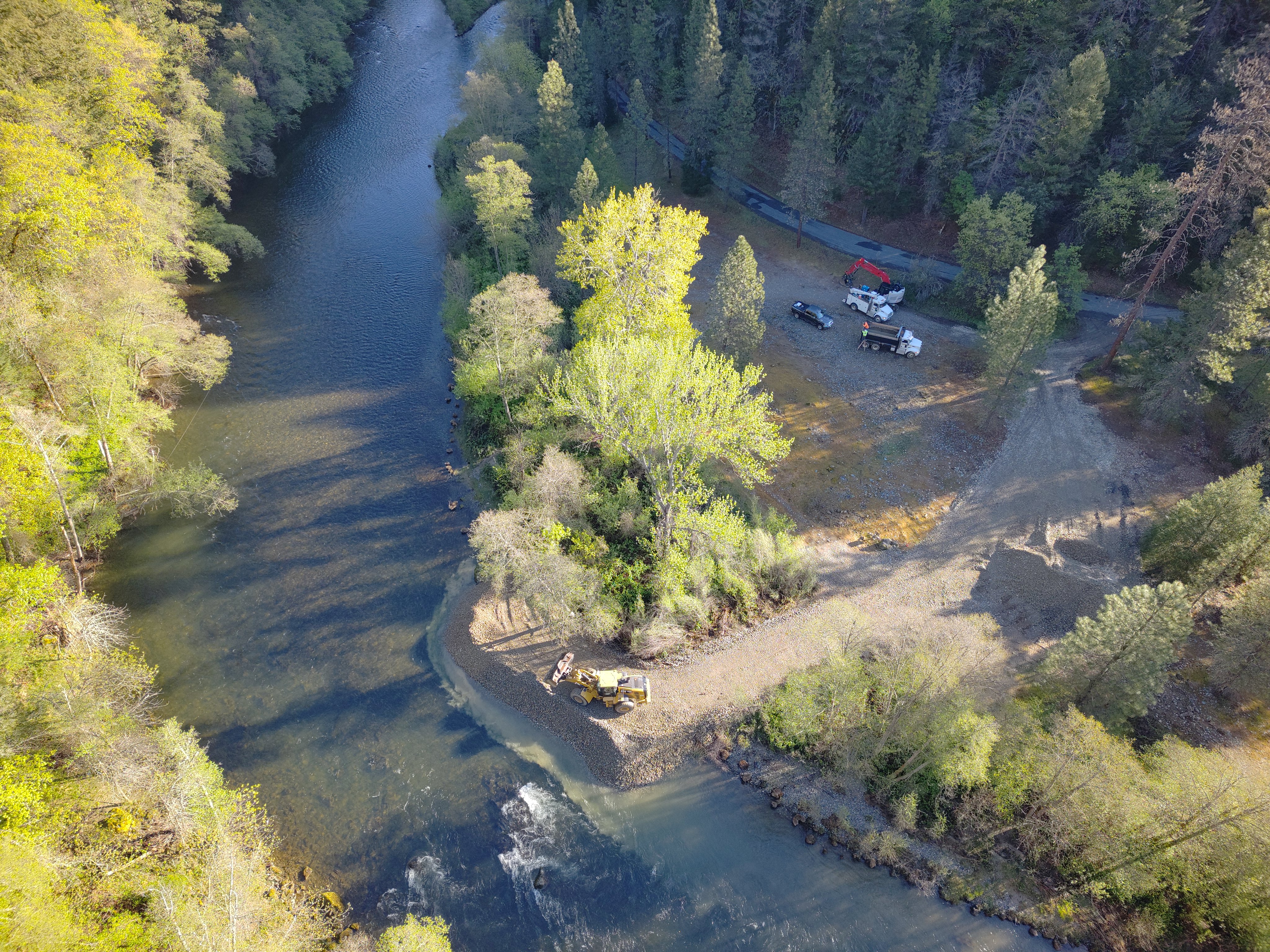
Work completed on April 8, 2026. Augmentation occurred prior to the Spring-Snow Melt restoration releases (scheduled for mid-April) to allow the river to distribute the sediment and wood naturally.
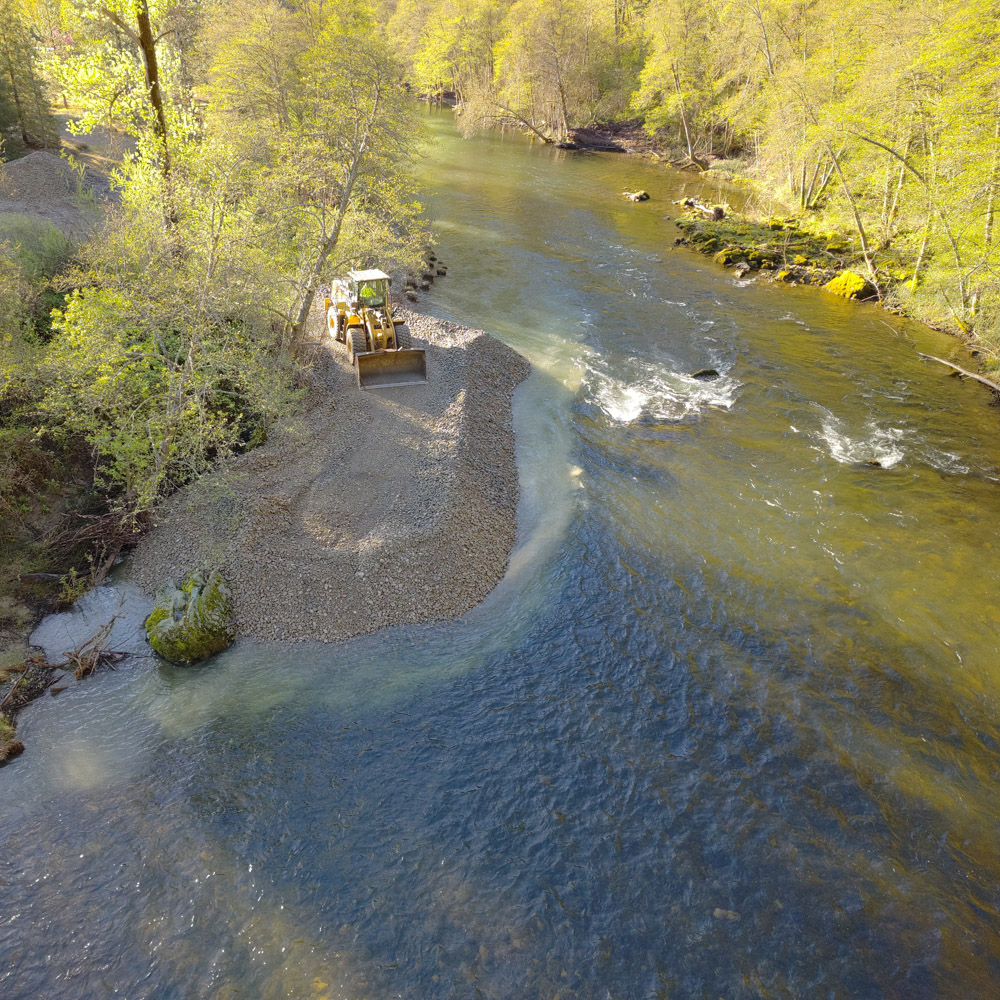
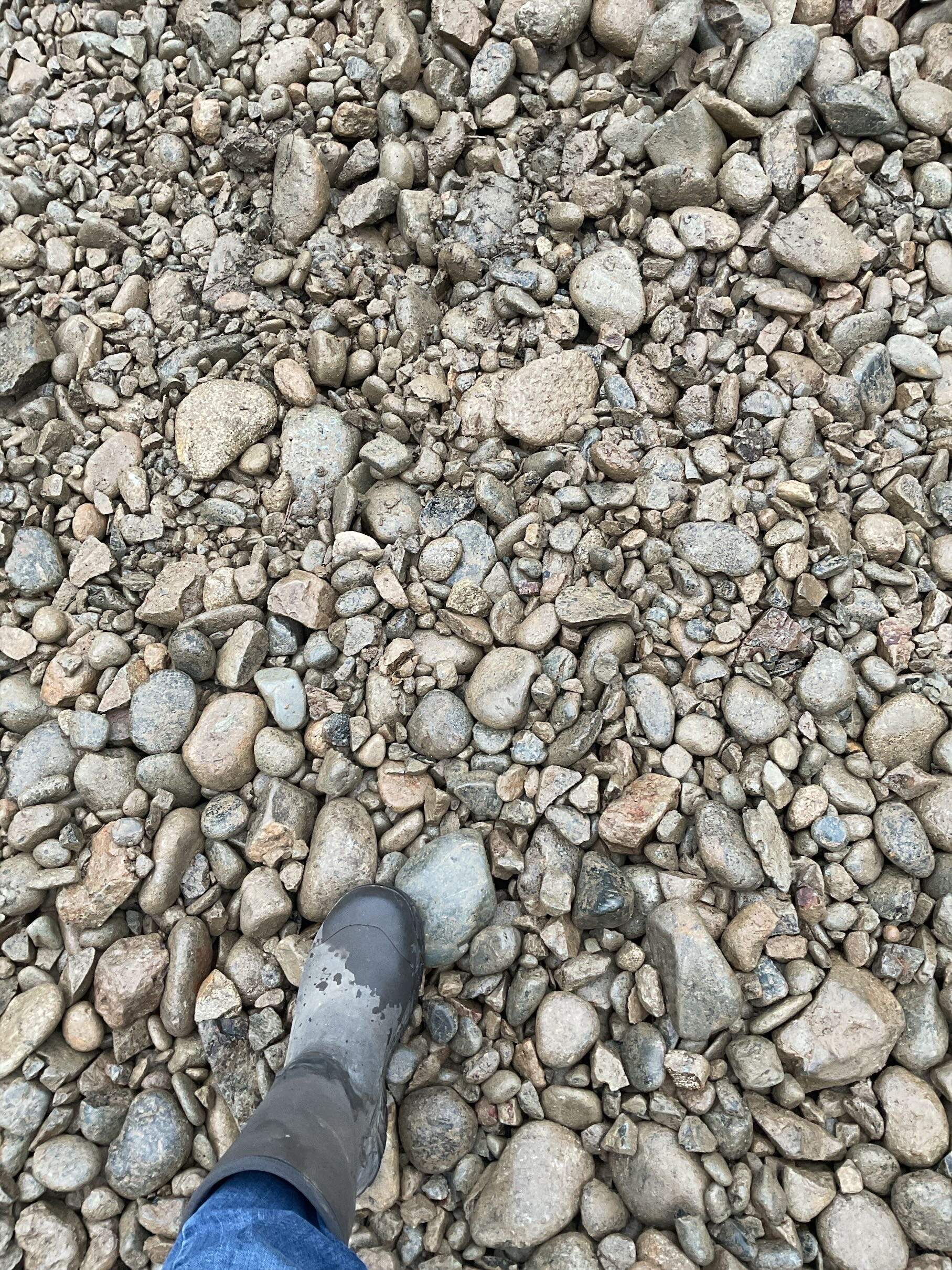
Approximately 2000 cubic yards of spawning-sized sediments (roughly 3/8 inch to 5 inches) were trucked, stored and then placed along the river bank.
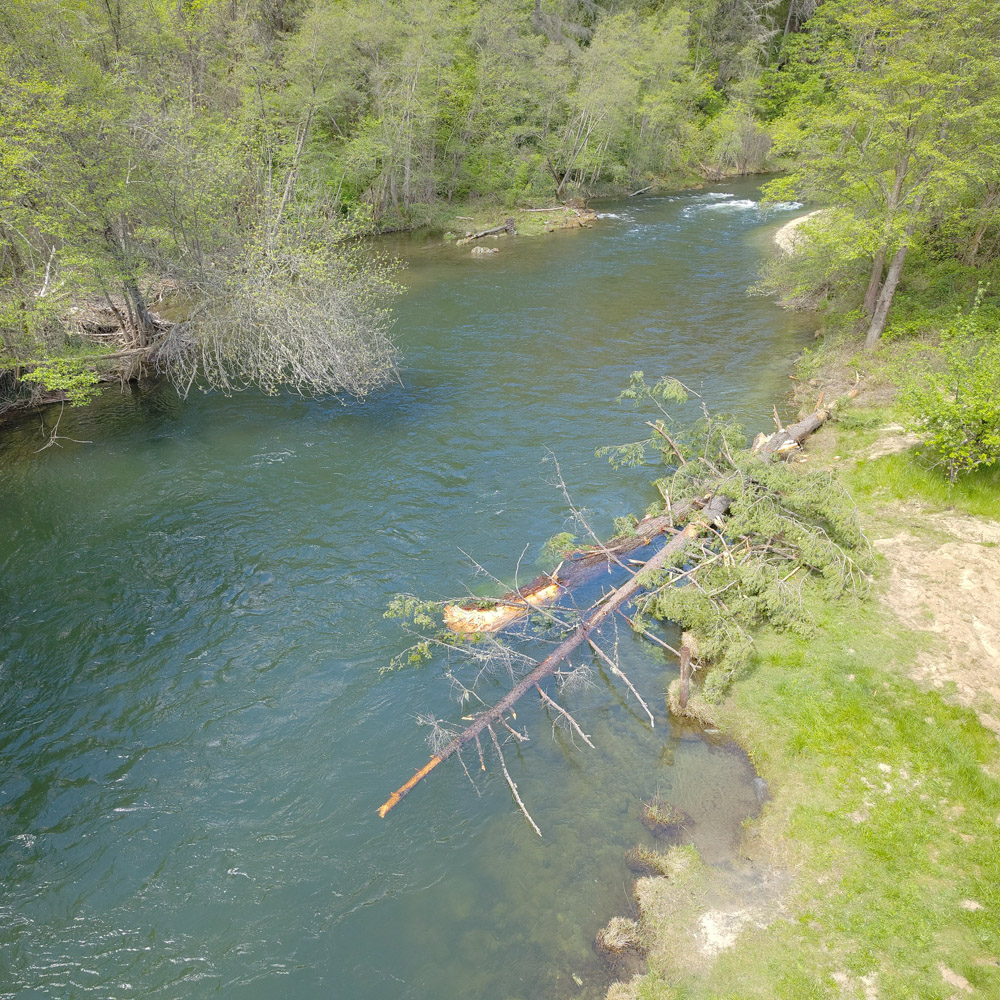
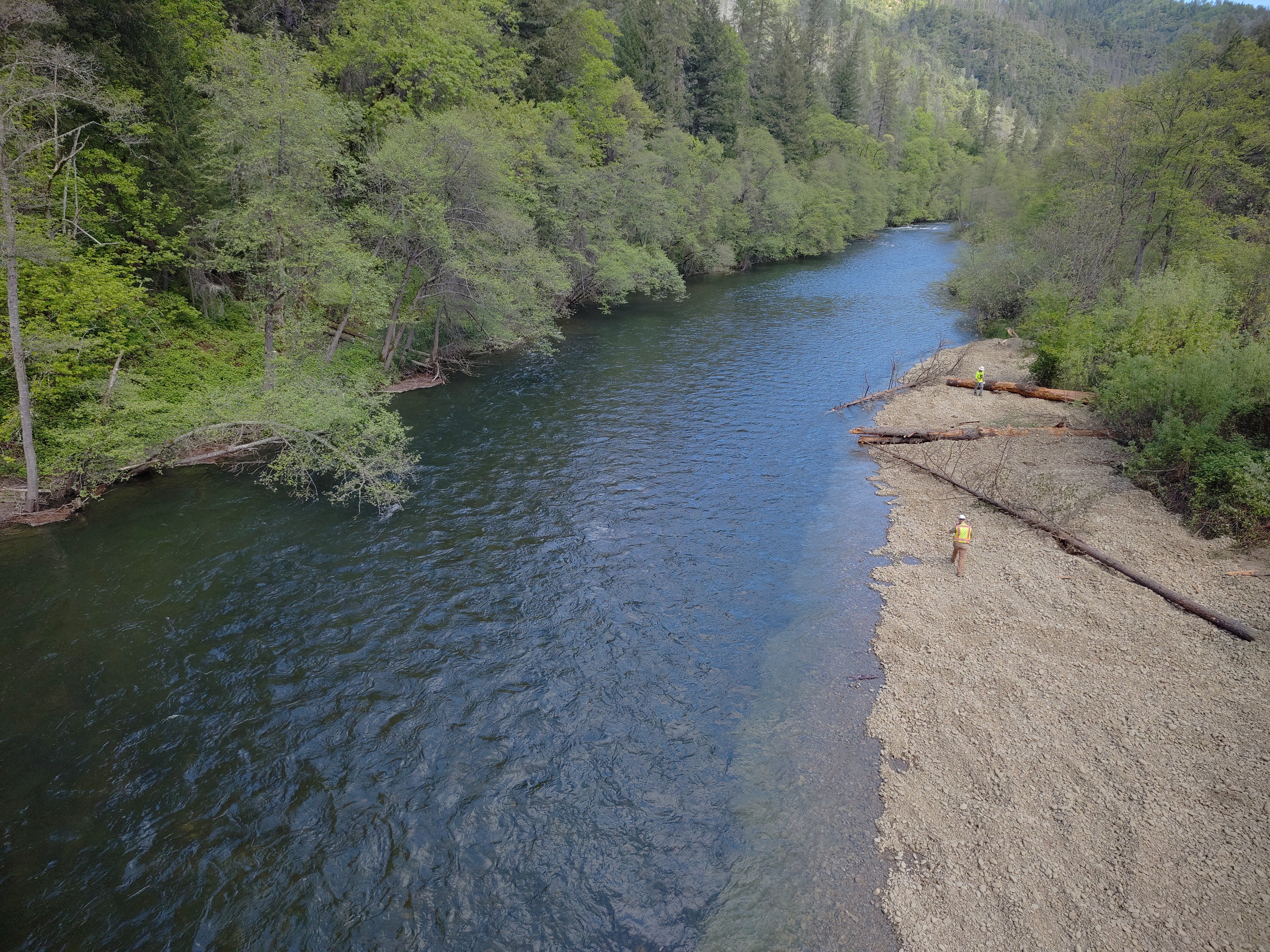
In addition to fish rock, locally harvested trees were placed in the river channel to build low-flow habitat.
Prior to and during implementation the project boundaries were marked with signs and barriers to protect public health and safety, cultural and natural resources, scenic values and scientific research activities.
A fish biologist monitored for active redds and turbidity was checked throughout the operation. Work paused if water cloudiness exceeded permitted limits. In addition any equipment used in-river used biodegradable hydraulic fluid to protect water quality.
Images of the Project
If you have questions, concerns, would like to be placed on a notification list, or want to learn more about the project please contact us at:
- email: info@trrp.net
- phone: (530) 623-1800
Click here to read more about why the program uses sediment and wood augmentation as a restoration tool on the Trinity River.
Click here to read more about Sediment and Wood Augmentation Projects.
Further Information
- Coarse Sediment Storage on the Trinity River: recommendations and correlations to juvenile Chinook Salmon rearing Habitat (HVTFS 2023)
- Sediment and Wood Environmental Assessment Final EA/IS
- Neighborhood Notification Post-Card (3/13/2026)
- Legal Advertisement – Spring 2026 Implementation