
- Current Conditions
- Program Updates: Sawmill Gravel Processing Site Channel Rehabilitation Project – Lewiston
- Trinity River Watershed Plant Spotlight: California Yerba Santa (Eriodictyon californicum)
- Upcoming Meetings and Events: Science on Tap and more!
- Reading, Listening & Watching
Current Conditions
Klamath Fish Health Assessment Team
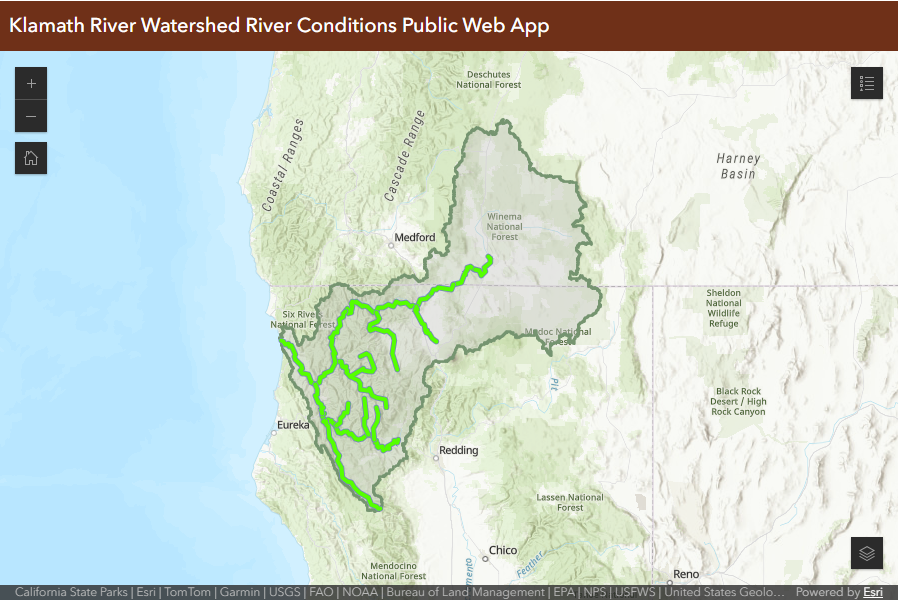
Annually beginning in April, members of the Klamath Fish Health Assessment Team (KFHAT) resume monthly meetings to assess Klamath Basin Fish Health. The KFHAT is a technical workgroup that formed in 2003 with the purpose of providing early warning and a coordinated response effort to avoid, or at least address, a non-hazardous materials related fish kill event in the anadromous portion of the Klamath River basin.
Photo: The KFHAT map presents the readiness level for the Klamath Basin below Iron Gate Dam in a visual format. Click here to read the 2026 reports.
Determinations are currently favorable for most of the Klamath and Trinity basin, however conditions can change rapidly with current snowpack conditions. In April water samples revealed elevated densities of C. shasta spores in the Upper Mid Klamath, leading the group to note caution for conditions above the Scott River. Fortunately, a month later in May water samples were less concerning and the group reverted to favorable conditions basin-wide.
As mentioned earlier, this year’s snowpack is minimal and rivers are following suit with temperatures rising and flows slowing in much of the system. It was advised that those drawing from streams and tributaries for irrigation and household use should begin to conserve waters.
Currently, monitoring is showing that out-migrating fish are generally healthy and are moving out of the system. Observational reports of springers in the Trinity were noted in mid-April.
CDFW reported that technicians would install the Junction City Weir to monitor adult migration during the first week of June. The Willow Creek Weir will be placed in late August or early September.
Trinity Reservoir Conditions
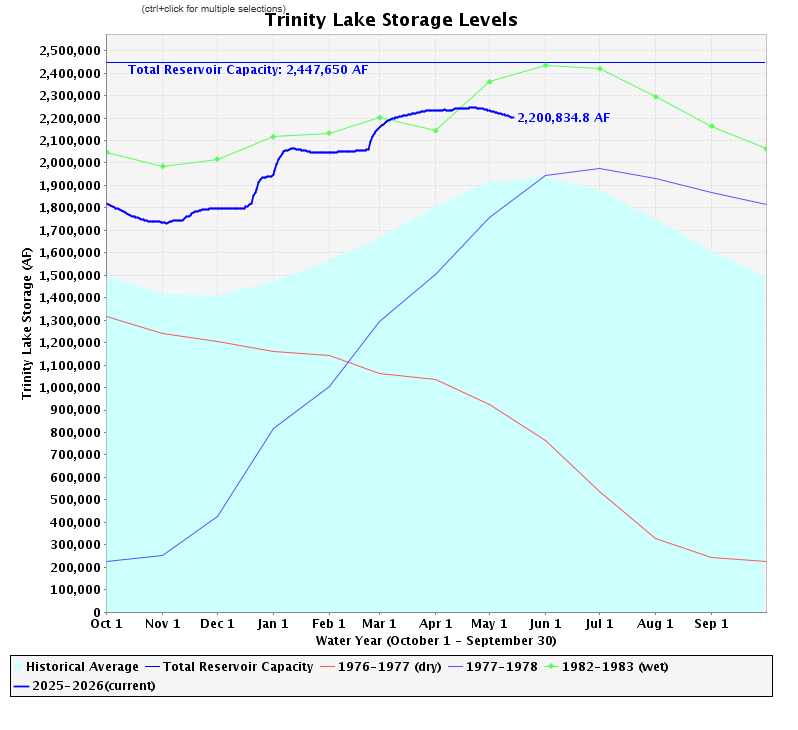
Trinity Reservoir is at 90% capacity. Peak reservoir capacity came at the end of April due to low snowpack and modest runoff from the Trinity Alps. Regionally, snowpack for the 2026 water year was below average, and reports indicate that the Central Valley Project will rely more heavily on stored water through the spring and summer, including from Trinity Reservoir.
California Department of Water Resources | CDEC | Storage Conditions
Cold Water Safety
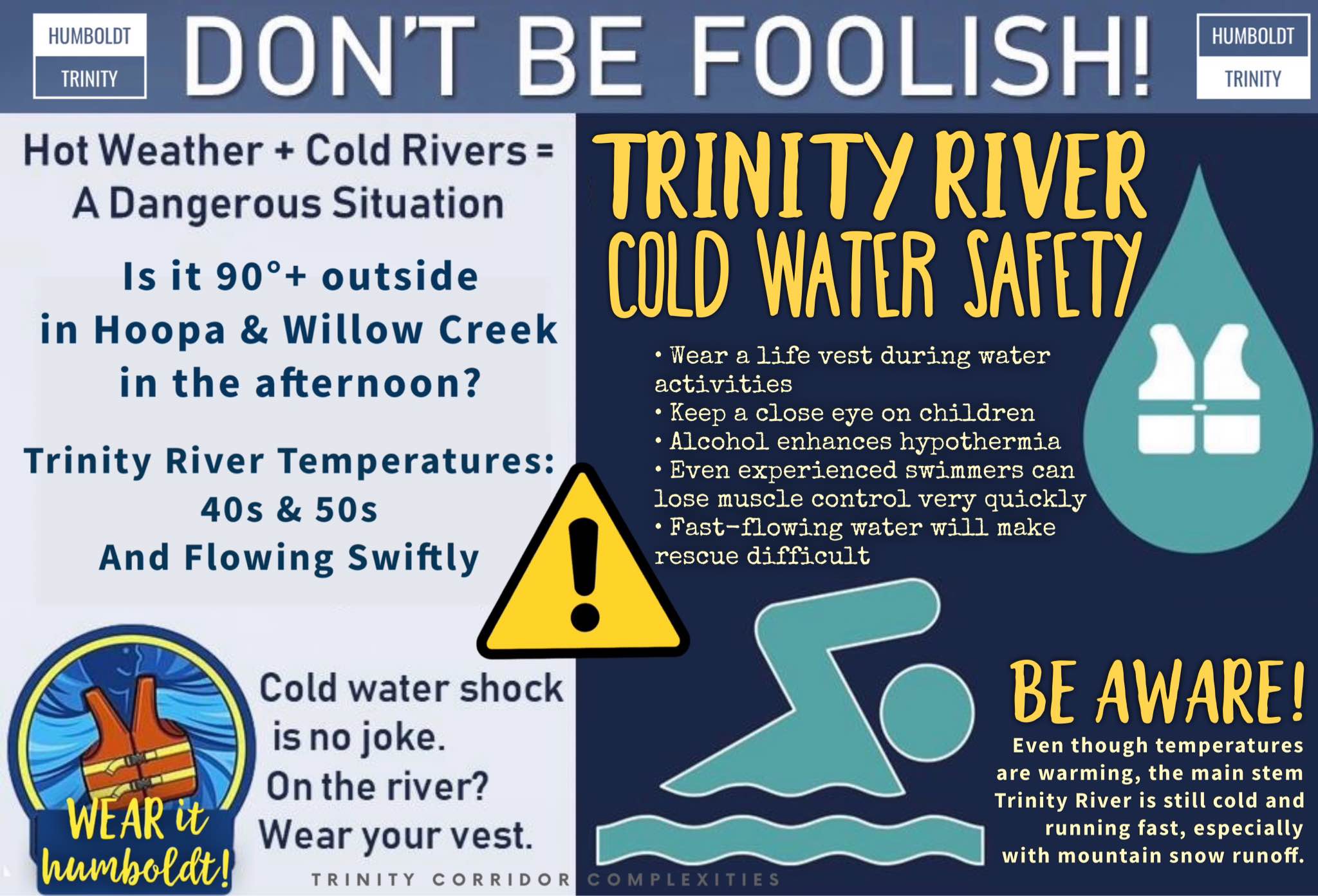
As air temperatures climb so do visitors to the Trinity River. Please be aware that waters up and down the river corridor are very cold and the river is swift this time of year. When visiting, please take necessary river safety precautions! Check out Recreate Responsibly Water Safety for tips and remember that life jackets are a must this time of year.
The river is always changing! Click here to view the 2026 water year release schedule.

Invasive Mussels
With the recreation season upon us it’s more important than ever to inspect your watercraft if travelling between systems. The highly invasive golden mussels pose a significant threat to the health and functionality of water conveyance systems, wildlife, watercrafts and water quality. Individuals can help by inspecting, cleaning, draining and letting equipment dry so that these invasive mussels don’t cause significant damage and costly restrictions.
Additional information on the golden mussel prevention can be found by visiting California Department of Fish and Wildlife page: California’s Invaders: Golden Mussel
Program Update
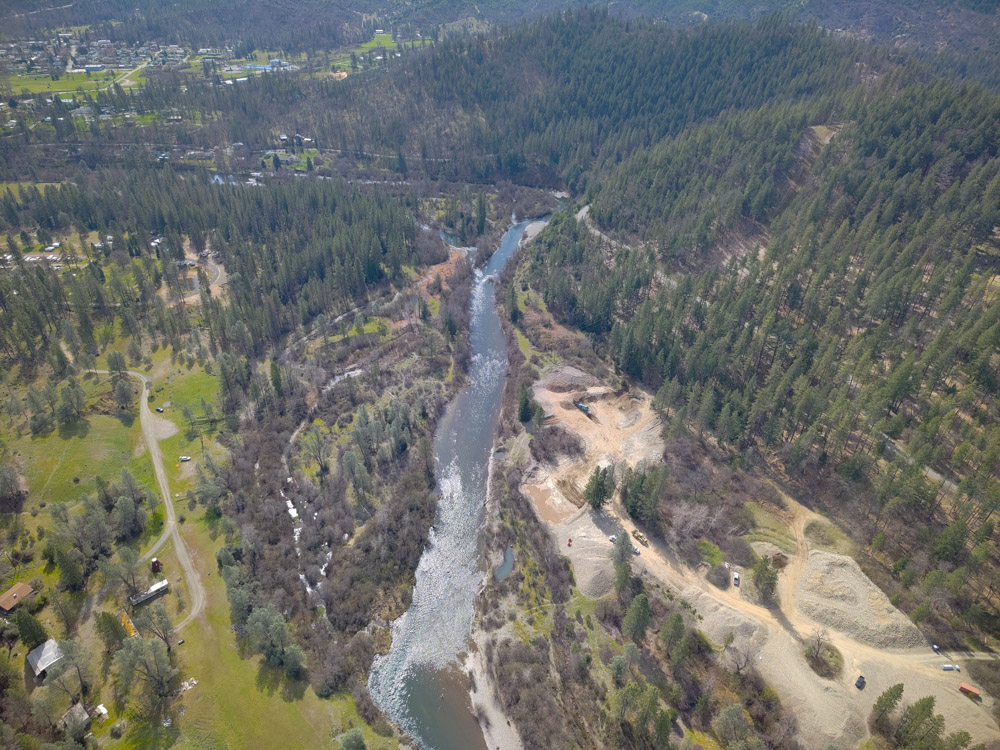
Sawmill Gravel Processing Site Channel Rehabilitation Project – Lewiston
The Sawmill Gravel Processing Site Rehabilitation Project is a multi‑year effort aimed at improving habitat for salmonids along the Trinity River near Lewiston.
The Sawmill site has been a source of varying sizes of rocks used for sediment augmentation for several years. While mine tailings have been sorted, stored and placed back in the river at augmentation sites, the area previously affected by rock mine tailings are now mostly cleared and ready for rehabilitation. This summer the sorting area will be decommissioned and reformed into floodplain and riparian habitat. The supplies have not yet been depleted thus sediment will continue to be stored and used for future augmentation in upland areas of the project.
The site design also focuses on expanding and enhancing rearing habitat for young salmonids across a wide range of flows. Expanding habitat can work to improve growth and survival for juvenile fish by increasing access to slow‑water refuge, food, and desirable temperatures for digestion. The project also seeks to promote dynamic river processes such as floodplain inundation, erosion and deposition, and the recruitment of large wood, while preserving critical adult holding habitat at Burner Hole.
Construction timing is currently planned for mid-June to mid-October, however exact dates are still to be determined. Typical construction times are 7a.m – 7p.m., Monday through Friday. During working hours neighbors may notice temporary increases in truck traffic and construction noise, as crews move equipment and materials using existing local roads. We want to express our gratitude to the surrounding neighborhood for sharing this space while experiencing disturbance while we work to rehab this site. If interested, please call to schedule a tour by contacting our Public Affairs Specialist, Kiana Abel.
Trinity River Watershed
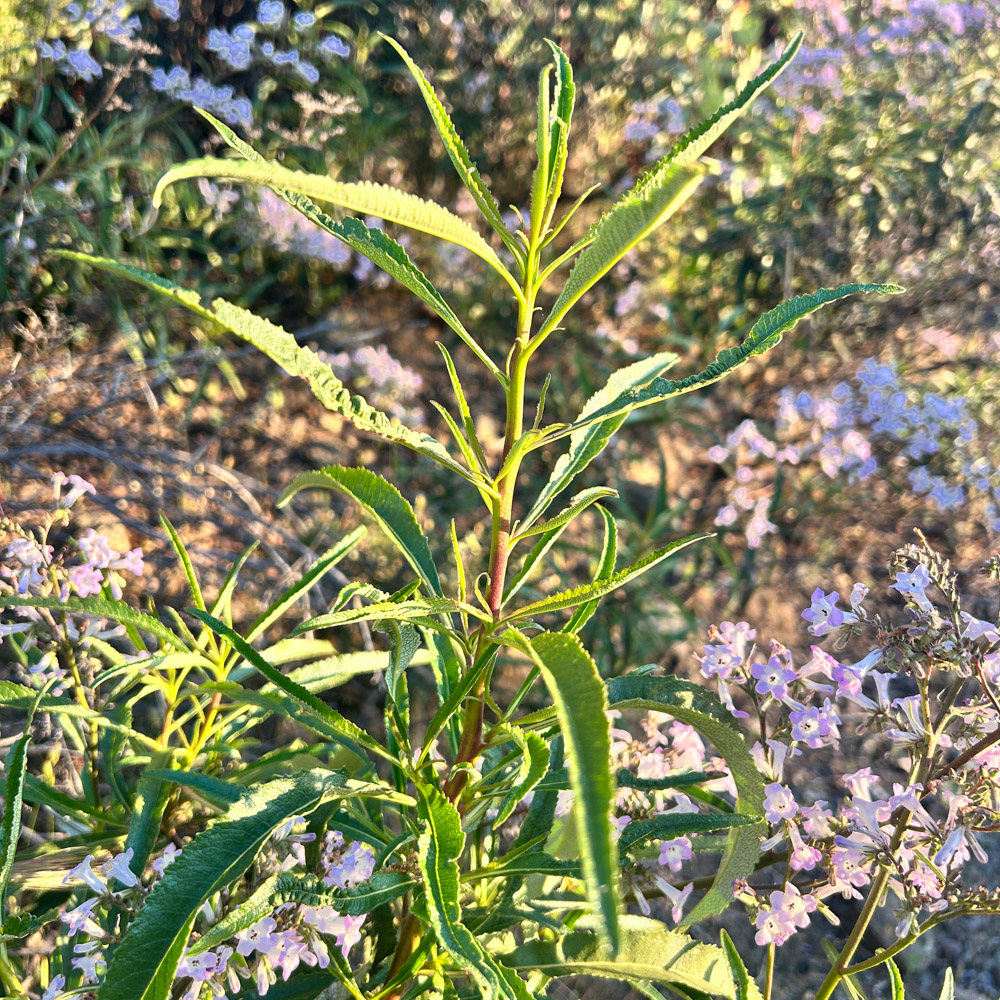
California Yerba Santa (Eriodictyon californicum)
Yerba Santa, the “holy herb” of chaparral and coastal mountains of California. It is a sticky‑leafed shrub with an incredible list of benefits and uses. Its shimmering leaves and trumpet like purple‑white blossoms make it stand out in the landscape, but its true significance lies in the Indigenous teachings that carried its medicinal uses through generations, in its remarkable adaptations to fire‑shaped ecosystems, and in its importance within the ecology of the Trinity watershed. This spotlight invites you to look deeper at a plant that has an incredible story to tell. Click to Read
Photo: California Yerba Santa on the Weaver Basin Trail System [TRRP/Kiana Abel]
Upcoming Meetings and Events
For a full list of events, click to view the TRRP Calendar.
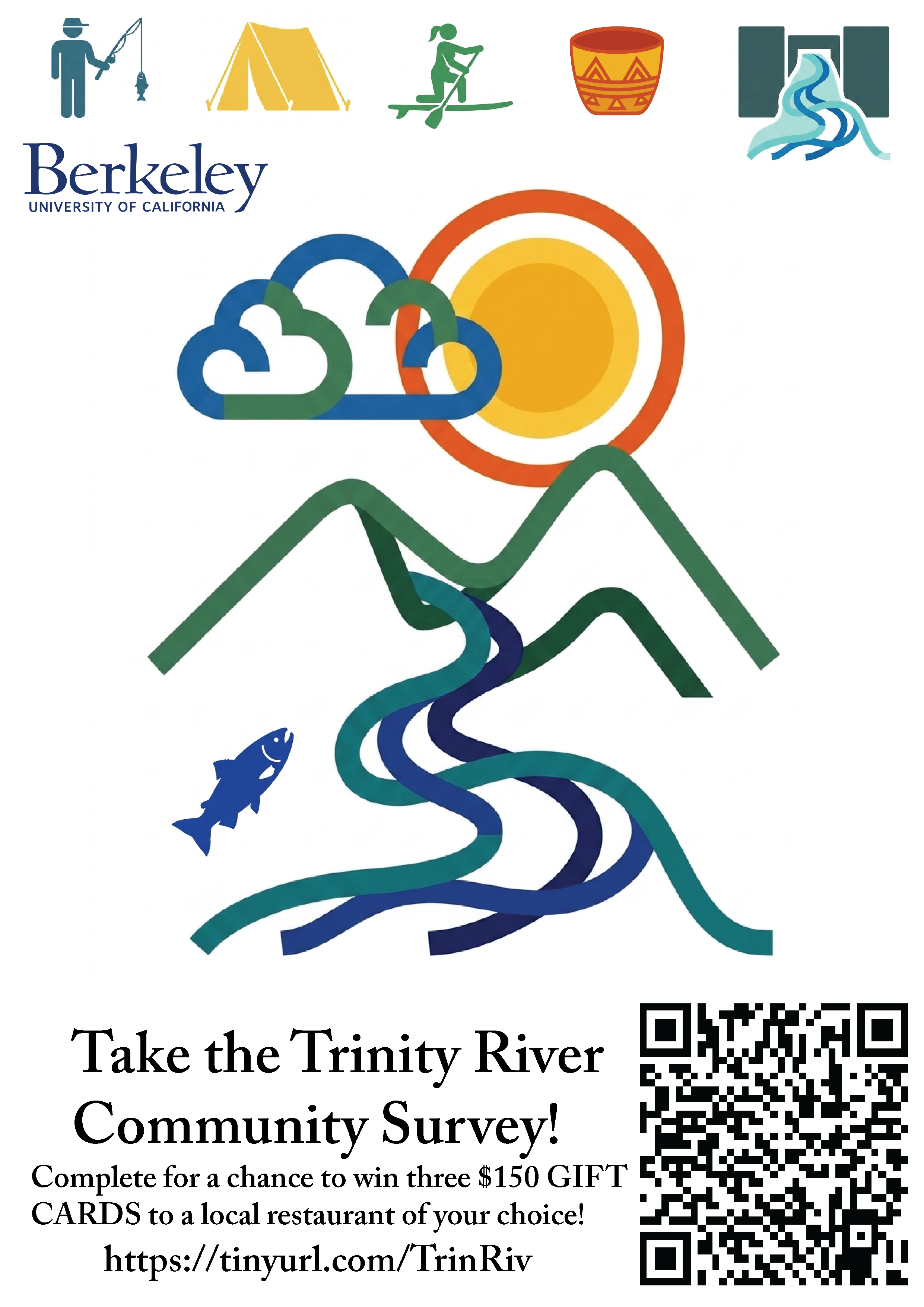
Trinity River Community Survey
UC Berkeley School of Environmental Science, Policy and Management
The Trinity River Community Survey is a watershed-wide study exploring local perspectives on the Trinity River. The survey aims to understand what Trinity County residents value about the river, how river restoration interacts with local communities, and what people hope for the future of the Trinity River and its water.
The goal of this project is to better understand the many different ways people relate to the Trinity River and to help democratize the conversation about the river’s future through one simple question: What does Trinity River restoration mean to you?
This research is being conducted and sponsored by the UC Berkeley School of Environmental Science, Policy and Management. The survey takes about 15 minutes to complete, and participants will be entered into a drawing to win one of three $150 gift certificates to local restaurants.
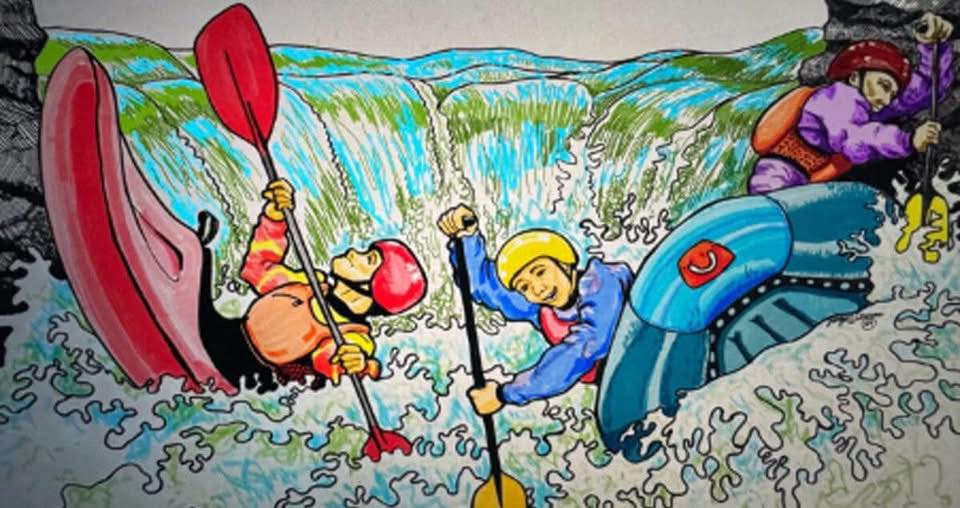
May 15 – 17 | Big Flat Jamboree
Bigfoot Rafting | Big Bar, Ca.
The Big Flat Jamboree is an annual whitewater celebration on the Trinity River honoring the life and legacy of Will Hoxie. Organized by the Will Hoxie Memorial Fund, this nonprofit event reflects Will’s deep love for outdoor recreation, environmental education, music, and community.
The Jamboree features non-competitive boating and whitewater races on the Pigeon Point Run, a classic 5.5-mile Class II/III stretch of the Trinity River, along with live music, raffles, and other community-centered activities.
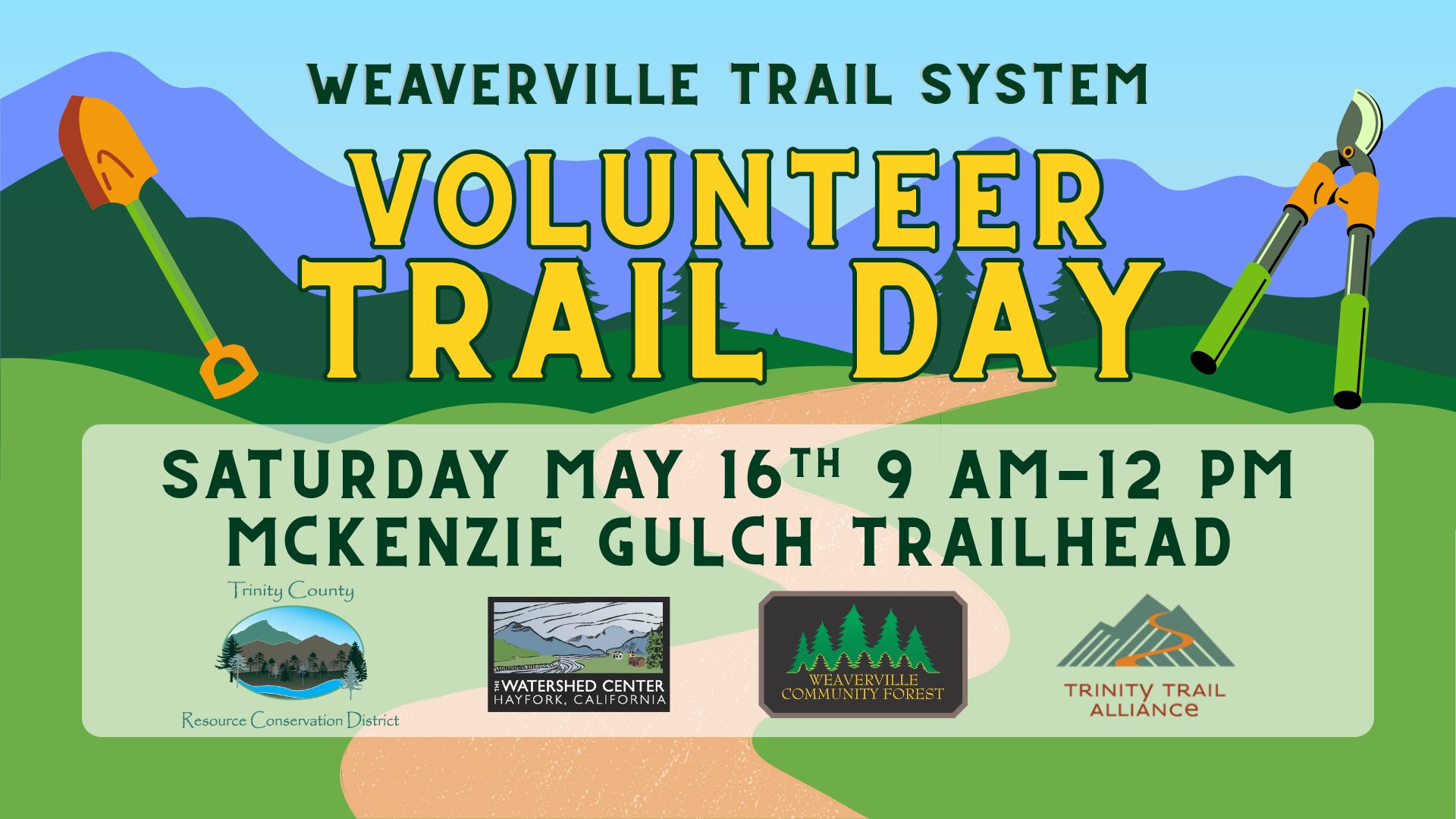
May 16, 9am-12pm | Volunteer Trail Day
McKenzie Gulch Trailhead, Weaverville, Ca.
Join Trinity Trail Alliance, The Watershed Research and Training Center, and Trinity County RCD for a fun filled morning of trail maintenance! Help brush the trails near Weaver Bally Road in preparation for the summer trail season and the LaGrange Classic Mountain Bike Race.
After working, everyone will be treated to lunch, refreshments, and gifts of our appreciation.
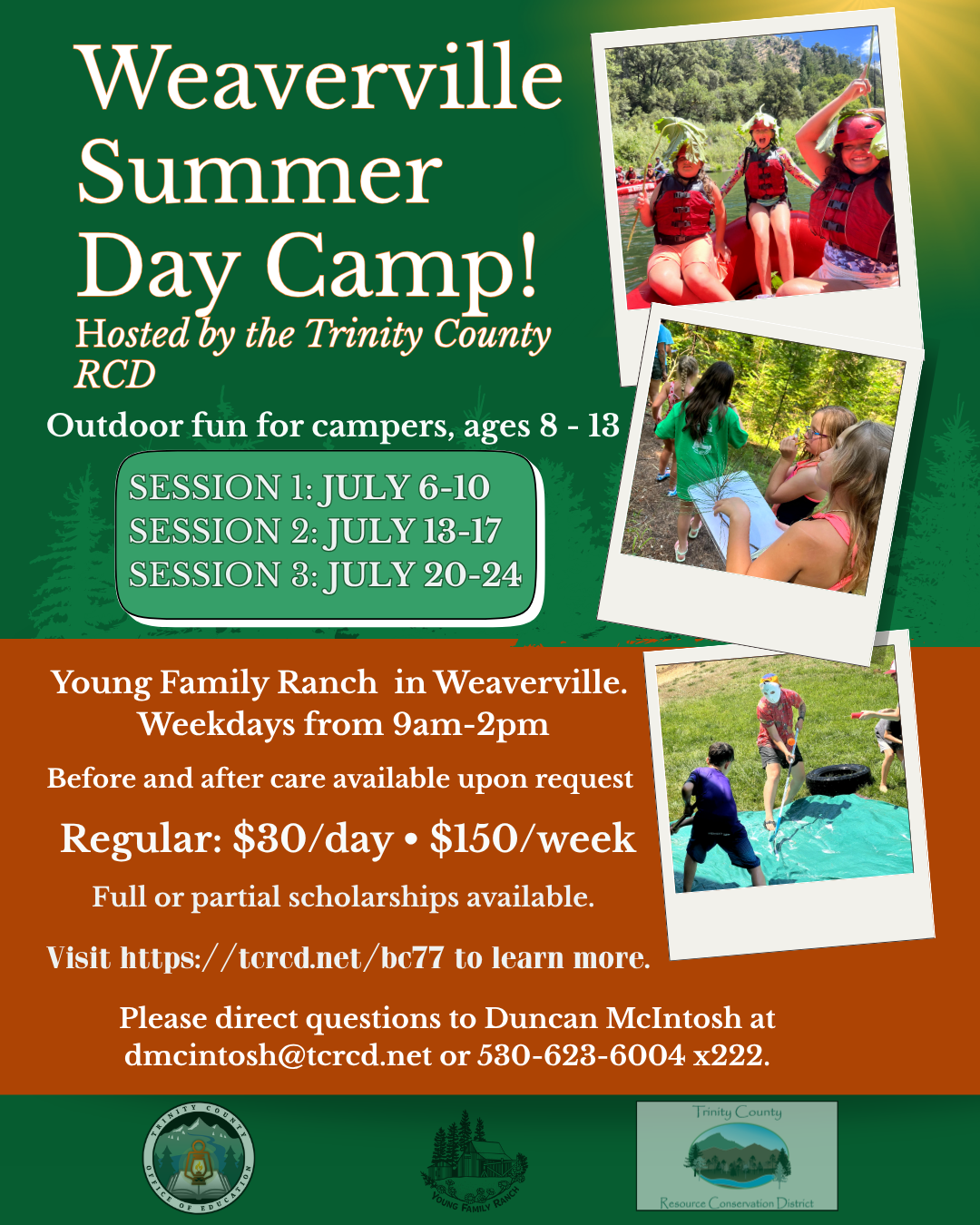
Weaverville Summer Day Camp, Registration Open!
Young Family Ranch – Weaverville
Join the Trinity County RCD for three weeks of outdoor fun and hands-on learning, July 6–24, at the historic Young Family Ranch in Weaverville. Designed for kids ages 8–13, campers will explore nature, connect with community partners (like us!), and dive into hands-on activities, including field trips to the Trinity River, Canyon Creek, North Fork, Stuart Fork, and the Trinity Alps.
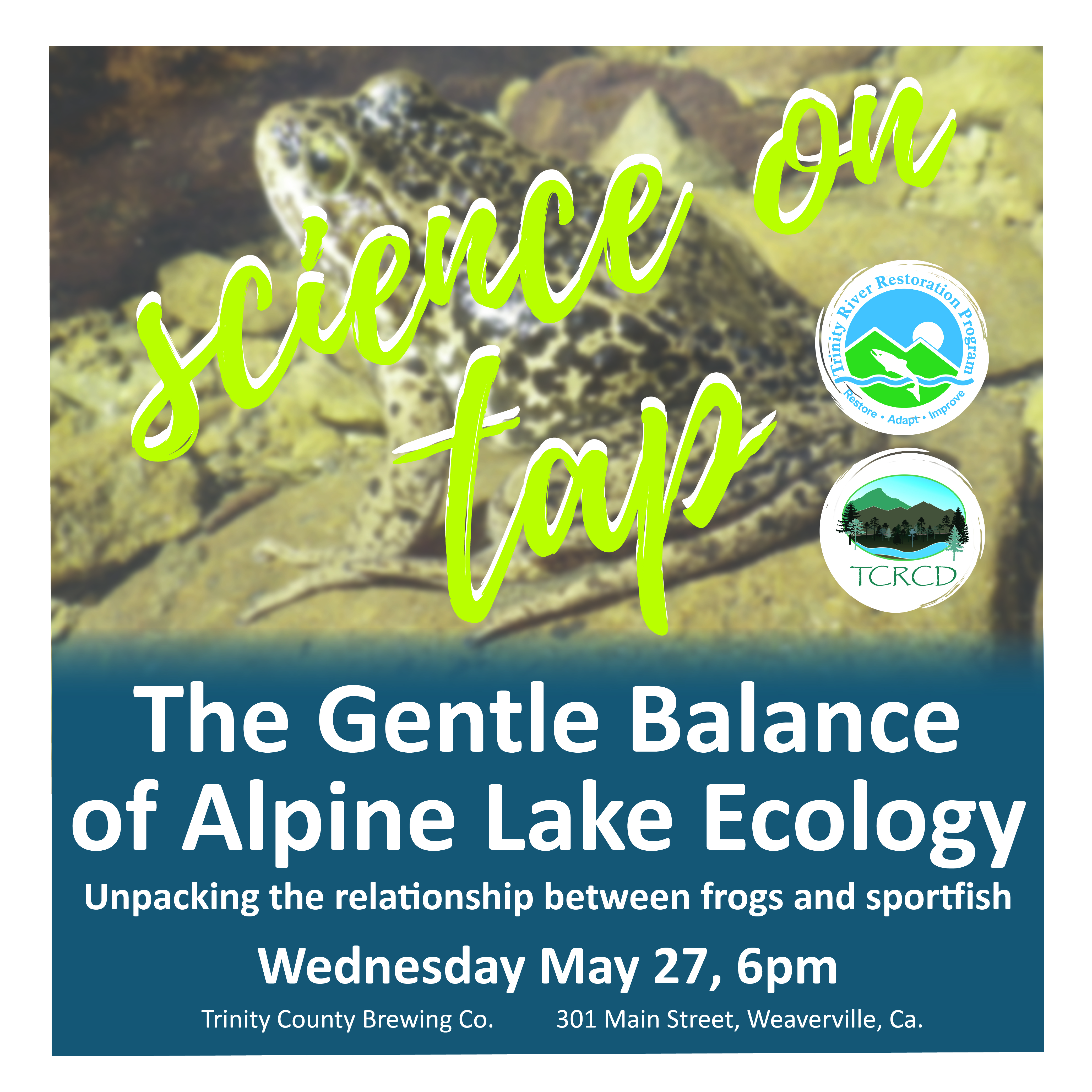
May 27, 6pm – Science on Tap
Trinity County Brewing Co. – Weaverville
Our last Science on Tap until September is going to be great! Join Justin Garwood, Environmental Scientist – California Department of Fish and Wildlife for a night that explores the Klamath Range’s natural fishless wetlands that support unique native fauna. But introduced trout fisheries have significantly altered these ecosystems. This talk highlights the effects of
trout stocking in the Trinity Alps over the past century, explains how recent surveys inform balanced management of fisheries and vulnerable amphibian populations, and review restoration efforts to benefit native wetland species.
June 17 & 18 – All Day Quarterly TMC Meeting
In Person: Eureka, Ca.
Meeting ID: 277 024 568 305 01
Passcode: BR7yK7Lj
Reading, Listening, Watching
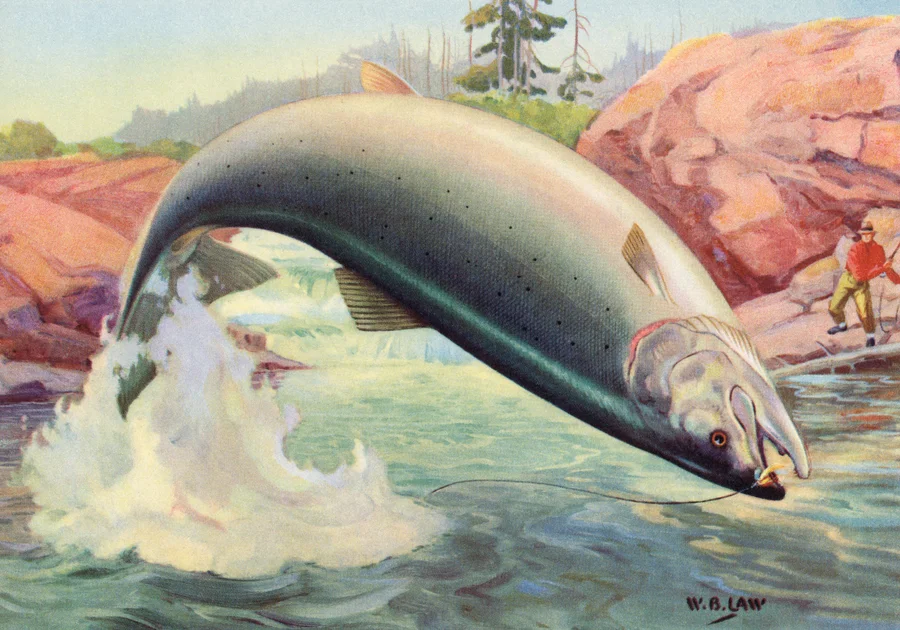
Here’s what happens when you give salmon cocaine
Scientific American | By Gennaro Tomma edited by Andrea Thompson | Apr. 20, 2026
It turns out that salmon exposed to cocaine through water pollution do a lot of swimming—which may not be a good thing. Continue Reading…
Image: Illustration of a fly fisherman battling a leaping Atlantic salmon (Salmo salar) on a pristine river, by W. Blackwood Law, 1950. GraphicaArtis/Getty Images
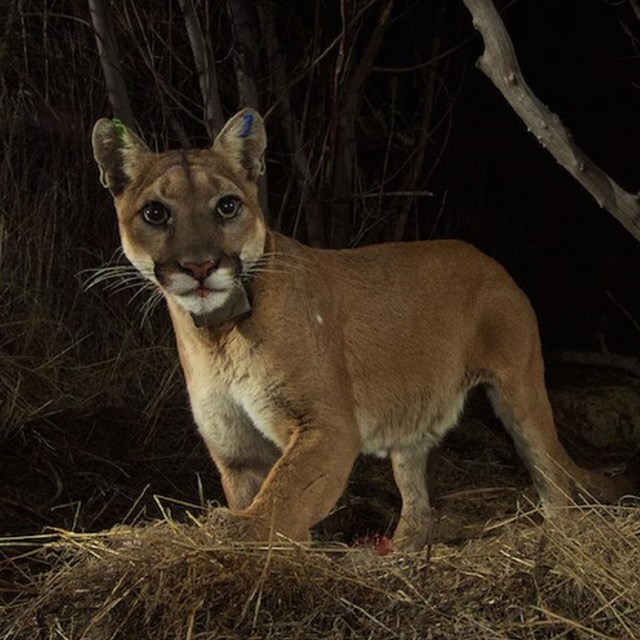
Wildlife and Outdoor Hazards in Parks
National Parks Service | Official Website – Wildlife and Outdoor Hazards
National parks provide the opportunity to experience some of the most extraordinary natural and cultural resources in the world! The U.S. National Parks Service put together some safety tips on how to be prepared and steps to take if you encounter any of these common hazards during a visit to a National Park.
Photo Credit: NPS
Contact Us
Call Us: 530-623-1800 Email Us: info@trrp.net