
Contents
- Current Conditions | Stay up to date on conditions in the basin
- Program Updates | Special TMC Meeting – Limiting Factors Analysis
- Upcoming Meetings and Events
- Reading, Listening & Watching
Current Conditions
Fall Monitoring | Annual Spawning and Carcass Surveys
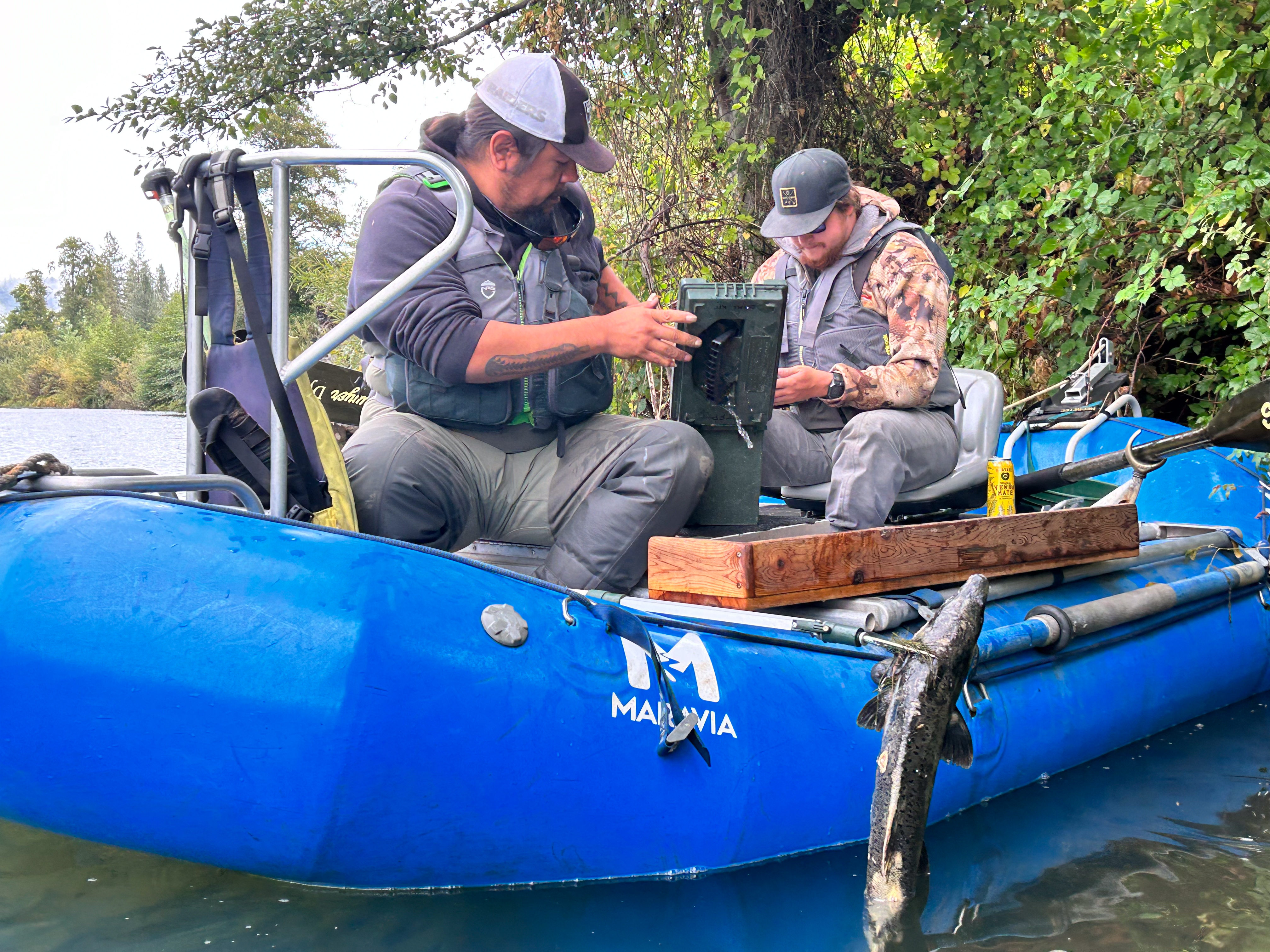
Spawning surveys in the Trinity River kicked off the week of Aug. 31. No redds or carcasses were observed in the first week. The first three redds of the season were observed Week 2 in Reach 1 (Lewiston Dam – Bucktail). Through four weeks of monitoring crews have observed 68 redds in Reaches 1-7, and two successfully spawned female Chinook Salmon carcasses.
Season Schedule
- Lewiston-North Fork (reaches 1-7)
- Surveyed weekly
- Big Flat-Cedar Flat (reaches 9-10) and Hawkins Bar-Weitchpec (reaches 12-14)
- Surveyed on alternating weeks
Fall Monitoring | Lower Trinity Weir
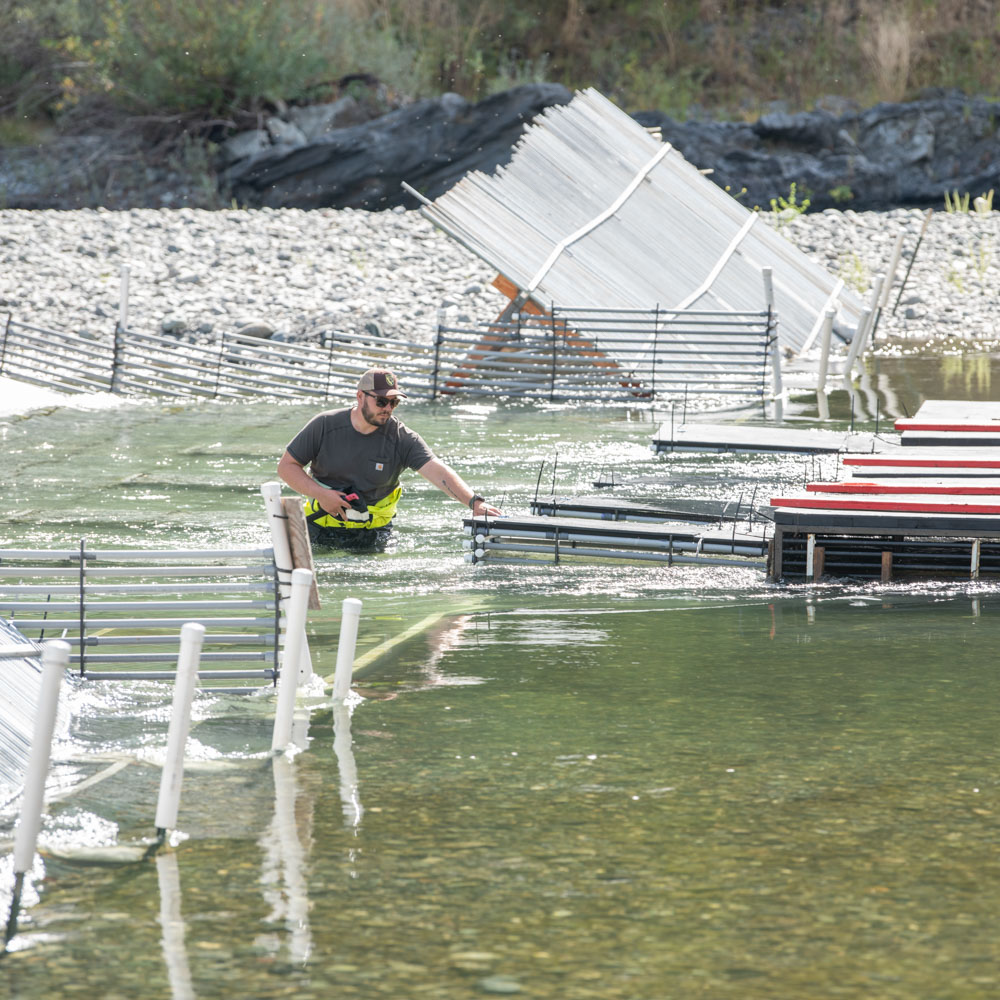
The lower Trinity River weir, located near the Tish Tang Campground was installed the first week of September and began monitoring for fall run Chinook, steelhead and coho to provide run-size estimates for adult salmonids and to monitor fish health by trapping, counting and performing fish health assessments.
Annual adult monitoring efforts have been consolidated into one location in the lower river and are implemented collaboratively by the California Department of Fish and Wildlife and the Hoopa Valley Tribe, funded by the Bureau of Reclamation. Trapping efforts will continue through the fall and wrap up, likely mid-November.
Please email info@trrp.net to receive seasonal trapping reports from the Upper and Lower Trinity Weir sites.
Fall Monitoring | Upper Trinity Weir
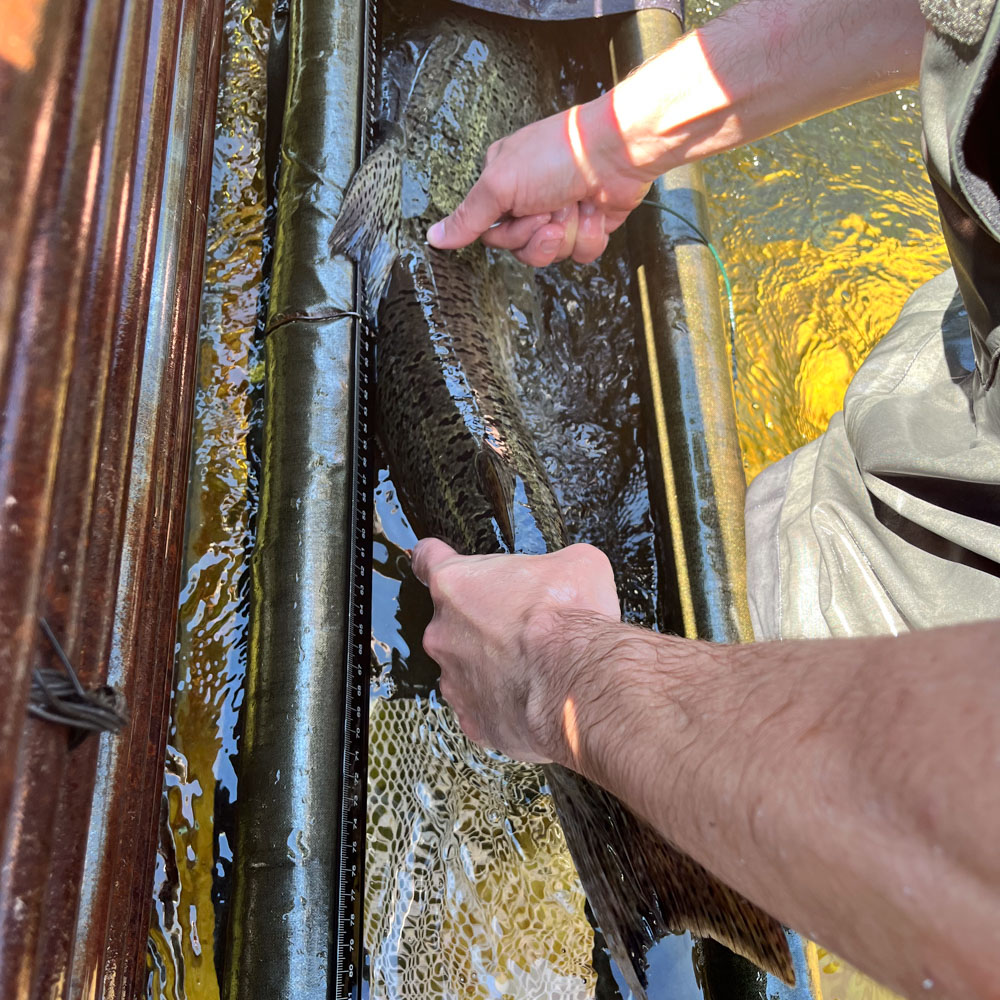
The Upper Trinity Weir, located just upriver of the Evan’s Bar boat launch began monitoring for adult salmonids on June 2. The upper weir monitors for annual runs of Chinook, steelhead and coho to provide run-size estimates for adult salmonids and to monitor fish health by trapping, counting and performing fish health assessments.
The weir is run collaboratively by the California Department of Fish and Wildlife and the Hoopa Valley and Yurok Tribes with funding from the Bureau of Reclamation. The installation of the weir and day to day operations are collaboratively handled by CDFW & Hoopa Valley Tribal Fisheries. The Yurok Tribal Fisheries Department collaboratively operates the the coho natural origin brood stock collection, which begins in October.
Please email info@trrp.net to receive seasonal trapping reports from the Upper and Lower Trinity Weir sites.
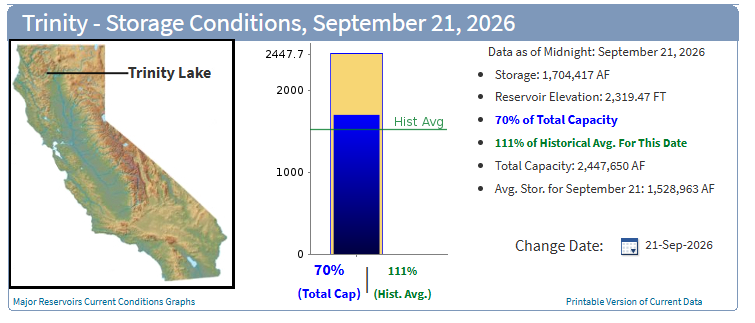
Trinity Reservoir | Conditions
Trinity Reservoir is at 70% capacity and 111% Historical average for this date. The 2027 Water Year begins on October 1.
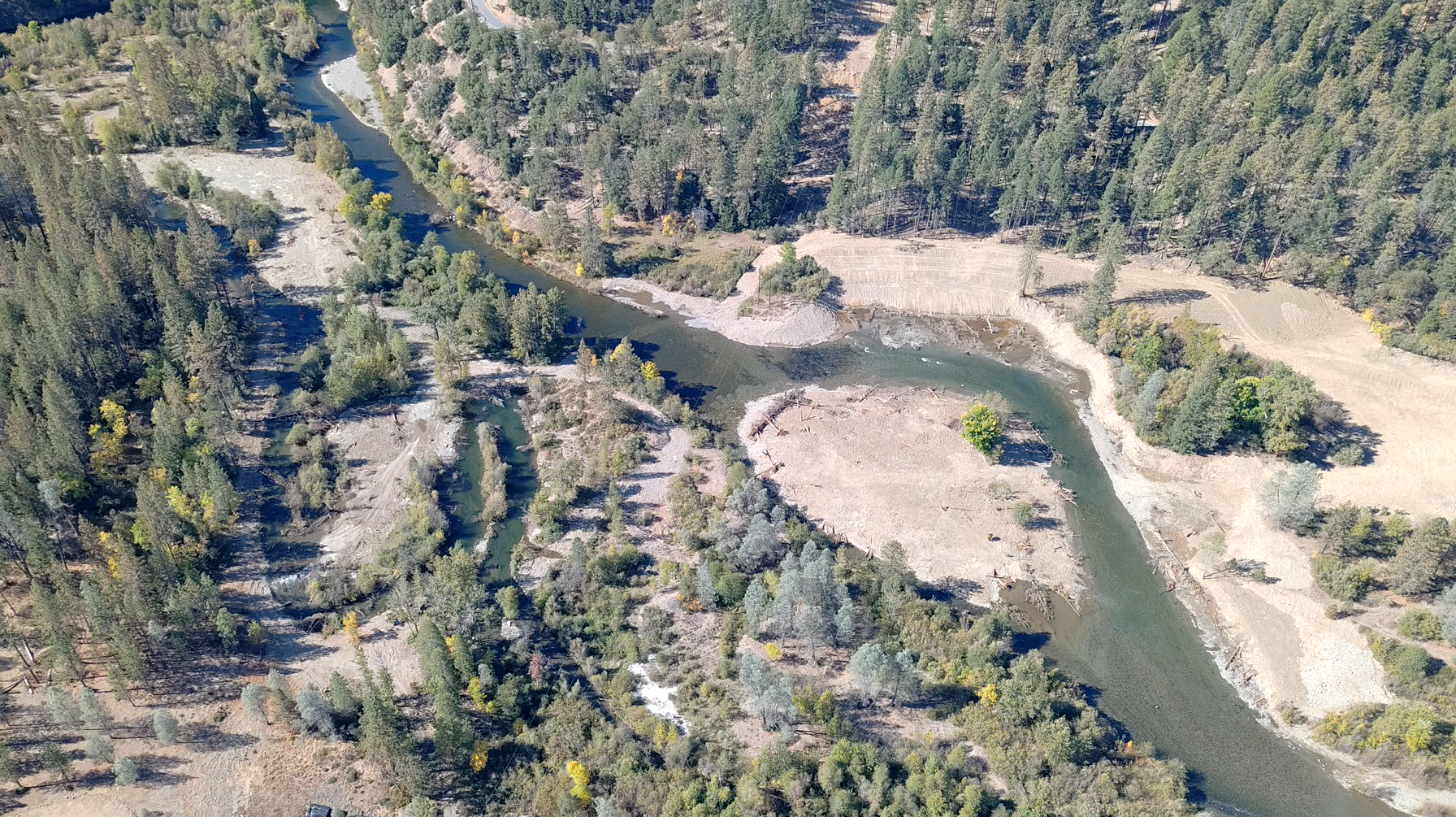
Channel Rehabilitation | Sawmill Rehabilitation Update
The Yurok Tribe Construction Corporation completed civil construction at the Sawmill Gravel Processing Site Channel Rehabilitation Project the week of September 21. Hoopa Valley Fisheries Department re-vegetation crews remain at work and will continue until complete. Project Page
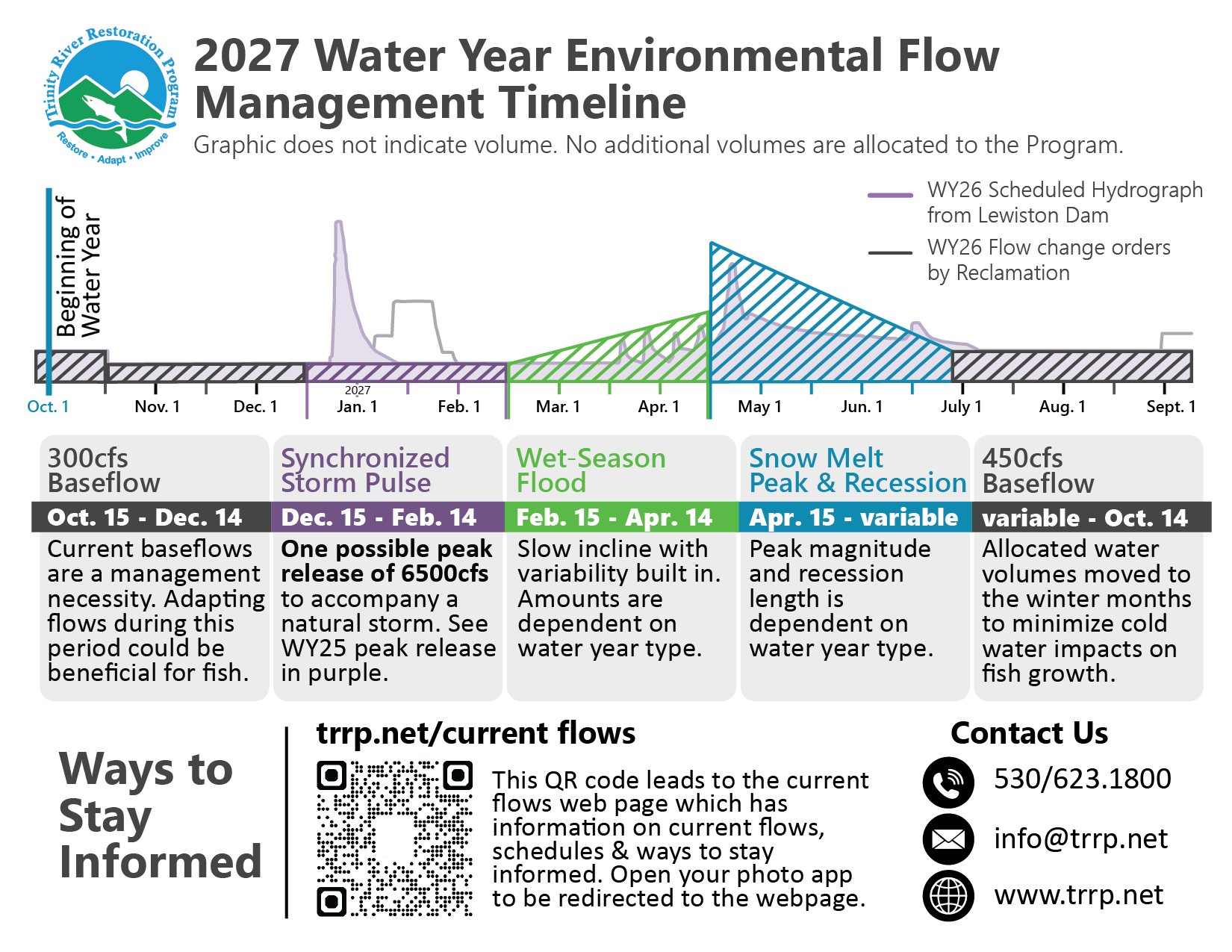
Flow Management | 2027 Water Year General Timeline
On Sept. 24, the Trinity Management Council concurred with the recommendation of the Flow Workgroup to implement environmental flows including the winter flow project ruleset for the 2027 Water Year. Summer baseflow (450 cfs) will continue until Oct. 15 when reservoir operations drop flows to winter baseflow (300 cfs). Current Flow Page
- Oct. 15 – Dec. 14 | 300 CFS Baseflow
- Dec. 15 – Feb. 14 | Synchronized Storm Pulse Period
- Feb. 15 – Apr. 14 | Wet-Season Flood Period
- Apr. 15 – Variable | Snow Melt Peak & Recession
- Variable – Oct. 14 | 450 CFS Baseflow
Program Update
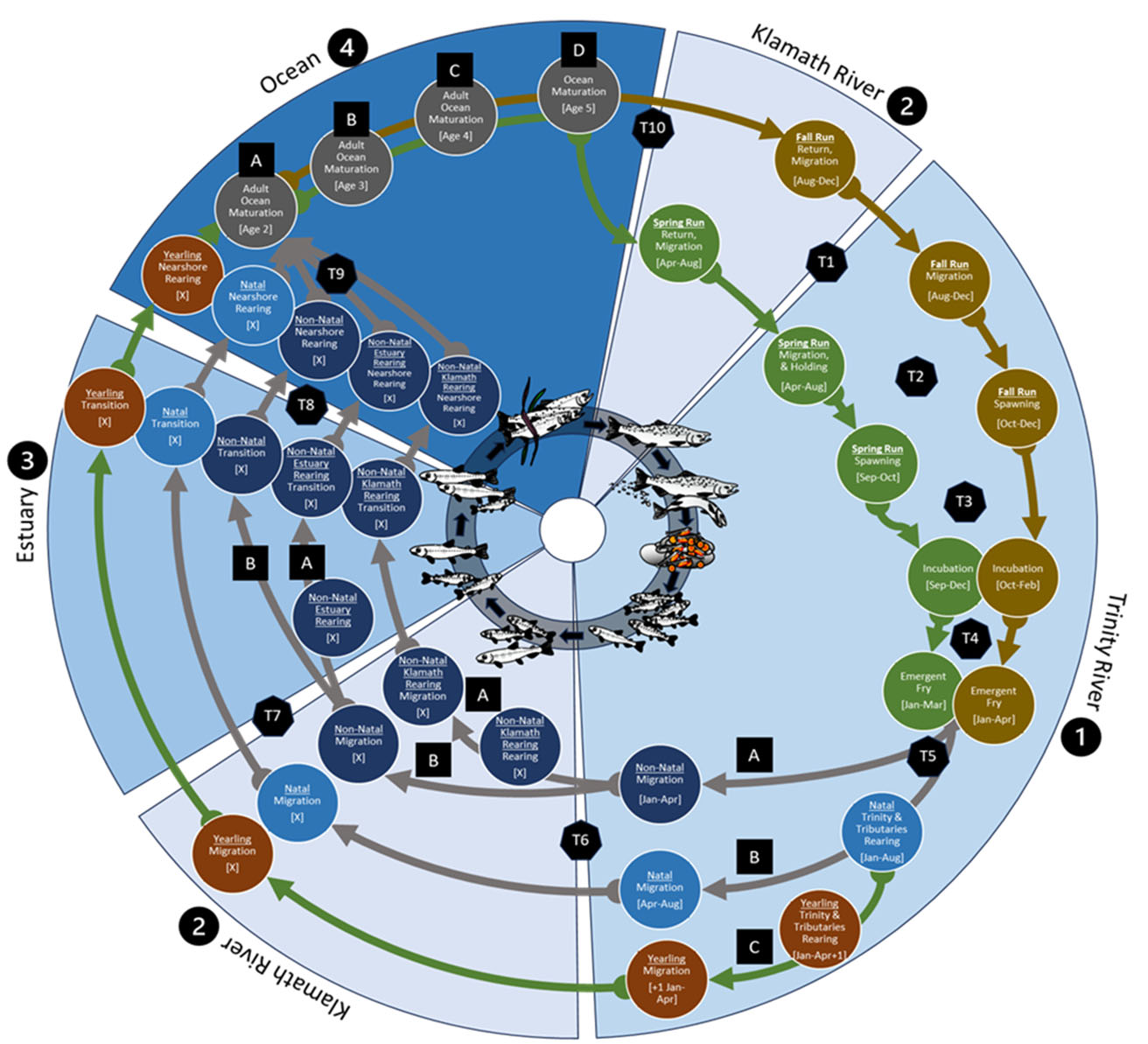
Special TMC Meeting | Limiting Factors Analysis
The Limiting Factors Analysis presented at the Special TMC Meeting in August offered critical insights into the challenges facing Chinook salmon recovery in the Trinity River system. By highlighting the most impactful limiting factors the analysis provides a roadmap for coordinated restoration and adaptive management. Continue Reading
Upcoming Meetings and Events
For a full list of events, click to view the TRRP Calendar.
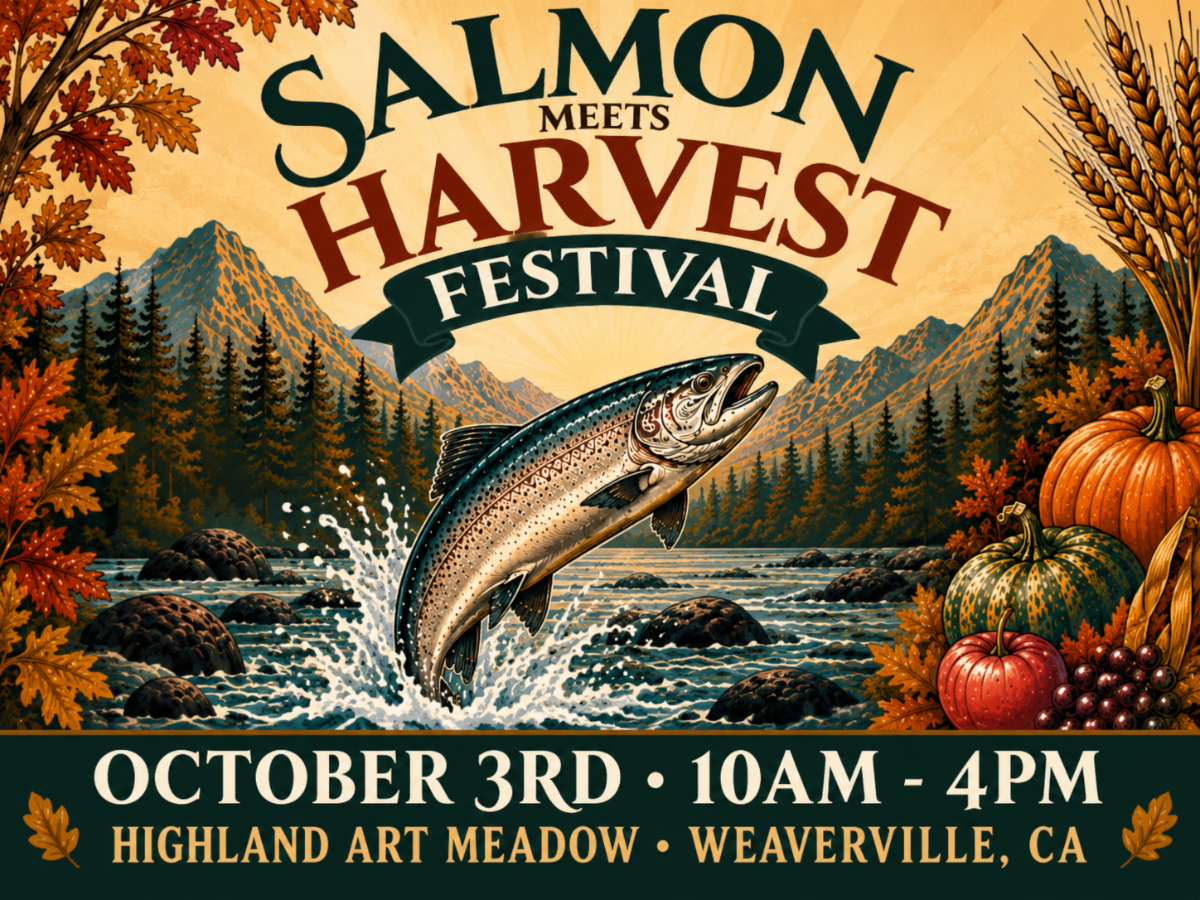
Oct. 3, 10 a.m. – 4 p.m. | Salmon Meets Harvest Festival
Highland Art Center Meadow – Weaverville, Ca.
Join us Saturday, Oct. 3, from 10:00 a.m. to 4:00 p.m. in Weaverville for the 28th Annual Trinity River Salmon Festival and the 23rd Annual Harvest Festival.
Celebrate the return of the fall run of salmon to the Trinity River at the Salmon Meets Harvest Festival! This annual tradition honors the salmon’s journey, the bounty of local gardens and fall harvests, and the cultural heritage of our community. Event Details
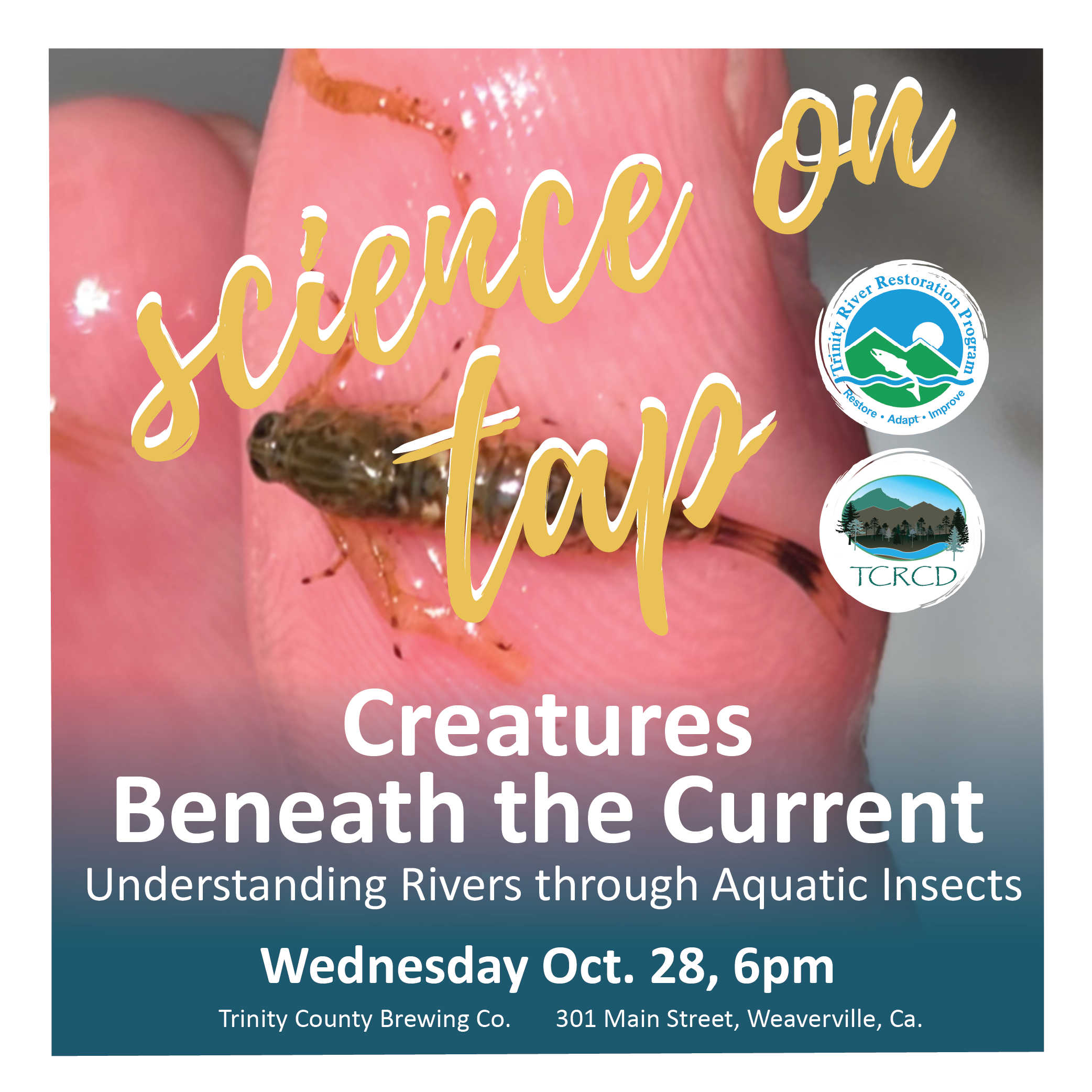
Oct. 28, 6 p.m.| Science on Tap
The Trinity River is constantly changing. From managed flow releases to natural disturbances, how do scientists understand how these changes influence river ecosystems? Together we’ll look under the river’s surface, where tiny aquatic insects live, feed, and support the food web that sustains young salmon. By studying these organisms, scientists can gain valuable insights into how changing river conditions shape aquatic communities and the food web that supports juvenile salmon. Event Details
Dec. 2 & 3, All Day | Quarterly TMC Meeting
In Person: Redding, Ca
Microsoft TeamsNeed help?
Meeting ID: 280 558 320 629 12
Passcode: Yc3An7EB
Reading, Listening, Watching
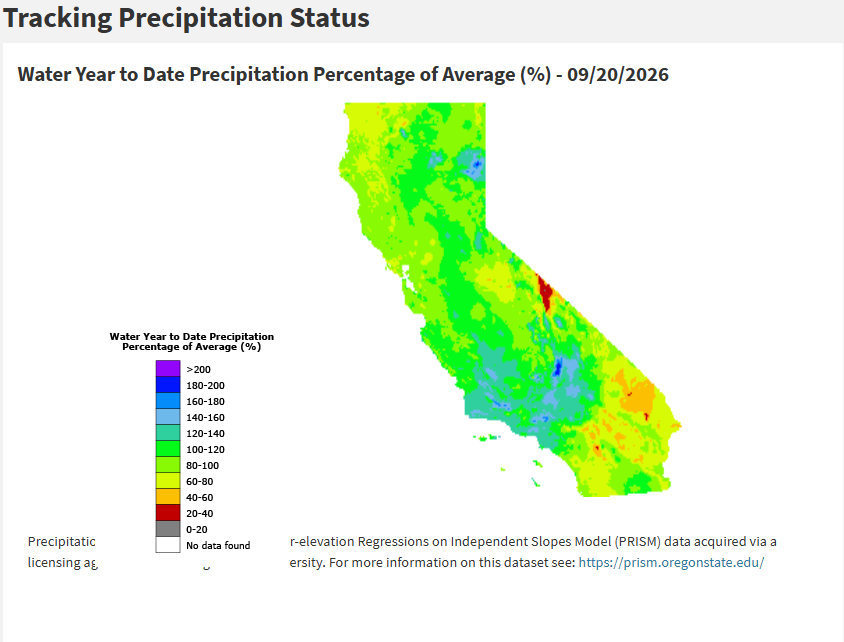
California Water Watch
Track California Water Conditions
This site offers the most current local and statewide water conditions down to your region and even your neighborhood. Continue Reading…
Screenshot from California Water Watch; Image: Water Year to Date Precipitation Percentage of Average (%) – 09/20/2026
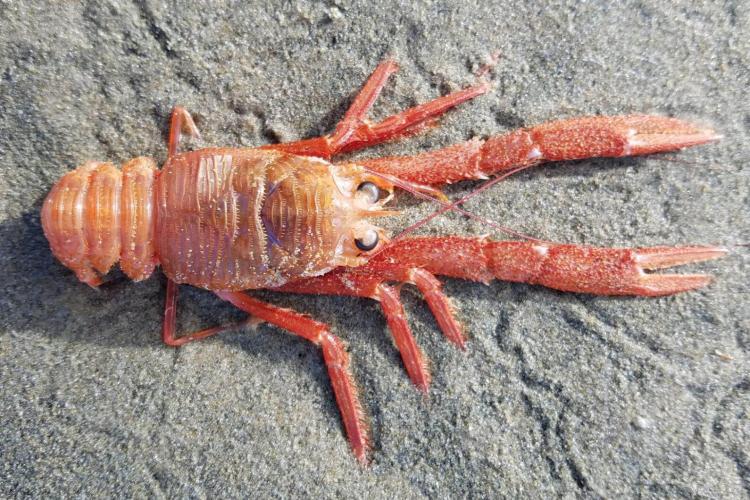
Ocean Indicators We’re Tracking for El Niño’s Arrival on the West Coast
NOAA Fisheries | West Coast | Sept. 3, 2026
Read about ocean monitoring and species changes tracked by NOAA Fisheries that will signal El Niño’s arrival. Continue Reading…
Red crab on an Oregon beach in 2017. Credit: NOAA Fisheries
Contact Us
Call Us: 530-623-1800 Email Us: info@trrp.net