Animal Spotlight: Foothill Yellow-Legged Frog (Rana boylii)

By: Kiana Abel. Edited by James Lee, Implementation Branch Chief (TRRP)
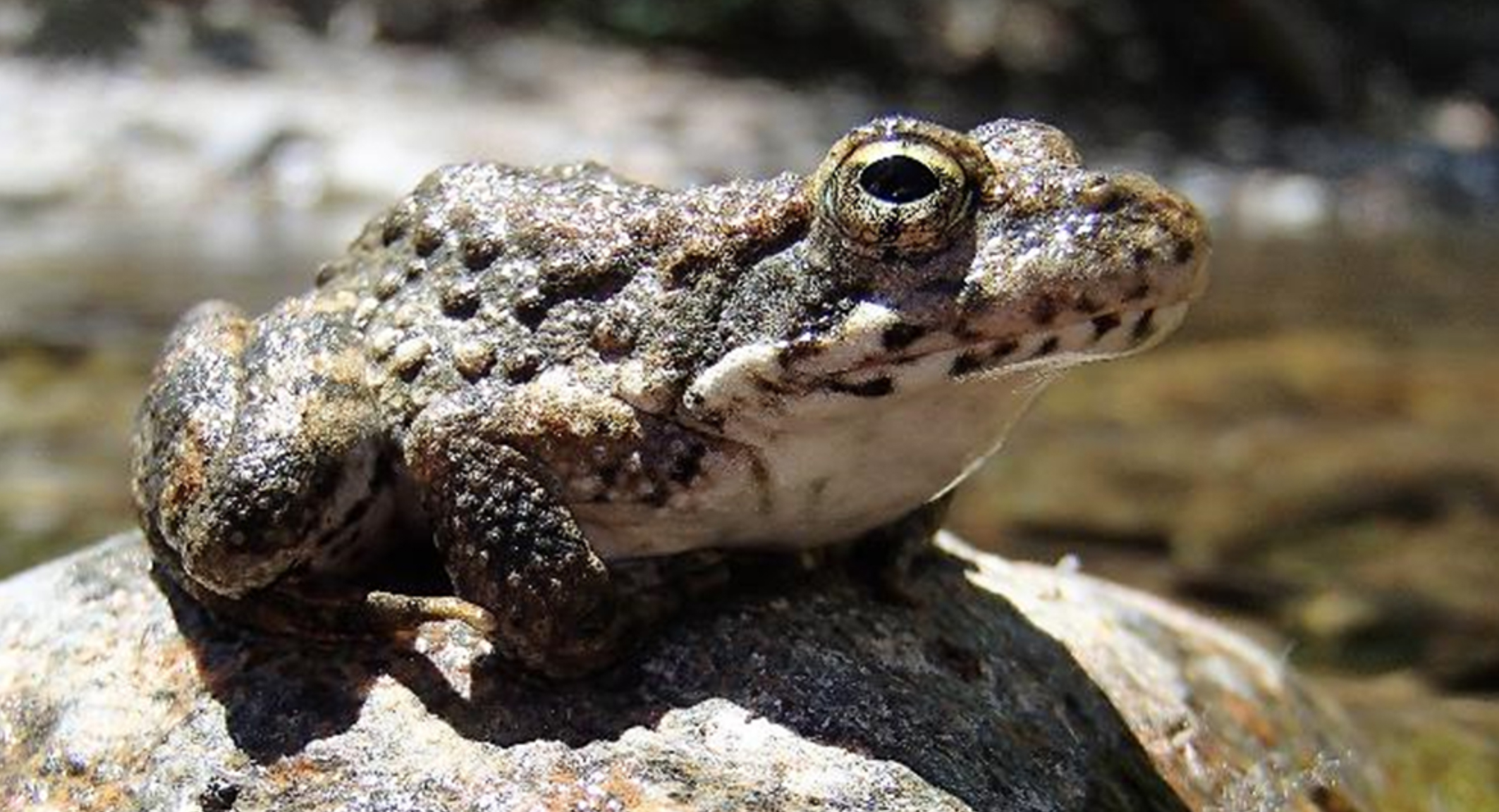
Foothill yellow-legged frog. [Applied River Sciences/Don Ashton]

Meet the foothill yellow-legged frog (Rana boylii), a local “river specialist” who has evolved to survive in the wild waters of Trinity County. While most frogs rely on still ponds and perform loud, midnight croaks, foothill yellow-legged frog has developed a suite of specialized adaptations that make them the perfect frog inhabitant for the fast-moving snow-melt dependent rivers and streams of the Trinity Watershed.

The foothill yellow-legged frog’s life cycle is tightly bound to flowing water. Interestingly, this species is noted as one of the only stream breeding species from the Ranid family. Because the entirety of this unique amphibian life cycle is tied to living in flowing waters their population health tells us exactly how matched (or how mismatched) our flow management strategies are working for them.
FAST FACTS

Scientific Name: Rana boylii

Size: 1.5 to 3.2 inches (Females are larger than males)

Key ID: Lemon-yellow under-legs, granular textured skin, no dark eye mask

Status: Robust in Trinity County but listed as Threatened/Endangered in four other California regions.

Life Span: Reach sexual maturity in 1-2 years and can live up to 10 years in the Trinity River Watershed.

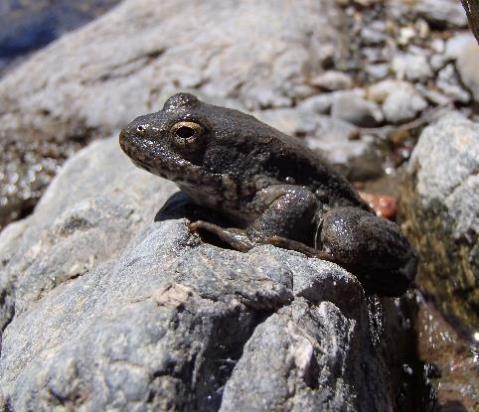
Photo: Foothill yellow-legged frog. [Applied River Sciences/Don Ashton]

Visual Identification: Built for the Riverbed

To the untrained eye, foothill yellow-legged frog may look just like a river rock. The species has evolved incredible camouflage, featuring mottled gray, olive, and brown skin with a rough, sand-like texture. In certain areas of the Trinity River where the geology consists of reddish-brown stone, these frogs even develop brick-red spotting to blend seamlessly with their surroundings.
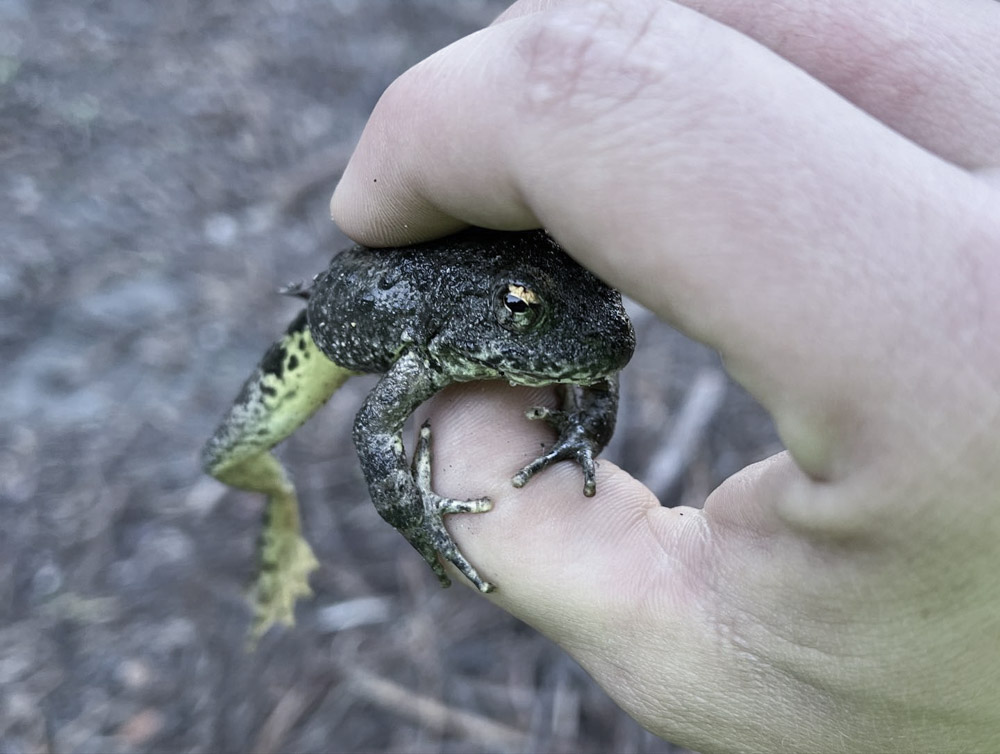
If you spot one, look for two distinct features:

The Yellow Flash: If they leap, you will catch a flash of bright lemon-yellow washed across the undersides of their hind legs and lower belly.

Streamlined Silhouette: Their “dorsolateral folds” (the parallel ridges running down a frog’s back) are flat and indistinct, giving them a hydrodynamic shape that reduces drag in fast currents.

Photo: Foothill yellow-legged frog represented with enhanced yellow coloration due to the photographer’s hazard gear. [Hoopa Valley Tribe/V. Yates]

Life History: A Cycle Tied to Rushing Water

Foothill yellow-legged frog maximum life span can exceed 10 years; however, in the wild few individuals are likely reach their potential maximum age. The foothill yellow-legged frog is typically diurnal (active during the day) but have been observed foraging and active at night.

Winter Months – Hibernation

Unlike some land-dwelling frogs that burrow into forest soil, foothill yellow-legged frog stays tied to their watery homes during their months of hibernation. To survive freezing temperatures and heavy winter storms, they seek shelter in two main areas: underwater crevices and near-shore crevices, root cavities, and other refugia, often moving up tributaries to avoid scouring winter flows in the main channel.

As water temperatures drop, the frog’s metabolism slows. During hibernation they do not need to eat but do need exposure to well-oxygenated waters. By choosing rocky crevices exposed to flowing water, they can absorb dissolved oxygen from moving river water directly through their skin.

Spring Snow Melt Recession (April or May) – Adults Emerge

Snowmelt slows & water temperatures hit ~11°C (52°F)

As soon as winter storms calm, and air temperatures start to rise, the snow melt recession begins. The spring-snowmelt recession is a period of flow management based on historic flow data dating back to 1911 on the Trinity River. Although, pre-dam, the magnitude and duration of the snow-melt recession was highly dependent on annual weather patterns, the existence of a snow-melt recession happened somewhat predictably. As air temperatures rise, rivers, like the Trinity, typically see a peak flow and then gradual recession or decline in river and stream flows. This predictable flow reduction plays a vital role in riverine ecosystems, acting as a key environmental cue for the reproductive timing of aquatic species like foothill yellow-legged frogs.

Once the waters warm to about 11°C (52°F) in April or May, the adults emerge from their rocky winter bunkers to immediately begin their underwater breeding season.  Known as the “Goldilocks window”, their breeding cycle relies on these precise temperature triggers.  Males will typically emerge before females in hopes of finding the perfect mating spot.

Lekking
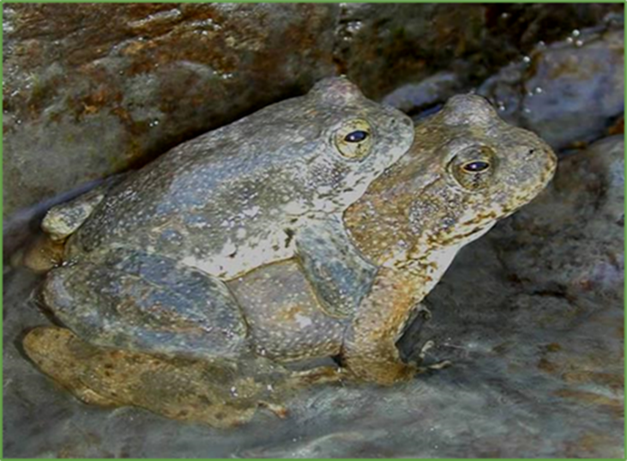
Breeding pair post lek. [Applied River Sciences/Don Ashton]

Males establish calling sites and gather to attract females based on their ability to choose the perfect site for breeding and egg deposit. This style of breeding is referred to the lek-style mating system. Males typically call underwater for their future mate, the female assesses the location and if satisfied they simultaneously deposit eggs and fertilize underwater.

Oviposition/Eggs
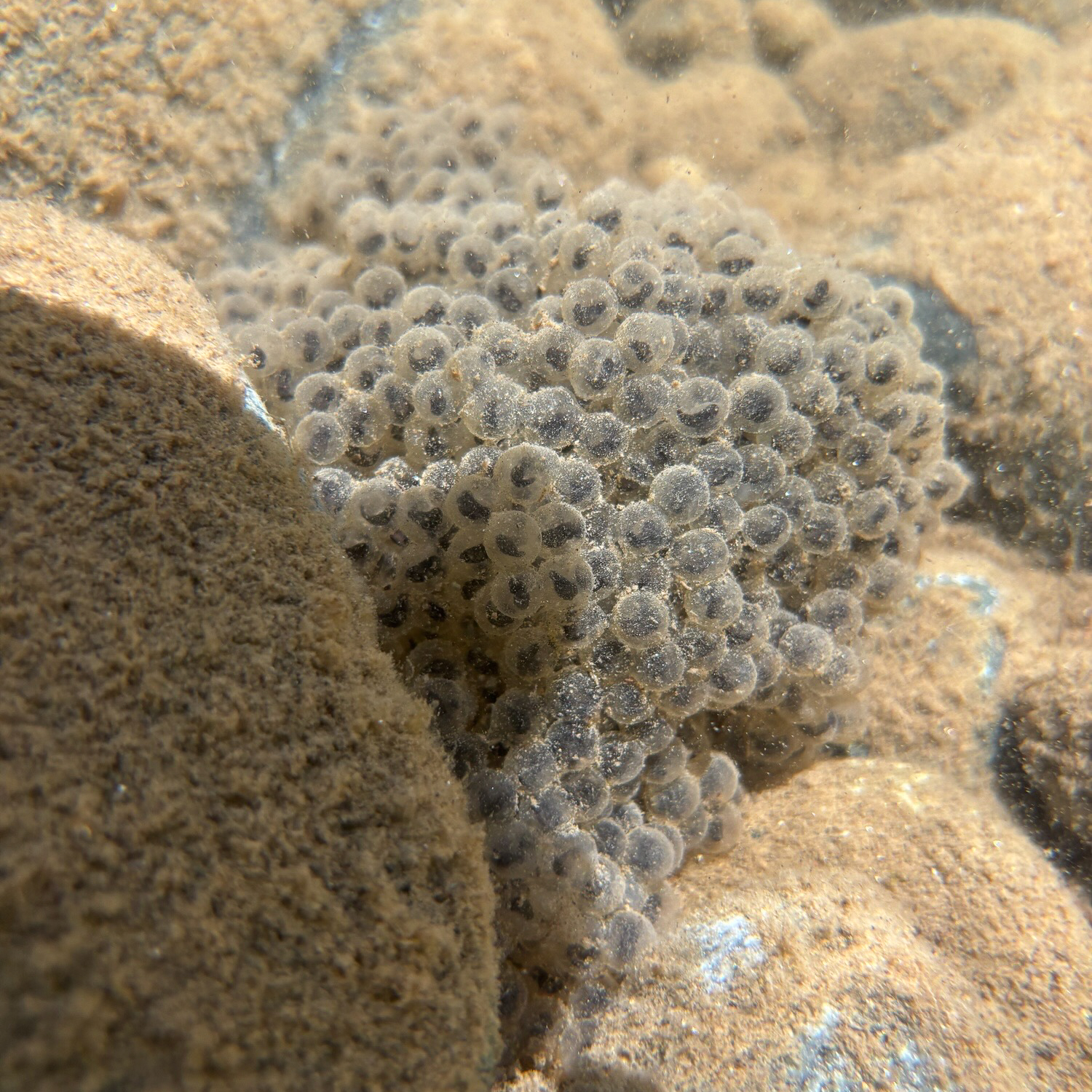
An egg mass spotted in May near the Lorenz Boat Launch in Douglas City by TRRP Scientists. [TRRP/Eric Peterson]

Successful breeding sites are typically sunny, shallow areas where a single, fist-sized egg mass containing up to 2,500 eggs are glued to the downstream side of a river cobble. The positioning creates a natural hydraulic shield, protecting the delicate, grape-like clusters from being swept away by the current.

Egg mass viability depends on clean, well oxygenated streams that are shallow, yet connected to a stable source of flow. If flows change in either direction precipitously the viability of the egg mass can be negatively affected.

Metamorphosis (3-4 Mo)

Once hatched, the small black tadpoles stick close to their egg sacs for a week or two as the develop strength, mobility and camouflage coloration. Then they are able to dispurse and use specialized mouthparts like tiny suction cups to cling to rocks and scrape off microscopic algae eating the periphyton, detritus, and other sessile aquatic food found within. While they eat and grow, they hide in the gaps between gravel to escape predators.
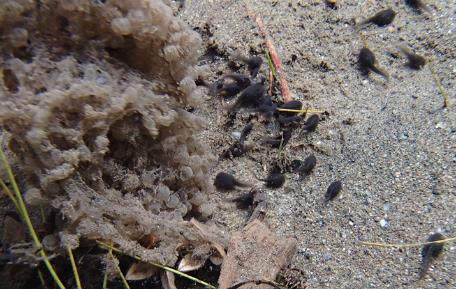
Newly hatched tadpoles stick close to the egg sac at first. [TRRP]
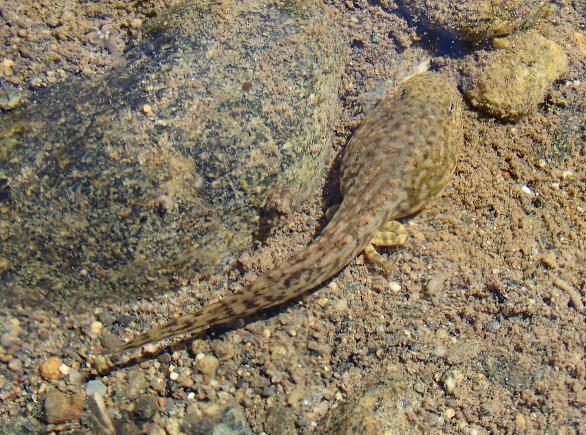
A late stage tadpole with well developed hindlimbs is camouflaged with the river bottom. [TRRP]

Subadult to Adult

Once metamorphosis is complete (typically occurring July to October), newly emerged juveniles frequently migrate from the hatching site to seek out cooler tributary streams. Adults, meanwhile, largely return to resident microhabitats on tributaries or shaded river sections after the spring breeding season.

Both juveniles and adults are active predators hunting a variety of aquatic and terrestrial invertebrates along the waters edge. They are typically observed hunting during the day for flies, moths, mosquitoes, hornets, aunts, beetles, grasshoppers, water striders and snails. During the hottest periods of the summer, they are known to decrease their daytime activity and seek cooler, shadier microhabitats.

How They Differ from Other Native Amphibians

Remember how we mentioned that the foothill yellow-legged frog possess unique adaptations to stream life that sets it apart from other native amphibians in the watershed, such as the western toad or the high-elevation cascades frog? Here are a few:

  • Submerged Singing: Sound waves travel poorly through the air next to a roaring river, but they travel beautifully through water. Because air-transmitted calls would be drowned out by crashing rapids, male foothill yellow-legged frog sing most effectively while submerged, making low-pitched rasping sounds underwater to defend territories and attract mates.
  • The Bottom-Dive: While a tree frog will jump into thick brush when startled, the Foothill yellow-legged frog dives straight into the fastest moving water, wedging its flat body under heavy river stones to anchor itself safely away from predators.

Frogs and Toads of the Trinity River Watershed Comparison

SpeciesPrimary HabitatSecret Vocal TricksPredator Defense
Foothill yellow-legged frog (Rana boylii)Lotic systems; stays near shallow, sunny, gravel/rocky flowing streams and main river channels.Underwater low grunts; tiny vocal sacs produce low, faint, raspy clicking notes designed to carry underwater beneath loud river currents.
[Listen Here]
Pebble camouflage; blends flawlessly into river cobblestones and leaps directly into fast currents to hide under rocks.
Sierran chorus / tree frog (Pseudacris sierra)Terrestrial generalist; found in wet meadows, grasslands, and woodlands, moving to ephemeral pools to breed.The Hollywood “Ribbit”; possesses an incredibly large throat pouch that amplifies a loud, two-note advertisement call.
[Listen here]
Rapid escape & color shifting; changes its dorsal color between green and brown to match substrate microhabitats before making massive, erratic leaps.
Cascades frog (Rana cascadae)Lentic montane habitats; high-elevation wet mountain meadows, snowmelt pools, bogs, and quiet lake margins.Faint clucking; issues very quiet, low-pitched grating clucks or chuckles that can rarely be heard from a distance.
[Listen Here]
Mud burrowing; quickly dives into deep sub-aquatic silt, heavy vegetation, or thick woody debris to hide.
Western toad (Anaxyrus boreas)Terrestrial burrower; lives in upland fields, damp forests, and brush, utilizing shallow pond margins only for communal breeding.Vocal-sacless chirping; lacks a formal vocal sac entirely. Emits a high-pitched, bird-like “release chirp” when accidentally grabbed by a rival male.
[Listen Here]
Bufotoxin secretion; swells up its body to appear too large to swallow while exuding a foul, toxic milky cardiotoxin from parotoid glands.
Non-native
American bullfrog
(Lithobates catesbeianus)
This invasive frog prefers slow-moving sloughs, warm reservoirs, deep ponds, and highly modified backwaters.Resonant “Jug-o-rum”; bellows a deep, bass-heavy foghorn call that can travel over half a mile across open wetlands.
[Listen Here]
Piercing distress screams; opens its mouth wide to emit an unexpected, high-frequency “baby-like” scream to startle predators into dropping it.
[Listen Here]

A Tale of Two Rivers: Mainstem vs. South Fork

Because this species is so specialized, human modifications to rivers have caused severe disruptions. Today, scientists observe ecological disparity within our own watershed.

On the free-flowing South Fork of the Trinity River, natural seasonal flow patterns remain intact. Here, frog populations are dense and successful. However, on the Mainstem Trinity River, dam operations at Lewiston and Trinity Dams alter natural water cycles, causing a ten-fold reduction in egg mass densities.
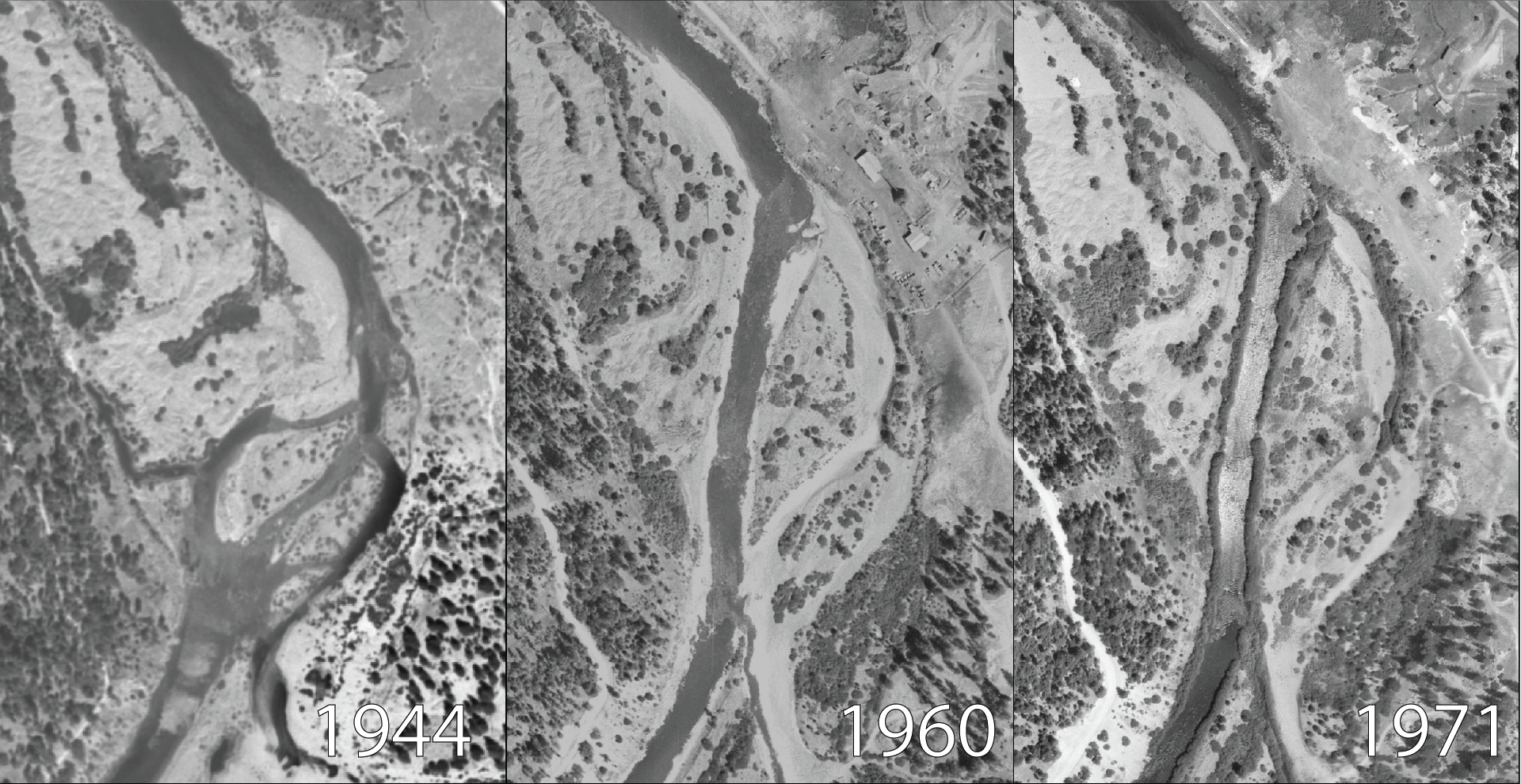
Aerial imagery of the Sawmill Rehabilitation site showing changes in channel morphology pre (1944) and post-dam (1960 and 1971). The lack of variable flows during the post-dam period provided stability for riparian vegetation encroachment. The growth of willows along the rivers edge reduced its use of riparian areas that are vitally important habitat for amphibian and other aquatic animals like juvenile salmonids.

Dams threaten frog survival in three main ways:

  1. Channel Morphology: Steady annual flow releases give riparian vegetation a leg-up on other riparian inhabitants leading to riparian encroachment and a loss of low-flow habitat for frog species.
  2. Stranding (Desiccation): Rapid drops in dam releases can leave egg masses high and dry on exposed gravel bars, causing them to dehydrate and die within hours.
  3. Thermal Stunting: Water released from the bottom of deep reservoirs is often unnaturally cold. This low temperature stunts tadpole growth and narrows the crucial seasonal window they need to successfully complete metamorphosis.

Local Status and Conservation Actions
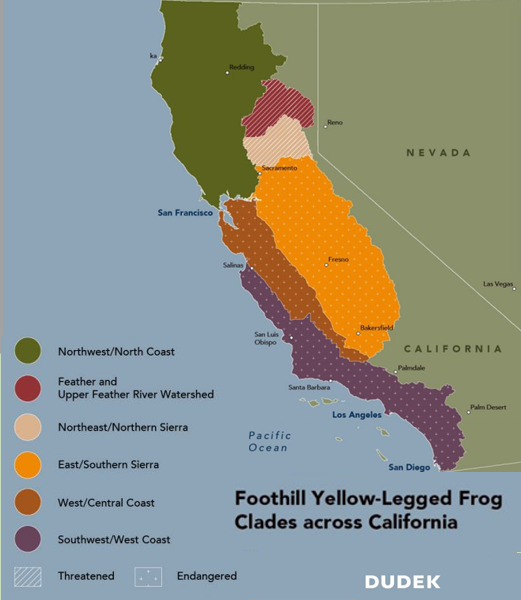
Map Credit:  FYLF clades by Dudek (based on FWS map).

In 2023, the federal government officially listed four of California’s five distinct population segments of this frog as threatened or endangered. Our local Northwest/North Coast population segment remains more robust than their southern counterparts and are not yet listed as threatened or endangered.

However, local stressors are mounting. Illicit cannabis cultivation runoff, off-highway vehicles trampling river bars, intense wildfires increasing sedimentation, invasive predatory bullfrogs, reduced snow-pack and, unnatural summer flow patterns all threaten Trinity County’s populations.
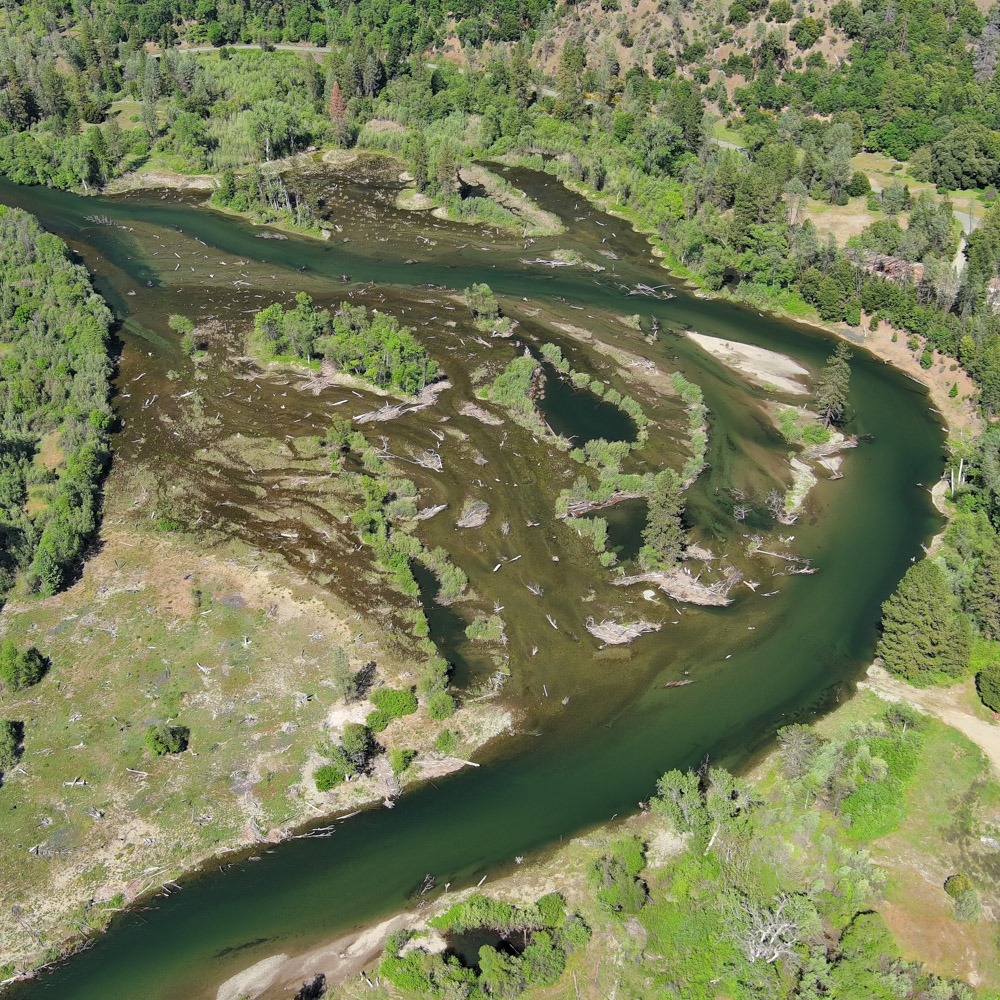
aerial image of the floodplain area at Oregon Gulch.

To combat these threats, the Program aims to assist in habitat enhancement for these important riparian specialists in two ways. First, is within channel rehabilitation projects, our technical working group actively designs channel restoration projects that expand riparian areas where the species can thrive. In the past 3 years, the Program has completed two channel rehabilitation projects [Oregon Gulch and Upper Conner Creek Rehabilitation Projects] each with the intent of lowering floodplain surfaces that can provide habitat for juvenile salmonids along with special species like the foothill yellow-legged frog.

Photo: Aerial image of the Oregon Gulch Restoration area in May 2026. [Yurok Tribe/Aaron Martin]

Additionally, on an annual basis, the Program’s Flow Workgroup models the foothill yellow-legged frog response to proposed hydrograph designs and work to adjust dam release schedules that are beneficial for the frog’s life cycle. Foothill yellow-legged frog Assessment Model (FYFAM) is an individual-based ecological simulation tool developed at Cal Poly Humboldt to evaluate how flow and temperature regimes affect the breeding success of the foothill yellow-legged frog. TRRP scientists use this model because it is hypothesized that what is beneficial for Trinity River frog species is also beneficial for juvenile salmonids.
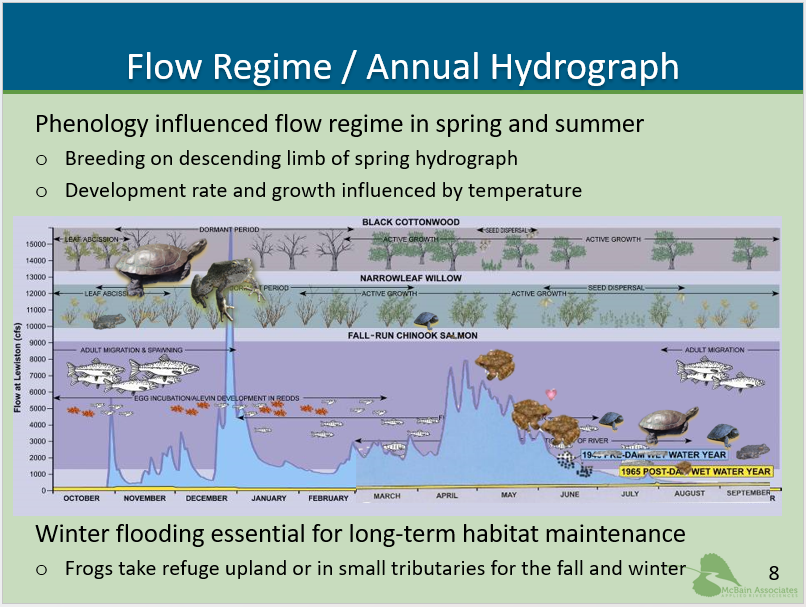
 Slide from Science Symposium presentation, “Frogs and Turtles Informing Flow Management and River Restoration”. [Applied River Sciences/Don Ashton]

Winter floods are also essential for long-term habitat maintenance for aquatic species. While floods build habitat for adult salmonids, they also scour and build important habitat for Trinity River frogs and turtles.  From 2004-2023, ROD releases were first directly influencing beneficial temperature regimes for both juvenile salmon and foothill yellow-legged frogs from April through June. And second, not releasing scouring floods during the wintertime. With the Program’s implementation of Winter Variable Flows, the river has recovered a portion of its ability to build habitat in the winter as well as improving the temperature regime for cold-blooded species by reallocating water releases from the spring hydrograph into the wintertime. These changes in flow management hope to better match the needs of aquatic species, like frogs, turtles and salmon in the Trinity River.

Be a Citizen Scientist    

You can help observe foothill yellow-legged frogs! During May and June, if you spot their distinct, grape-like egg masses along river bars, do not touch them. Instead, take a photo and note the date and your GPS coordinates. Submit your data to the Trinity River Restoration Program (TRRP) via email (info@trrp.net) to help biologists map and monitor breeding success.

References & Further Reading

Don Ashton, Senior Aquatic Herpetologist/Ecologist – McBain Associates/Applied River Sciences presents, “Frogs and Turtles informing flow management and river restoration.” Available: https://www.youtube.com/watch?v=pWzGrUOUK_0&t=649s

Artificial intelligence was used to formulate information for this article. Some nuances or inaccuracies may have been missed in the editing process. We are happy to consider changes or updates to the article; please send those suggestions to info@trrp.net.

Kiana Abel, Public Affairs Specialist

As Public Affairs Specialist for the Trinity River Restoration Program, Kiana manages external communications, media relations, and stakeholder outreach. She acts as a liaison between program initiatives and the public, transforming technical findings into compelling narratives that promote understanding of restoration initiatives on the Trinity River. Kiana holds a Batchelor’s in Art History, has spent most of her career in marketing and is focused at the TRRP on bridging the gap between public awareness and resource restoration and management. 
Animal Spotlight: Common Merganser

By: Kiana Abel, Public Affairs Specialist – Trinity River Restoration Program

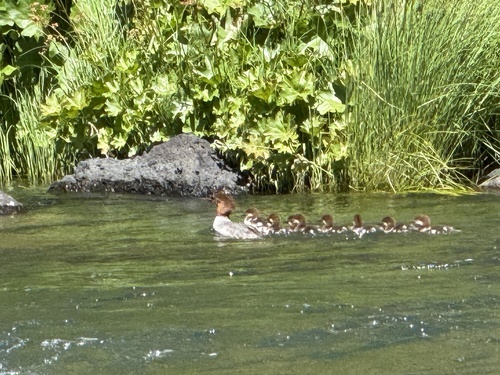
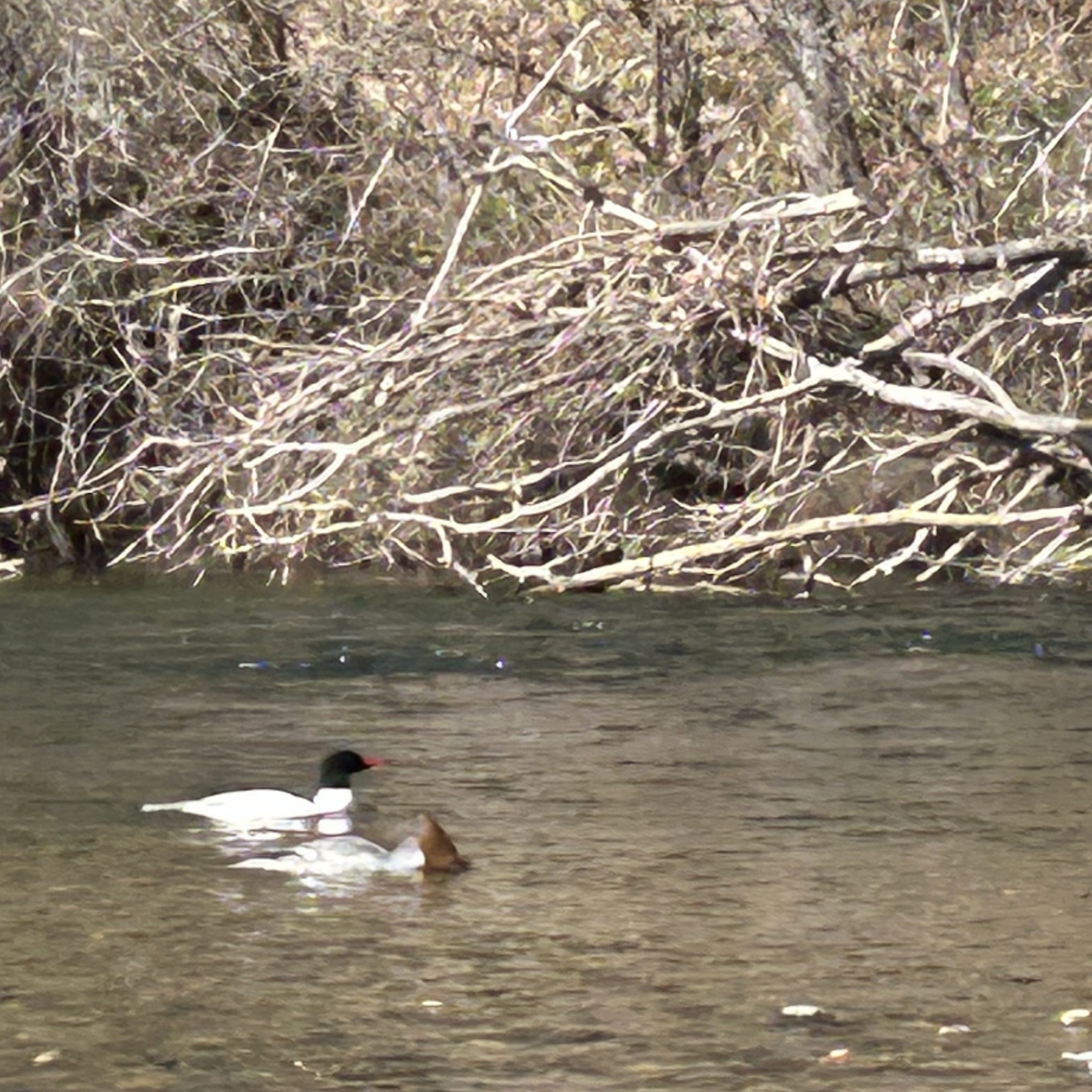
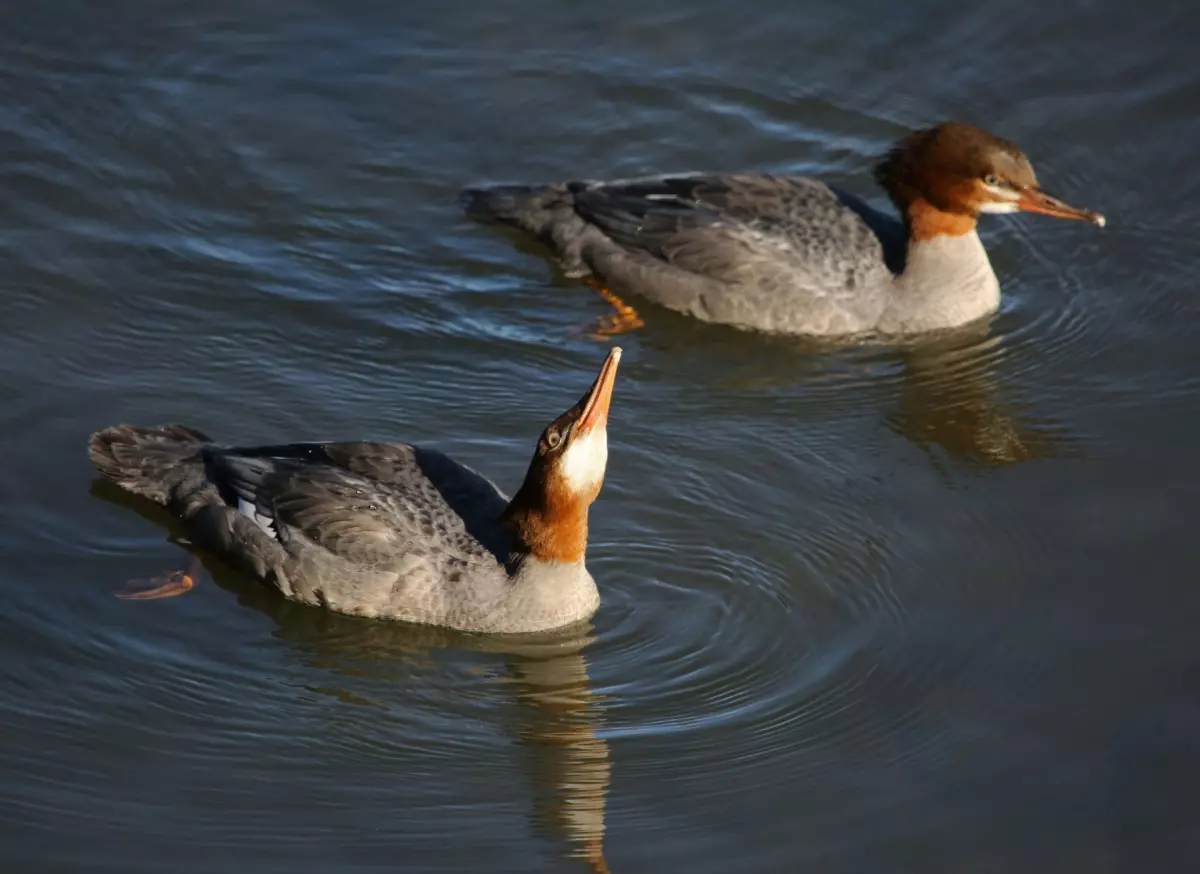
The Common Merganser (Mergus merganser) is, as the name suggests, very commonly seen when travelling the Trinity River corridor. Although common, they are striking when encountered. Males are bright white with dark green heads, while females wear elegant gray bodies with cinnamon-colored crests.

Both are unmistakable silhouettes gliding low over the water or“snorkeling” (swimming on the surface but with their heads underwater, looking for food) along the shallows.  

Photo: Mergansers swimming in the Trinity River this past March. The female is shown “snorkeling” for food. [James Lee, Trinity River Restoration Program]

Beyond their striking appearance, mergansers may also be telling us something important about river ecology – especially when it comes to further understanding the early life stages of Trinity River salmon. 

Life on the Trinity: A River Tailor-Made for Mergansers 

Common Mergansers specialize in catching fish, and the Trinity River offers an exceptional winter buffet. With an abundance of young salmon available and with 60 years of consistent slow and clear winter flows, merganser population have benefited from perfect conditions for spotting and pursuing prey during the those months.  

Their diet on the Trinity likely includes, mussels and salamanders but mostly they feed on a wide variety of fish, most notably, Chinook salmon fry. While young ducklings eat aquatic insects, adult mergansers may swallow a fish up to a foot long – check out this awarded photo from the Autubon Field Guide.  

Mergansers are excellent predators, feeding by dipping their heads underwater while swimming, scanning the riverbed for juvenile fish.   

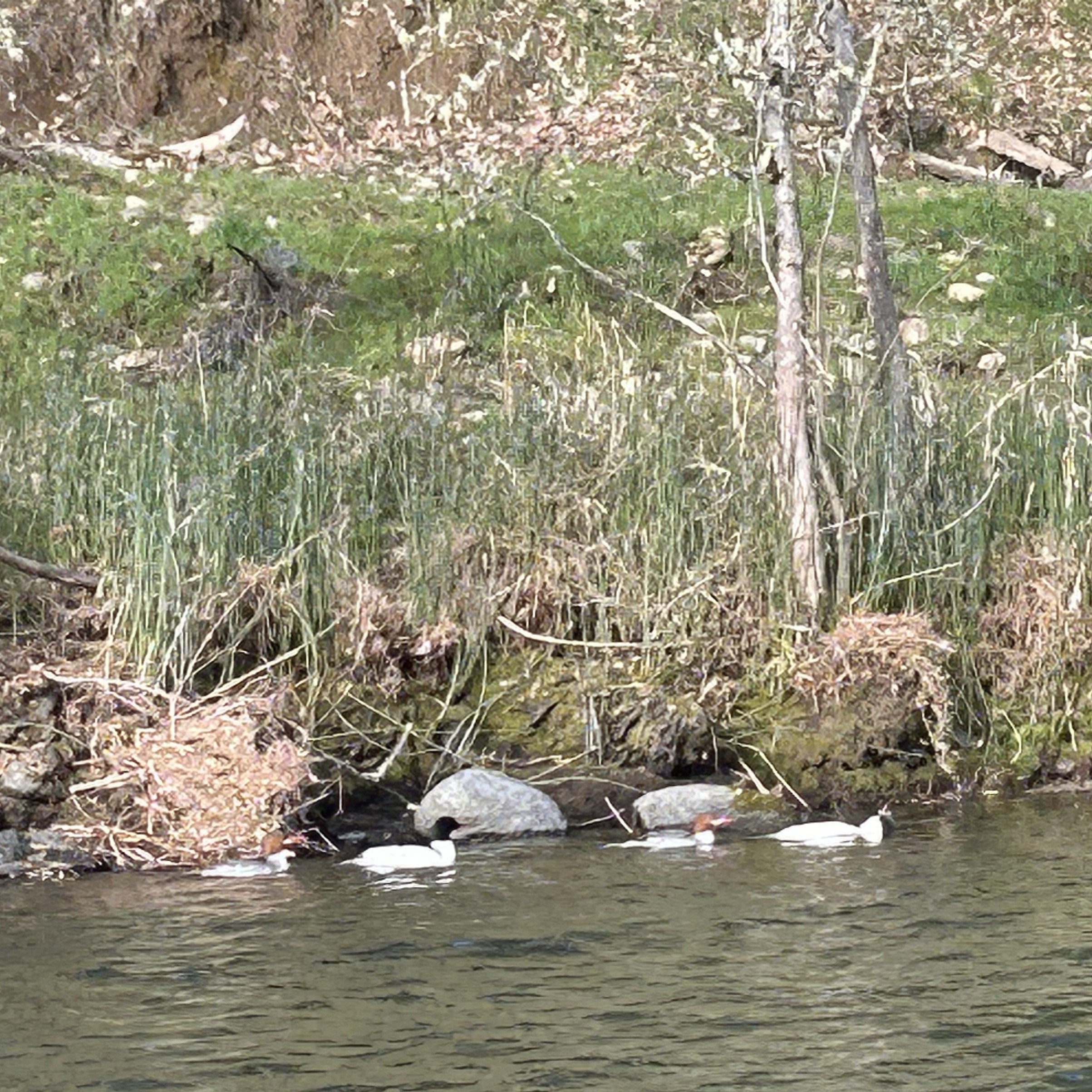
Two merganser pairs spotted in the Lewiston reach this past March. [James Lee, Trinity River Restoration Program]

A Growing Question: How Many Salmon Do They Eat? 

Although common mergansers are a natural and important part of the Trinity River ecosystem, fish biologists have long wondered how significant their predation might be on young salmon and if that balance were out of sync due to low winter flows. 

Two decades ago, Redwood Sciences Laboratory biologist Dr. C.J. Ralph offered a rough, informal estimate for the Trinity River: mergansers might consume millions of Chinook fry each year, given the combination of abundance and the seasonal availability of small, vulnerable salmon fry. 

Recently, Trinity River Restoration Program staff revisited this question. A preliminary late winter float on the river counted 45 mergansers in just 6.2 miles—about 7.3 birds per mile. If that density were similar across the full 40-mile restoration reach, the river may host around 290 mergansers during peak fry emergence. 

Using moderate assumptions from scientific literature – if about 450 fry are consumed per bird, per day (in prime conditions) – predation could reach into the millions over a two-month period.

While this estimate is intentionally conservative and includes many uncertainties, it begs the question – have mergansers benefitted from past flow management and preyed on Trinity River juvenile salmon at an unnaturally high rate due to managed conditions?  

A Potential New Monitoring Effort: Counting Birds to Understand Fish 

To explore this idea, scientists are considering a Before After Control Impact (BACI)-style study: 

  1. Measure merganser abundance during low, clear 300 cfs winter flows 
  2. Repeat surveys when flows are elevated (500–3,000 cfs) 
  3. Compare both to a stable flow control reach 

A simple float survey by TRRP staff in March provided a primary snapshot. Additional surveys during variable flows will begin building the baseline needed for a robust analysis.

This effort is still in its infancy, but it reflects growing collaboration among partners interested in fish ecology, bird behavior, and flow management. 

Common Merganser juveniles, Pearsall, Peter/USFWS

Could Mergansers Be a Clue to Where Young Salmon Are? 

An especially creative idea emerging from early discussions is that mergansers might help answer another long-standing question: Where are Chinook fry distributed along the river during their first weeks of life? 

Because mergansers concentrate where food is most dense, their distribution may mirror fry distribution. This could provide: 

  • A new, low-impact way to monitor fry movements 
  • Insights between emergence and lower-river screw trap detection 
  • A broader understanding of habitat use during early rearing 

In this way, mergansers might serve not only as predators, but also as bioindicators helping us better understand the juvenile salmon life cycle. 

ShapeA Bird Worth Appreciating 

Despite their appetite, Common Mergansers are charismatic, lovely to see and ecologically important. They are one of the few waterfowl species that nest in high tree cavities, often returning year after year. They are agile swimmers, attentive parents – often adopting into their clutch and are stunning birds to observe.  

Their seasonal presence on the Trinity River reflects both the river’s biological richness and the complex relationships among species that depend on it. 

As the season continues, keep an eye out for these impressive divers, and stay tuned as scientists work to better understand the role they play in the story of Trinity River salmon and flow management. 

References

  1. Common merganser – Wikipedia
  2. Common Merganser | Audubon Field Guide
  3. Common Merganser (Mergus merganser) | U.S. Fish & Wildlife Service
  4. Cornell Lab of Ornithology – Birds of the World: Common Merganser (Mergus merganser)

Kiana Abel, Public Affairs Specialist

As Public Affairs Specialist for the Trinity River Restoration Program, Kiana manages external communications, media relations, and stakeholder outreach. She acts as a liaison between program initiatives and the public, transforming technical findings into compelling narratives that promote understanding of restoration initiatives on the Trinity River. Kiana holds a Batchelor’s in Art History, has spent most of her career in marketing and is focused at the TRRP on bridging the gap between public awareness and resource restoration and management. 
Bug of the Month: Golden Stones

By: Chris Laskodi M.S., Fisheries Ecologist, Yurok Tribal Fisheries Department

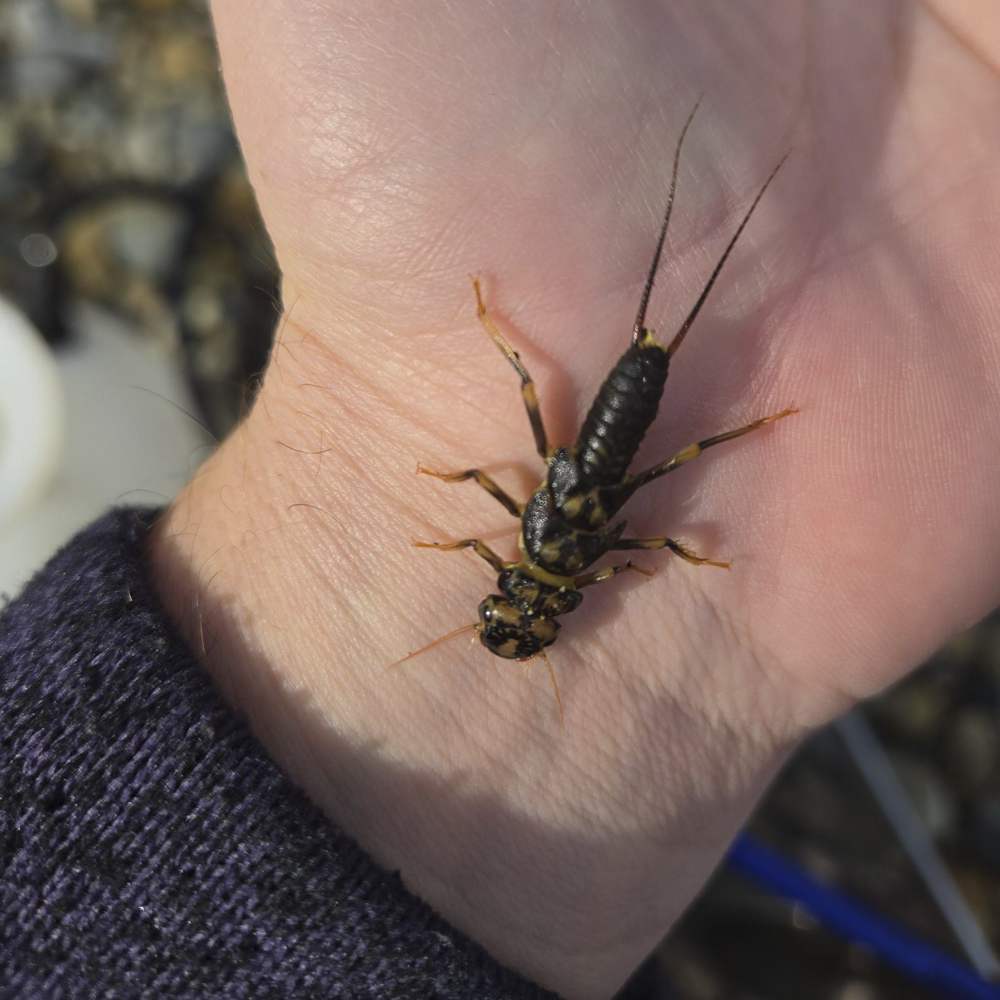
Stoneflies from the family Perlidae aka Golden Stones

If you are a fly fisherman on the Trinity River, you know one of the top flies in the winter is a golden stone nymph. Unsurprisingly, these stoneflies are one of the most common benthic macroinvertebrates found on the Trinity River. They are especially prevalent in the winter and early spring as most of the other insects have already completed their lifecycle and are growing to emerge the following year.

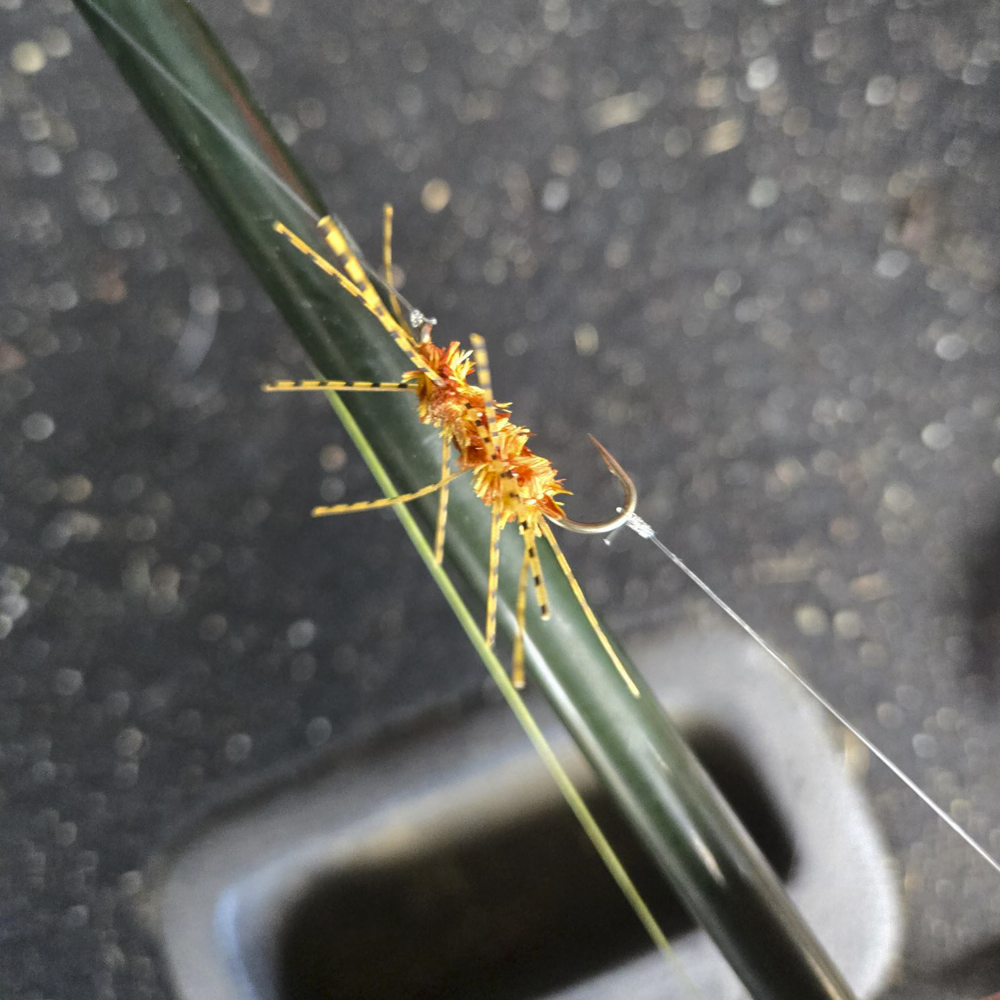
Photo: A stone fly imitation designed to look like the real thing. [Chris Laskodi, Yurok Tribal Fisheries Department]

These stoneflies typically emerge in late spring so they are almost fully grown and are just packing on calories for the next stage of their life cycle. They are avid hunters and consume anything that can fit in their mouths (mostly Chironomids and Baetid larvae). This hunting activity makes them susceptible to entering the drift either voluntary or involuntary potentially providing a tasty morsel for salmonids that are large enough to eat them. TRRP scientists have noticed an uptick of these stoneflies in the last few months during their regular benthic macroinvertebrate surveys providing insight into the stonefly’s behavior.

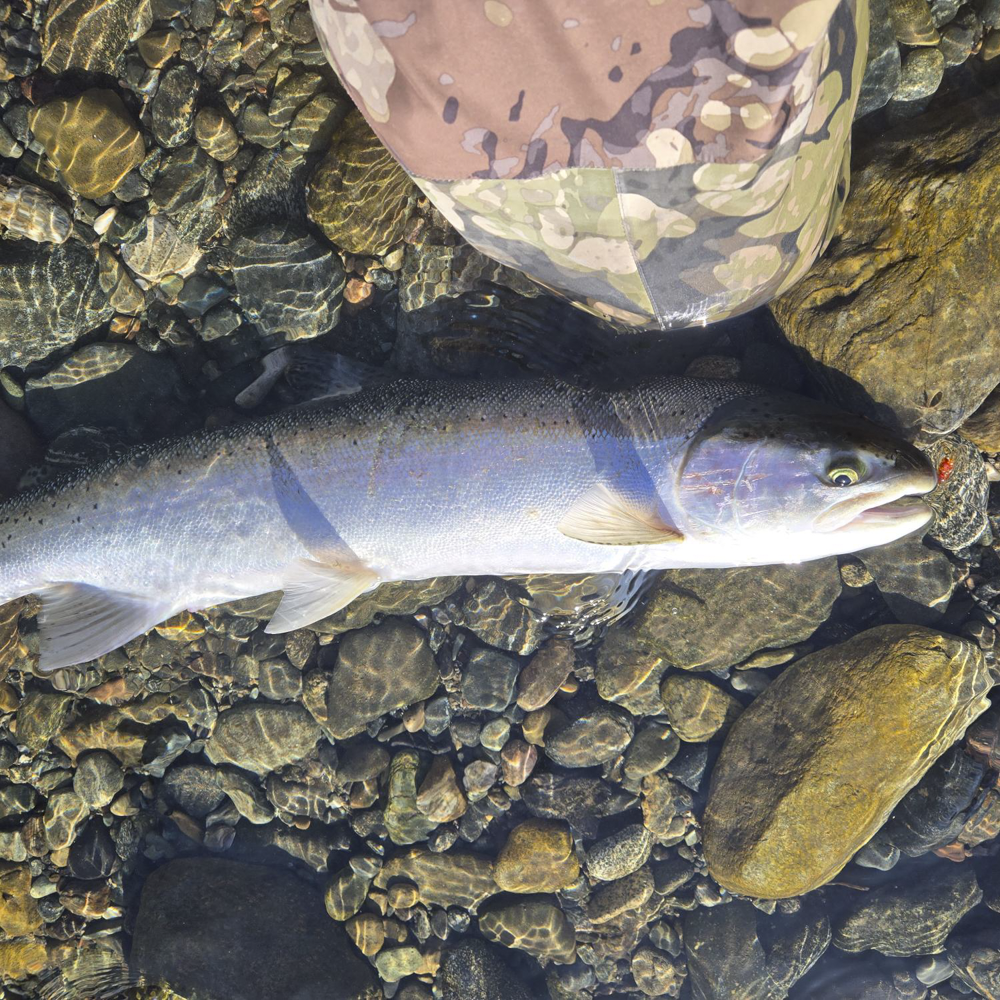
Photos provided by the author.

Chris Laskodi, M.S., Fish Ecologist – Yurok Tribal Fisheries Department

Chris serves as the fish biologist/ecologist for the TRRP in the program’s Science branch. Chris has worked on the Trinity River since 2015, previously serving as a fish biologist for the Yurok Tribe and a fisheries technician for the US Fish & Wildlife Service. Chris holds a B.S. in Wildlife, Fish and Conservation Biology from the University of California, Davis and a M.S. in Aquaculture/Fisheries from the University of Arkansas at Pine Bluff. In his free time, Chris enjoys taking friends and family fishing on one of the many watercraft available to him.

Featured Article – Wolf Spiders

By: Kiana Abel, Public Affairs Specialist – Trinity River Restoration Program

Family: Lycosidae

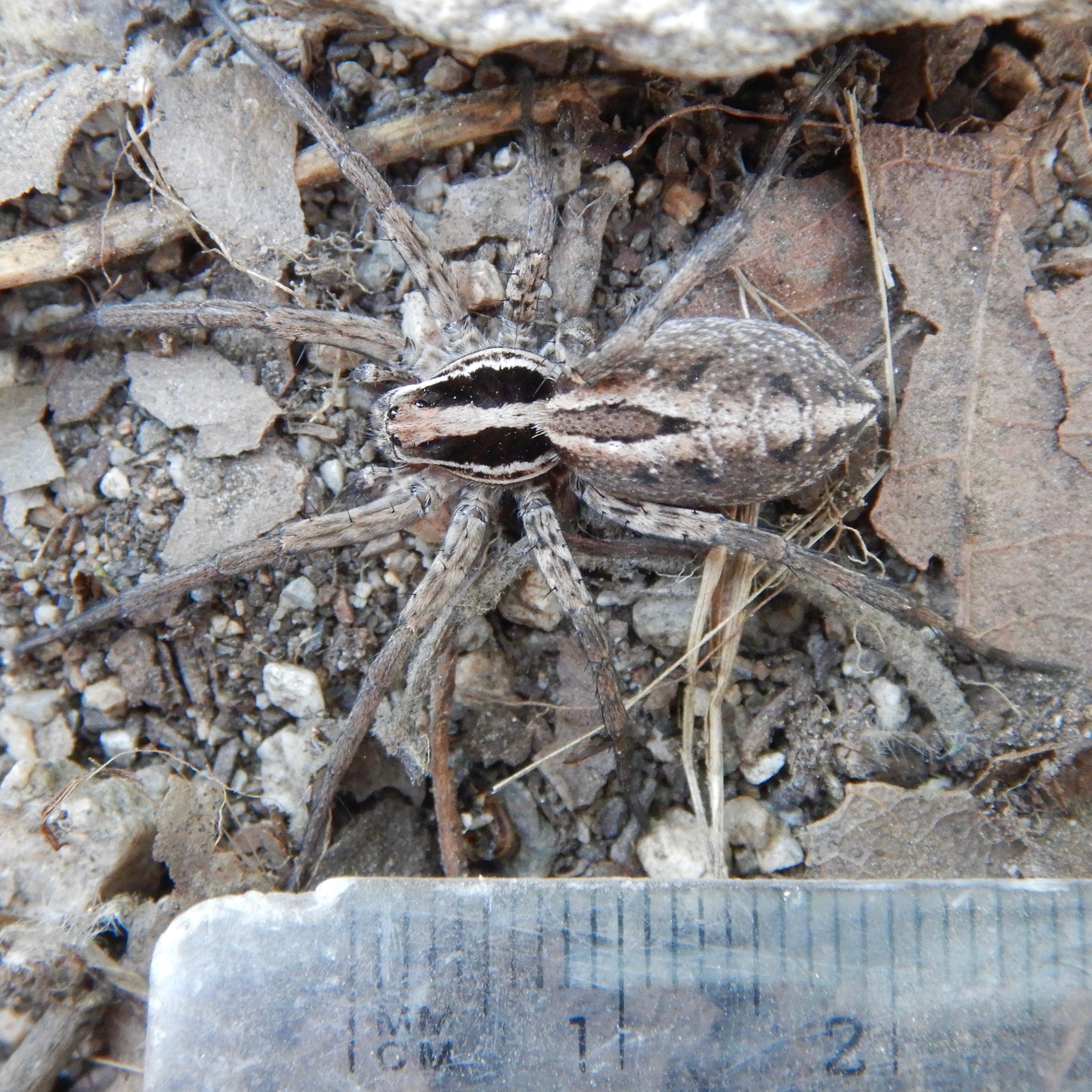
Wolf spiders are an incredibly common spider worldwide with 2400 described species that range in many different habitats, vary in size and coloration, have incredible eyesight and hunt by ambushing, chasing, pouncing and or tackling its prey. In fact, wolf spiders are classified to the Lycosidae family of arachnids, so named after the Greek word (from Ancient Greek λύκος (lúkos)) for wolf due characteristic hunting tactics of the two species.

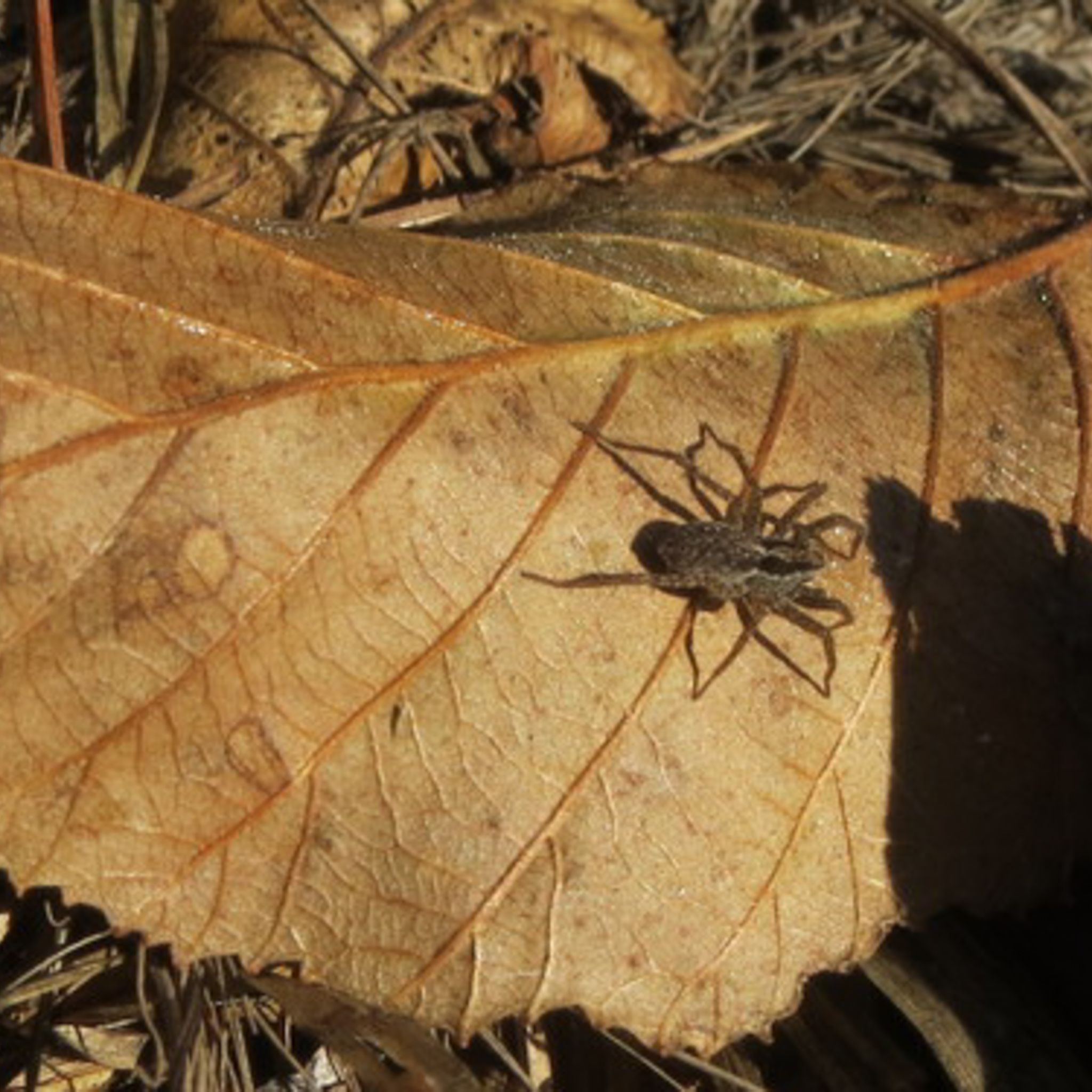
Thin Legged Wolf Spider [Howard Bruner, inaturalist – Lewiston]
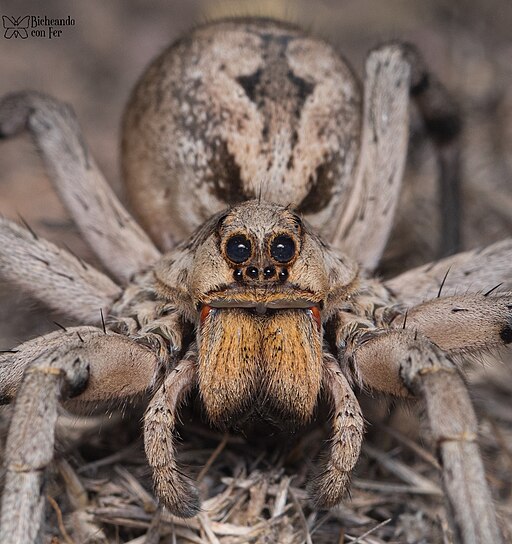
Carolina Wolf Spider (Hogna carolinensis). [wikimedia commons]
image
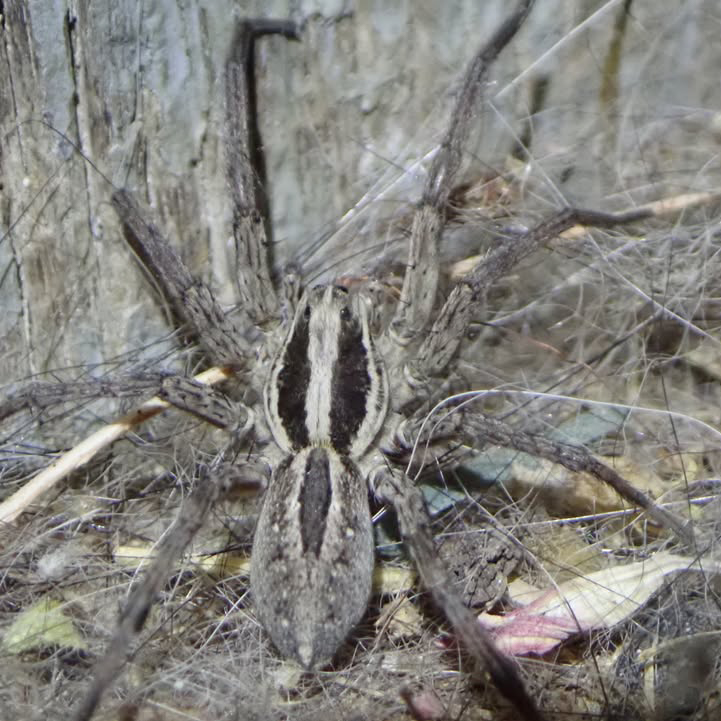
McCook’s Split wolf spider (Schizocosa mccooki). [Joaquin Hale – Lewiston]

California is home to more than 120 species of wolf spiders, ranging from tiny ground dwellers in the genus Pardosa (thin legged wolf spider) to the quite large Hogna carolinensis (Carolina wolf spider). When discerning between genera of wolf spiders, they can be very difficult to identify in the field without holding each type in your hand [or by using this genius method]. Although the wolf spider’s bite is not dangerous to humans (akin to a bee sting) capturing one on camera or in your hand can be difficult because they are fast – and they are, well. Mostly big. Also hairy. And a spider.  

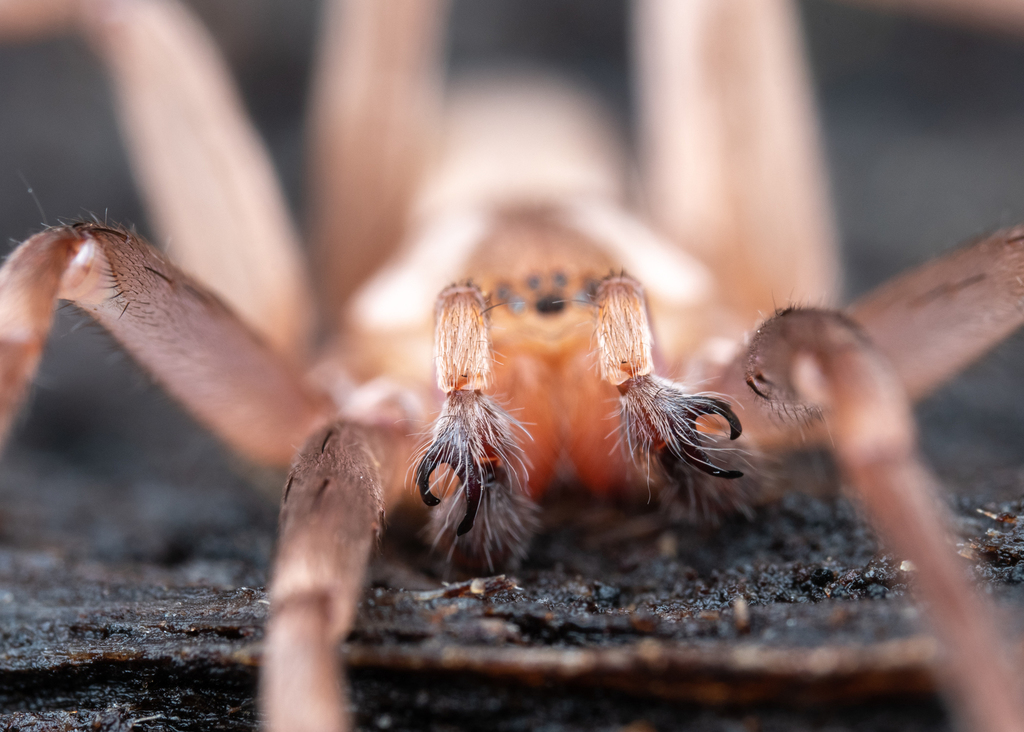
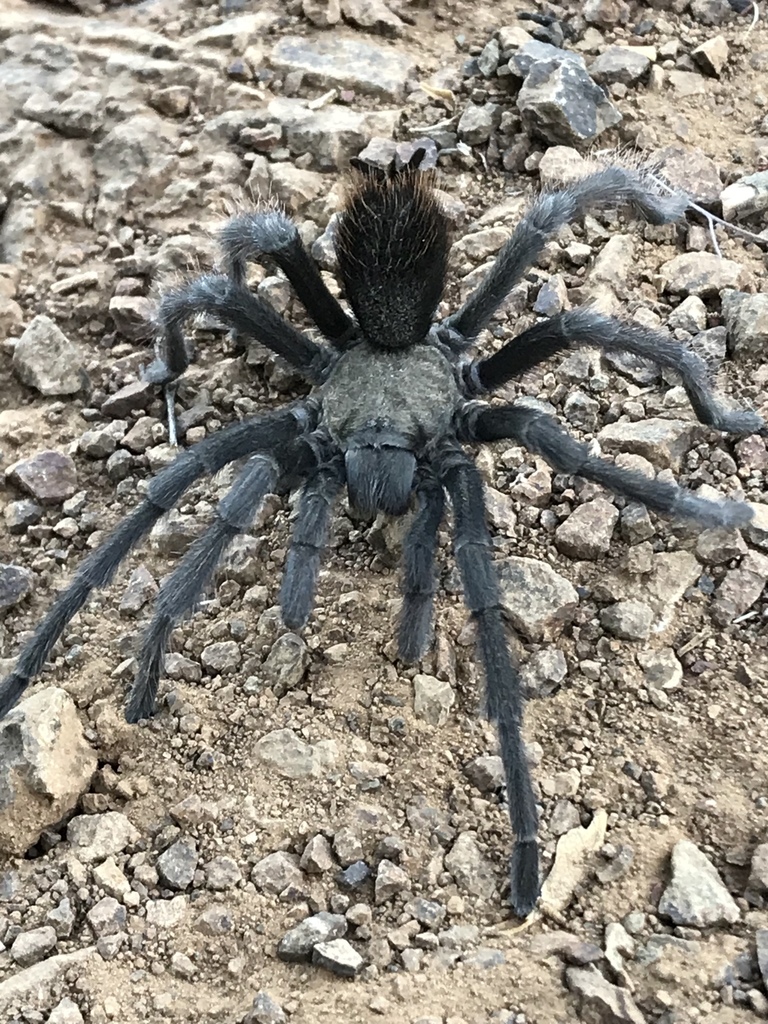
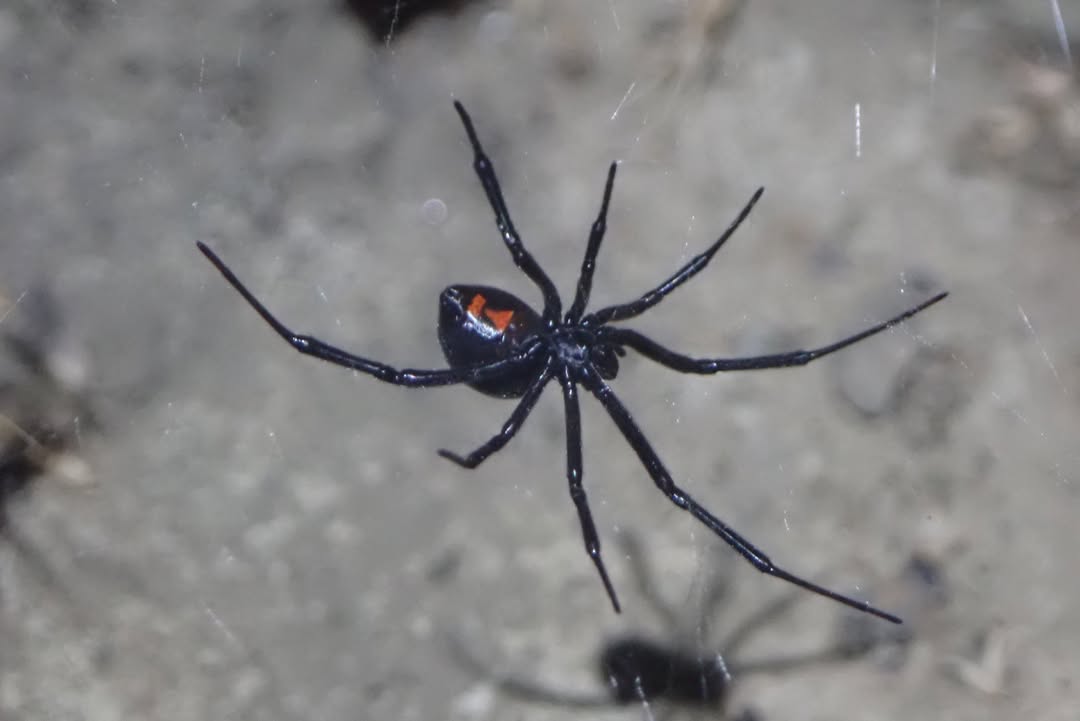
Commonly all wolf spiders share traits such as parental care, eight eyes, active hunting techniques and coloration that hides them within their habitat. Knowing these identifying factors, the wolf spider can be distinguished quite easily from other common California spiders such as the brown recluse look alike, Titiotus californicus, tarantulas or black widow.

Desert Tarantula(c) LJ Moore-McClelland via iNatrualist
Western Black Widow. [Joaquin Hale – Lewiston]

Within the Lycosidae family there are 56 described spiders in the genus Schizocosa. Schizocosa mccooki, commonly known as the McCook’s Split Wolf Spider and can be found in Trinity County. This spider is identified by its medium sized (about 1.5 inches) hairy body, active hunting style, eight eyes (two very large center eyes, four under and two upper eyes) and a distinctive “heart mark” on its abdomen.  Most individuals live one year, with mating typically occurring in late summer or fall.

McCook’s Split Wolf Spider (Schizocosa mccooki). Original posted in inaturalist by (c) William Mason

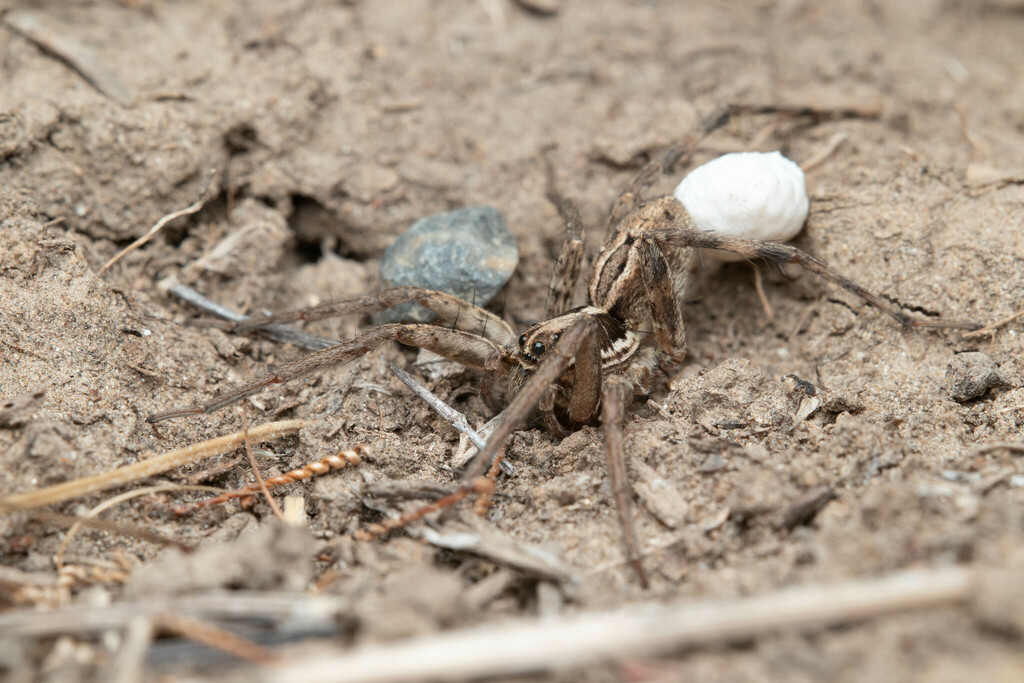
The rearing and mating process for wolf spiders is unique in the spider world. Common to female wolf spiders, S. mccooki carries her egg sac attached to their spinnerets at the end of their abdomen until their spiderlings hatch. Once hatched, the juveniles remain on their mother’s back until they are ready to disperse into the world.

Wolf Spider Mothers Carry their Eggs – YouTube

Common to male Schizocosa is a complex leg-drumming display used to attract females during mating season. A 2022 study, published in Biology Letters, indicates that males use specific vibratory signals to court their desired female, creating unique and more complex patterns for larger females – the study hypothesizes this may be due to choosing a female that has a large carrying capacity for juvenile spiders once hatched (Choi etal, 2022). The study also found that females picked males with complex coordination of differing signals that may indicate her suiters athleticism (Choi etal, 2022).

Wolf spider, Schizocosa stridulans male courtship – YouTube

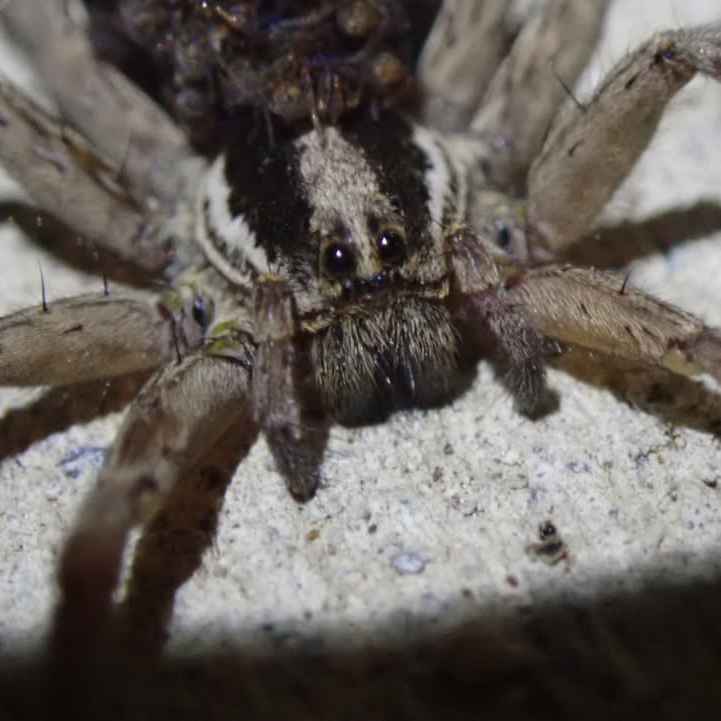
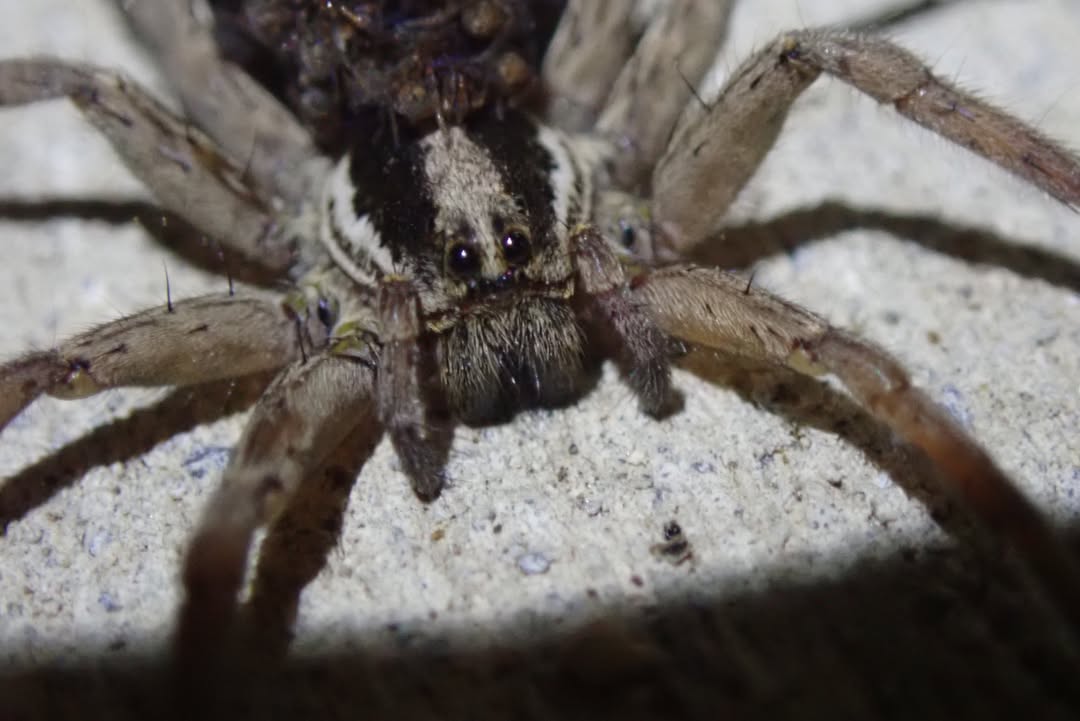
Spiders typically have eyes that suit their hunting styles, and unlike web-building spiders, wolf spiders rely on keen eyesight to capture prey. As mentioned earlier, wolf spiders have eight eyes, with a large pair front and center. Their eyesight is enhanced by a interior reflective layer called the tapetum lucidum that helps to shine light back into the spider’s vision effectively enhancing low-light conditions that aide them in nocturnal predation.

Tapetum lucidum is an evolutionary feature found in both predators and prey such as cats, deer, cows, and some spider species. If you are ever interested in hunting wolf spiders, simply head out with a headlamp on a moonless night, shine your light into the grass and look for two reflective eyes shining back at you from the darks of your backyard.

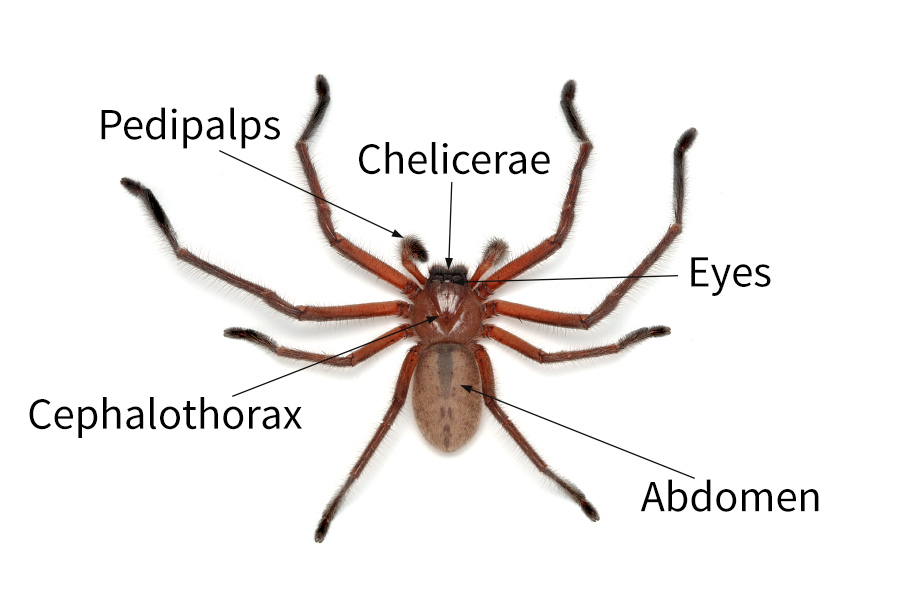
Araneomorph spider of which wolf spiders are categorized. Anatomy from Spidentify

Wolf spiders possess forward-pointing chelicerae, an appendage that almost resembles a well groomed mustache yet operates to aid immobilizing prey while fangs deliver venom at it’s tip. In wolf spiders, the chelicerae are relatively large and well-muscled, giving them the strength to subdue struggling insects during active hunts. Viewed closely, the chelicerae appear dark and glossy, sometimes with fine hairs, and the fangs curve slightly inward at the tips. This arrangement is both efficient for piercing prey and distinguish them from other spider groups such as tarantulas, whose fangs move vertically rather than side-to-side.

In S. mccooki, the chelicerae are proportionally large relative to the spider’s body size and are typically dark brown to black with a polished sheen that contrasts against the lighter patterned cephalothorax. Strong internal muscles allow the fangs to strike with enough force to quickly immobilize prey such as beetles or crickets. Fine sensory hairs line the cheliceral margins, helping the spider detect movement and handle struggling prey. In males, the chelicerae can also serve a communicative role, sometimes being lifted or vibrated in coordination with leg-drumming during courtship.

A Riparian Predator & Prey

Riparian corridors are home to a wide range of species that link terrestrial and aquatic food webs. Among these, the wolf spider is a key ground-dwelling predator that helps regulate insect populations and provides prey for higher trophic levels.

Wolf spiders are widespread in open habitats such as grasslands, chaparral, and riparian habitats where cobble bars, woody debris, and leaf litter provide hunting grounds and cover. These microhabitats are important refuges not only for wolf spiders but for the many insects they consume. As wolf spiders actively stalk prey such as earwigs, beetles, ants, and crickets, consuming them helps moderate insect communities which indirectly supports plant health thus contributing to ecosystem stability. S. mccooki and other wolf spiders also contribute to cross-boundary energy flow by serving themselves as prey for birds, amphibians, reptiles, and mammals.

Mccooks Split Wolf Spider carrying its eggsac. [Martin Galli, inatrualist]

Recognizing the ecological functions of wolf spiders highlights why observation is often a better response than eradication. These spiders are integral components of riparian and terrestrial ecosystems, regulating insect populations and serving as prey for higher trophic levels. Their hunting strategies, reproductive behaviors, and physiological adaptations illustrate the complexity of predator–prey interactions that sustain biodiversity. By taking time to identify and observe a spider before removing or killing it, we not only learn more about local species but also foster an understanding of the interconnected roles that maintain ecosystem stability. In this way, simple curiosity can translate into conservation-minded awareness.

References

  1. Schizocosa mccooki – Wikipedia
  2. Common synanthropic spiders in California – Essig Museum of Entomology
  3. https://a-z-animals.com/animals/spider/wolf-spiders-in-california-everything-you-need-to-know/
  4. Wolf Spiders | Missouri Department of Conservation
  5. Male spiders drum out mesmerizing syncopated beats to woo mates | Live Science
  6. Increased signal complexity is associated with increased mating success | Biology Letters
  7. Spider anatomy – Spidentify
  8. Schizocosa mccooki (A Wolf Spider) | Idaho Fish and Game Species Catalog

Kiana Abel, Public Affairs Specialist

As Public Affairs Specialist for the Trinity River Restoration Program, Kiana manages external communications, media relations, and stakeholder outreach. She acts as a liaison between program initiatives and the public, transforming technical findings into compelling narratives that promote understanding of restoration initiatives on the Trinity River. Kiana holds a Batchelor’s in Art History, has spent most of her career in marketing and is focused at the TRRP on bridging the gap between public awareness and resource restoration and management. 
Bats of the Trinity River

By: Michael Dixon, Executive Director – Trinity River Restoration Program

Wait, bats? Of the river? Yes! A river is more than its bed and banks, it is also intricately tied to the valleys, canyons, and forests through which it flows. Many North American bats are tightly associated with proximity to both forest cover and water (e.g. Dixon 2012), and the bats of the Trinity River watershed follow suit. In fact, some of our bats do almost all of their foraging over and near water, which in a dry, mountainous landscape like ours, means over the Trinity River and its tributaries.

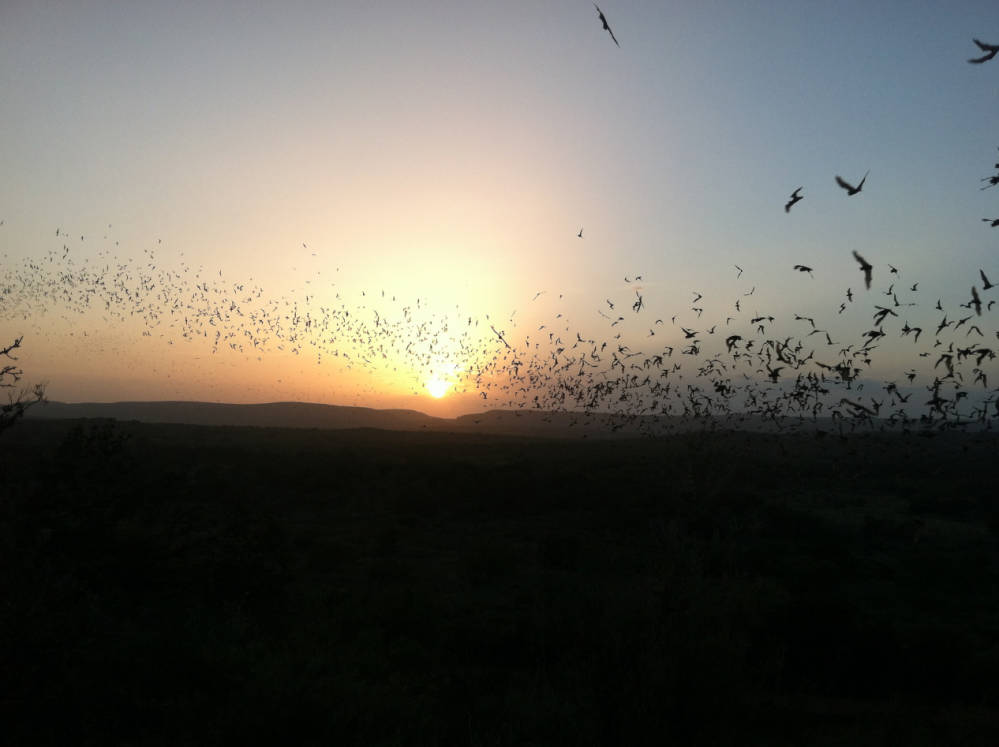
Bats fly into a Texas sunset. [US Fish and Wildlife Service]

Bats are the second largest order of mammals in the world, with >1,400 species on every continent except Antarctica, though a majority of those species are in the hyper-diverse tropics. The Klamath Mountains, through which the Trinity River flows, are home to at least 18 species (Reiss, Kauffman, and Feldman 2022). Some of these are year-round residents and are known to hibernate locally, whereas others migrate to warmer climates during the winter. All of our local bat species echolocate, meaning they essentially “yell” in very high frequency sound and then listen for the echoes (the same concept as sonar), which helps them navigate and feed in a dark world.

While the incredible worldwide diversity of bats includes many unique feeding styles such as nectar-feeding flower pollinators, fruit eaters, and (a bat fan favorite) bats that fish for food like the super cool fish-eating myotis, all of the bats in the Trinity watershed eat invertebrates like insects and spiders. That said, there’s a remarkable range of ways that they do that. Let’s take a look at a few of the species that call the Trinity River watershed home.

Myotis species

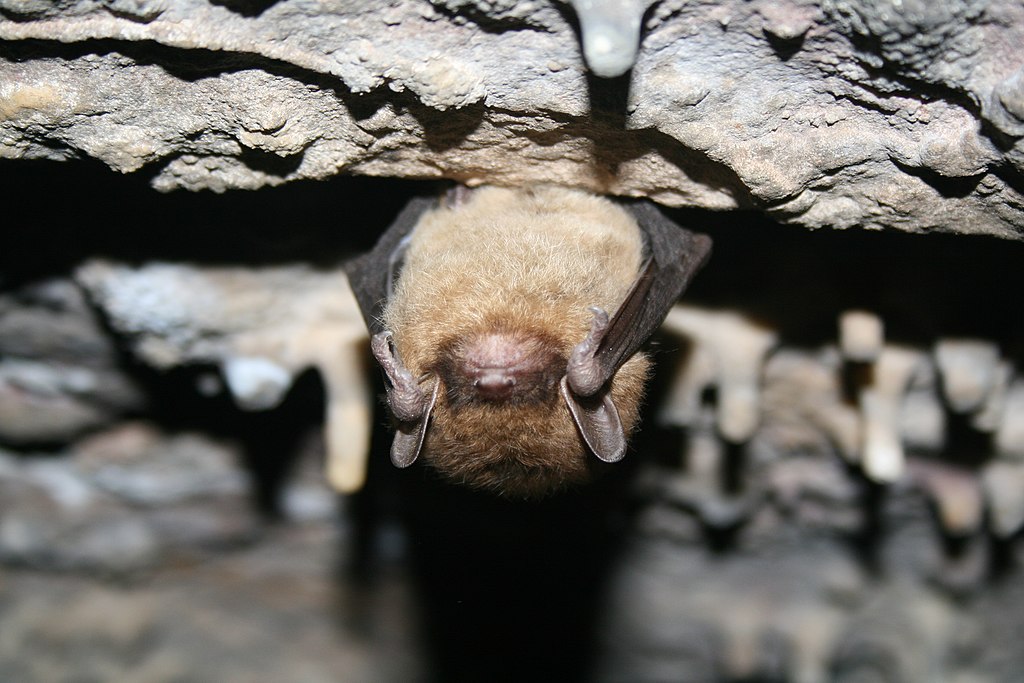
A little brown bat. [USFWS/Ann Froschauer]

Of the bats discussed here, the five or more small, brown, round-eared species of Myotis in our area are perhaps the closest to what people think of when they think of a “bat”. Their appearance exemplifies the German word for bat, Fledermaus or “flutter mouse”, though bats are much more closely related to deer, whales, and carnivores than to rodents.

Yuma myotis (Myotis yumanensis) are among the most frequently encountered species in the region and are “aerial insectivores”, meaning they forage on flying insects. They can be found flying along forest edges but most commonly over slow-moving water, typically only a couple feet above the river. This is because while they will also take things like moths and beetles, they are strongly predisposed to hunting emerging aquatic insects like caddisflies and midges. They make low, repeated passes over water smooth enough for their echolocation to detect the disturbance of insects on the waters’ surface. In areas where few large trees are found, they will form maternity roosts in buildings; these are where large groups of females gather together to raise their pups until they are old enough to disperse. However, in areas of the West including parts of the Trinity River where there are healthy riparian areas with large, old trees, they will roost in things like hollowed-out old cottonwood trees. This is one of the reasons that the Trinity River Restoration Program attempts to avoid impacts to mature riparian forests when building our restoration projects.

Another Myotis worthy of note is the little brown bat (Myotis lucifugus). While they are less abundant than Yuma myotis in the Trinity River region (Pierson and Rainey 2007), they are strongly predisposed to roosting in buildings and thus relatively commonly encountered. They are noteworthy in that, while fairly generalist in their feeding habits, they eat disproportionately large numbers of mosquitoes, making them allies of their human neighbors (Wray et al 2018). They have quite a large range, extending from the subarctic to the southern US, and through the late 2000s were among the most common bats on in North America. However, they are now classified as endangered by the International Union for Conservation of Nature because of the catastrophic impacts of an introduced disease called white-nose syndrome; it is estimated that the eastern and midwestern populations of the species have declined by 90% since 2010.

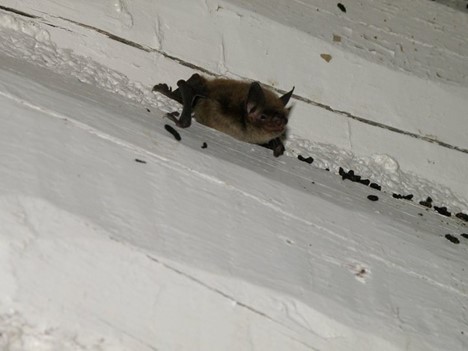
Little brown bat (Myotis lucifugus) in a historic building. [Mike Dixon, Bureau of Reclamation]

Pallid bat

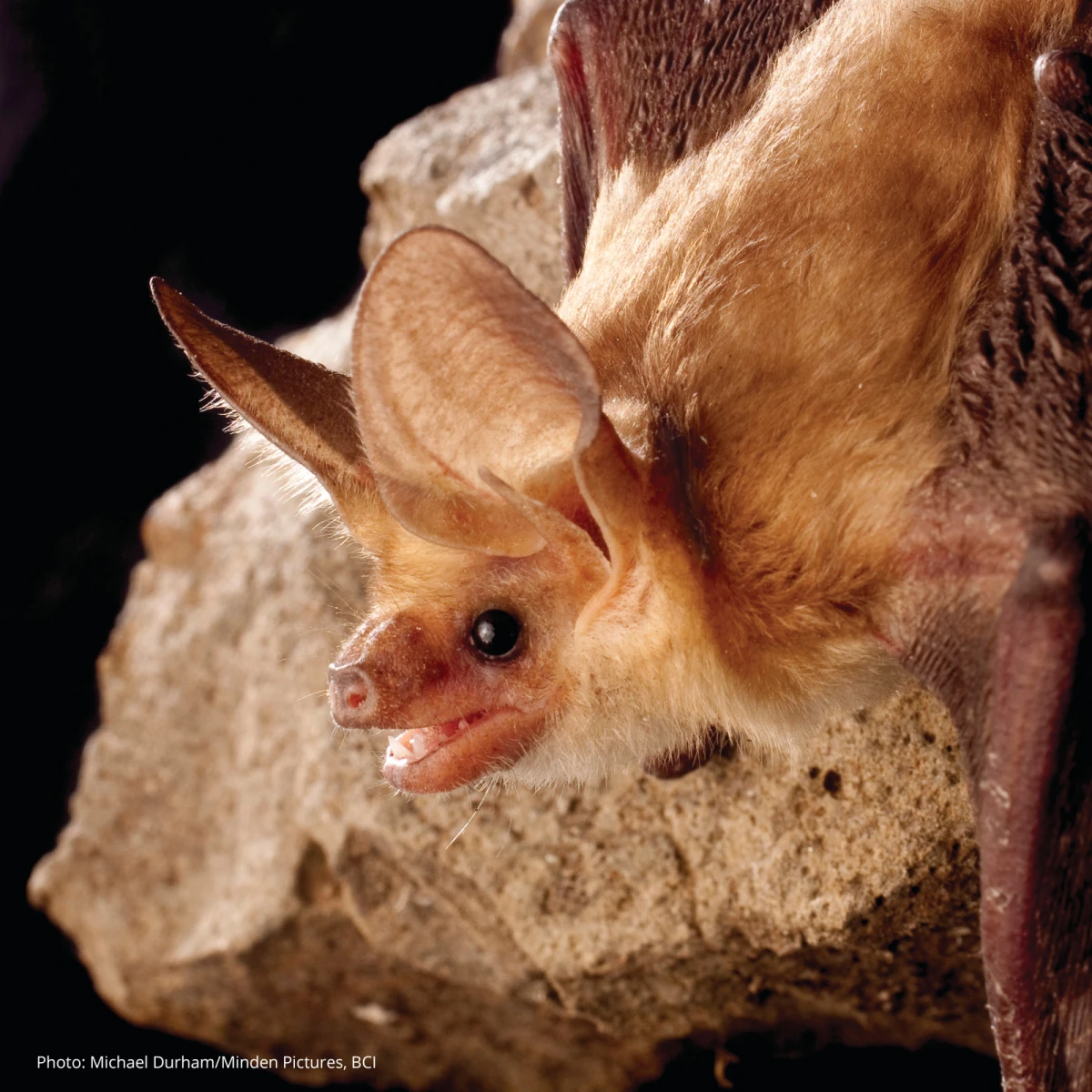
A pallid bat (Antrozous pallidus). Photo originally posted on ANAMALIA by Michael Durham/Minden Pictures, BCI

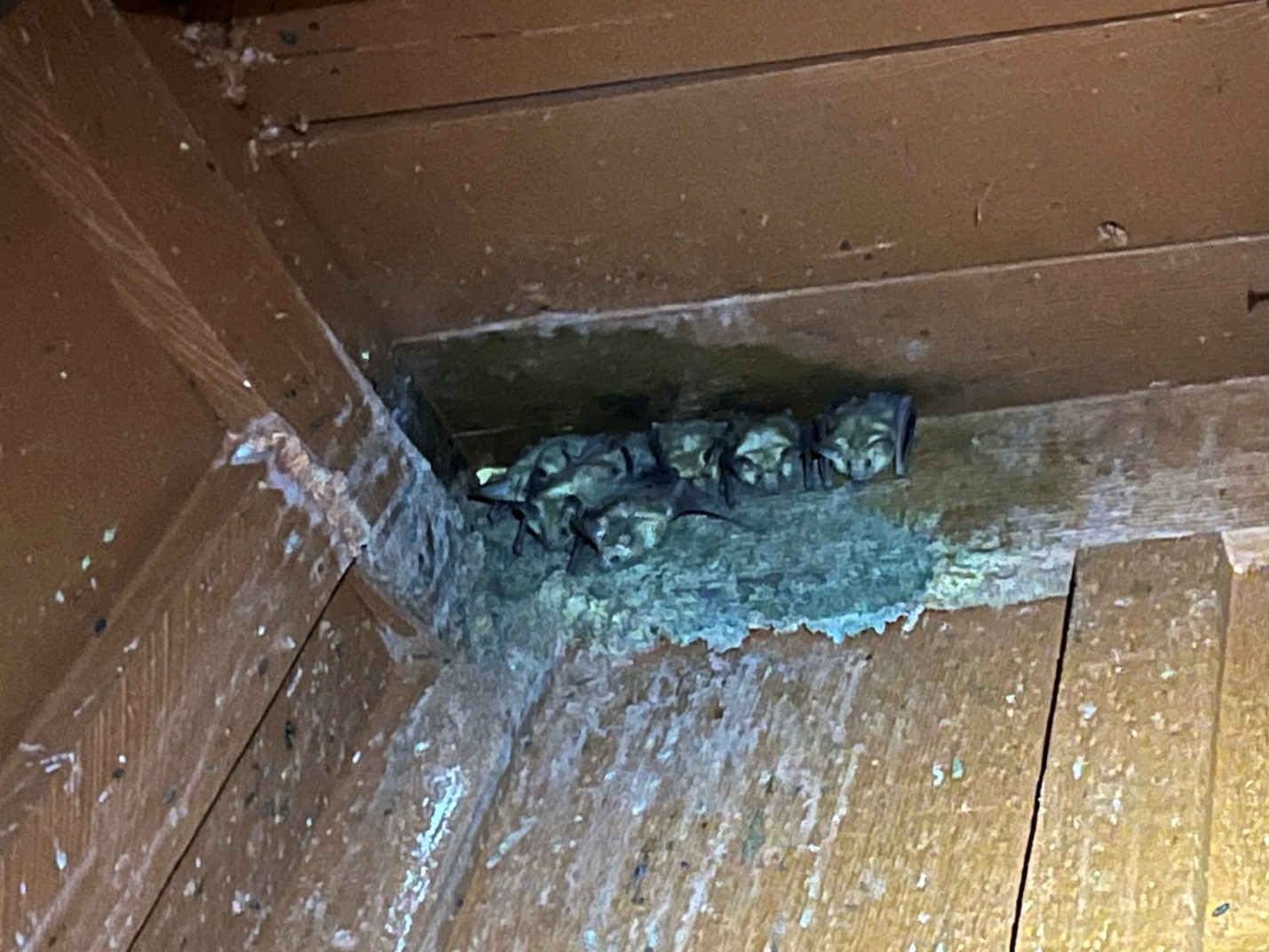
In contrast to the myotis bats described, pallid bats (Antrozous pallidus) are quite large, with a wingspan of up to 16 inches. Beyond their large size, they also have enormous ears that can be a third of their body length. This is because rather than catching insects on the wing, they are gleaners, meaning they hunt prey on structures or, in their case, the ground. They are still capable of echolocation, but their over-large ears also allow them to listen for the sounds of their prey and target them that way. They are particularly fond of scorpions, of all things. Their inconsistent use of echolocation and ground-hunting behavior also means they tend to hunt in more arid or open areas, but they still stay relatively close to water. They frequently roost in trees in northern California (Baker et al. 2008) but can also be loyal users of strategically located buildings as night roosts. Night roosts are places that bats hang out for a variety of reasons including rest, digestion, picking apart large prey items, and various social interactions including information sharing (Ormsby et al. 2007). For several years, I have observed congregations of 5-20 pallid bats in the same corner under my eaves almost every night when overnight lows temperatures exceed 45oF. I appreciate them keeping the front of my house scorpion-free!

One fun fact about the pallid bat is that it is officially the state bat of California!

Pallid bats (Antrozous pallidus) have frequently used this night roost on a cabin next to the East Branch of East Weaver Creek. [Mike Dixon, Bureau of Reclamation]

Hoary bat

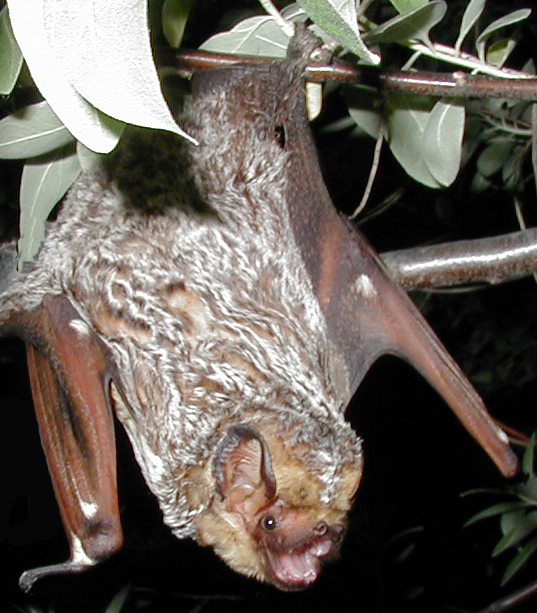
Hoary bats (Lasiurus cinereus) are striking in appearance. Rather than the shades of brown with which bats are often portrayed, the hoary bat has dark fir with brightly frosted tips and a yellowish face. Also unlike many bats of the temperature regions, it doesn’t hibernate – rather, it spends its summers from the northern U.S. (including northern California) well into Canada, and then in the fall migrates sometimes over 2,000 km south to a winter range that extends from the Southwest into Central America (Cryan et al 2004).

A hoary bat (Lasiurus cinereus) roosting on the branch of a tree. [Paul Cryan USGS]

Rather than flying low over the water or ground or on the edges of forest, the hoary bat is a high-flying moth specialist that makes long passes over open water or the top of the forest canopy, sometimes flying almost 25 miles in a night of hunting. The coevolution of bats and moths has been a subject of long study, as there is evidence that echolocation by moth-hunting bats drove the evolution of ears and evasive behaviors in moths, which in turn changed how moth-specialist bats echolocate (Ter Hofstede and Ratcliffe 2016).

Hoary bats are more solitary than most of our bats and tend to roost individually by hanging from tree branches like dead leaves, but they can form large aggregations around landmarks during their long southward migrations. This means that after they leave our Klamath Mountains, they are often recorded in what would seem to be pretty unusual places for a bat – they have been observed swarming ships at sea and commonly recorded over the Farallon Islands 30 miles off the coast of San Francisco.  These long, sometimes over-water migrations also presumably led to one of the more unlikely events in the history of bats – the colonization of the Hawaiian Islands over 1.3 million years ago by hoary bats from what is now the west coast of the U.S. In this single founder event, wayward bats established the most isolated bat population in the world, which has since diverged significantly into its own species, the critically endangered Hawaiian hoary bat (Lasiurus semotus).

Bats and people

I have already mentioned how a couple of our native bats benefit people by controlling pests, and that topic has been the subject of many publications. Suffice it to say, bats are very important to the ecology of the Trinity River watershed and provide services to its people here and throughout the world, but they can also be inconvenient and, occasionally, dangerous to people. Here are a few suggestions for living with bats.

  • First and foremost – while bats don’t “carry” rabies (it is also deadly to them), the abnormal behavior of rabid bats is what often brings them into contact with people. NEVER pick up a bat that you encounter. It is unlikely that it has rabies, but the consequences of contracting rabies are so serious that it is not worth the risk. If you encounter a bat in your house, shoo it out but do not handle if it all avoidable – you’d be surprised how thick of a glove a bat can bite through!
  • If you have the space for it, embrace an untidy yard. Long grass provides a home for large insects like crickets that are preyed upon by our gleaning bats. Leaving fall leaves until the following spring allows many types of caterpillars and beetle grubs to use them as winter cover, providing food for our aerial insectivores the following summer. Trees with loose bark cavities or large are used by many species for roosting and can be left as habitat where they do not cause a hazard.
  • Many species like to use buildings for day or night roosts or for hibernation. Sometimes this isn’t a huge deal – I already mentioned that I appreciate the night roost above a seldom-used door at my house, and even use their guano as a garden amendment. However, in confined spaces like the walls and attics of buildings, the guano can become smelly and damage walls, and bats roosting in those places sometimes find their way into parts of those buildings with people (not a good thing, as already discussed). Many pest control companies have experience with excluding bats in a humane way (essentially letting them fly out but not back in). If you need bats evicted from your home, try to wait until late summer when the pups have fledged, so as not to separate foraging mothers from their flightless pups.  
  • If you’d like to encourage bats to use your property, you can build or buy prefabricated bat houses. The trick in a climate like that of the Trinity watershed with sometimes intensely hot days and cool nights is to find the right sun exposure. Nursing mothers and pups want a spot that will gather and retain heat into the evening but will not get so hot during the day as to be uninhabitable. There’s an element of trial and error (and luck) to getting bats to move in, but it’s a great way to provide wildlife habitat and help keep your bugs down. For more resources on gardening and bat houses, this is a great place to start: Bat Gardens & Houses – Bat Conservation International.

References

Baker, Michael D., Michael J. Lacki, Greg A. Falxa, P. Lee Droppelman, Ryan A. Slack, and Scott A. Slankard “Habitat Use of Pallid Bats in Coniferous Forests of Northern California,” Northwest Science 82(4), 269-275, (1 September 2008). 

Dixon, Michael D. “Relationship between land cover and insectivorous bat activity in an urban landscape.” Urban Ecosystems 15 (2012): 683-695.

Ormsbee, Patricia C., James D. Kiser, and Stuart I. Perlmeter. 2007. Importance of night roosts to the ecology of bats in Michael J. Lacki, John P. Hayes, and Allen Kurta, eds. Bats in Forests – Conservation and Management. The John Hopkins University Press: pp 129-151.
Pierson, Elizabeth D. and William E. Rainey. 2007. Bat distribution in the forested region of Northwestern California. Report for California Department of Fish & Game, Contract #FG-5123-WM.

Reiss, Karen, Michael Kauffman, and Chris Feldman. Mammals in Michael Kauffman and Justin Garwood, eds. (2022). The Klamath Mountains – A Natural History. Backcountry Press. Pp. 428-430.

Ter Hofstede, Hannah M., and John M. Ratcliffe. “Evolutionary escalation: the bat–moth arms race.” Journal of Experimental Biology 219.11 (2016): 1589-1602.

Wray, Amy K.; Michelle A. Jusino, Mark T. Banik, Jonathan M. Palmer, Heather Kaarakka, Paul White, Daniel L. Lindner, Claudio Gratton, and M. Zachariah Peery, (2018). “Incidence and taxonomic richness of mosquitoes in the diets of little brown and big brown bats”Journal of Mammalogy99 (3): 668–674.

Mike Dixon is the Executive Director of the Trinity River Restoration Program and a northern California native. He fell in love with the Trinity River and Klamath Mountains while assigned to his first duty station at Coast Guard Air Station Humboldt Bay. He received a Ph.D. in Conservation Biology from the University of Minnesota, Twin Cities, where his dissertation focused on the landscape ecology and population genetics of bats. He lives on a small, perennial tributary of the Trinity River near Weaverville.

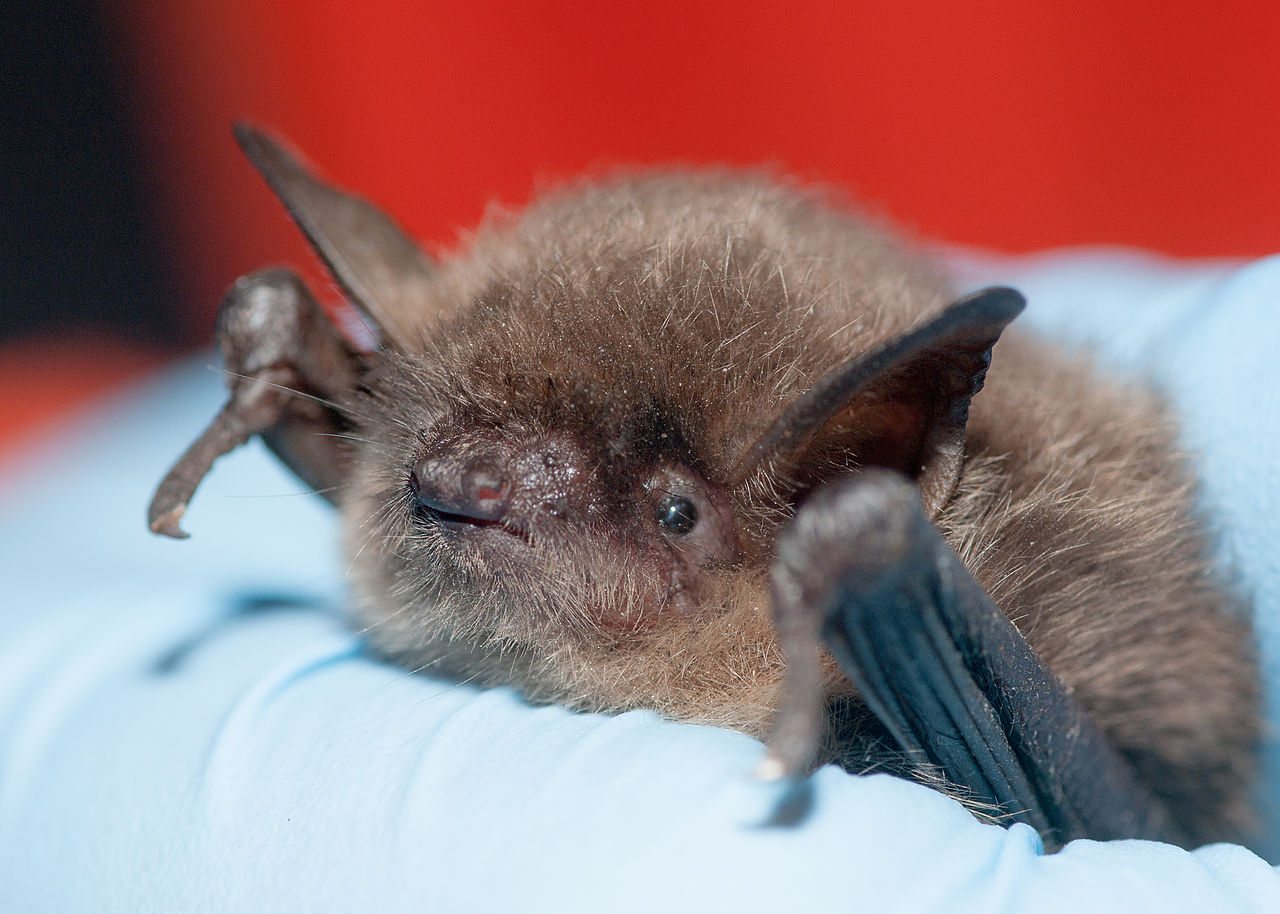
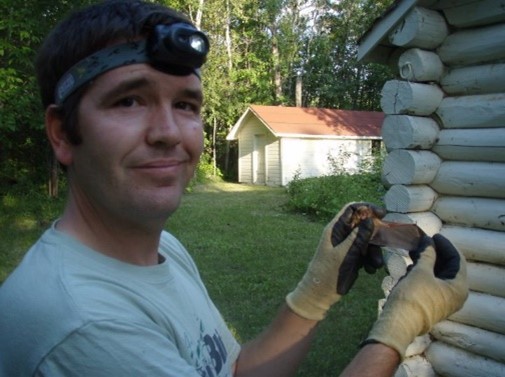
Photo: The [much younger] author with a little brown bat in Voyageurs National Park

Animal Spotlight – Northwestern Pond Turtle

image

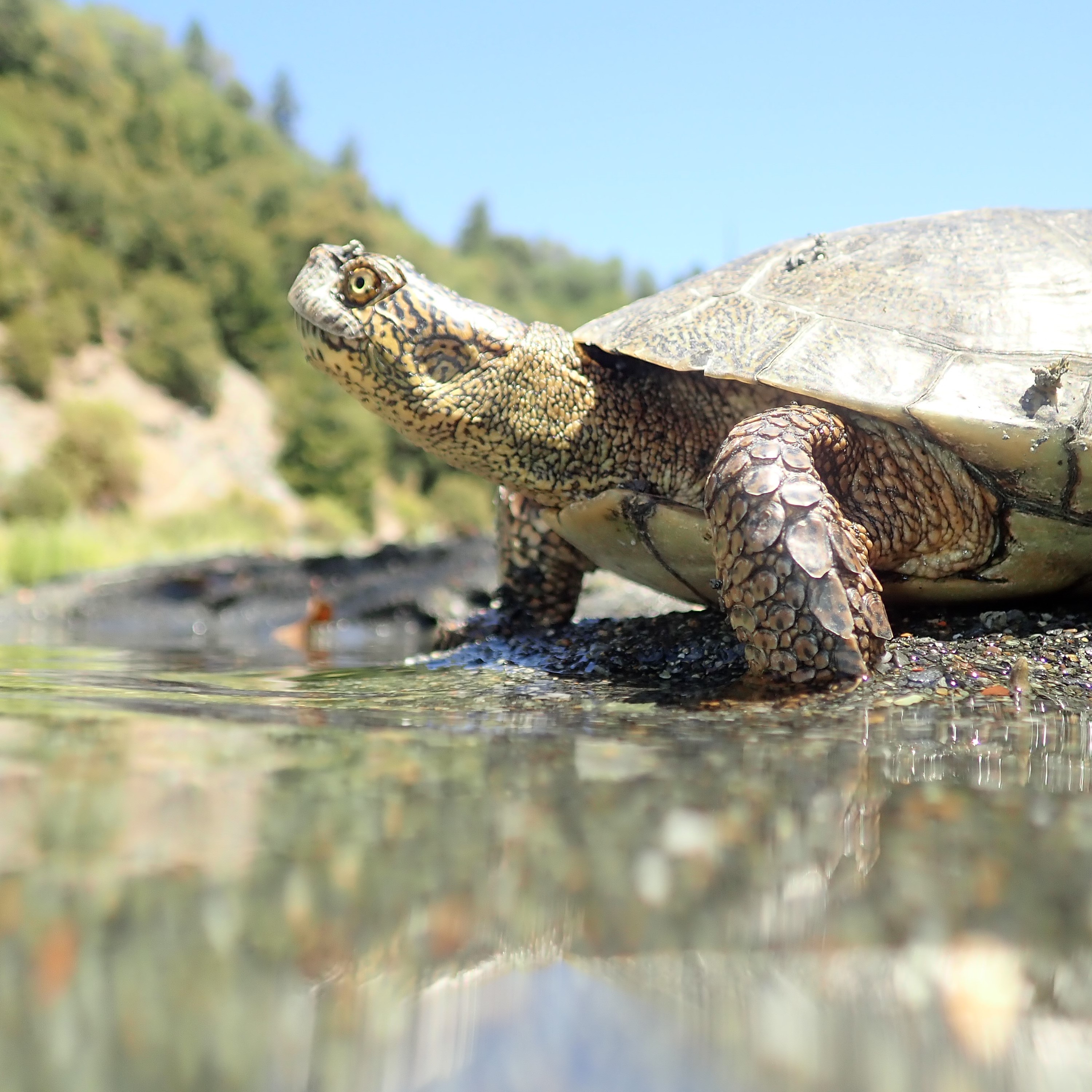
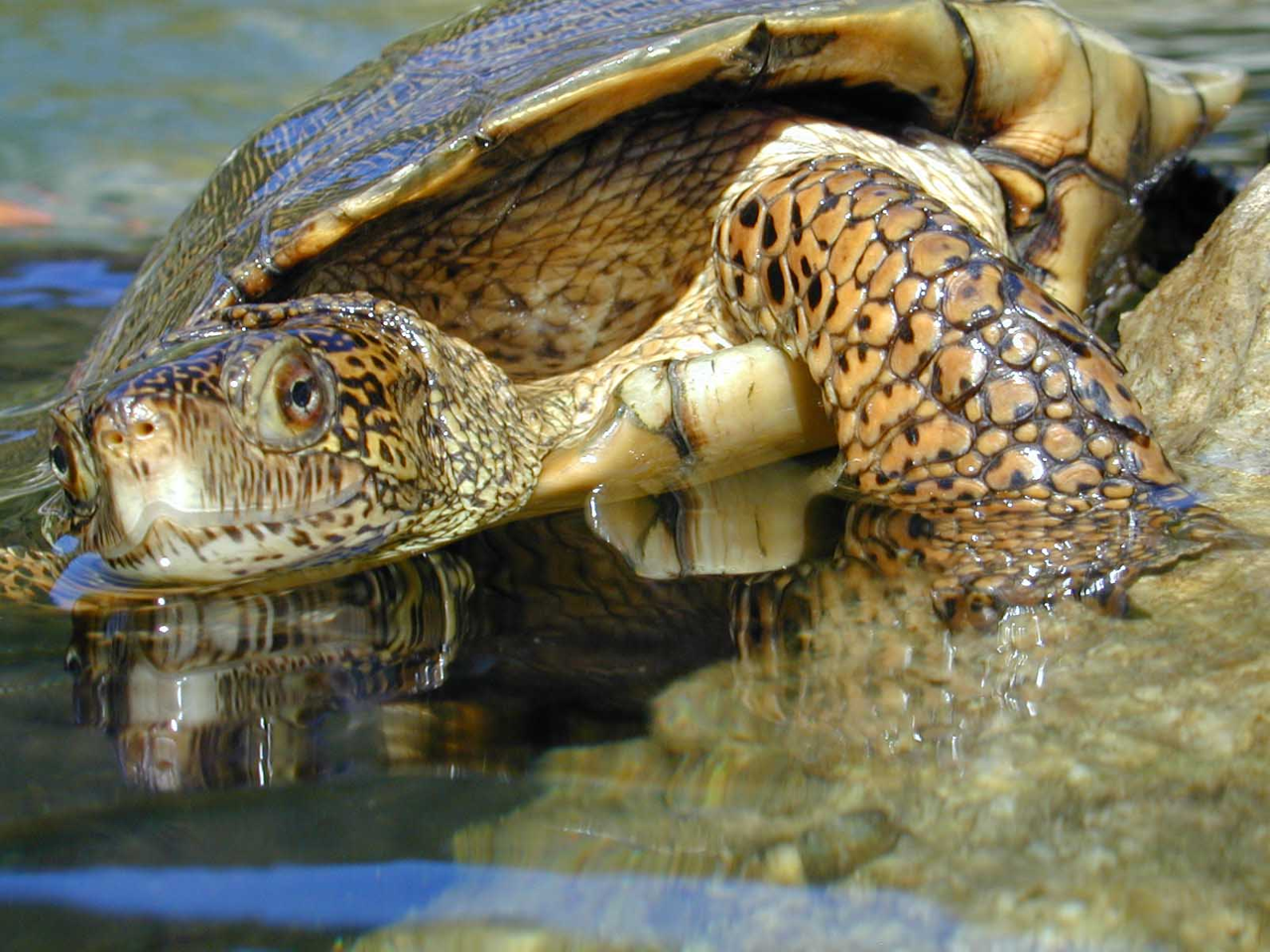
The northwestern pond turtle (Actinemys marmorata) has lived in the waters of the Trinity River for thousands of years. This species has undergone several taxonomic revisions since first being first described in 1841 (1, 2, 3).  It was originally considered a single species with the southwestern pond turtle (Actinemys pallida) and called ‘Emys marmorata’. Then both species were renamed ‘Clemmys marmorata’. The northwestern and southwestern groups were more recently split into two species based on genetic and physical differences between them. So, you may read our local turtles described with different common and scientific names depending on when the document was published (3). But no matter when it was published, there is only one native freshwater turtle known to the Klamath Mountains and the current name is “northwestern pond turtle” (Actinemys marmorata).  

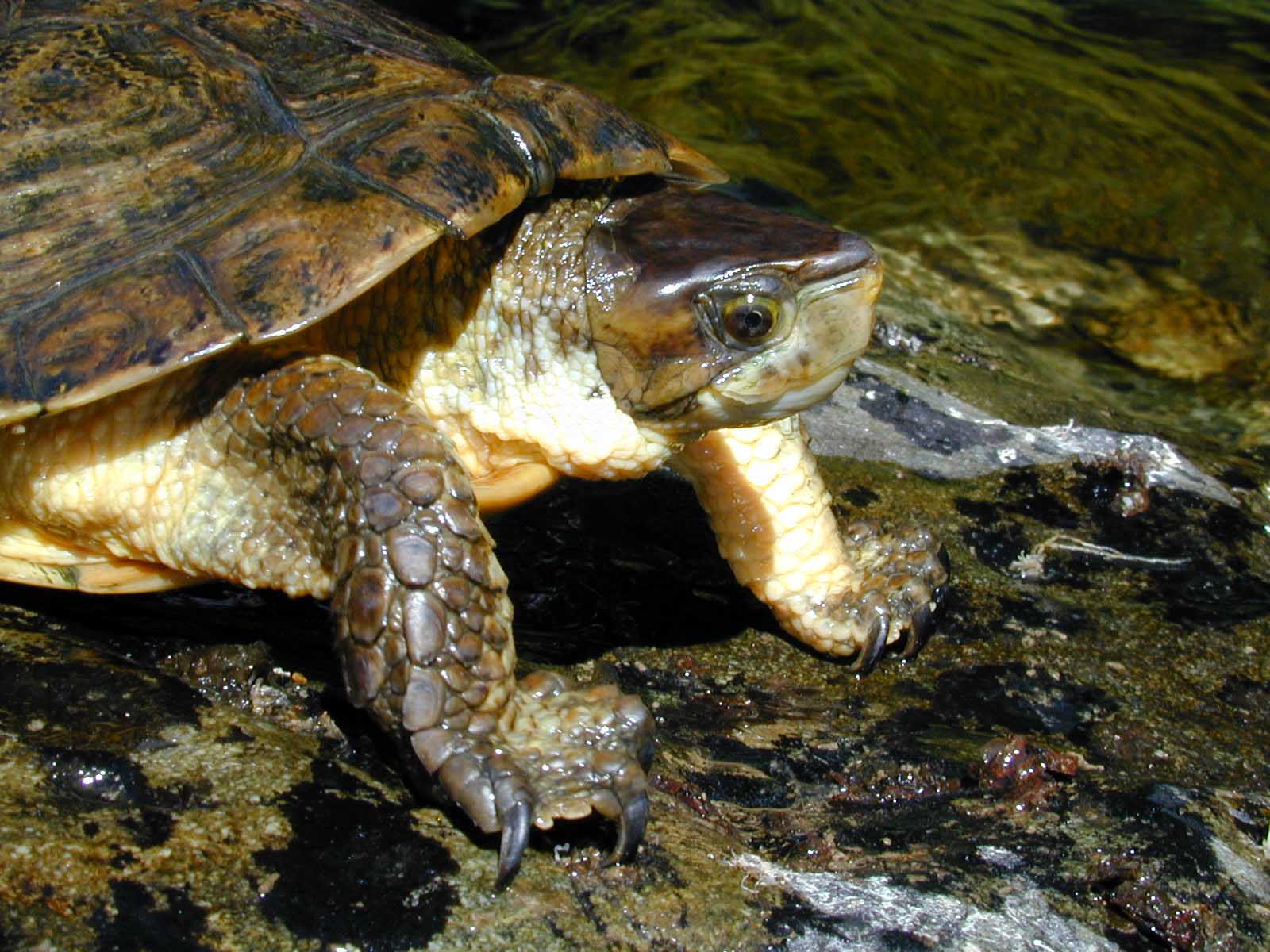
Photo: A female northwestern pond turtle. [Don Ashton] 

Actinemys marmorata 

actin = ray or beam // emys = turtle // marmorata = marbled

As its common name suggests, the northwestern pond turtle is known to inhabit ponds and lakes, but within the Klamath Mountain ecosystem they are commonly associated with riverine habitats. Northwestern pond turtles are poikilothermic, meaning that they regulate their temperature by basking in the sun when they are cold, and seek cool water or shade when they are too warm. They distribute in sunny, slow water reaches with boulder lined pools that, importantly, have connectivity to broad floodplain habitat (5, p. 353).

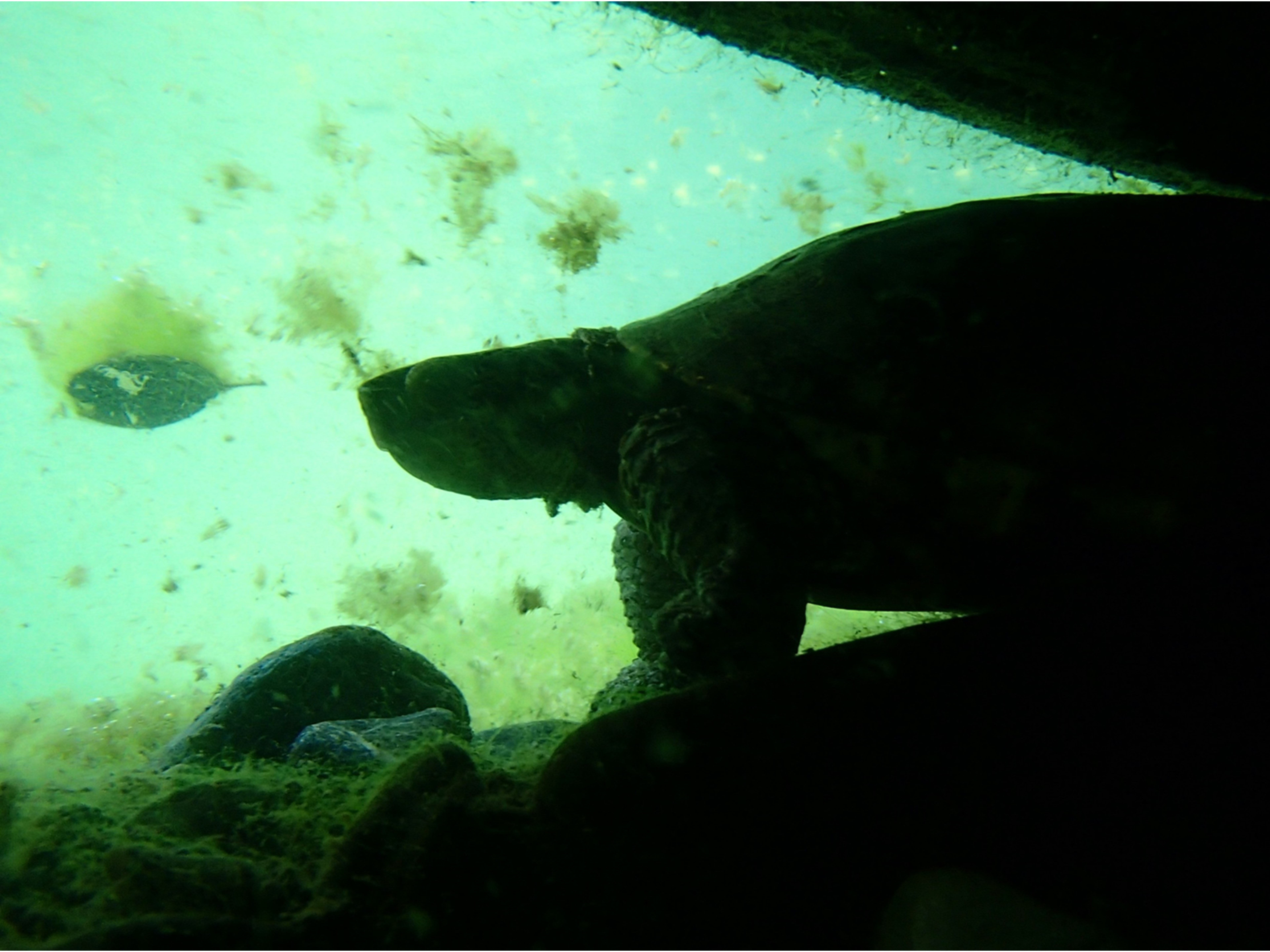
A male Northwestern Pond Turtle in underwater refugia on the Southfork Trinity River. [Don Ashton]

The northwestern pond turtle has an acute sense of sight and low-frequency hearing, and while they are often seen basking in the sun above water, they will quickly retreat when they feel threatened (5). Reader, a river enthusiast we surmise, we are sure you’ve witnessed the sound of a plopping western pond turtle off a river log – but did you see them? 

Male turtles are known to migrate from river to upland areas to overwinter in riparian shrubs or leaf litter. This trait is not ubiquitous among all turtles as some choose to stay close to their summer habitat by overwintering in banks near the river or pond. Local herpetologist Don Ashton of McBain Associates/Riverbend Sciences has spent decades studying turtles in the Trinity River and said, “Turtles are very smart animals, they tend to migrate close to the high water line (think 100 year floodplain) but over time we have found that in comparison with North Fork Trinity River populations, turtles on the mainstem are found more frequently hibernating and nesting in lower elevation areas, likely due to adaptation of minimized flooding by Trinity and Lewiston Dams.”

In addition to migration for hibernation and summering, female turtles migrate twice for nesting. When they are ready to lay their eggs, they fill their bladders and set off on a slow but steady journey to upland areas to dig their nests. Once in a satisfactory location, the female turtle wets the ground with her urine to help soften it for digging. Once her eggs are laid, she will journey back to her summer habitat.

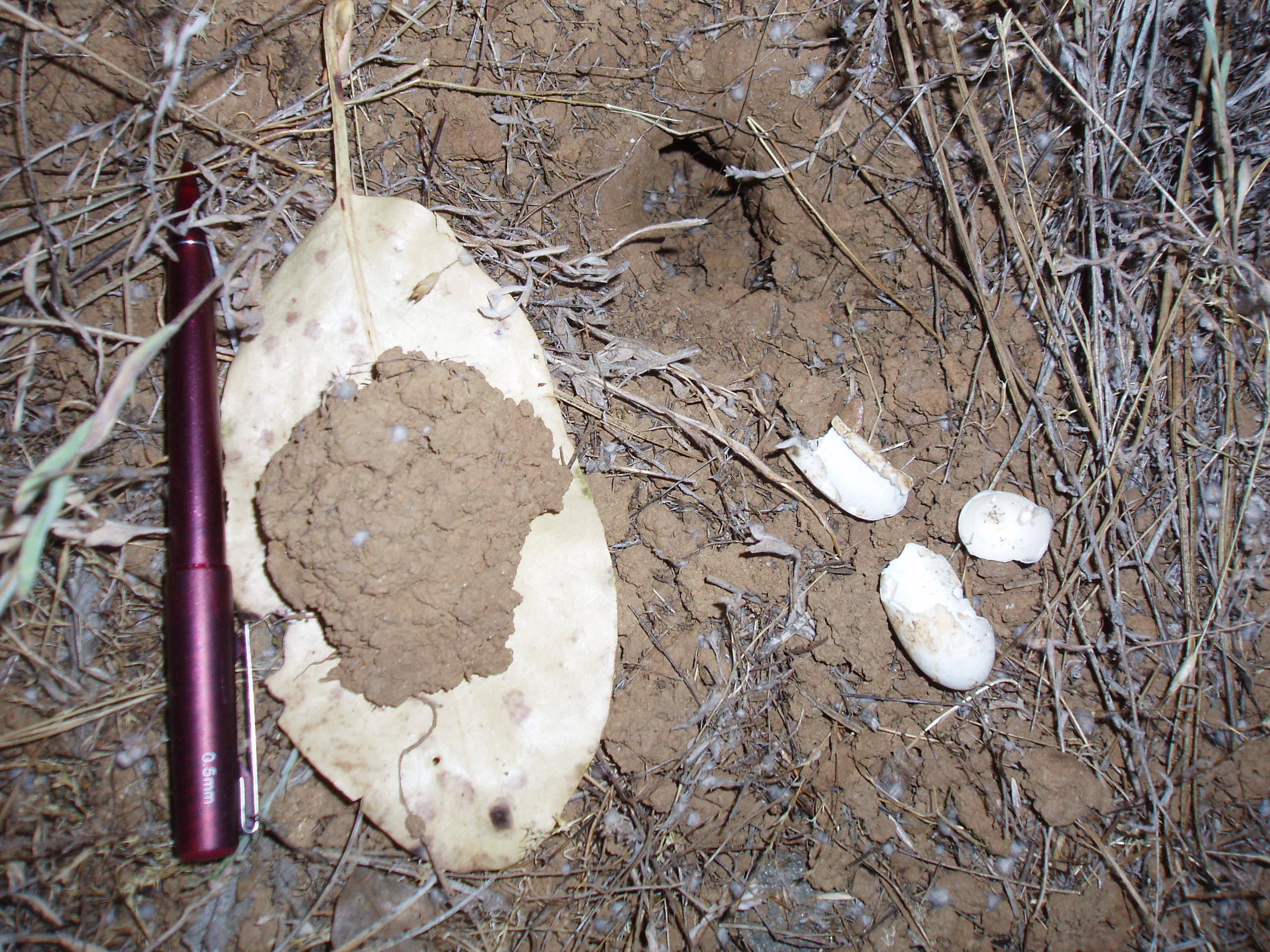
A Northwestern pond turtle nest, predated. Egg fragments and plug are identified. [Don Ashton]

Migration to upland areas for nesting or hibernation can often lead to chance encounters with humans or their vehicles. If you happen to cross paths with a turtle, Ashton advises to leave them to their journey, “they are not lost” Ashton declares. However, if their location poses a risk of vehicular homicide, and you feel compelled to move them, point them in the direction of their path. That is unless the turtle happens to urinate while being handled, then, Ashton suggests, they should be pointed back toward a water source.

These ancient creatures are small to medium in size, growing up to 8 inches long. Interestingly, Trinity River turtles have been documented as even smaller than their regional counterparts. Some herpetologists surmise this could be due to temperature suppression caused by elevated dam releases causing cold water releases in the latter spring and summer months (6). Watch Don Ashton’s 2024 Trinity River Restoration Program Science Symposium presentation on the subject below.

Don Ashton, Senior Aquatic Herpetologist/Ecologist for McBain Associates/Applied River Sciences presents, “Frogs and Turtles informing flow management and river restoration.” at the 2024 Trinity River Restoration Program Science Symposium.

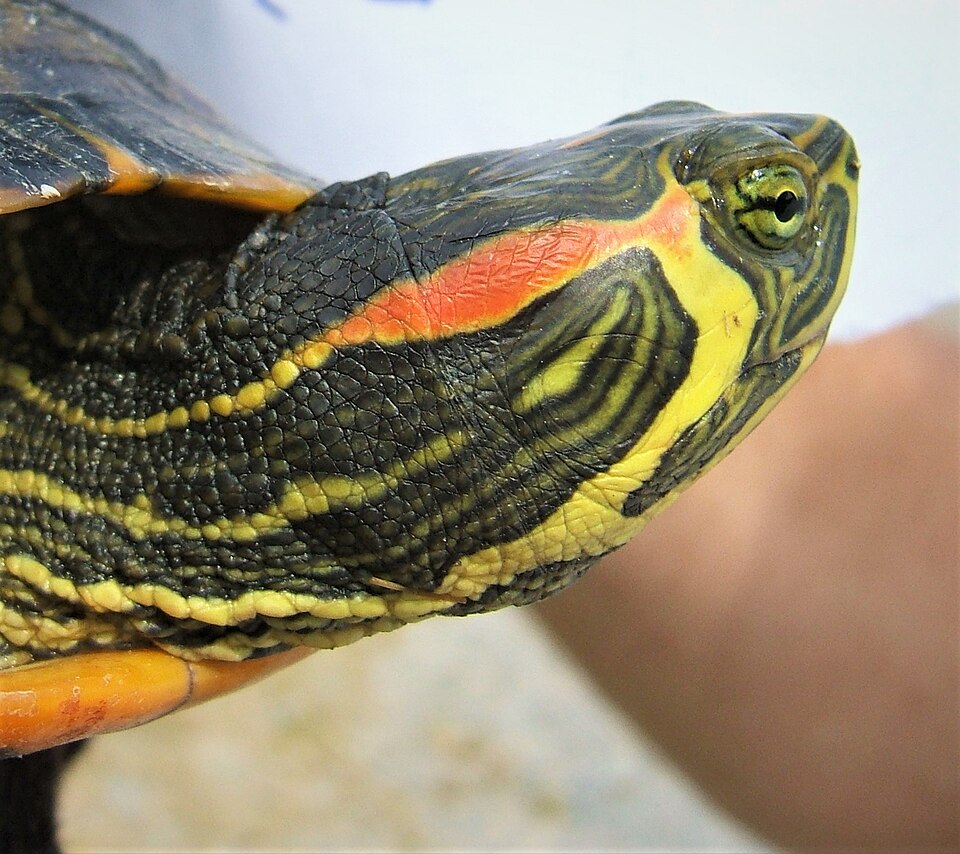
Their dark brown or olive-colored shells often feature fine, lighter markings that give them a marbled look as reflected in their species name, marmorata.  Their low profile and coloring help them blend in with riverbanks, keeping them safe from predators like raccoons, skunks, and birds of prey. The male northwestern pond turtle can be identified with a pointier snout and lighter pale cream coloring under its neck. If you encounter a turtle with hints of red near the ear it is likely a non-invasive red-eared slider, make note of where you are and if possible, provide photo documentation to the Trinity River Restoration Program or the California Department of Fish and Wildlife. Documentation of these instances can help in protecting our native turtle populations.

image

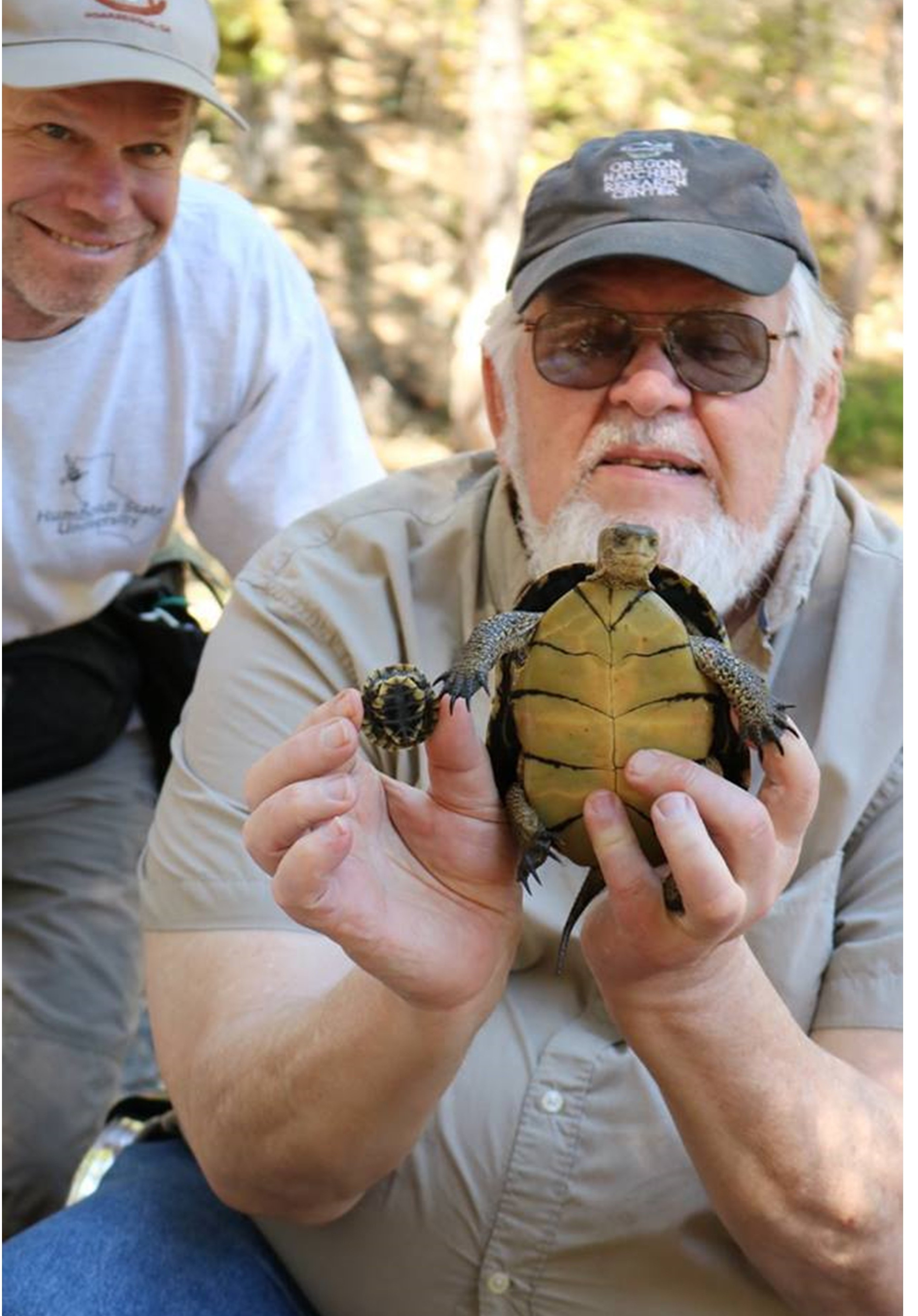
Unlike many reptiles, northwestern pond turtles grow slowly. They start out about the size of a quarter. Females don’t start laying eggs until they’re between 8-10 years old (3, 7, 8). They lay between 3 and 13 eggs, which incubate through the summer. In some parts of Northern California, hatchlings stay in the nest through winter, emerging the following spring. In the photo you can see a comparison of a female turtle at 55 years old with a newly hatched turtle. Ashton, in the background mentioned that the elder at age 55 was carrying 9 eggs at the time of that photo (2018) which suggests their lifespan may be quite long. Ashton mentioned, “it is certainly possible that there are turtles living in the mainstem that have lived there since before the dam was placed.”

Photo: A female, marked and recaptured and aged at 55 years old in comparison with a hatchling. Held by Bruce Bury and Don Ashton smiles from the back in 2018. [Jamie Bettaso]

The northwestern pond turtle has been studied locally for over 50 years due to the diligence of herpetologist Bruce Bury, now retired from USGS, who monitored northwestern pond turtles starting in 1968 while earning his Ph.D. at UC Berkeley. He marked turtles with an identifying notch in a tributary of the South Fork Trinity River, allowing for scientists to track longevity on the only native species known in the Klamath Range (5, p. 354). Although Bury has documented turtles over 50 years old, northwestern pond turtle longevity is still being studied today.

The northwestern pond turtle is commonly seen in the Trinity River, but its population has been declining throughout its west coast range. This decline is so severe that in 2023 the U.S. Fish and Wildlife Service proposed to list the northwestern pond turtle as a “Threatened” species (8, 11). Habitat loss, hydrologic alterations and invasive species are a few human caused threats to northwestern pond turtles. The state of California also recognizes the northwestern pond turtle as a species of “special concern”. As such, handling these turtles requires permitting and are considered illegal to keep as pets.

The Trinity River Restoration Program has been involved in research to identify and address some of these threats. A graduate student from Cal Poly Humboldt, Leah Sloan, determined that non-native bullfrogs (Lithobates catesbeianus) eat young northwestern pond turtle hatchlings to the detriment of their populations along the Trinity River (10). Bullfrogs prefer off-channel ponds, which are perfect areas for northwestern pond turtles to grow. Bullfrogs require perennial ponds to reproduce because their tadpoles take longer than one year to grow (and the mainstem Trinity River is too cold and swift to support bullfrogs year-round), so ponds that normally dry out won’t support bullfrogs permanently. Seasonal drying isn’t much of a concern to turtles because they can simply walk to the river when their home dries up. This is one recommendation for the Program to consider when rehabilitating a site.

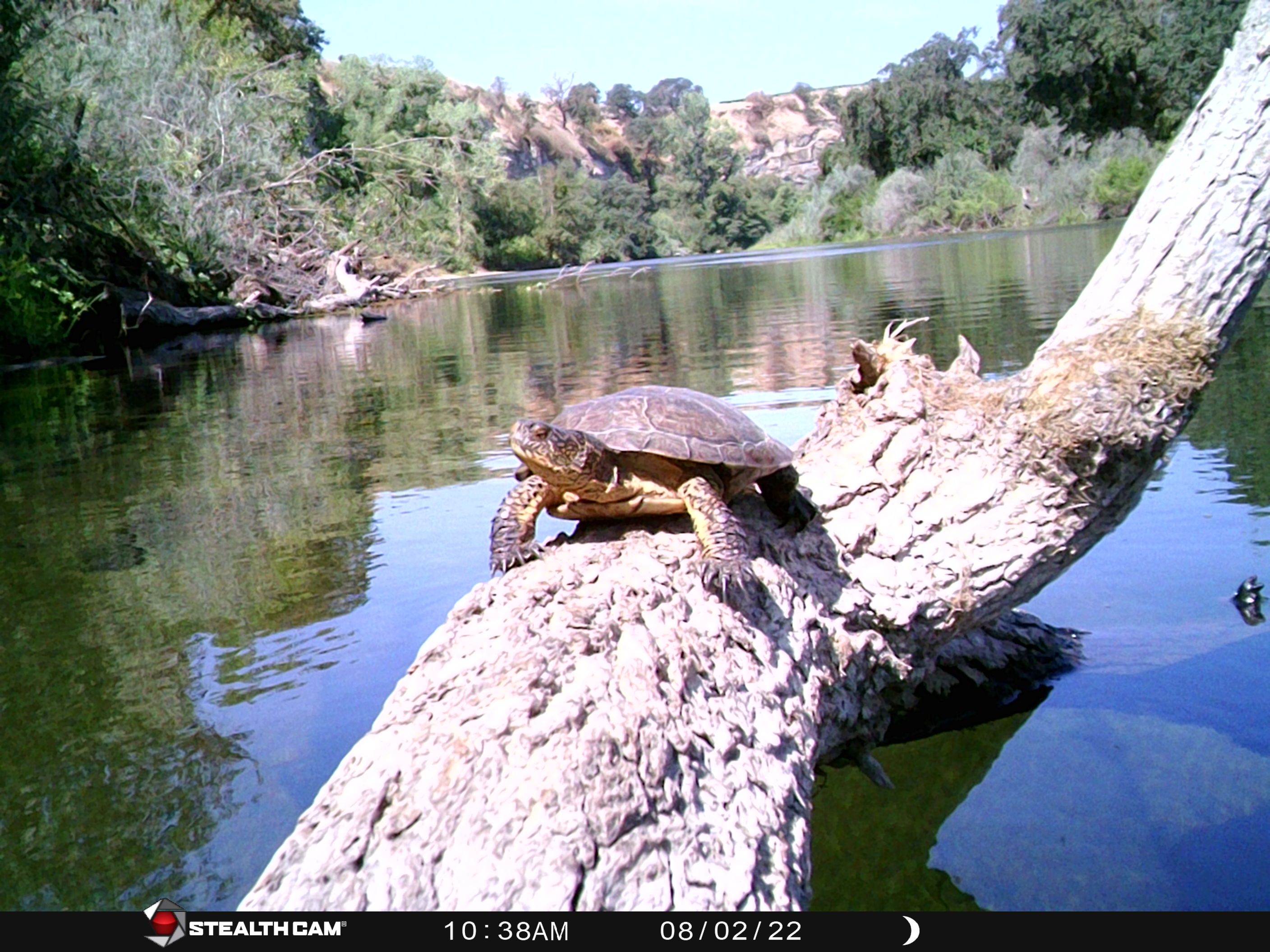
A trail camera captures a female northwestern pond turtle basking on a log. [Don Ashton]

Today, turtle researchers and wildlife managers are still learning more about turtle behaviors and how to change management to better serve the northwestern pond turtle in the Trinity River region. From size and aging to nesting sites and travel patterns, each discovery helps build a clearer picture of what these turtles need to thrive.

References

  1. Scientific and Common Names of the Reptiles and Amphibians of North America – Explained © Ellin Beltz
  2. Holland DC. 1994. The Western Pond Turtle: Habitat and History.
  3. Bury, R.B., Welsh, H.H., Germano, D.J., and Ashton, D.T. (eds). 2012. Western Pond Turtle: Biology, Sampling Techniques, Inventory and Monitoring, Conservation, and Management. Society for Northwestern Vertebrate Biology, Northwest Fauna, Number 7. 128 pp. 
  4. Shaffer H.B., Scott, P.A., 2019. Assessment for the Western Pond Turtle. Prepared for the US Fish and Wildlife Service by University of California, Los Angeles.
  5. Kauffmann, M. Garwood, J. The Klamath Mountains: a Natural History. 2022. p. 353-354.
  6. Ashton, Don & Bettaso, Jamie & Welsh, Hartwell. (2015). Changes across a Decade in Size, Growth, and Body Condition of Western Pond Turtle (Actinemys marmorata) Populations on Free-flowing and Regulated Forks of the Trinity River in Northwest California. Copeia. volume 103. 621-633. 10.1643/CP-15-253.
  7. California Herps – Northwestern Pond Turtle – Actinemys marmorata
  8. Wikipedia – Western Pond Turtle
  9. https://www.fws.gov/press-release/2023-09/us-fish-and-wildlife-service-proposes-federal-protections-both-species
  10. Sloan L, Marks S. 2012. Summary of Management Implications for the Project on Western Pond Turtles (Actinemys marmorata) in Lentic Habitats Along the Trinity River, California. Report to the U.S. Bureau of Reclamation, Trinity River Restoration Program, from Humboldt State University, Department of Biological Sciences, Arcata, CA. Available: https://www.trrp.net/library/document?id=1819.
  11. Endangered and Threatened Species: Status with Section 4(d) Rule for the Northwestern Pond Turtle and Southwestern Pond Turtle. Posted by the Fish and Wildlife Service. Apr 4, 2024.

Bug of the Month: March Mayfly

By: Chris Laskodi M.S., Fisheries Ecologist, Yurok Tribal Fisheries Department

The ‘bug of the month’ for March is the…March Brown. March Browns are mayflies that get their namesake for being, well, brown and for hatching in March. As with most common names for aquatic insects, the name March Brown can apply to several different species of mayfly. On the West Coast, the name March Brown applies to Rhithrogena morrisoni; while on the East Coast, it applies to Stenonema vicarium. This common name confusion is why insect taxonomists use the scientific names (even though those change often too!) to describe insects.

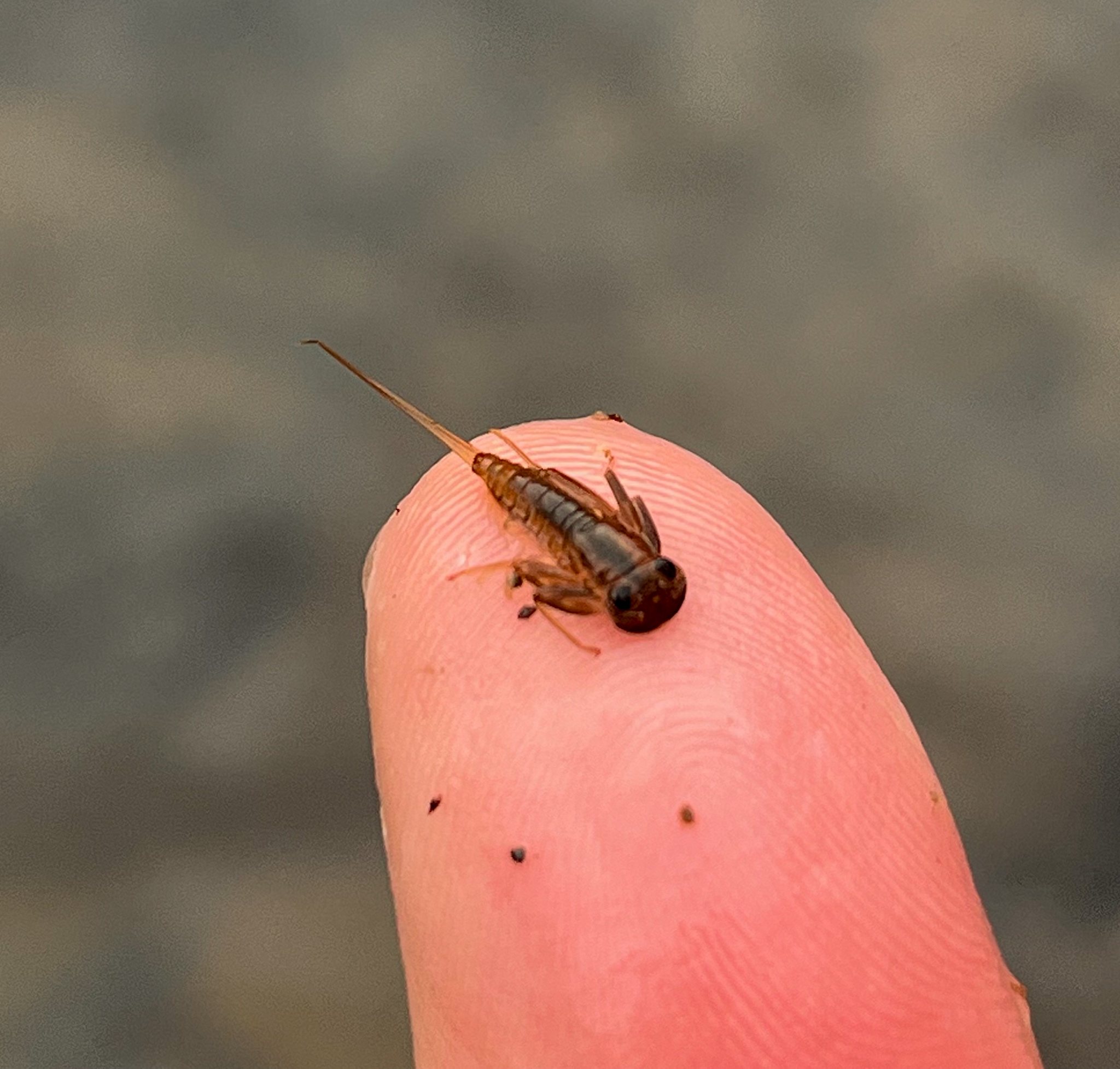
March Browns, like other members of the family Heptageniidae, are known as clinger mayflies in the nymph life stage. Their body shape is extremely flat and their gills often form a suction cup like structure on their underside. They are adept at living in the fastest riffles and can persist high flows without being dislodged like other species. Their persistence to stay where they are means they are not as available to salmonids as other species. Even though they are less available, they are often seen in the drift as they are extremely abundant. We do occasionally find the nymphs in the stomachs of juvenile salmonids; but it is much more common to see the adult life stage being eaten.
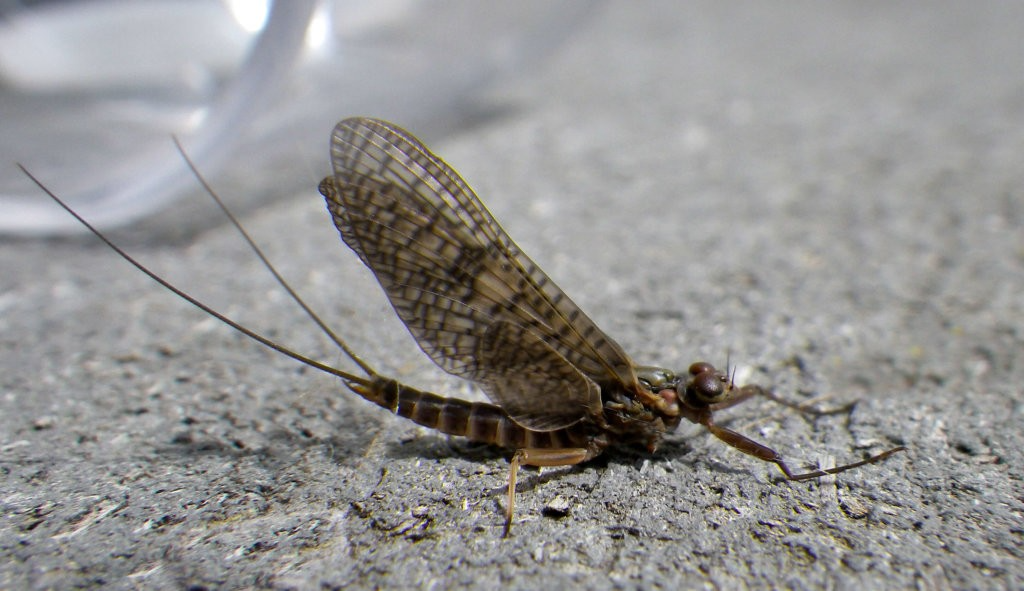
Adult March Browns are one of the most prolific hatches of insects in the winter months. Although they cannot meet the numbers of midges or Baetid mayflies, their larger size is a good source of calories for hungry salmonids. They typically hatch February through April although they are most abundant in, you guessed it, March. You will often see a hatch of March Browns bringing juvenile salmonids as well as larger trout to the surface. A March Brown imitation fished as a dry fly is a good way to catch an adult Steelhead in the spring.

Check out this March Brown fly tying tutorial from the Oregon Fly Fishing Shop:

Photo Captions

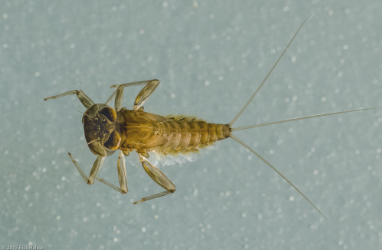
  1. A March Brown nymph. [Courtesy Rick Hafale]
  2. Here is a mature March Brown nymph showing it’s developed carapace/wing pad. [Adapted from Oregon Fly Fishing Blog Fly tying tutorial]
  3. A March Brown adult courtesy The Missoulian Angler Fly Shop. [Les Korcala]

Chris Laskodi, M.S., Fish Ecologist – Yurok Tribal Fisheries Department

Chris serves as the fish biologist/ecologist for the TRRP in the program’s Science branch. Chris has worked on the Trinity River since 2015, previously serving as a fish biologist for the Yurok Tribe and a fisheries technician for the US Fish & Wildlife Service. Chris holds a B.S. in Wildlife, Fish and Conservation Biology from the University of California, Davis and a M.S. in Aquaculture/Fisheries from the University of Arkansas at Pine Bluff. In his free time, Chris enjoys taking friends and family fishing on one of the many watercraft available to him.

Bug of the Month: Chironomids

You may notice a distinct absence of bugs flying above the river during these winter months. However, if you look closely you’ll find an active colony of tiny midges buzzing on the surface. These midges, despite their small size, are extremely important to the ecology of the Trinity River. Midges belong to the ‘true flies’ (order Diptera) and are related to other flies such as houseflies, craneflies, and mosquitoes.

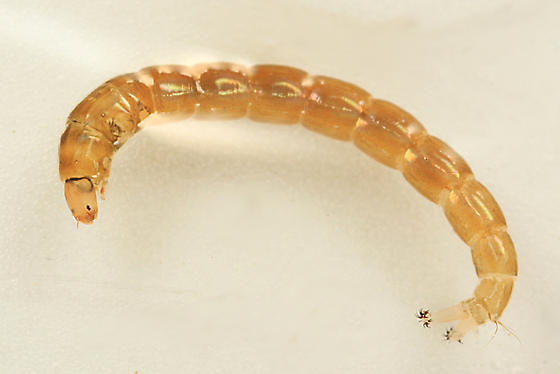
Midges are often referred, especially by Trinity River Restoration Program scientists, as chironomids. This is because they belong to the family Chironomidae within the order Diptera. Chironomids are extremely diverse and are found worldwide in all types of different aquatic environments. Some are extremely tolerant of low oxygen and pollution; some even have a hemoglobin analog to survive in low oxygen environments. Others are extremely sensitive to poor water quality. Chironomids are often used to determine the health of streams because of the diversity of different water qualities they can tolerate.

image

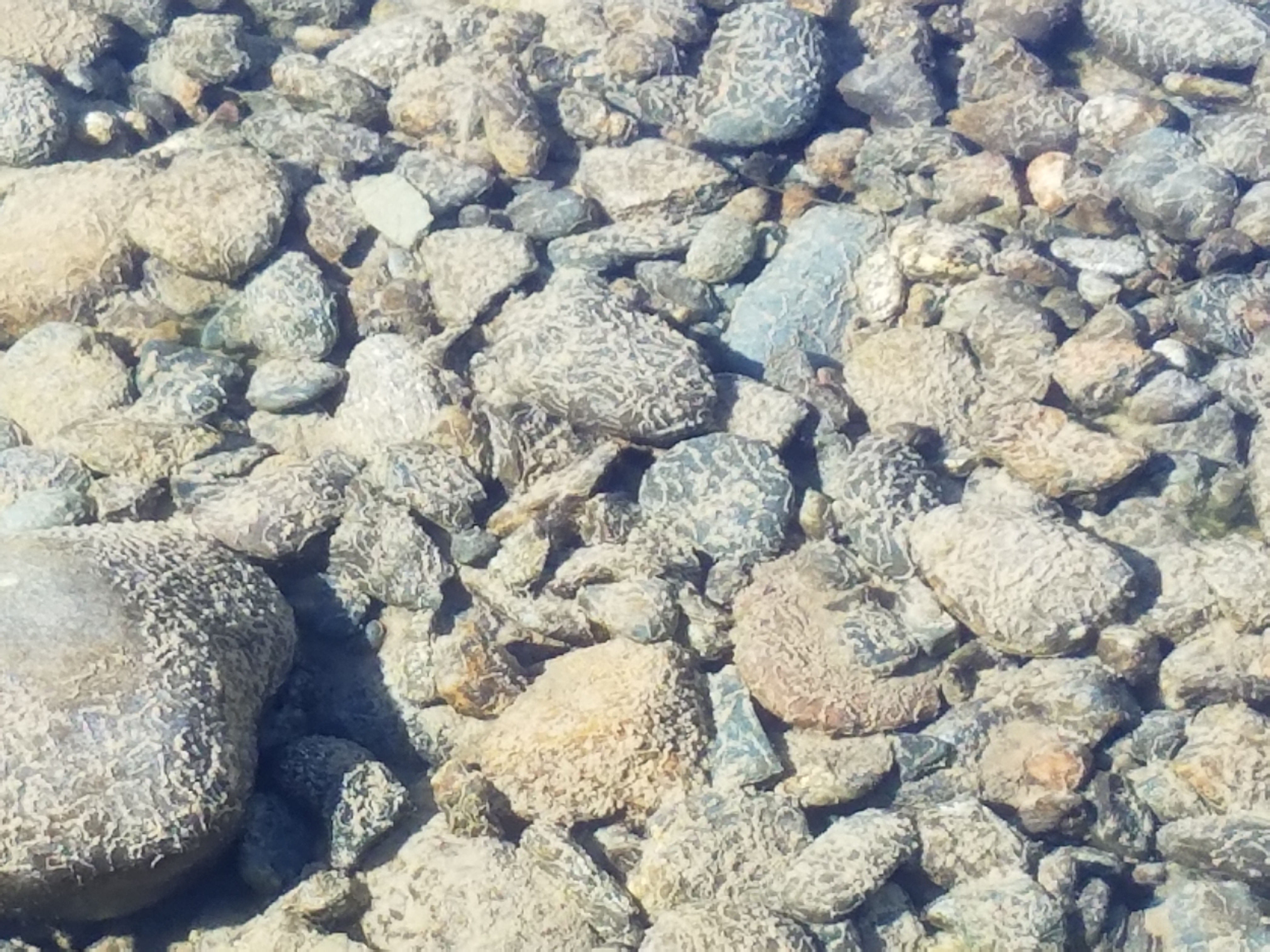
Chironomids are especially important to the ecology of the Trinity River because they are a major food source for juvenile salmonids and other native species. Chironomids are known as a pioneer species which means they are the first to colonize new habitats. During the winter, when seasonal floods are wetting new landscapes, Chironomids take advantage. Their short life cycle (usually between 6 and 12 weeks) enables them to exploit habitat extremely quickly. This often results in a Chironomid ‘bloom’ (see picture). These seasonal ‘blooms’ often coincide with the emergence of salmonids from the gravel.

The chironomids small size and high abundance make it an easy first meal for tiny salmonid mouths. Chironomids along with Baetid mayflies profiled last month, are some of the most important food sources for juvenile salmonids during their outmigration to the ocean.

Figure Captions

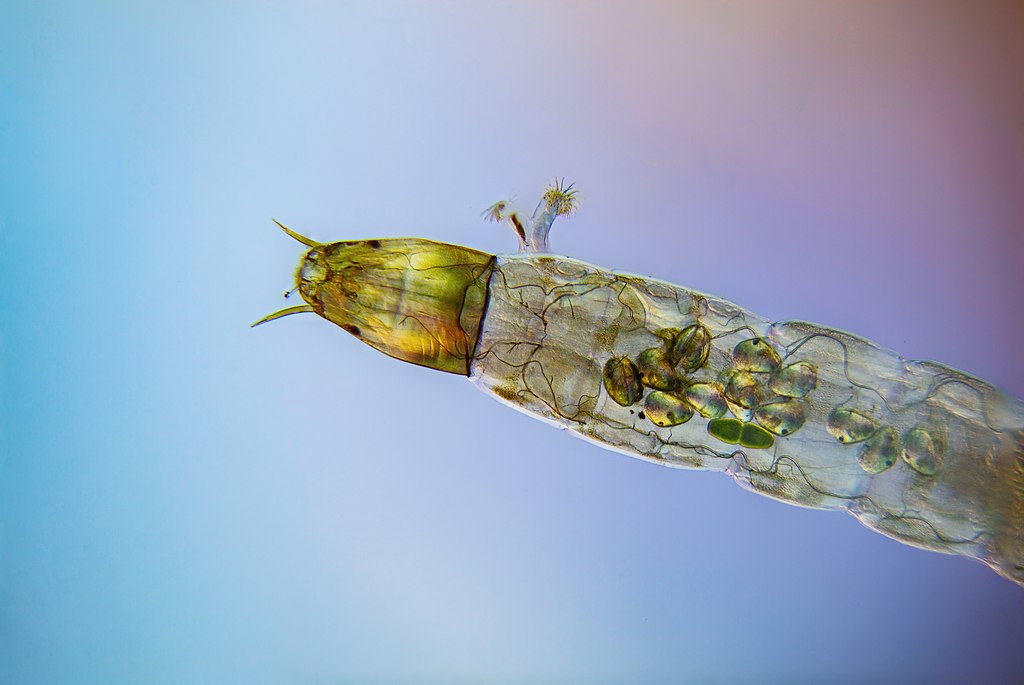
  1. A larval Chironomid [photo courtesy of Bugguide.net]
  2. Newly inundated floodplain habitat with a Chironomid ‘bloom’. Each one of the tube-like structures are cases that Chironomids construct out of fine sediments. [Chris Laskodi, Yurok Tribe]
  3. Chironomidae Larvae [Wikimedia Commons]

Chris Laskodi, M.S., Fish Ecologist – Yurok Tribal Fisheries Department

Chris serves as the fish biologist/ecologist for the TRRP in the program’s Science branch. Chris has worked on the Trinity River since 2015, previously serving as a fish biologist for the Yurok Tribe and a fisheries technician for the US Fish & Wildlife Service. Chris holds a B.S. in Wildlife, Fish and Conservation Biology from the University of California, Davis and a M.S. in Aquaculture/Fisheries from the University of Arkansas at Pine Bluff. In his free time, Chris enjoys taking friends and family fishing on one of the many watercraft available to him.

Bug of the Month: Baetid mayflies

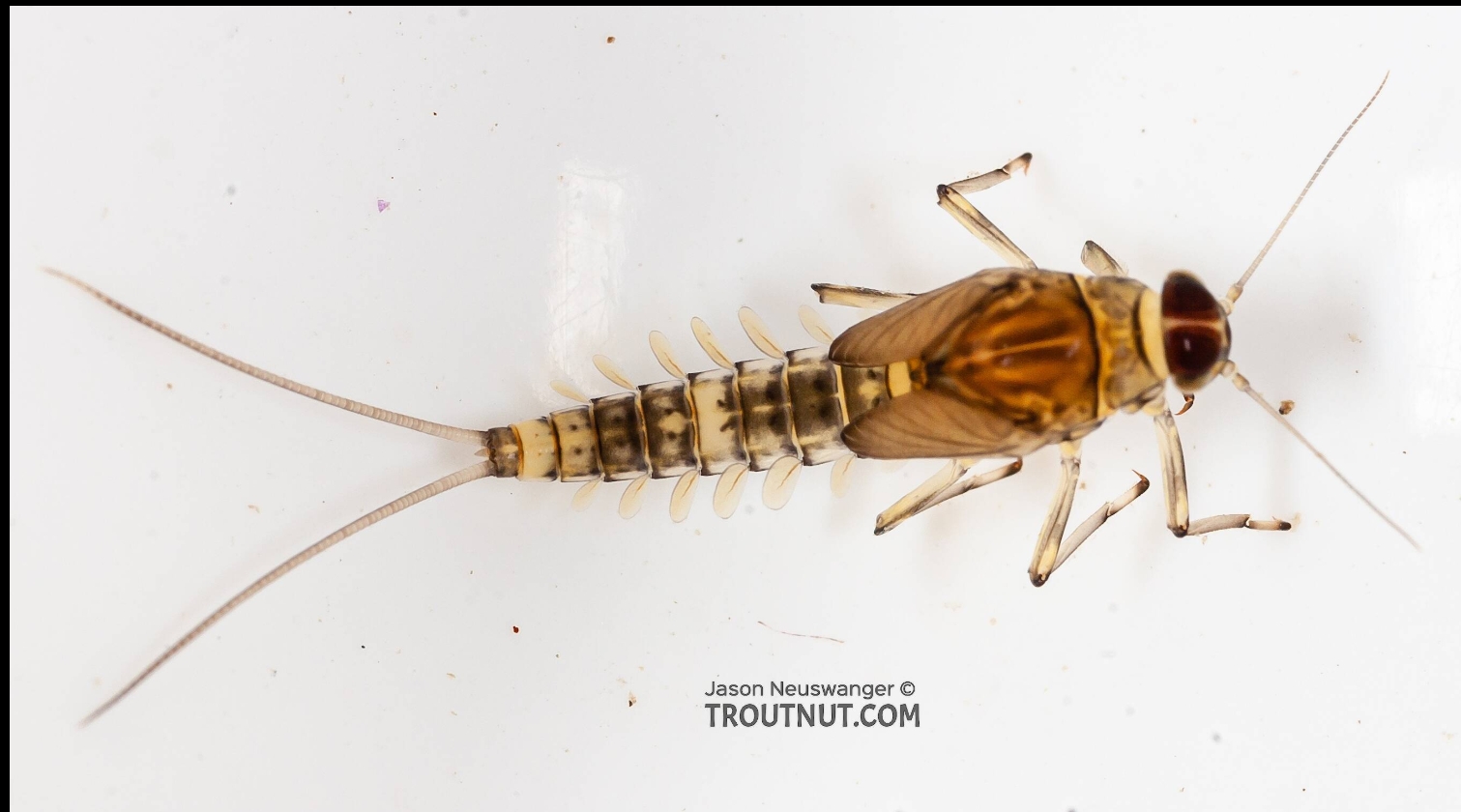
Photo Credit; TroutNut.com

Bug of the month: Baetid mayflies

genus Baetidae

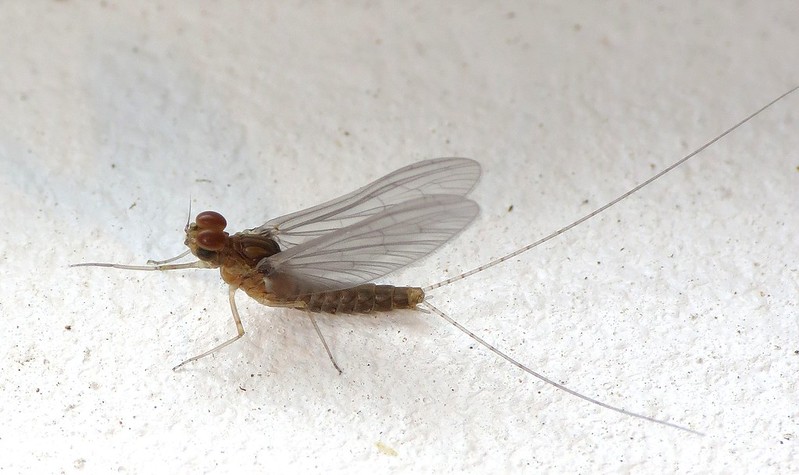
Mayflies from the family Baetidae are this month’s ‘bug of the month’. Commonly known as blue winged olives by fly fishermen, Baetid mayflies are small (<10mm) and can be extremely prolific. In addition, they grow rapidly and can have multiple generations within a year (known as multivoltine). This means that you can see adult Baetid mayflies during most of the year although they are especially apparent during the winter in early spring when few other bugs are hatching.  

Photo Credit: TroutNut.com

Baetid mayflies are exceptionally adept at colonizing new habitat. They are extremely good swimmers (for a bug) and are known for undertaking what is known as behavioral drift. Behavioral drift is a strategy where macroinvertebrates enter the flow of the river voluntarily to seek out new habitat. Short life cycles, excellent swimming ability, and the propensity to undertake behavioral drift allow them to settle new habitat like when high flows inundate floodplains.
They are often the first to colonize a new area due to their swimming skills and their preference for shallow, slow water. These newly formed areas grow algae very well which is the primary food source for Baetid mayflies. They can often exploit newly formed habitat within a few weeks and live their entire life cycle within 12 weeks before other bugs get a chance to settle in an area. Seasonal inundation of floodplains are extremely important to Baetid mayflies success. Juvenile salmon have evolved to depend on the seasonal inundation of floodplains because of the presence of Baetid mayflies, which they eat for food.

Chris Laskodi, M.S., Fish Ecologist – Yurok Tribal Fisheries Department

Chris serves as the fish biologist/ecologist for the Trinity River Restoration Program in the program’s Science branch. Chris has worked on the Trinity River since 2015, previously serving as a fish biologist for the Yurok Tribe and a fisheries technician for the US Fish & Wildlife Service. Chris holds a B.S. in Wildlife, Fish and Conservation Biology from the University of California, Davis and a M.S. in Aquaculture/Fisheries from the University of Arkansas at Pine Bluff. In his free time, Chris enjoys taking friends and family fishing on one of the many watercraft available to him.

Bug of the Month: October Caddisflies 

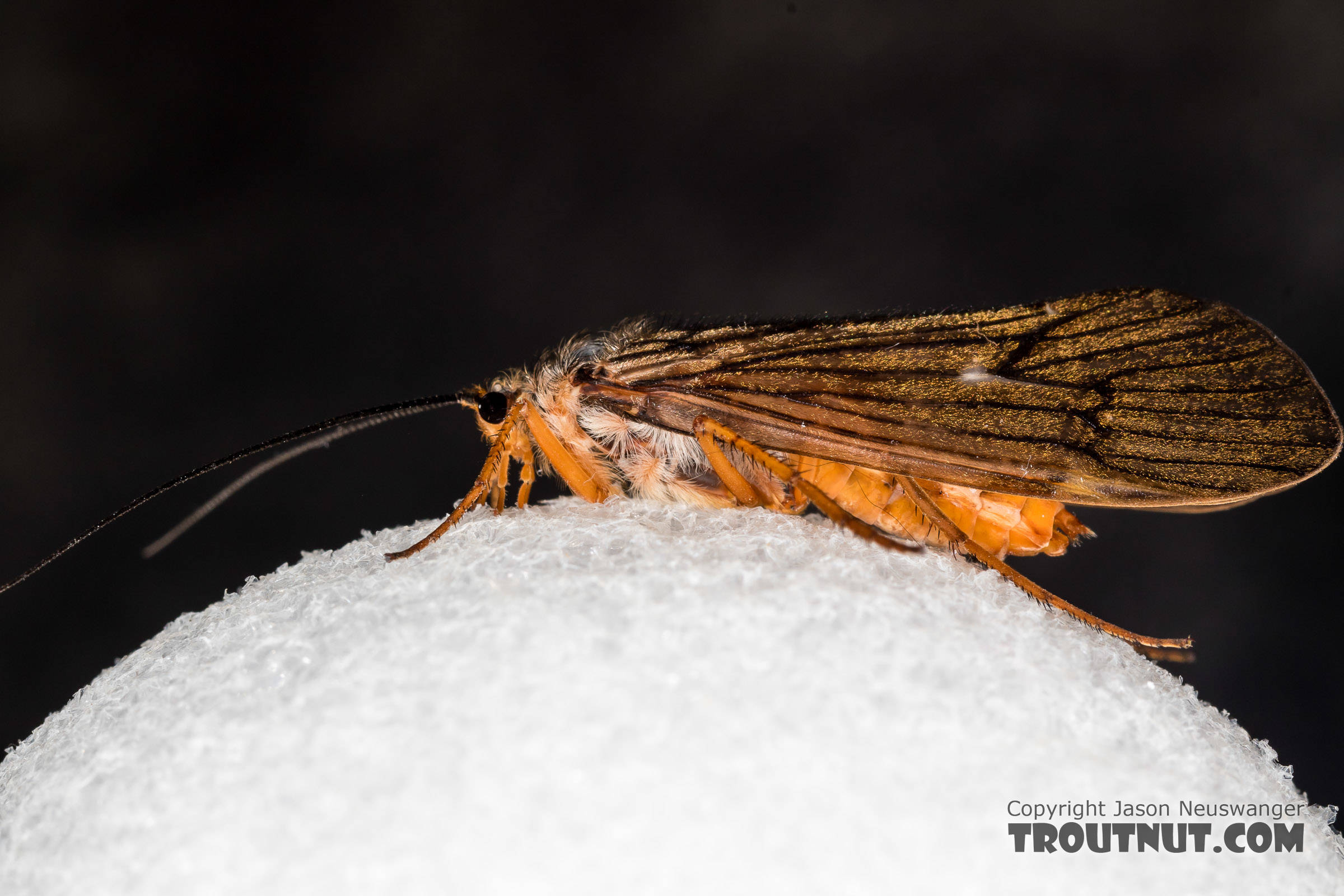
October Caddisflies genus Dicosmoecus

Dicosmoecus (dee-co-smee-cus) caddisflies are better known by the common name ‘October caddisflies’. These caddisflies are notable for there extremely large size (1-2 inches), their concentrated emergence window (October), and their abundance especially in streams containing anadromous fish. These characteristics make it one of the most important hatches to not only fly-fishermen, but to wildlife such as birds as well. 

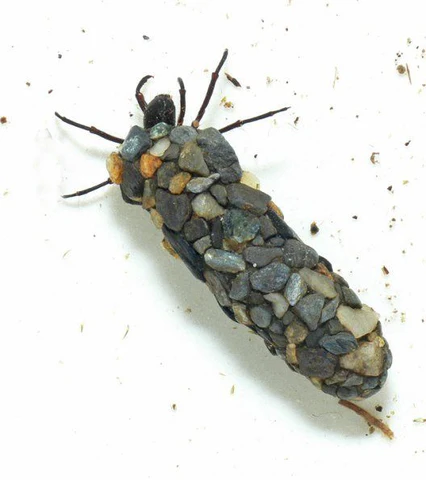
Dicosmoecus like other caddisflies have three life stages: larvae, pupae, and adult. Larvae build cases out of small rocks which serves as protection and their housing. They drag these cases around while foraging for food, mostly algae and detritus. Dicosmoecus are especially notable by the large distances they can cover (up to 25 meters per day) to forage (Resh et al. 2011).

They continually grow and have to build new cases as the old ones become too small. After molting five times (called instars), they attach their cases to the underside of rocks and began to pupate. After about a month of pupating, they cut a hole in their case and swim to the surface before shedding their exoskeleton one more time and becoming adults.

Caddisflies, unlike mayflies, will live for several weeks while they seek out a mate. You will often see them active at dusk and just after sunset. Keep a look out for the large moth-like bugs during sunset for the next few weeks.

References

Resh, V.H., M. Hannaford, J. Jackson, G.A. Lamberti, and P.K. Mendez. 2011. The biology of the limnephilid caddisfly Dicosmoecus gilvipes (Hagen) in Northern California and Oregon (USA) streams. Zoosymposia 5:413-419.

Images courtesy of Red’s Fly Shop and Troutnut.com

Chris Laskodi, M.S., Fish Ecologist – Yurok Tribal Fisheries Department

Chris serves as the fish biologist/ecologist for the TRRP in the program’s Science branch. Chris has worked on the Trinity River since 2015, previously serving as a fish biologist for the Yurok Tribe and a fisheries technician for the US Fish & Wildlife Service. Chris holds a B.S. in Wildlife, Fish and Conservation Biology from the University of California, Davis and a M.S. in Aquaculture/Fisheries from the University of Arkansas at Pine Bluff. In his free time, Chris enjoys taking friends and family fishing on one of the many watercraft available to him.