
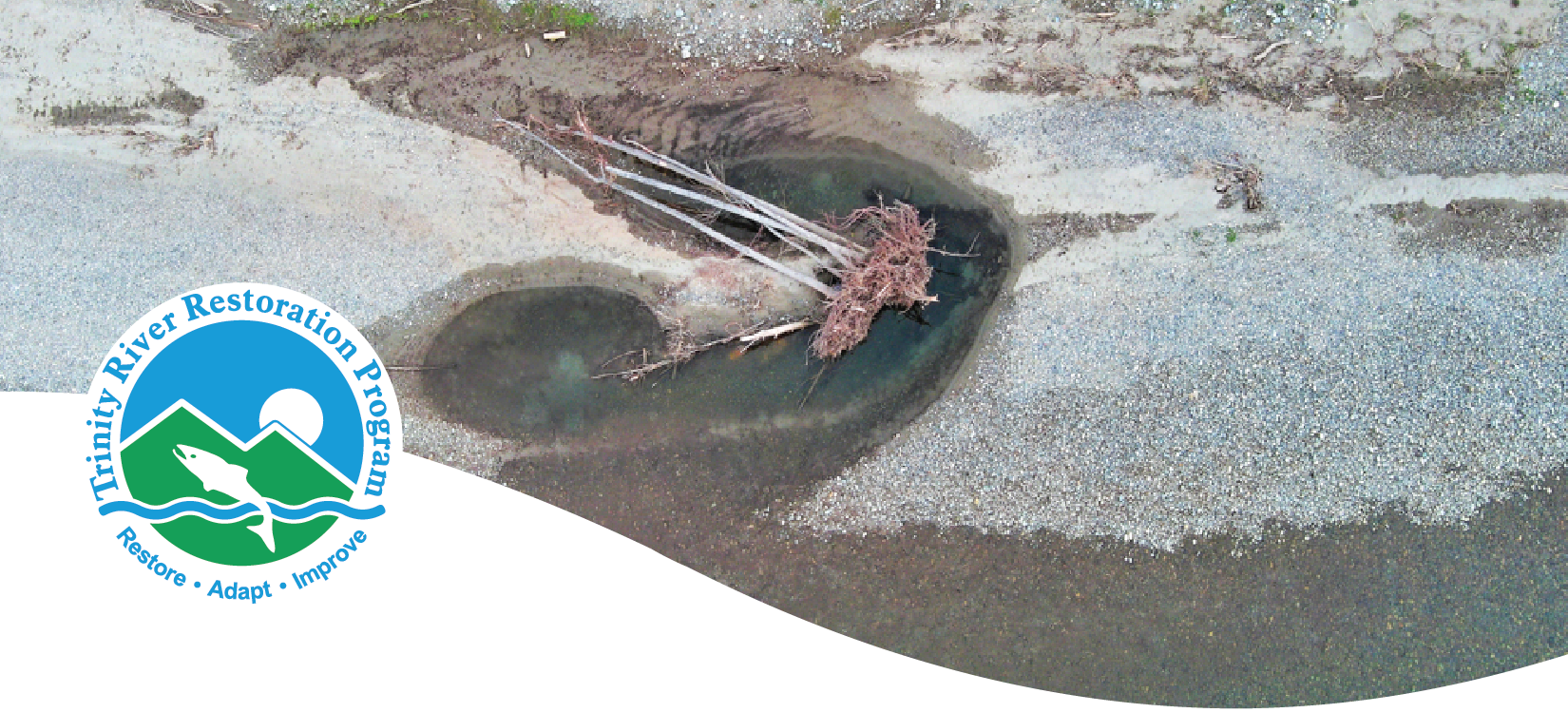
Gravel and wood recruitment at Oregon Gulch post WY26 winter flows. [Aaron Martin, Yurok Tribal Fisheries Department]
Contents
- Current Conditions: Water Year 2026 / March Forecast
- Program Updates: Sediment and Wood Augmentation Projects
- Featured Article: Ecology in Motion: Wildlife Interactions After River Rehabilitation
- Upcoming Meetings and Events: Science on Tap and more!
- Reading, Listening & Watching
Current Conditions
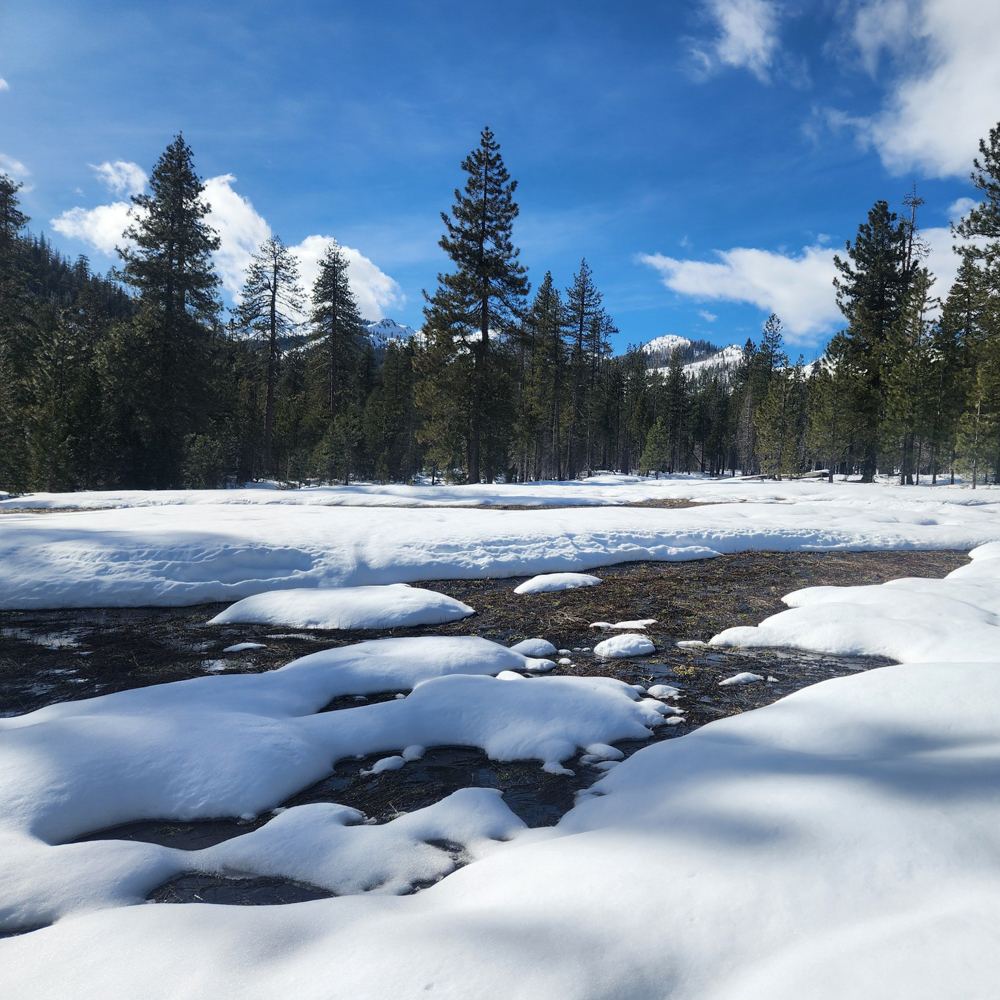
Water Year Thus Far
March Forecast
February was dry, then came snow and a warm spell of rain rendering most snow accumulation from the mid-February storm in surrounding high elevation areas as either gone or melting. Despite the “snow drought” Trinity Reservoir is measuring in at 129% of normal with just about 2.2 million acre feet of storage going into March. The California Department of Water Resources March B120 has been announced as “Dry” and the Program will schedule the release of 20,000 AF over the next month from the restoration allocation for WY26, which starts Mar. 15.
Photo: Adapted from the Watershed Research and Training Center
Program Updates
Sediment & Wood Augmentation
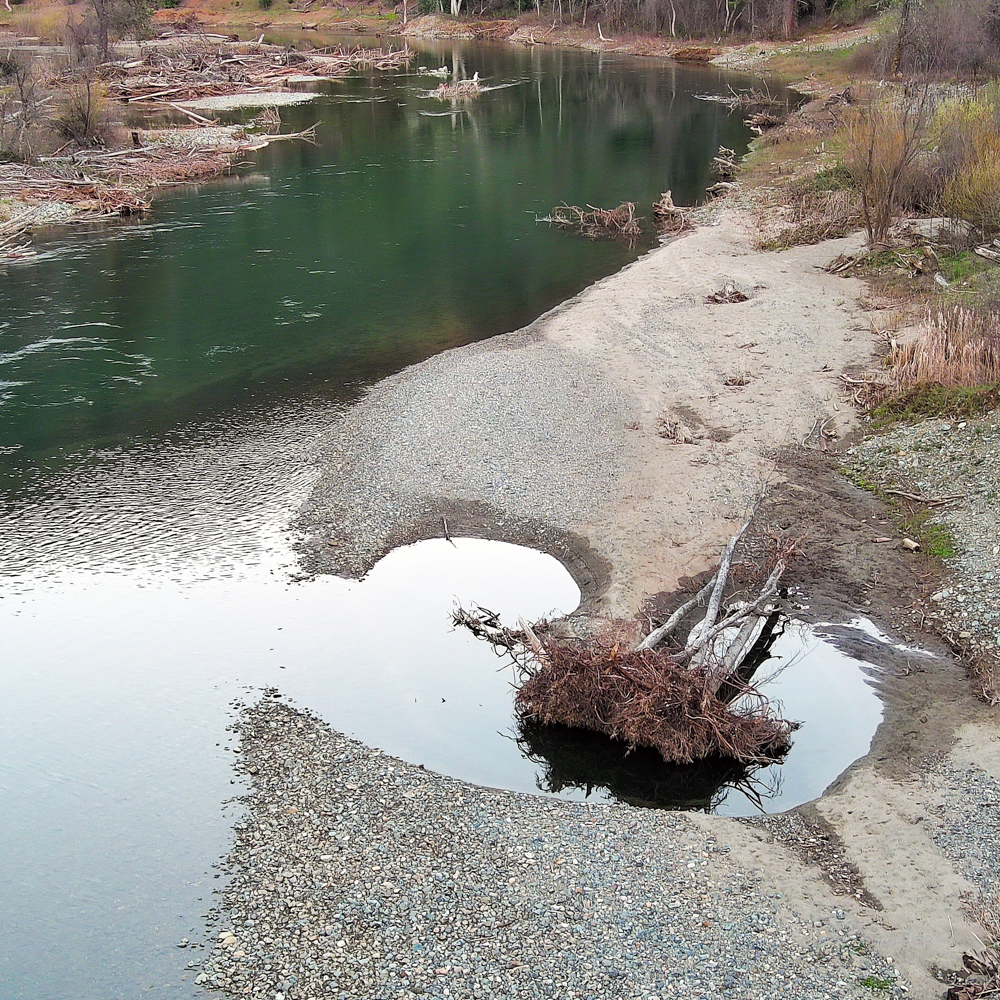
Prior to April restoration flows, the Program plans to conduct targeted sediment and wood augmentation at a newly identified location with the aim of improving salmon habitat within the upper reaches of the Trinity River. This season’s work which builds on recent scientific findings that highlight the need for habitat enhancement is focused on the Steel Bridge reach. The project aims to restore natural river processes, rebuild critical spawning and rearing habitat, and support the long‑term health of Trinity River salmonids.
Photo: Natural wood recruitment of an alder tree at Oregon Gulch this winter. [Aaron Martin, Yurok Tribal Fisheries Department]
Featured Article
Ecology in Motion: Wildlife Interactions After River Rehabilitation
From the perspective of a riparian ecologist working along the Trinity River, recent rehabilitation efforts at the Upper Connor Creek project site provided a unique experience into how wildlife responds to planned disturbance. As newly constructed floodplain surfaces settled, early patterns of species return; including insects, small mammals, and riparian‑associated predators. Each observation offered direct, field‑based insight into the ecological functions reinitiated by channel restoration. Click below to read how mechanically induced disturbance reestablished processes once driven by natural floods, supporting the renewal of riparian vegetation and the wildlife communities that depend on it.
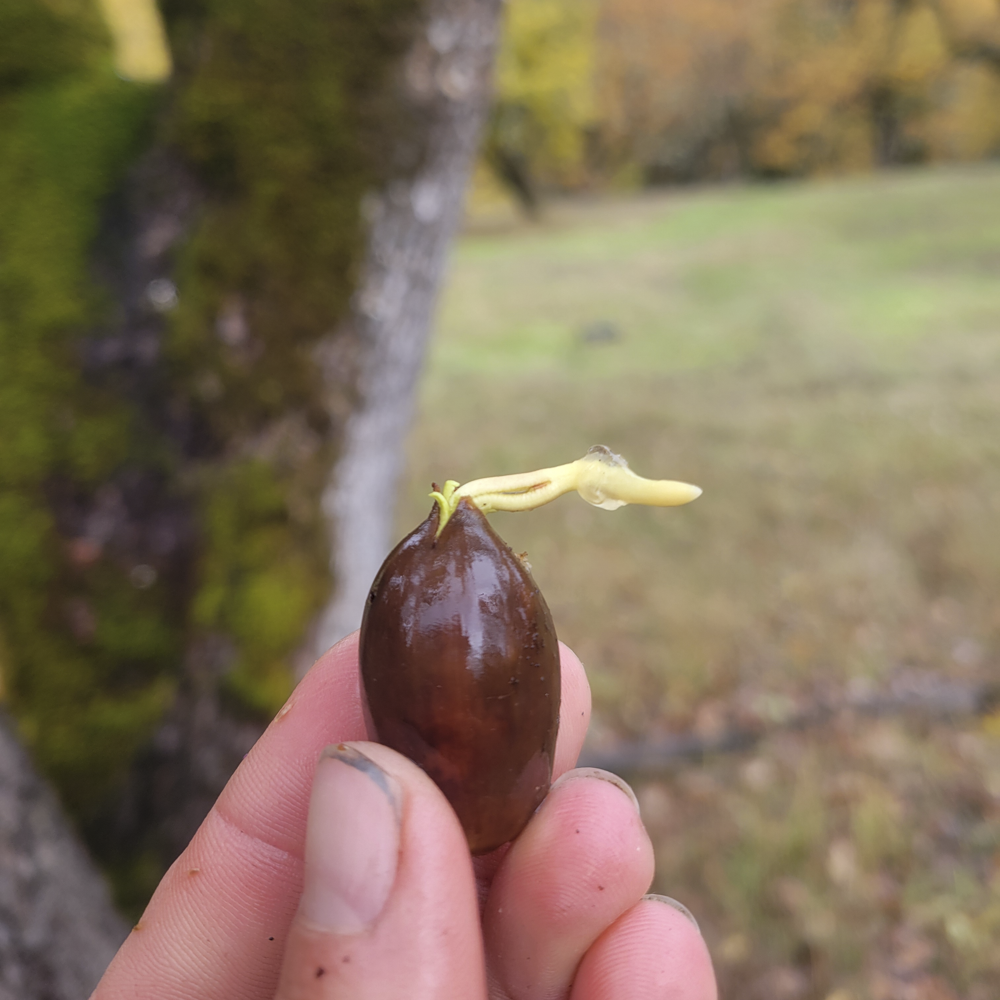
Photo: An acorn sprouting. [Simone Groves, Hoopa Valley Tribal Fisheries]
Upcoming Meetings and Events
For a full list of events, click to view the TRRP Calendar.
March 25 & 26 – All Day Quarterly TMC Meeting
In Person: Yurok Tribe Willow Creek Tribal Office
39171 CA-299, Willow Creek, CA 95573
Click here to join the meeting
Meeting ID: 279 462 878 014 93
Passcode: tS9Li229
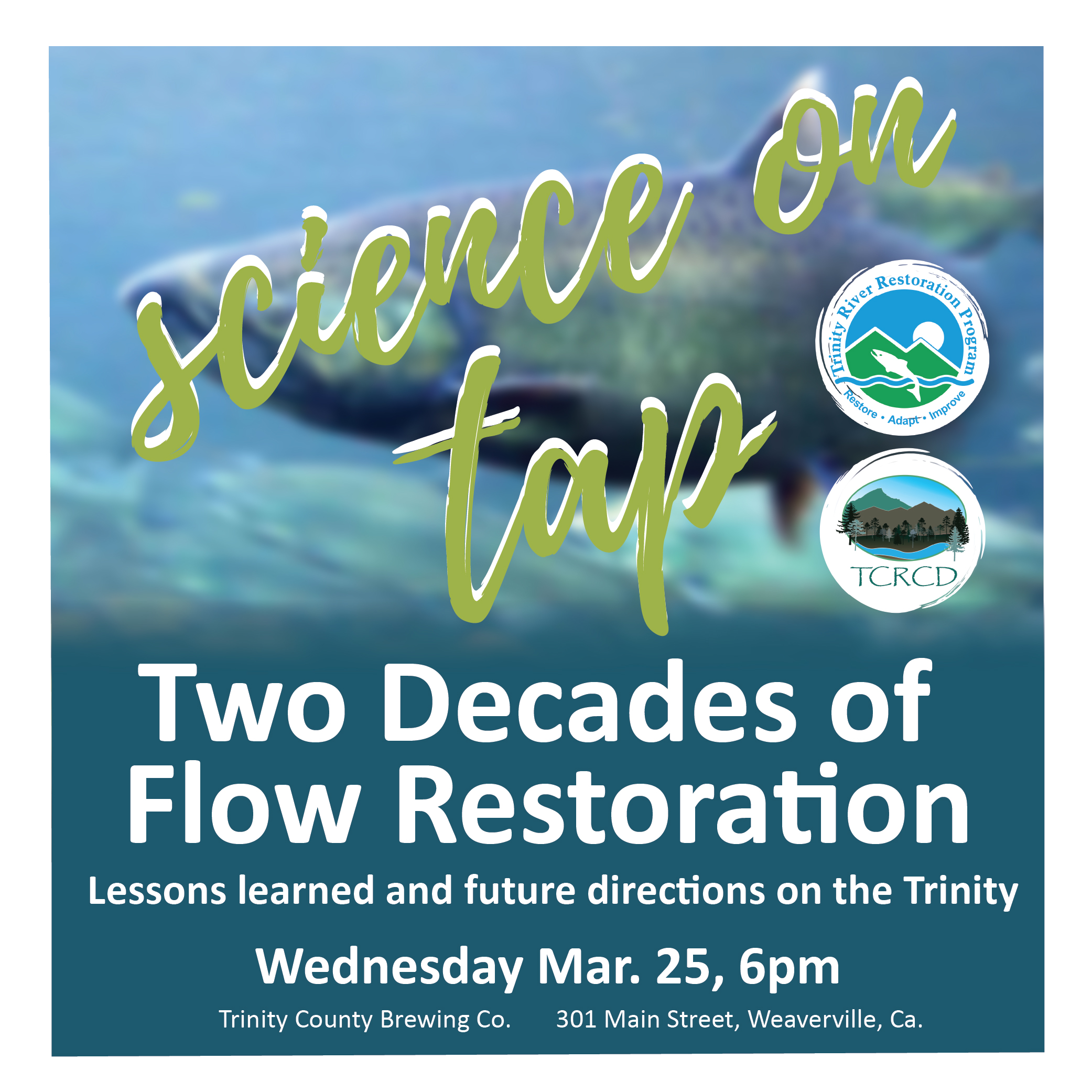
Mar. 25, 6pm – Science on Tap
Trinity County Brewing Co. – Weaverville
Decades of scientific study are reshaping our understanding of the Trinity River and flow restoration. Once a system defined by natural seasonal flows, the river has undergone dramatic changes since dam construction and water diversions altered its rhythms. Now, with new data and the growing pressures of climate change, innovative approaches to flow management are emerging to better support salmon, steelhead, and overall river health. Join us to learn how adaptive, science‑driven strategies are helping create a more resilient and productive Trinity River for the future.
Join us as we explore local ecosystems and the dynamics of managing flow on the Trinity River. Event Details
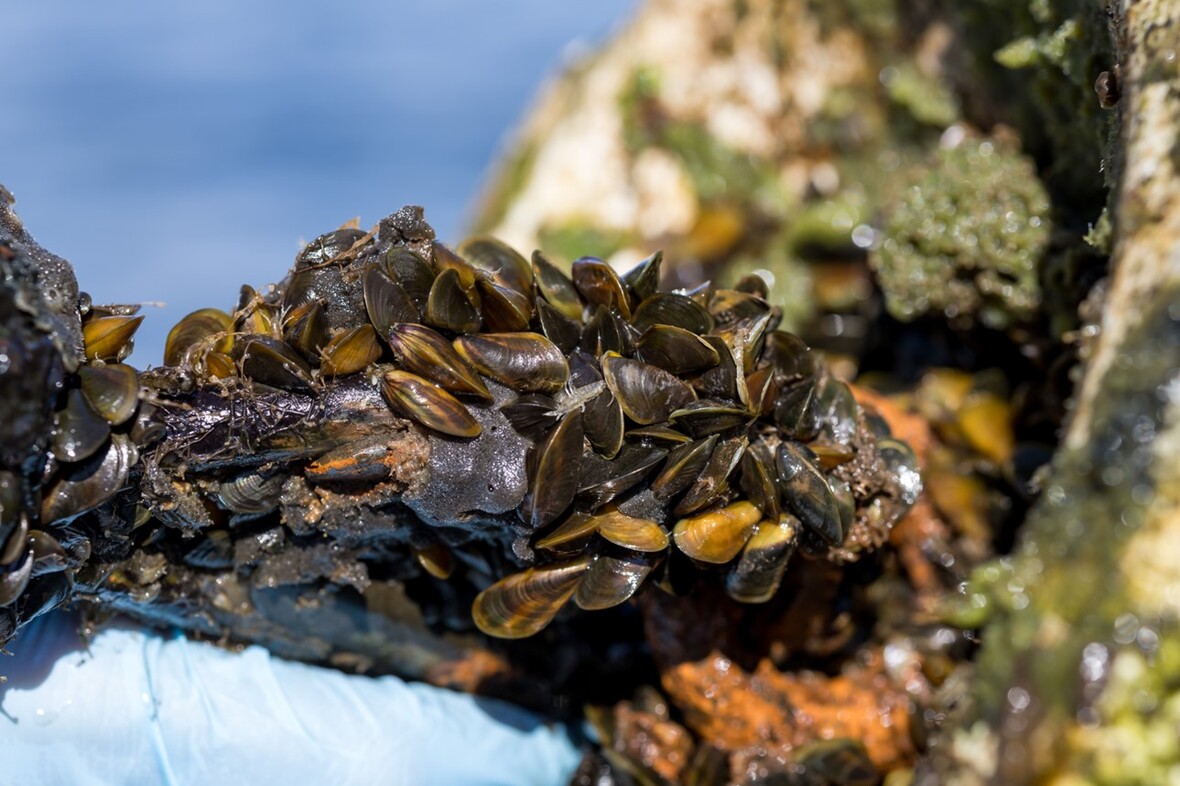
Mar. 26, 9am-Noon – Aquatic Invasive Species Prevention Workshop
If you access California’s waterways you are invited to learn how to stop the spread of freshwater aquatic invasive species into uninfected waterways. This free virtual workshop will help the public learn how they can recognize freshwater invasive species in their region and how to take action to prevent them from spreading.
Advance registration is required by Mar. 25.
Workshop hosted by California State Parks Division of Boating and Waterways, California Coastal Commission, California Department of Fish and Wildlife, California State Lands Commission, and the U.S. Fish and Wildlife Service.
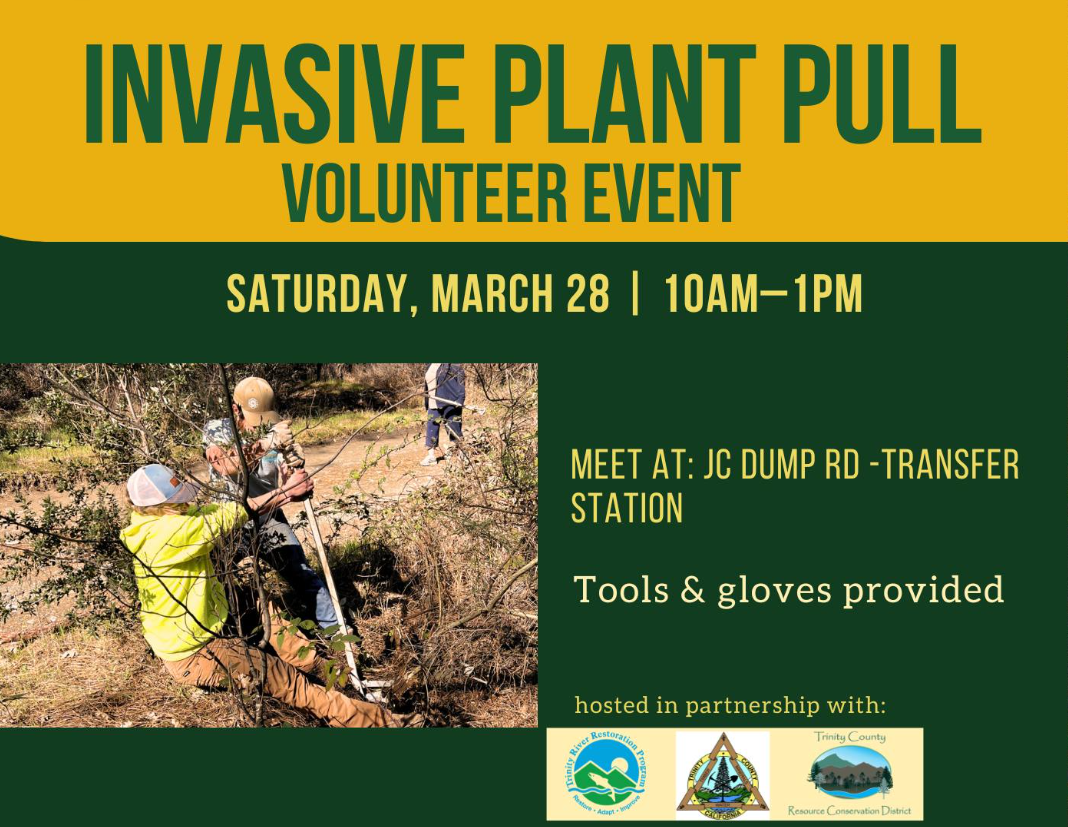
Mar. 28, 10am – Invasive Weed Pull
Junction City, Ca.
Help us remove invasive Scotch broom and preserve our local ecology. Pulling broom helps create space for native plants, reduces the spread of invasive weeds in our watershed, and lowers wildfire risk by decreasing hazardous fuel loads.
If time and weather allow, we will also take a brief tour of recently completed Trinity River Restoration Program projects. This is a great opportunity to give back, get outside, and make a real difference in the Junction City community. All ages are welcome!
Reading, Listening, Watching
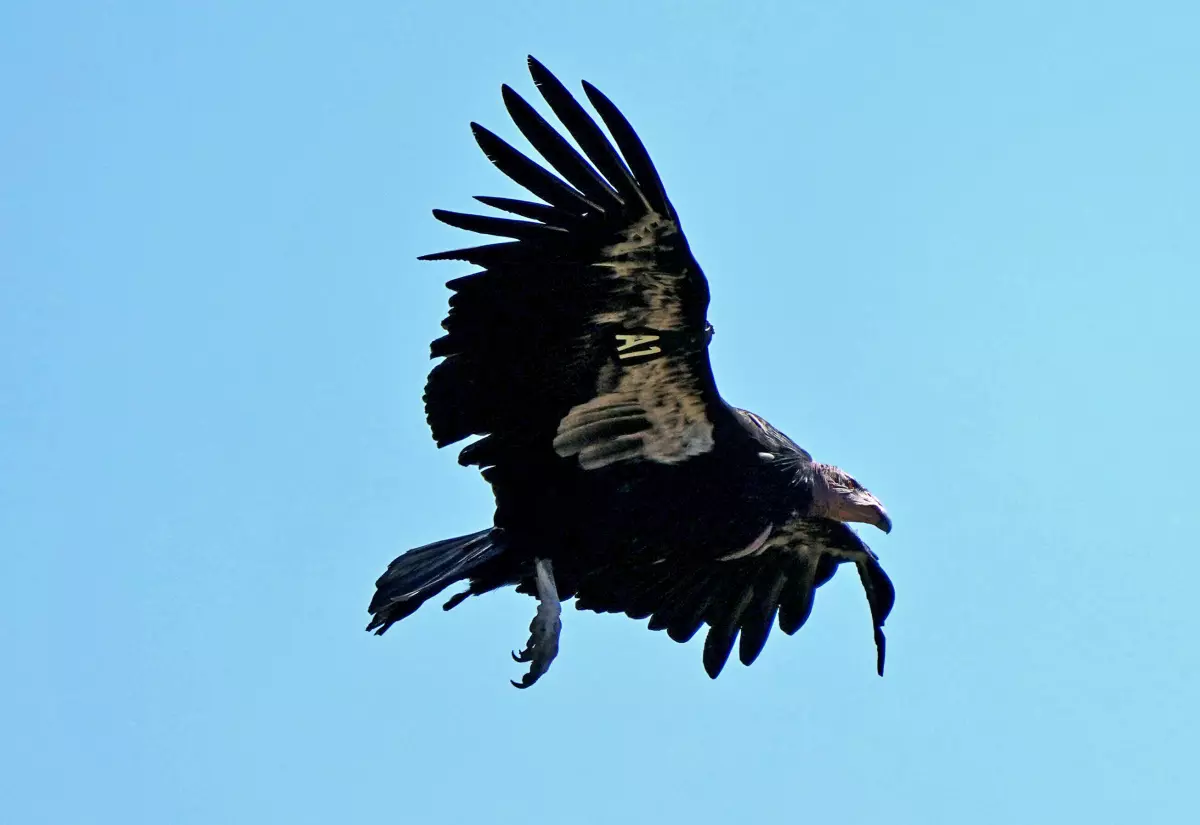
MILESTONE! The First North Coast Condors Have Built a Nest in an Old-Growth Redwood, and There Very Well May Be an Egg in It
Lost Coast Outpost | By: LoCO Staff | Mar. 2, 2026
“This is a huge moment for our Northern California flock,” said Chris West, the Northern California Condor Restoration Program Manager and Yurok Wildlife Department Senior Biologist. ““It is important to remember that these are wild birds. We trap them occasionally for health monitoring, but if they nest, and how successful they are, is totally up to them, with as little interference from us as possible.” Continue Reading
Photo: Condor ‘Hlow Hoo-let’, or A1, soars across the sky in far Northern California. [Matt Mais, Yurok Tribe]
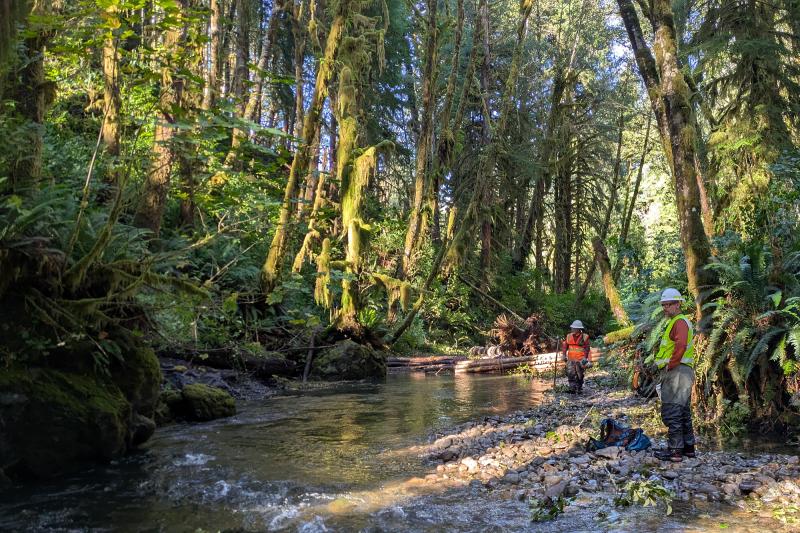
Helicopters Help Rebuild Salmon Habitat on the Olympic Peninsula
NOAA Fisheries | West Coast | Jan. 29, 2026
With NOAA funding, the Quinault Indian Nation and its partners are building engineered log jams on remote tributaries in the Queets-Clearwater watershed. This project restores historically abundant salmon habitat and supports Tribal-led recovery efforts. Continue Reading…
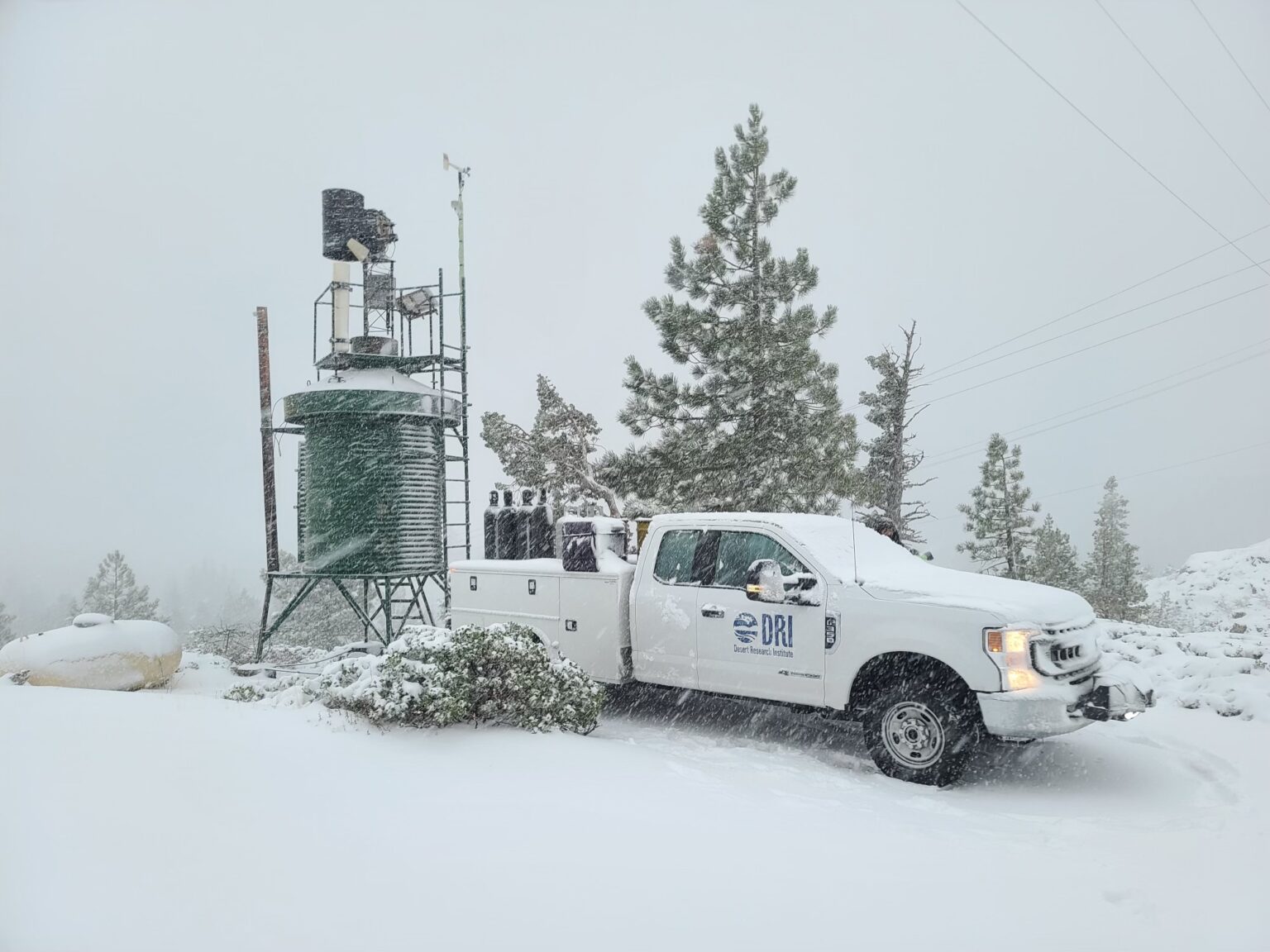
Nevada looks for help from cloud seeding amid record low snowpack
Nevada Current | by Jennifer Solis | Mar. 9 2026
Nevada officials are expanding cloud seeding efforts to boost snowfall as the state faces record-low snowpack. Lawmakers have funded programs through the Desert Research Institute to increase precipitation and support water supplies for reservoirs, ecosystems and communities. Continue Reading…
Photo: Desert Research Institute. “Cloud seeding is really the only opportunity to really increase water resources, and it’s done at about $10 an acre foot,” said Frank McDonough with the Desert Research Institute.

The truth is NOT in the eye of the beholder!
California Water Blog | by Alexandra Chu and Danhong Ally Li | Feb. 22 2026
Fish researchers are turning to an unexpected but powerful tool for understanding salmon diets: the eye lens. Much like tree rings, the layers within a fish’s eye lens preserve chemical signatures from every stage of its life, offering a detailed dietary record that traditional methods like stomach content analysis simply can’t capture. Continue Reading…
Contact Us
Call Us: 530-623-1800 Email Us: info@trrp.net