
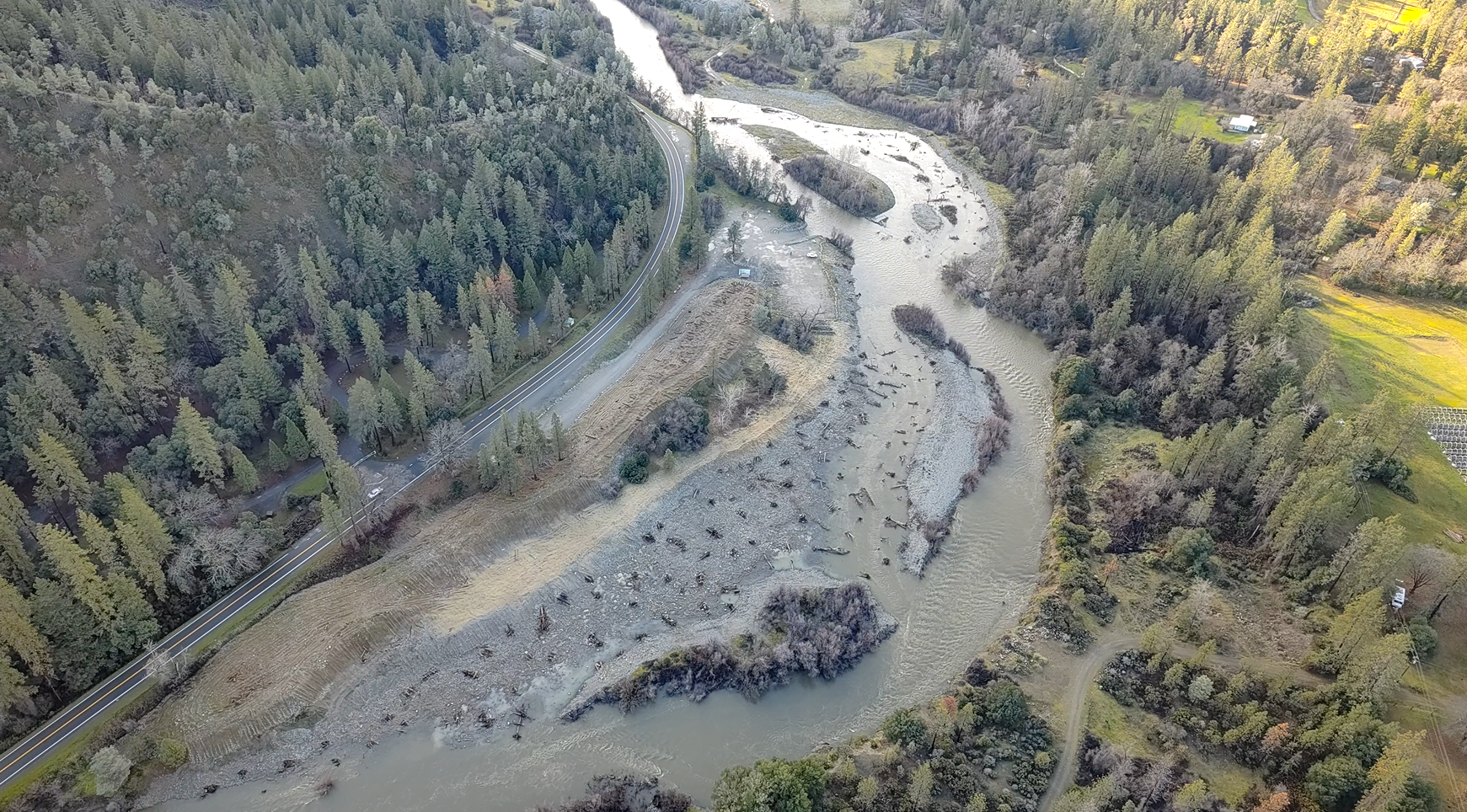
Junction City, Ca. (River Mile 77.1-78.5)
Junction City, Ca. – The Trinity River Restoration Program and partners began work at the Upper Conner Creek Channel Rehabilitation Project site on the Trinity River on August 19, 2024. The site is located approximately one river mile downstream from the Dutch Creek Bridge in Junction City, between river miles 78.5 and 77.1. To facilitate project area access, restoration activities will involve heavy equipment and use of local roads, including Highway 299 and Red Hill Road. Once complete, the project will improve river access for recreation, increase juvenile salmonid rearing habitat and enhance channel complexity in the Trinity River.
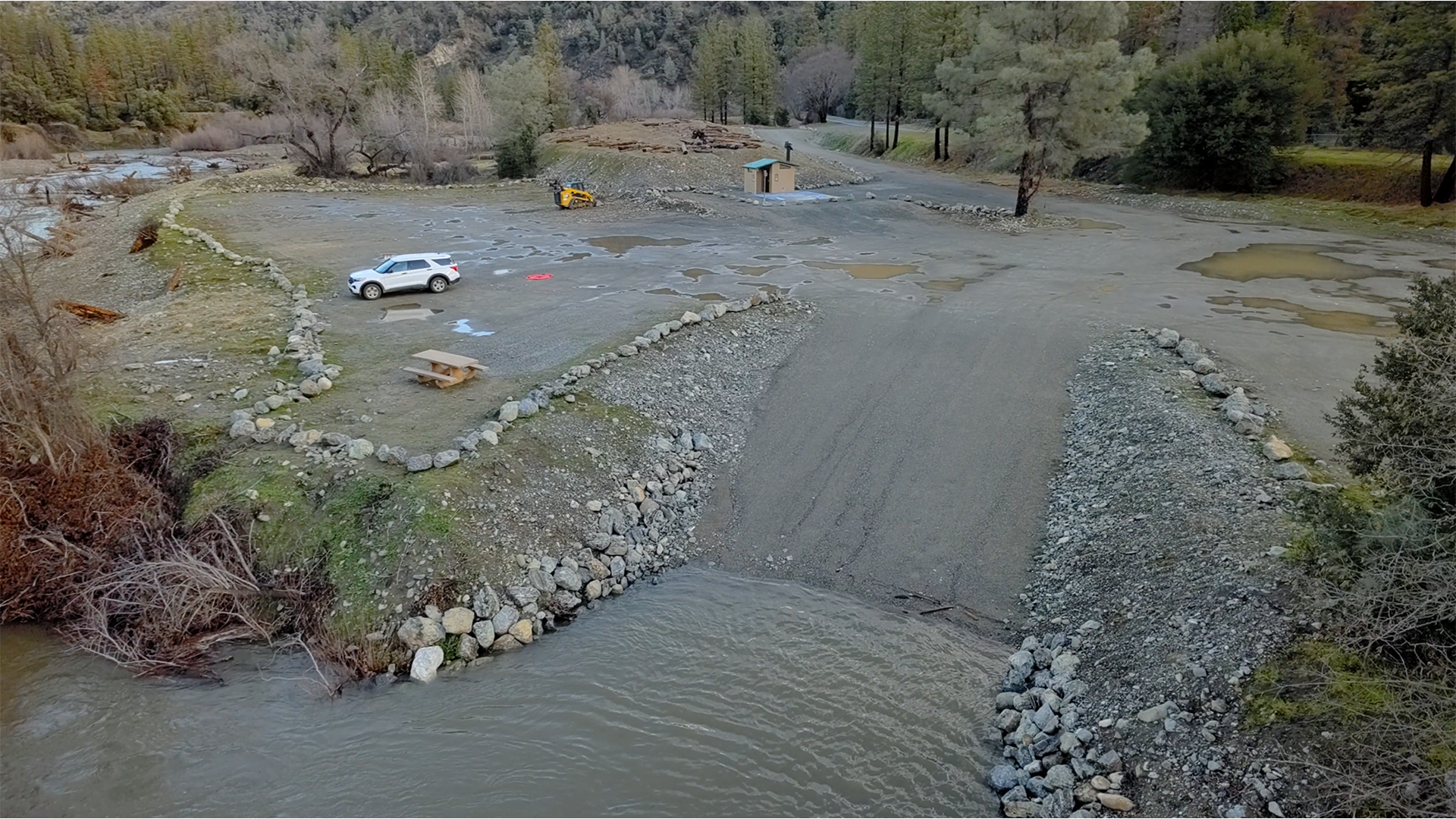
River access at JC Campground
The public boat launch is complete and it is open for public access.
Proposed Project Timeline
The restoration effort was broken into phases with activities beginning in 2024.
- Phase I activities began in August and completed October 2024 in the uppermost portion of the restoration area. After mobilization, Phase 1 rehabilitation will consist of lowering the riparian floodplain, adding riffle enhancements, placing large wood to slow water and create habitat and planting of riparian vegetation. Read more about Phase I by clicking here.
- The Phase II construction began Jan. 23. Civil construction completed Sept. 9, 2025. Phase 2 rehabilitation consisted of lowering the riparian floodplain in three areas, adding three riffle enhancements, placing large wood to slow water and create habitat and planting of riparian vegetation. Riparian re-vegetation will continue through 2026.
In-river work for this project is allowed by the National Marine Fisheries Service and was timed accordingly to protect endangered species. Impacts to water quality from in-river work are consistently monitored to stay below permitted thresholds.
Public Scoping: December 4, 2023 – December 17, 2023 (COMPLETE)
Draft EA for Public Comment: May 2 – May 31, 2024 (COMPLETE)
Final EA and Decision: July 24, 2024 (COMPLETE)
Proposed Construction: July 2024 – September 2025 (COMPLETE)
Proposed Completion: 2025-2027. Post-construction revegetation and maintenance – may occur for up to 5 years post in-channel work, as needed.
Project Background
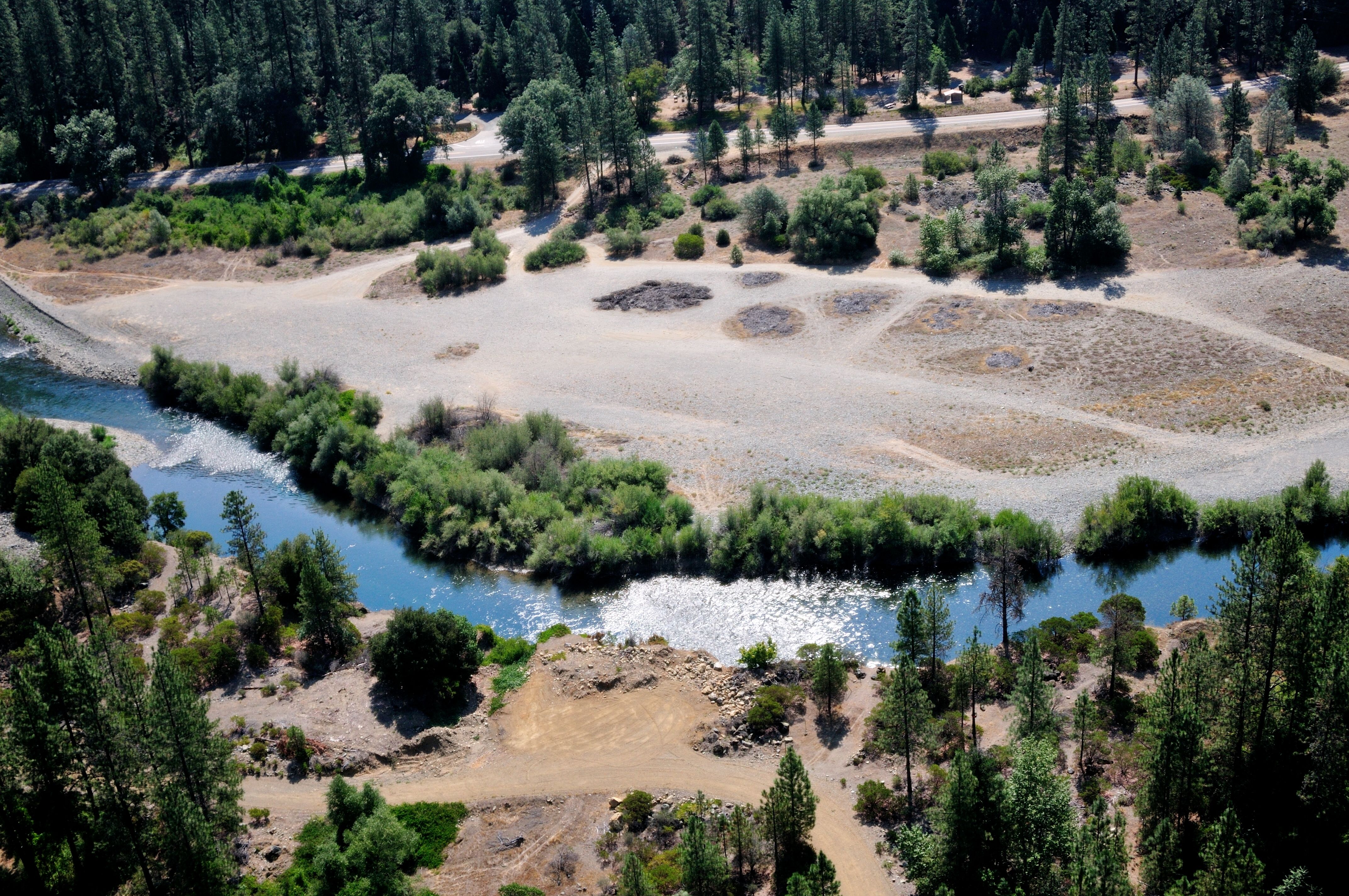
As part of the Trinity River Channel Rehabilitation Projects: Upper Conner Creek Site and Sawmill Gravel Processing Site, the Program completed an Environmental Assessment/Initial Study (EA/IS) to meet requirements of the National Environmental Policy Act (NEPA) and the California Environmental Quality Act (CEQA) and fully disclose the proposed plans for restoration at the two sites. This effort was led by Reclamation, BLM, and the California North Coast Regional Water Quality Control Board. The EA/IS evaluates and discloses potential environmental effects of implementing the project.
Photo purchased by the Bureau of Reclamation and taken by Ken DeCamp (2019).
Project Description
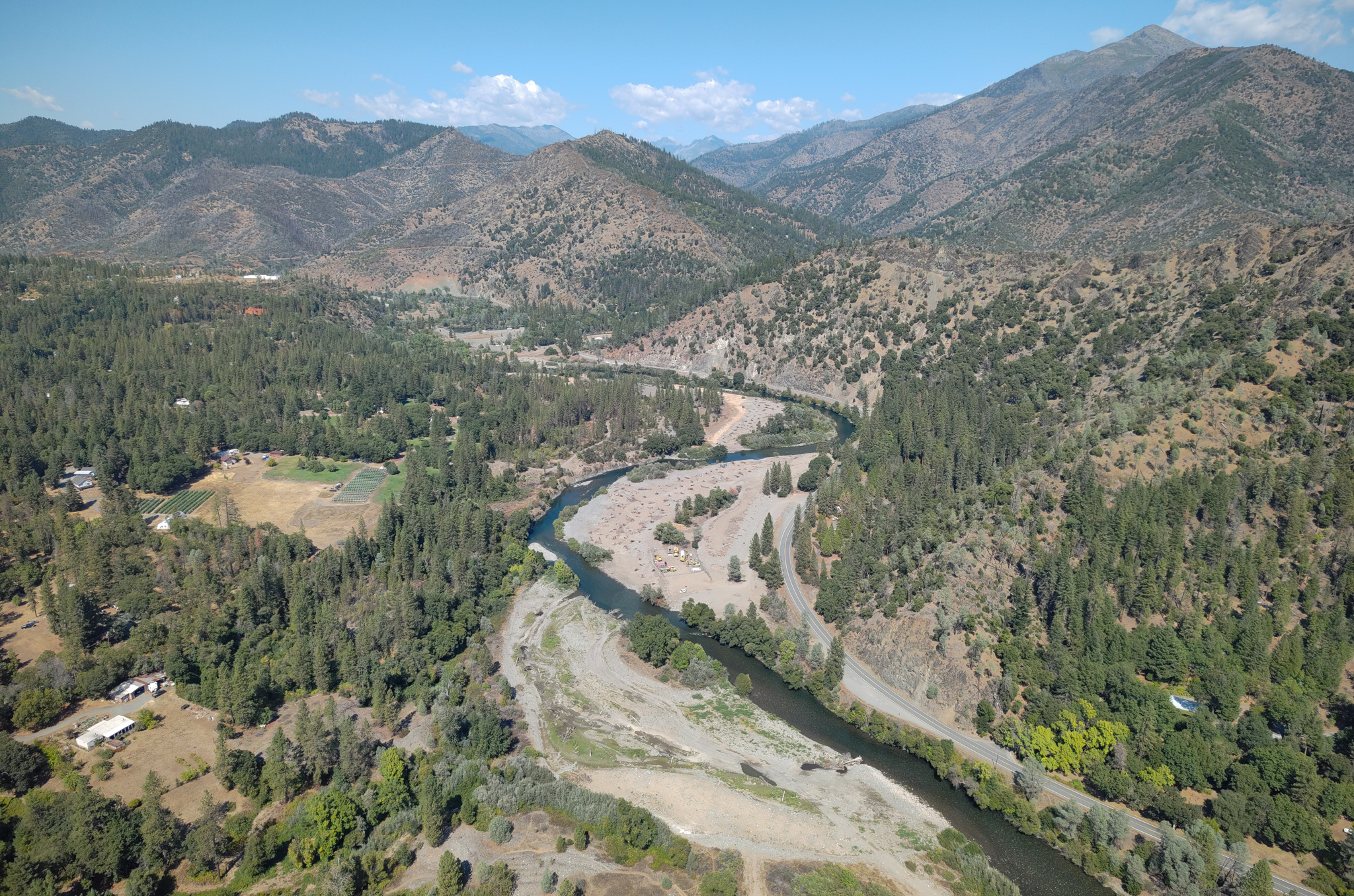
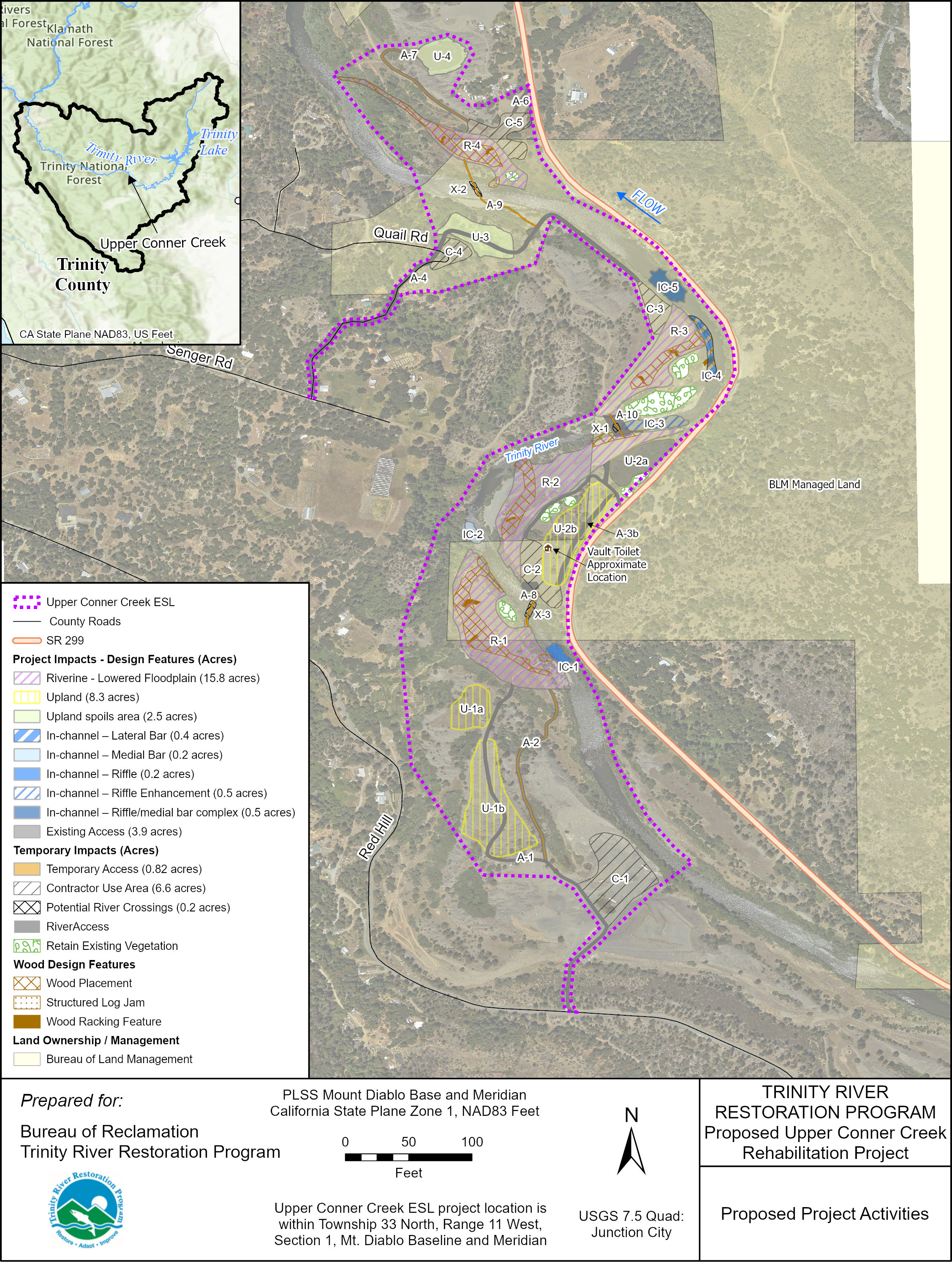
Situated approximately one river mile downstream from the Dutch Creek Bridge in Junction City, Ca., the Upper Conner Creek Channel Rehabilitation project encompasses both private (65 acres) and public lands (41 acres). This area includes two previous restoration efforts completed in 2005 and 2006. Long term monitoring of these locations and adaptive management have led program partners to determine that the lowered surfaces of these early projects were not inundating (providing low floodplain habitat) frequently enough. Improvements in floodplain connectivity to the mainstem, as well as course sediment additions and large wood features open opportunities for the Trinity River to rework its form to provide long-term channel complexity and high-quality salmonid habitat. The recreational aspect of this area is also appreciated by many, and project designers, funding partners and the public have worked collaboratively to maintain the Junction City Campground river access and community swimming holes.
The restoration effort was broken into two phases with restoration activities beginning in 2024. Construction involved heavy equipment and required the use of local roads, including highway 299 and Red Hill Road, to facilitate river access. Excess material (i.e. spoils) will be placed within the construction area and will not be trucked off-site.
- The design provides a 60% increase in Fry Capacity compared to existing conditions in flows of 450 cubic feet per second to 11,000 cubic feet per second.
- The design provides a 56% increase in Smolt Capacity compared to existing conditions in flows of 450 cubic feet per second to 11,000 cubic feet per second.
- The current design cuts 141,850 yd3 and fills 141,850 yd3 on the project site.
The figure below shows the Upper Conner Creek project activity areas.
Upper Conner Creek Project Goals and Objectives
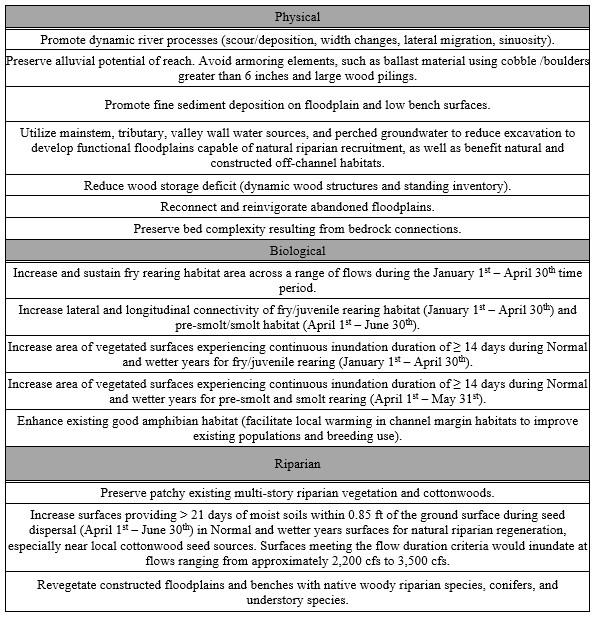
Upper Conner Creek design objectives were separated into three categories: physical, biological, and riparian objectives. In some cases, Upper Conner Creek design objectives were specific to Upper Conner Creek, while others were generic to the entire Lower Valley Design Suite, which also includes Deep Gulch and Sheridan Creek (Yurok Tribal Fisheries Program et al. 2015)2.
2 Yurok Tribal Fisheries Program, Hoopa Valley Tribal Fisheries Department, Bureau of Reclamation, U.S. Fish and Wildlife Service, NOAA Fisheries, and C. R. Agency. 2015. Lower Valley Existing Conditions Report. Prepared for the Trinity River Restoration Program, Weaverville, Ca.
Possible Local Disturbances
- Highway-legal haul trucks would make deliveries of equipment, large wood, plants, and other needed materials during work hours using existing roads. This may cause road delays.
- Nearby residents may experience noise commensurate with the use of haul trucks and heavy construction equipment, such as bulldozers and excavators.
- Recreational river access at the Junction City Campground may be intermittent during the construction period as improvements are made to the put-in/take out location.
Further Information
- Upper Conner Creek Rehabilitation Existing Conditions Report
- Upper Conner Creek Rehabilitation Design Report
- Upper Conner Creek Rehabilitation proposed features map
- Trinity River Channel Rehabilitation Projects: Upper Conner Creek Site and Sawmill Gravel Processing Site Public Scoping Notice
- Draft Environmental Assessment / Initial Study
- Trinity River Channel Rehabilitation Projects: Upper Conner Creek Site and Sawmill Gravel Processing Site Comment Period Notice
- Signed Finding of No Significant Impact (FONSI)
- Final EA/IS