
By: Eric Peterson, Science Coordinator – Trinity River Restoration Program
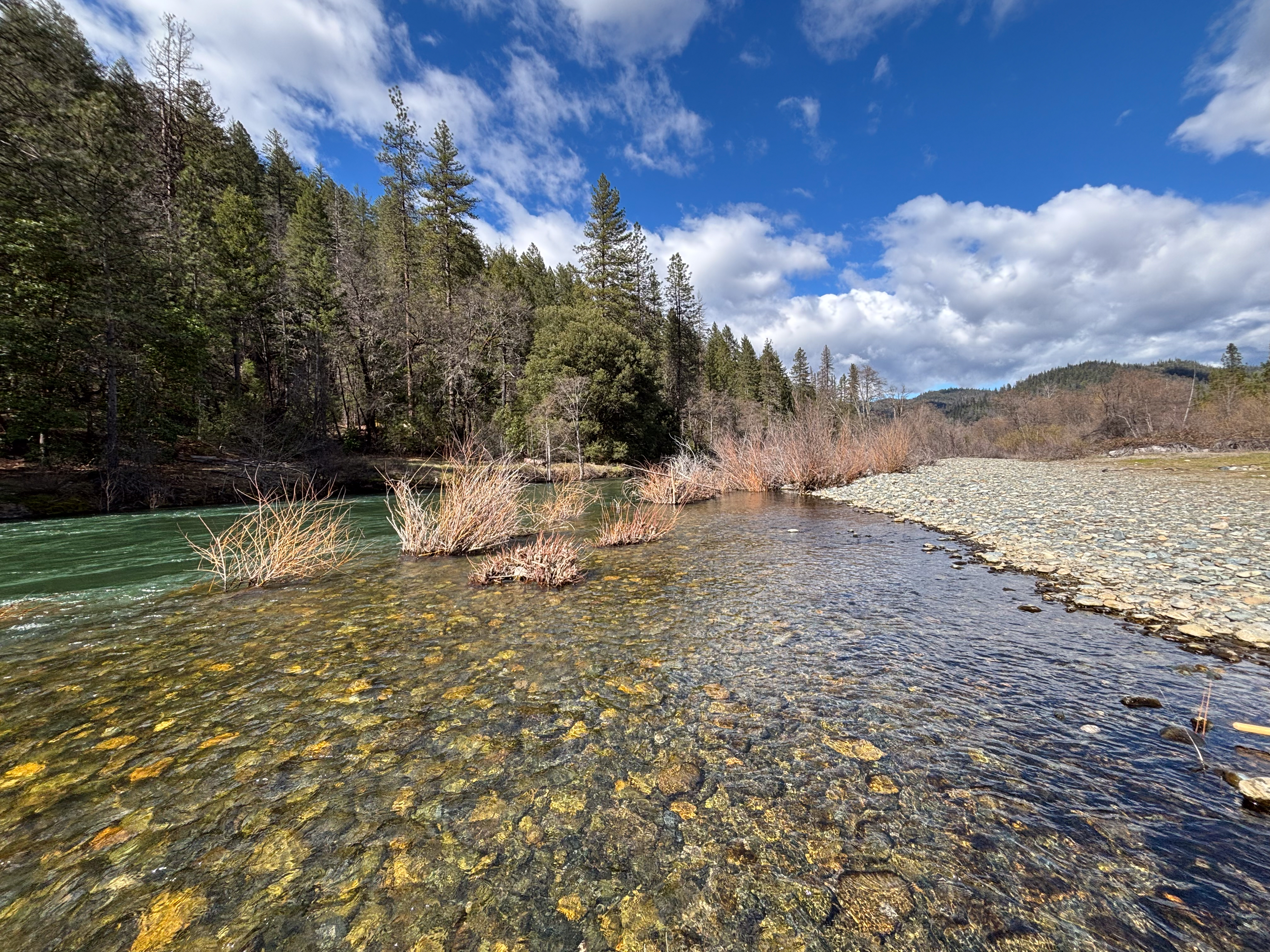
For the year ahead the Program will continue with both short and long-term monitoring projects. Long-term monitoring projects include,
- outmigrant monitoring (tracking the number and size of young fish heading out to sea)
- adult escapement monitoring (tracking the number and size of adult fish returning from the sea).
Shorter duration studies to examine the flow changes include;
- acoustic monitoring of rock movement,
- and investigating the benthic macroinvertebrate (fish food) response to the flows.
Also, this year we will wrap up a review of our long-term monitoring and modeling efforts and bring recommendations forward on how to better measure our progress.
We will complete the adult Chinook Limiting Factors Analysis, which should give us insights regarding what factors are limiting the return of adult Chinook salmon along with gaming the associated scenarios to help us understand how to improve the use of our tools.
Lastly, we will continue to support the development of a new approach to long-term operations of the Trinity River Division, which should give us better protection of river temperatures in drought years and give us more flexibility with managing environmental flows.
Publications to look out for in 2026
- Lindke, K. T., Video monitoring of fish passage at Willow Creek weir: feasibility of validating mark-recapture run size estimates.
- Bridegum, J., D. Goodman, T. Daley, R. Smit, J. Boyce, O. Black, J. Alvarez, and K. De Juilio. The Effects of Restoration Actions on Juvenile Salmonid Rearing Habitat in the Trinity River Restoration Reach at an Index Streamflow, 2009 to 2017.
- Martel, C. J. Alvare, Z. Reinstein, and K. T. Lindke, Fall Chinook Redd Environmental Conditions and Egg Survival to Emergence in the Trinity River.
- Gaeuman, D., K. De Juilio, and C. Laskodi. Efficacy of two-dimensional modeling for assessing spatial variability in stream temperatures.
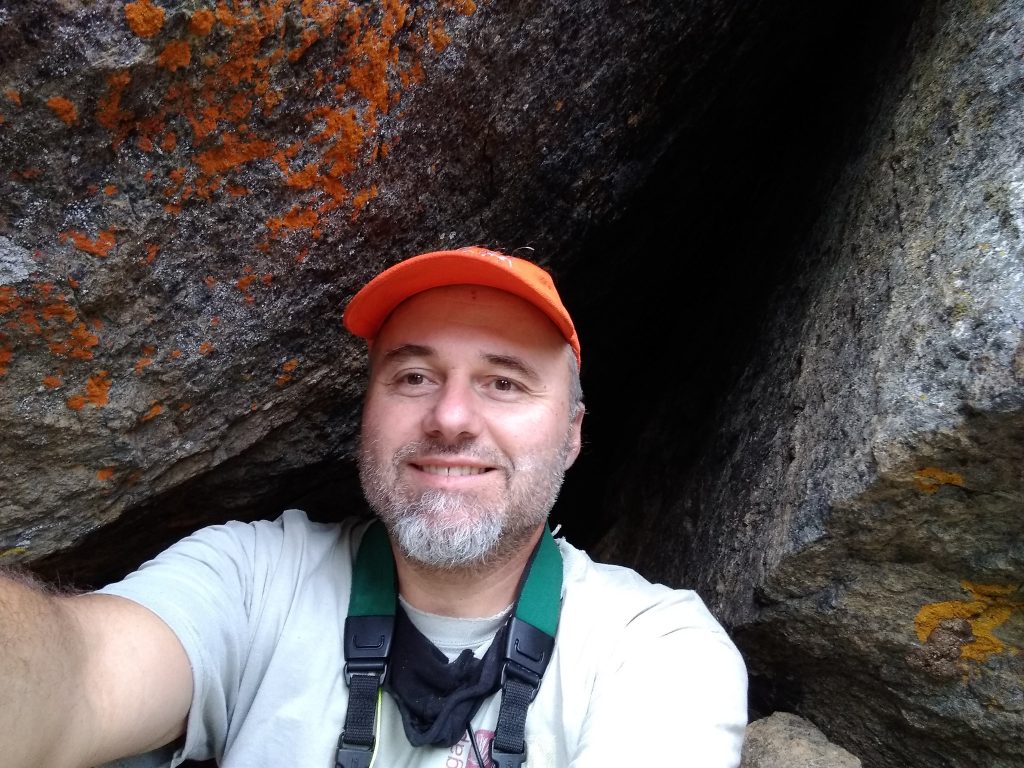
Eric Peterson, PhD – Science Coordinator
Eric grew up in Weaverville, hiking in the Trinity Alps and exploring East Weaver Creek. A natural biologist from an early age, he completed a B.S. in biology and botany at Humboldt State University in 1995, and a Ph.D. at Oregon State University in 2000 in plant ecology with a focus on lichens and forestry. Eric worked as the vegetation ecologist for State of Nevada’s Natural Heritage Program for about 8 years, covering all corners of the state and developing techniques for mapping invasive annual grasses with satellite imagery. Eric joined TRRP in 2009 to manage Trinity River data and coordinate its use across the many offices of our partnership, brought a focus on river ecology by conducting a study of algae growth in the river and tributaries, and is currently the TRRP Science Coordinator.
Eric maintains his interest in lichens on the side as a Research Associate of the California Academy of Sciences, and he chaired the California Lichen Society’s conservation committee for over 20 years. Meanwhile, Eric continues to hike the Trinity Alps and is an active member of Trinity County Search and Rescue. Eric is also on ResearchGate.