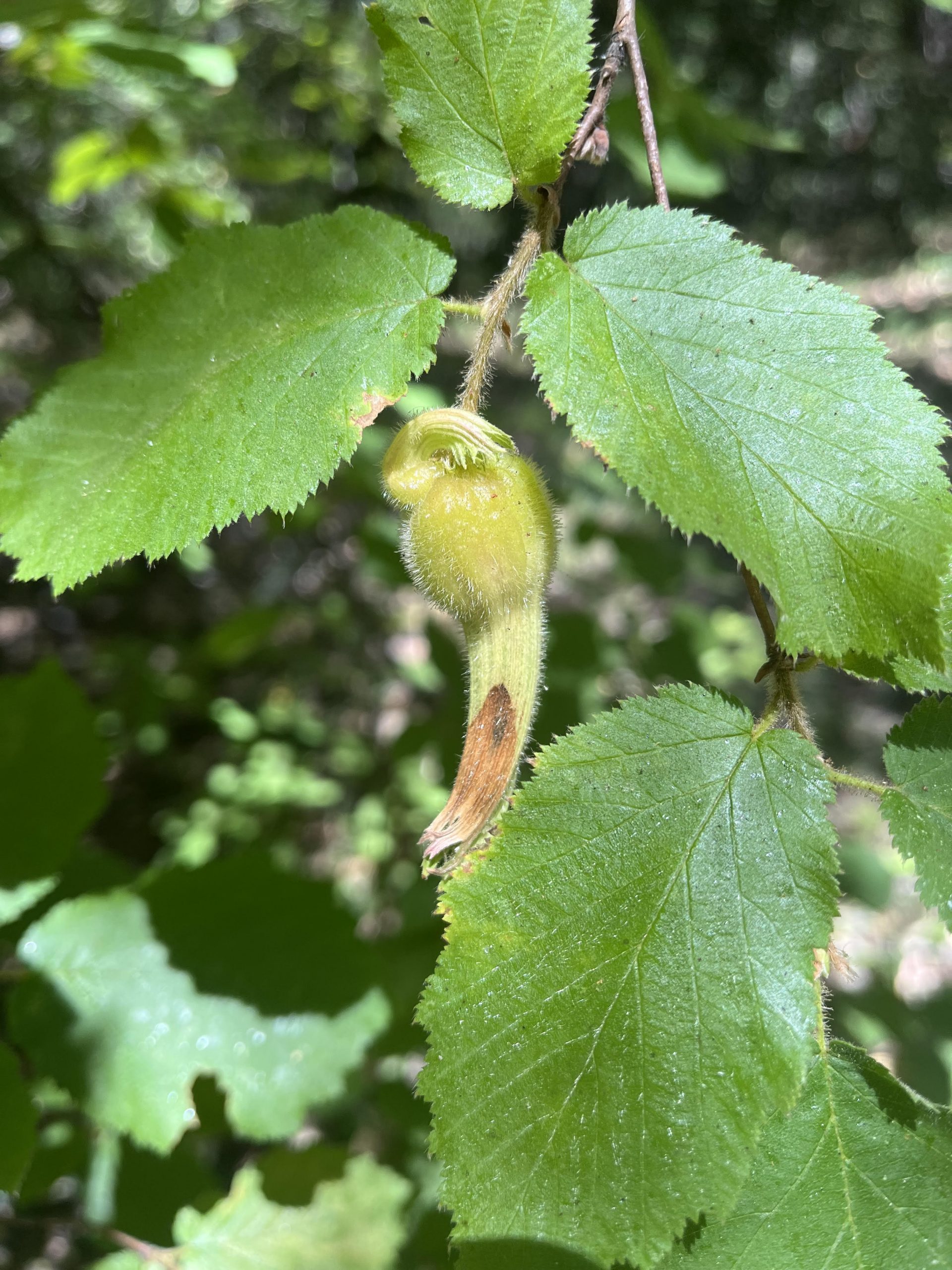
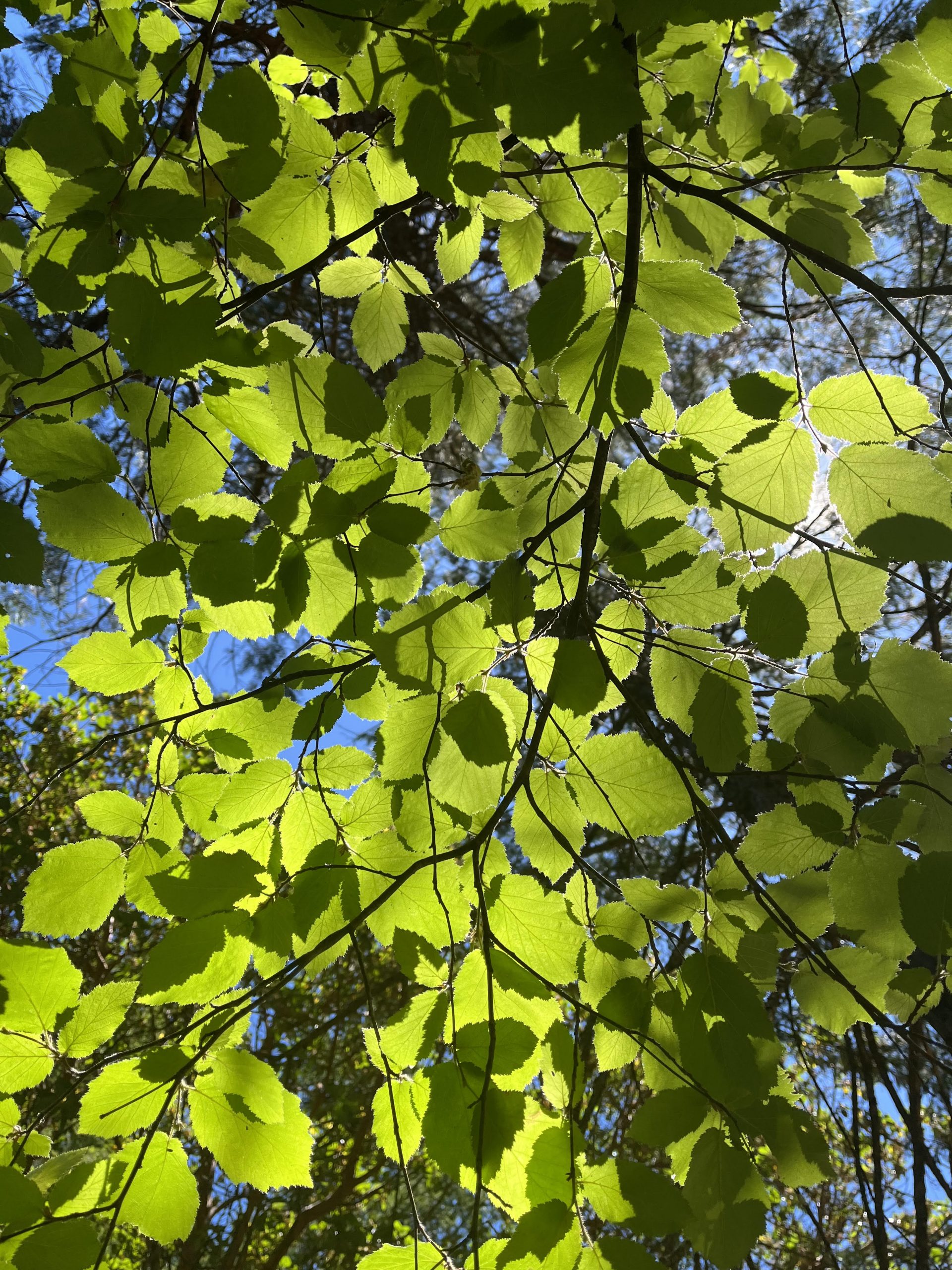
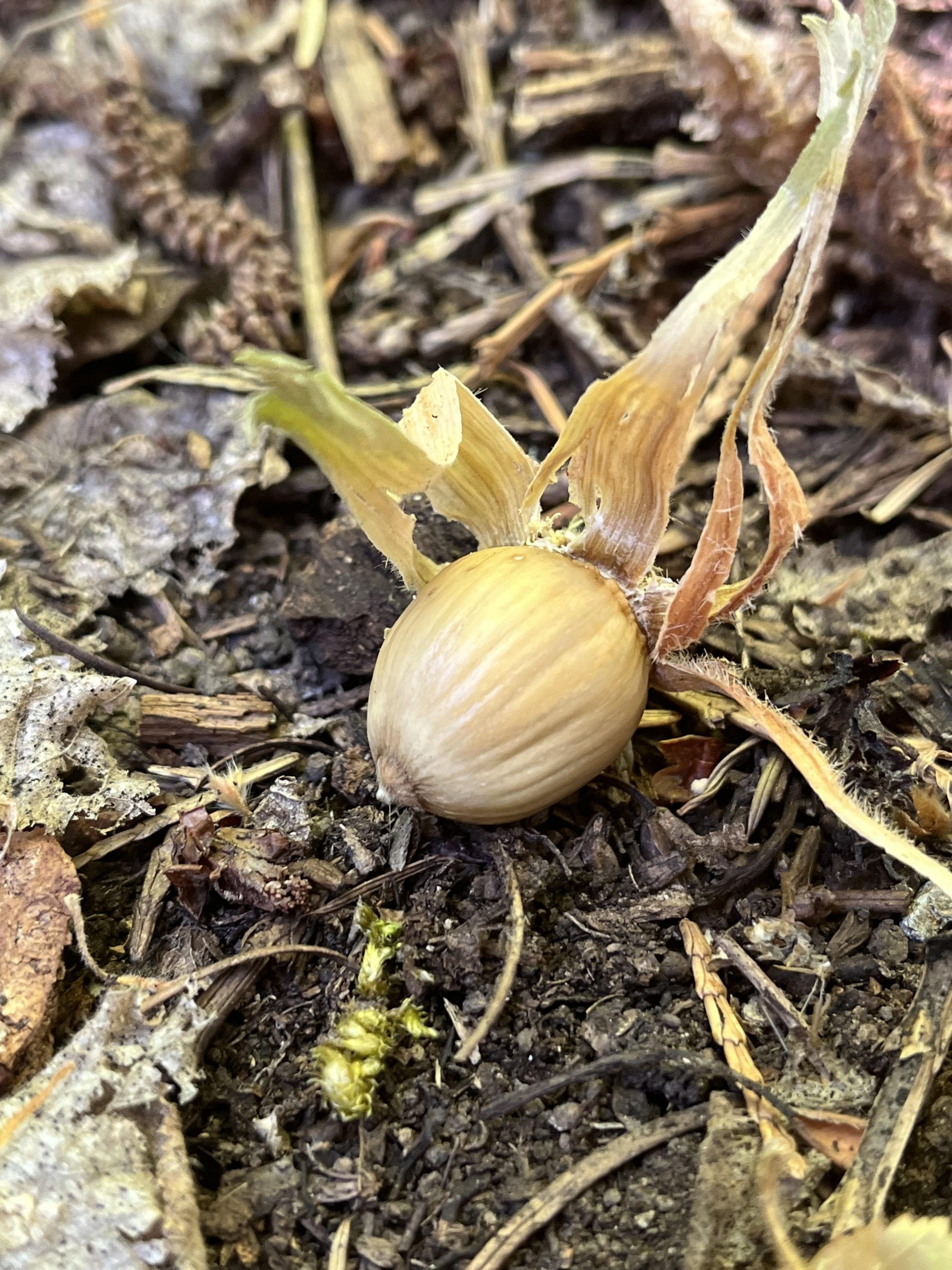
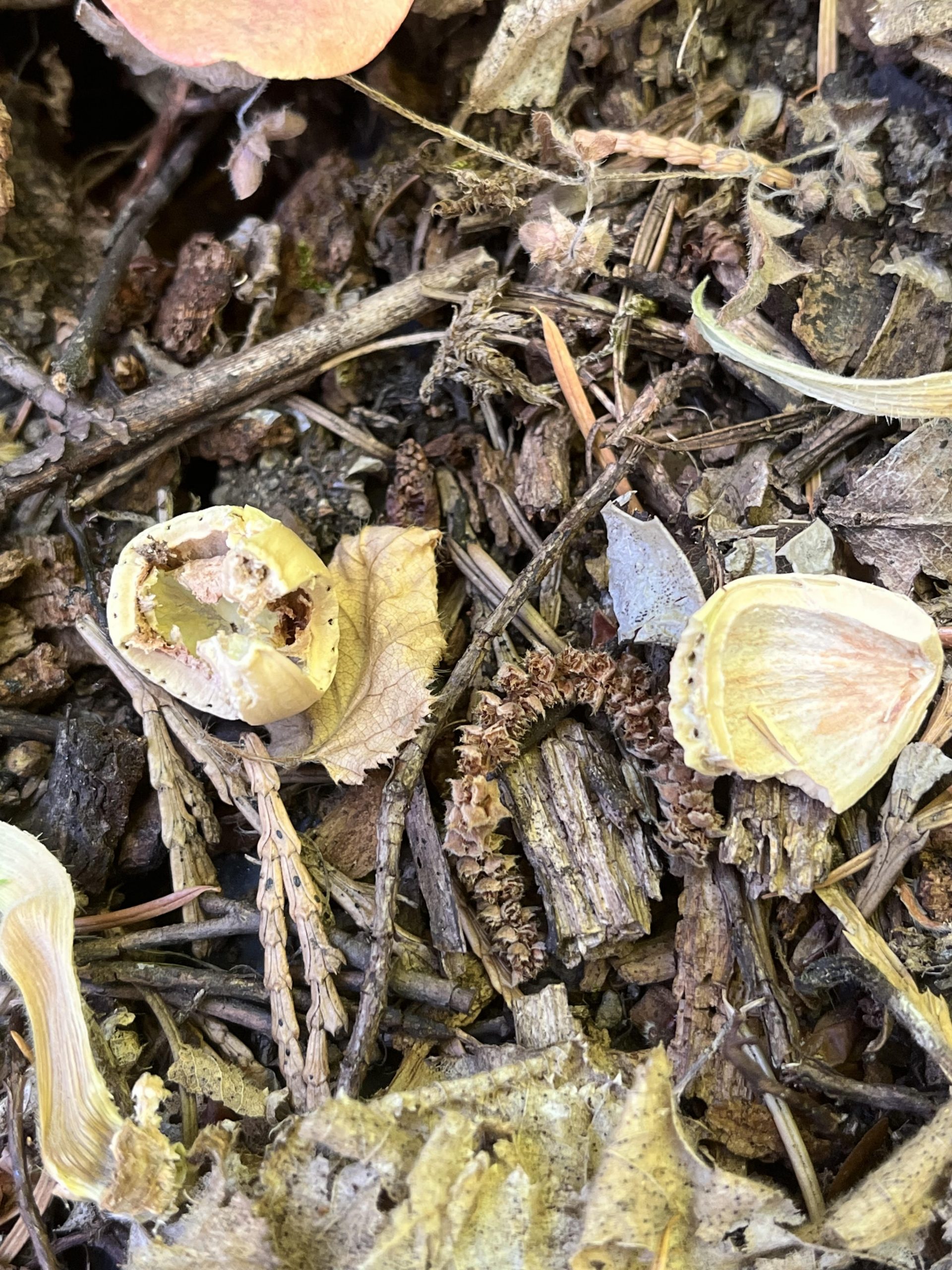
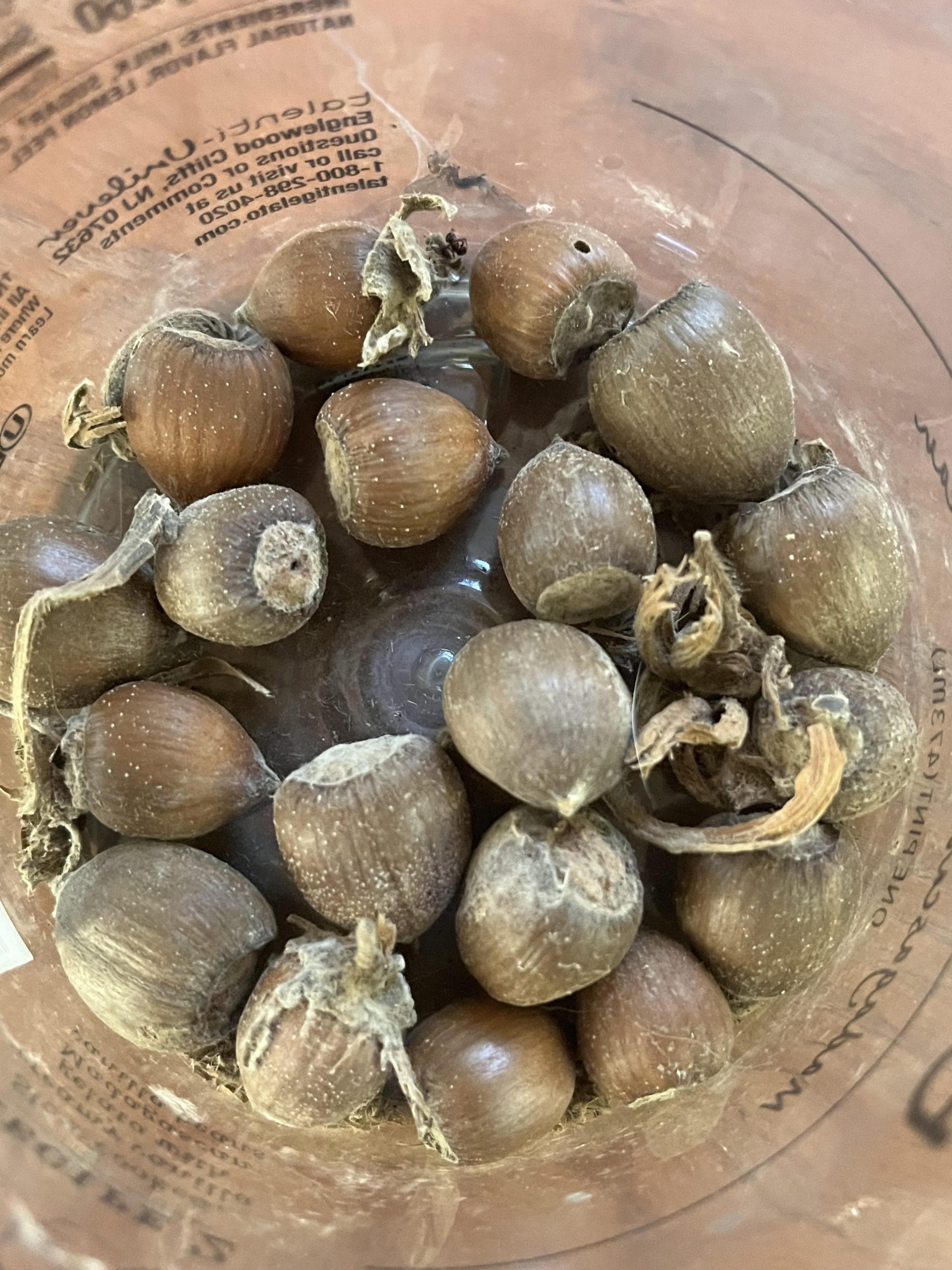
California buckeye (Aesculus californica)
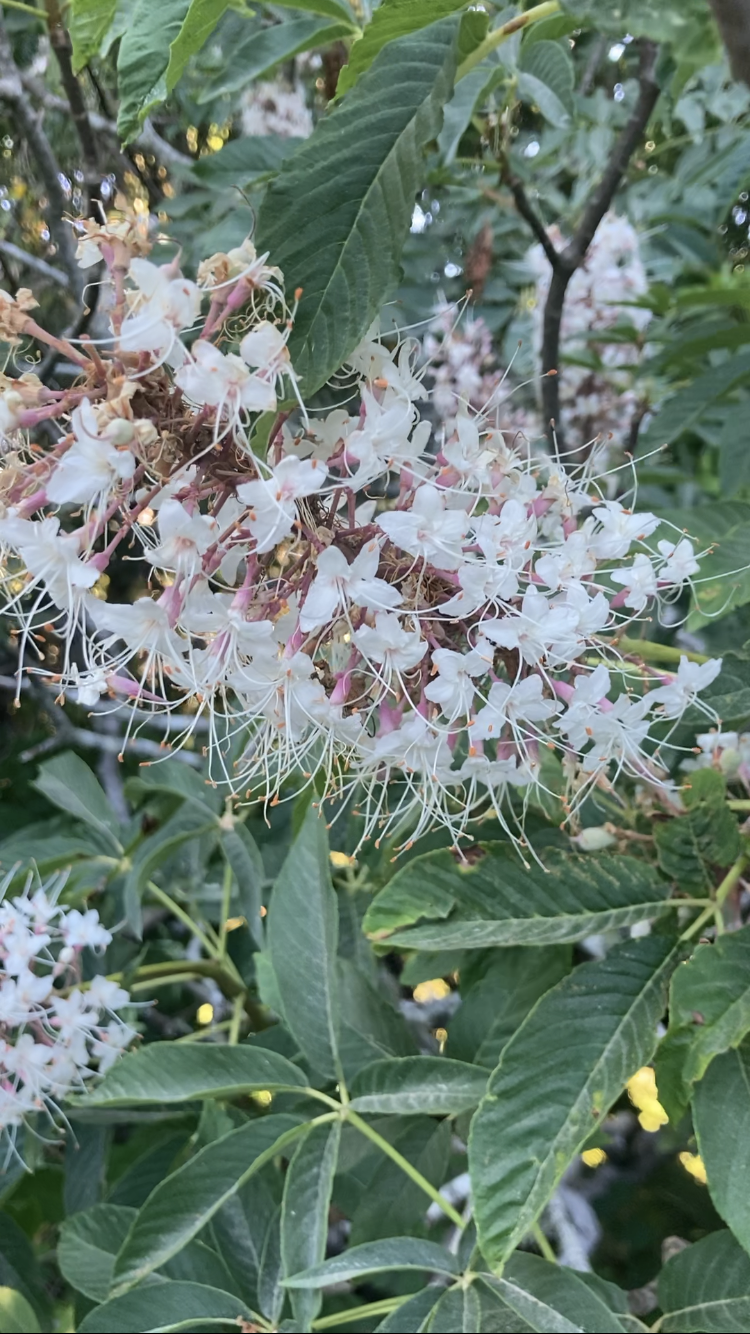
California buckeye (Aesculus californica) is a fast-growing species that grows below 4000 feet in dry slopes, canyons, and stream edges. Various species of buckeye grow throughout the world, but this is the only species that grows in California. Here in Trinity County, it seems to prefer the cooler and wetter parts of the region, mostly growing downriver towards Willow Creek or along moist riverbanks. They are a summer deciduous species and start to lose their leaves as early as July, turning crinkly and yellow and creating a seasonal stand-out display amongst the surrounding green riparian foliage.
Described as either a small tree or a large shrub, California buckeyes usually have multiple, gnarled trunks with smooth grey bark. One of the earliest riparian trees to leaf out in the spring, they ornately decorate the still dormant riparian area with large, dark green, palmately compound leaves. Soon thereafter, impressive clusters of whitish-pink flowers explode from the backdrop of tropical-looking leaves. Each cluster is primarily composed of male flowers, but towards the tip are a few functionally female flowers. This means that though each inflorescence contains several dozen blooms, they only manage to produce 1-2 seeds, which are rather large and somewhat resemble chestnuts (hence one of this plant’s common names, “horse chestnut”).
Buckeye seeds are known for being toxic to non-native bees. This is due to a neurotoxic glycoside called aesculin, which causes hemolysis (rupturing) of red blood cells. This not only affects hive species like honeybees – who take the pollen back to the hive and inadvertently poison their own queen – but it also affects humans and fish, causing symptoms like diarrhea, muscle weakness, lack of coordination and even paralysis. Thanks to coevolution, native bees and pollinators are unaffected by aesculin and savor the sweet nectar and pollen.
Native Americans have a cultivated relationship with buckeye seeds. In the Hupa language, the word for buckeye is la:whe’, and the seeds are believed to be a food of the pre-human immortals (k’ixinay). With significant preparation (including repetitive leaching, boiling, and pounding), the seeds become edible as flour or meal, similarly to acorns.
California buckeyes are drought tolerant, fast growing, and highly effective reproductively, making them extremely well adapted to their environment. To propagate some on your own property, simply take a seed and plant it about 1” deep – it will rapidly develop a large and robust taproot and can grow up to 10” a year, making a lovely landscaping attraction.

Veronica Yates, Riparian Ecologist
(former) Hoopa Valley Tribal Fisheries Department, Weaverville