March Forecast – “Dry” with potential for “Normal”
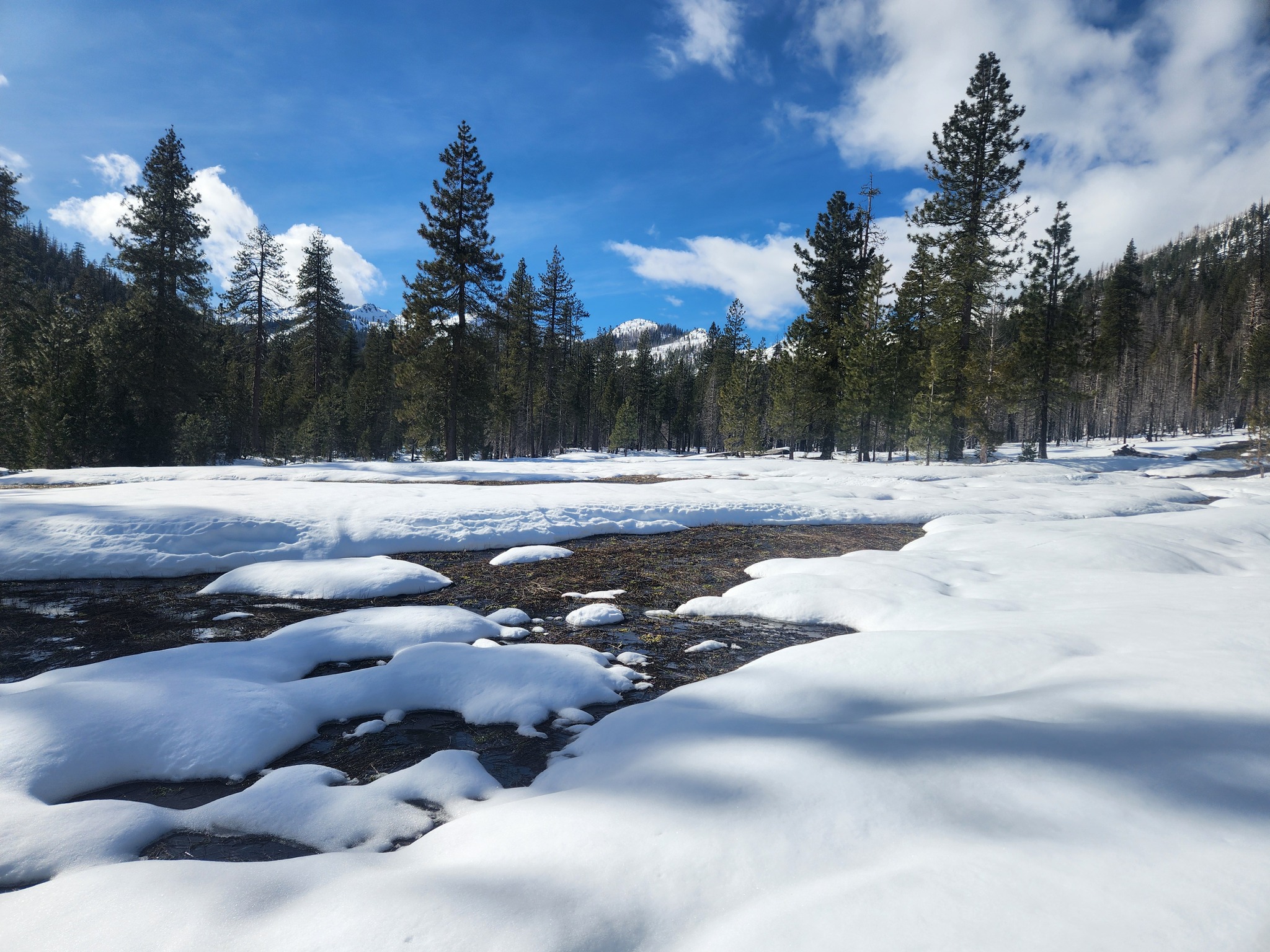
Surveyors from the Watershed Training and Research Center are encountering minimal snow pack and melt in the Trinity Alps.
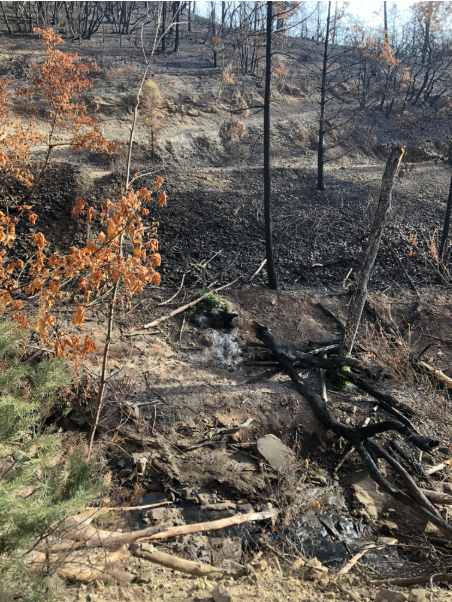
A swale has melted out in a meadow to be traversed on the route to the snow course during the February snow surveys conducted by the Watershed Research and Training Center. [Watershed Research and Training Center]
Snow Survey Results (from February)
“This was one of the wettest snow surveys in recent history for our crews.” Josh Smith, Watershed Stewardship Program Director described. “It rained at 7,000′ and every ephemeral swale had running water. It was a maze of streams running through the meadows and forests that made travel difficult and time consuming. We hope that the temps drop and/or we get some more snow storms in the near future!”
From a WRTC Facebook Post: February 2026 statistics, with February 2025 measurements in parentheses for comparison.
Bear Basin
Red Rock Mountain
Shimmy Lake
Snow height
40″ (80.5″)
41″ (101.5″)
51.5″ (99″)
Snow Water Equivalent
16.5″ (32.5″)
16″ (43.5′)
21″ (42.5″)
Trinity River Watershed Mar. Forecast
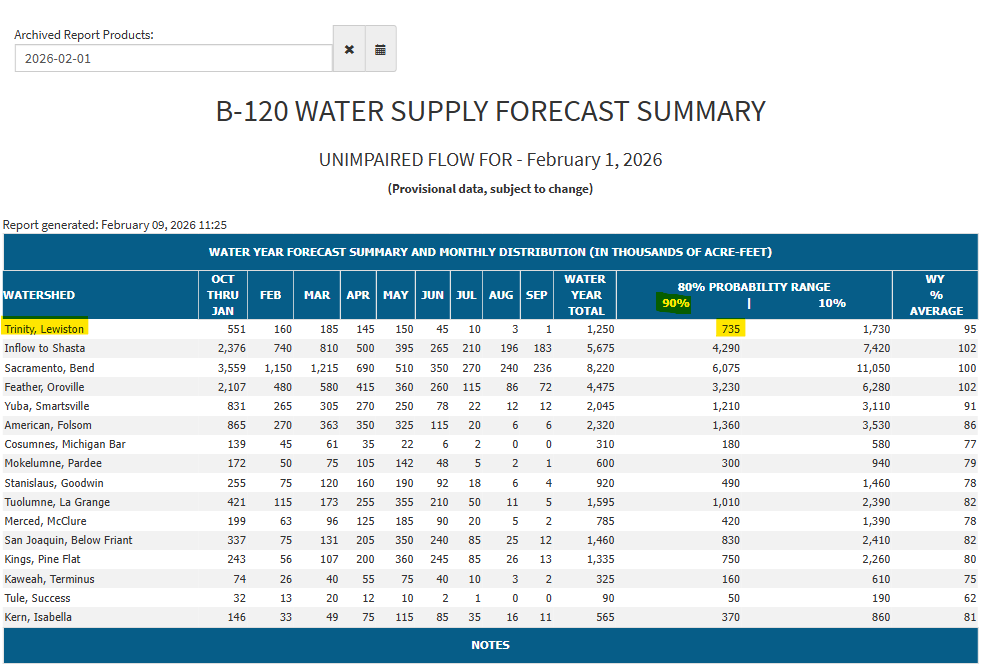
The volume of environmental flow releases for the Trinity River Restoration Program’s Wet-Season Baseflow Period (Feb. 15-Apr. 14) are determined by a conservative monthly inflow projection for Trinity Reservoir from the California Department of Water Resources (90% B120) in February, March with the final determination in April.
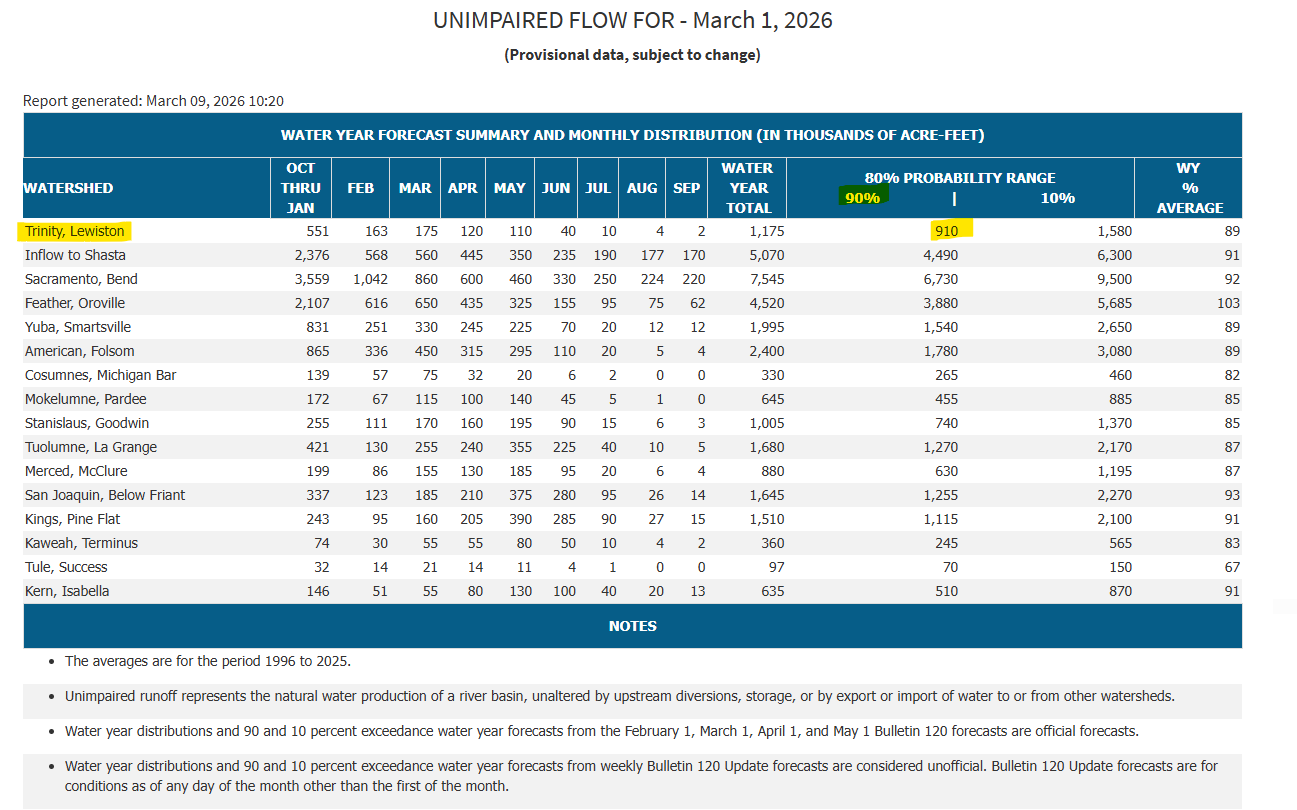
The current period within the Trinity River Restoration Program environmental flow management is the Wet-Season Baseflow Period. The California Department of Water Resources March 90% B120 declaration was published on Mar. 9 as “Dry” with the 90% determination at 910,000 acre feet.
Screenshot taken from the California Department of Water Resources March B120
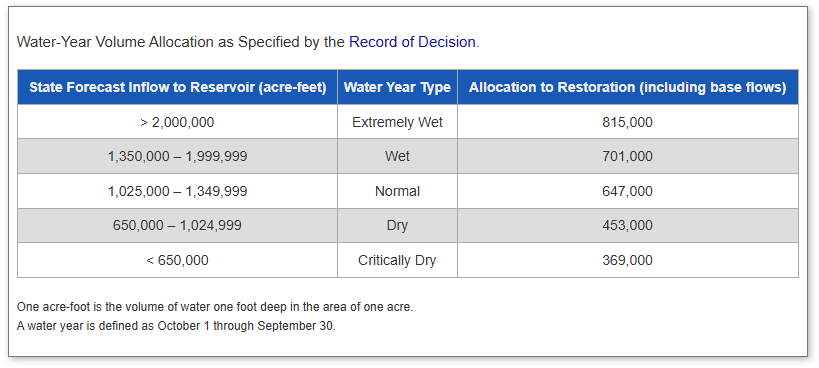
The Program’s Water-Year Volume Allocation as specified by the Record of Decision is outlined in the table below. The far left column is the threshold amount of state forecasted inflow in the Trinity Reservoir listed in acre feet which determines the center column, water year type. Then in the right column is listed the allocation to restoration for that water year, which includes baseflows.
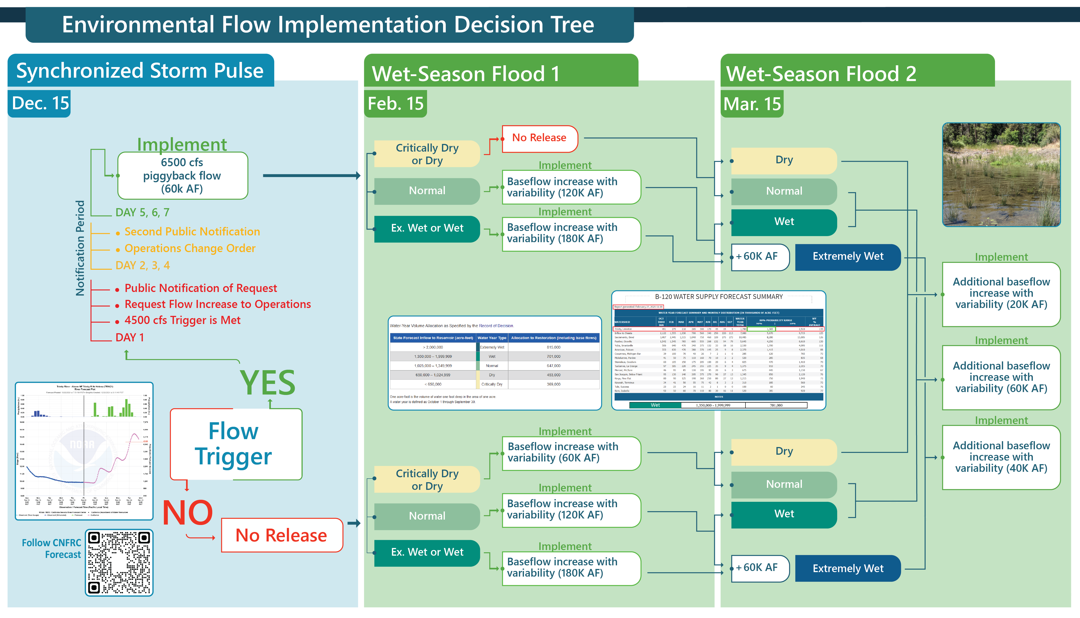
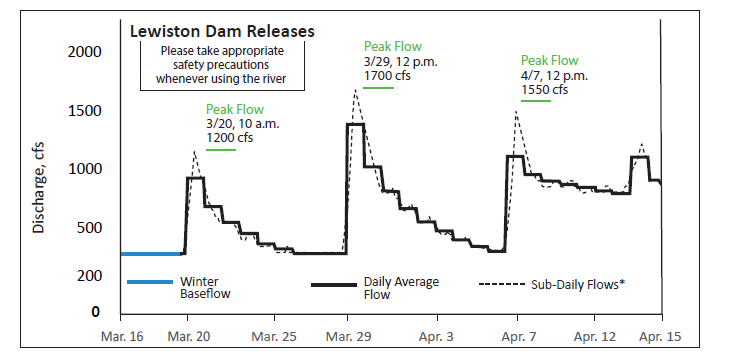
With a Mar. B120 determination of “Dry” the Mar. 15 – Apr. 15 period will increase releases from 300 CFS (winter baseflow) to the Trinity River by adding 20,000 AF into the schedule during this period.
The hydrograph using 20K AF during the next period is the following:
Schedule of recommended flow releases from Lewiston Dam to the Trinity River during the Elevated Baseflow Period (Mar. 15 – Apr. 14).
In April, the Program implements a spring snow-melt and recession hydrograph following the final B120 water year determination by the Department of Water Resources, which is typically announced around Apr. 10.
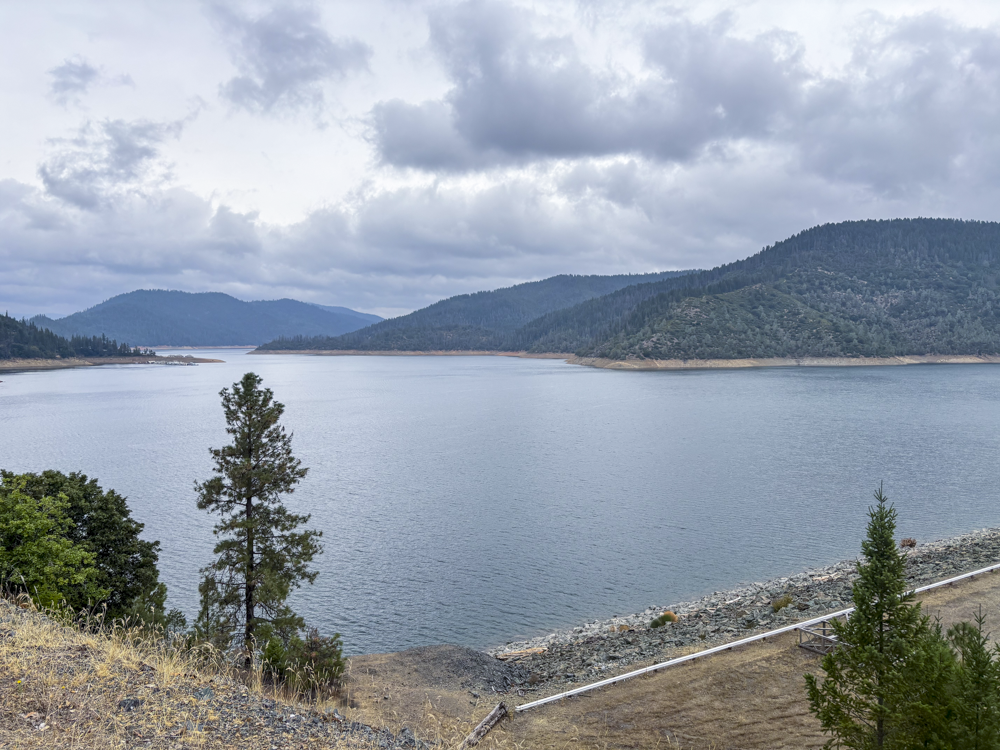
Trinity Reservoir
Current reservoir data does not play a role in the WY26 forecast or determinations, however levels are important to keep track of and can be accessed by following this link: Trinity Reservoir Daily Data (CDEC) – click the link for daily data.
Ecology in Motion: Wildlife Interactions After River Rehabilitation
By: Simone Groves, Riparian Ecologist, Hoopa Valley Tribal Fisheries with contributions fromJames Lee, Implementation Branch Chief and Kiana Abel, Public Affairs Specialist – Trinity River Restoration Program
Disturbance: A Natural Driver of River Ecosystems
Disturbance is a fundamental ecological force across western North America. At small scales, a fallen tree opens space and sunlight; at larger scales, wildfire or major floods reshape entire landscapes. Historically, the Trinity River experienced seasonal floods that scoured floodplains, deposited sediment and wood, and reset vegetation communities. These events initiated ecological processes that made the river corridor dynamic and biologically rich.
Succession in River Environments
Following major disturbance, the floodplains of rivers like the Trinity River undergo predictable successional phases. After high flows deposit bare gravel and sand, these new surfaces become recruitment beds for species like black cottonwood (one of the clearest examples of primary succession along the Trinity). In other cases, where vegetation is cleared but soils and roots remain, secondary succession accelerates recovery. In both processes, disturbance serves as the starting point that enables riparian vegetation to establish, mature, and ultimately support riparian wildlife.
Riparian Vegetation Depends on Disturbance
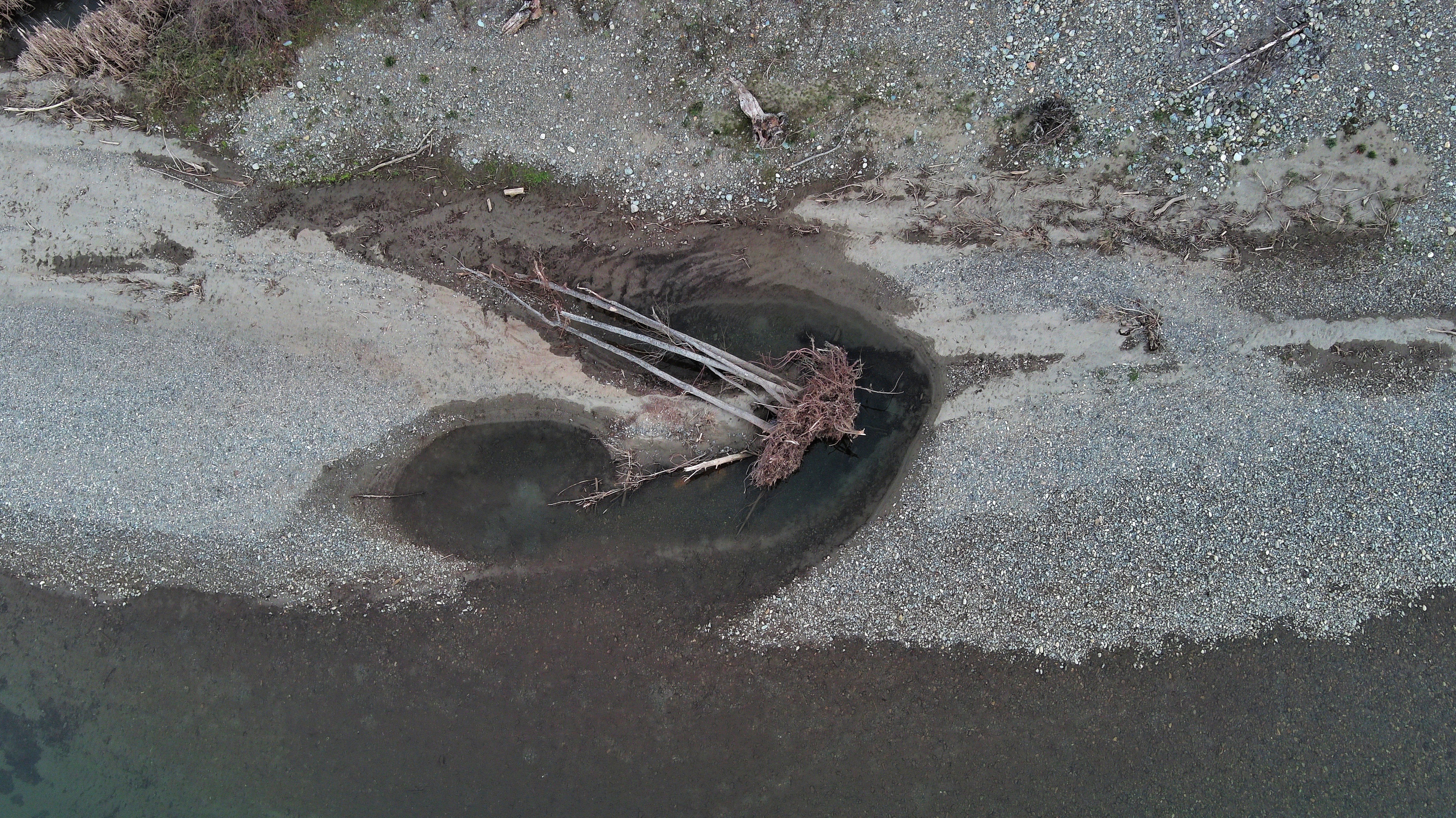
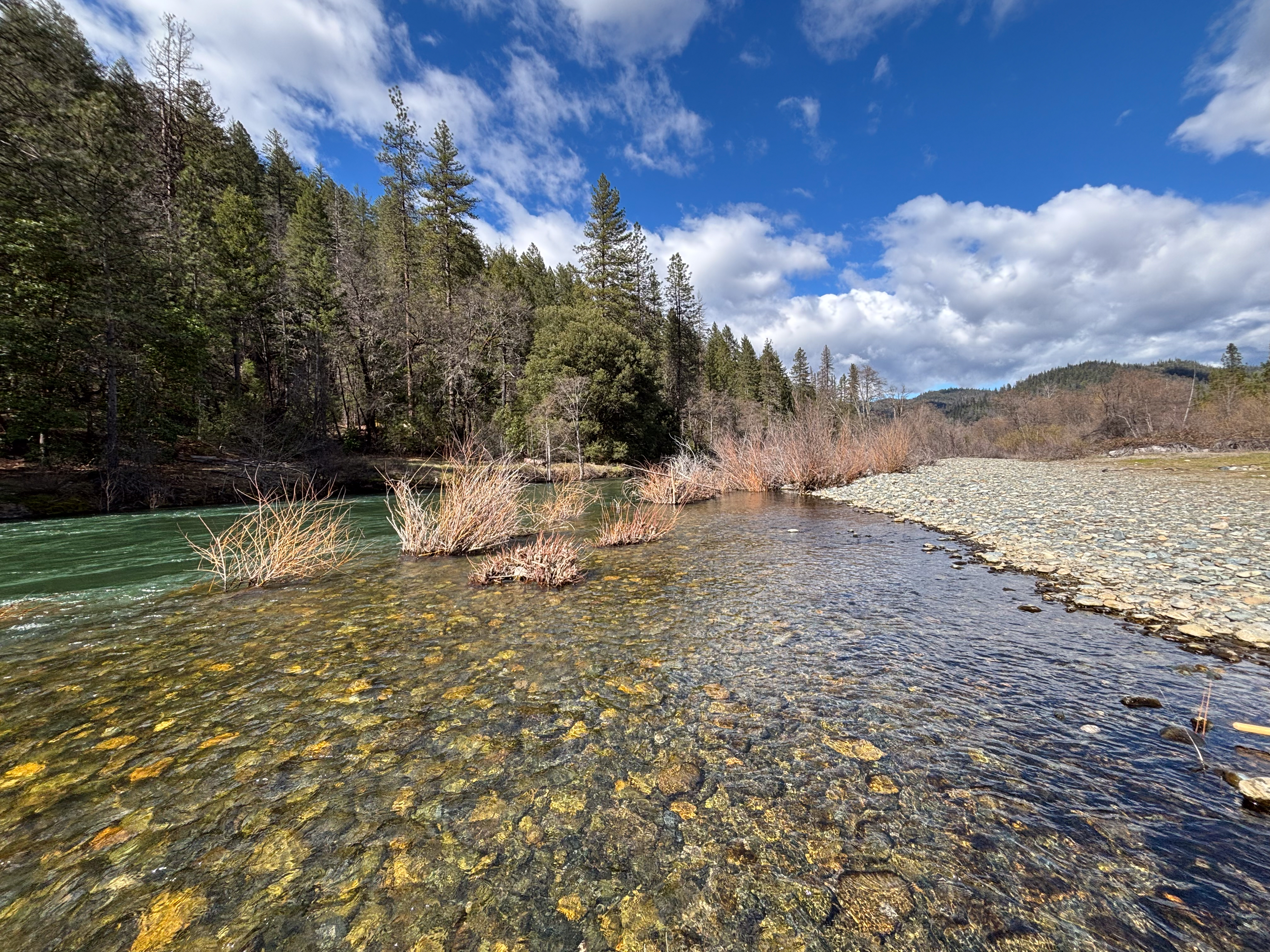
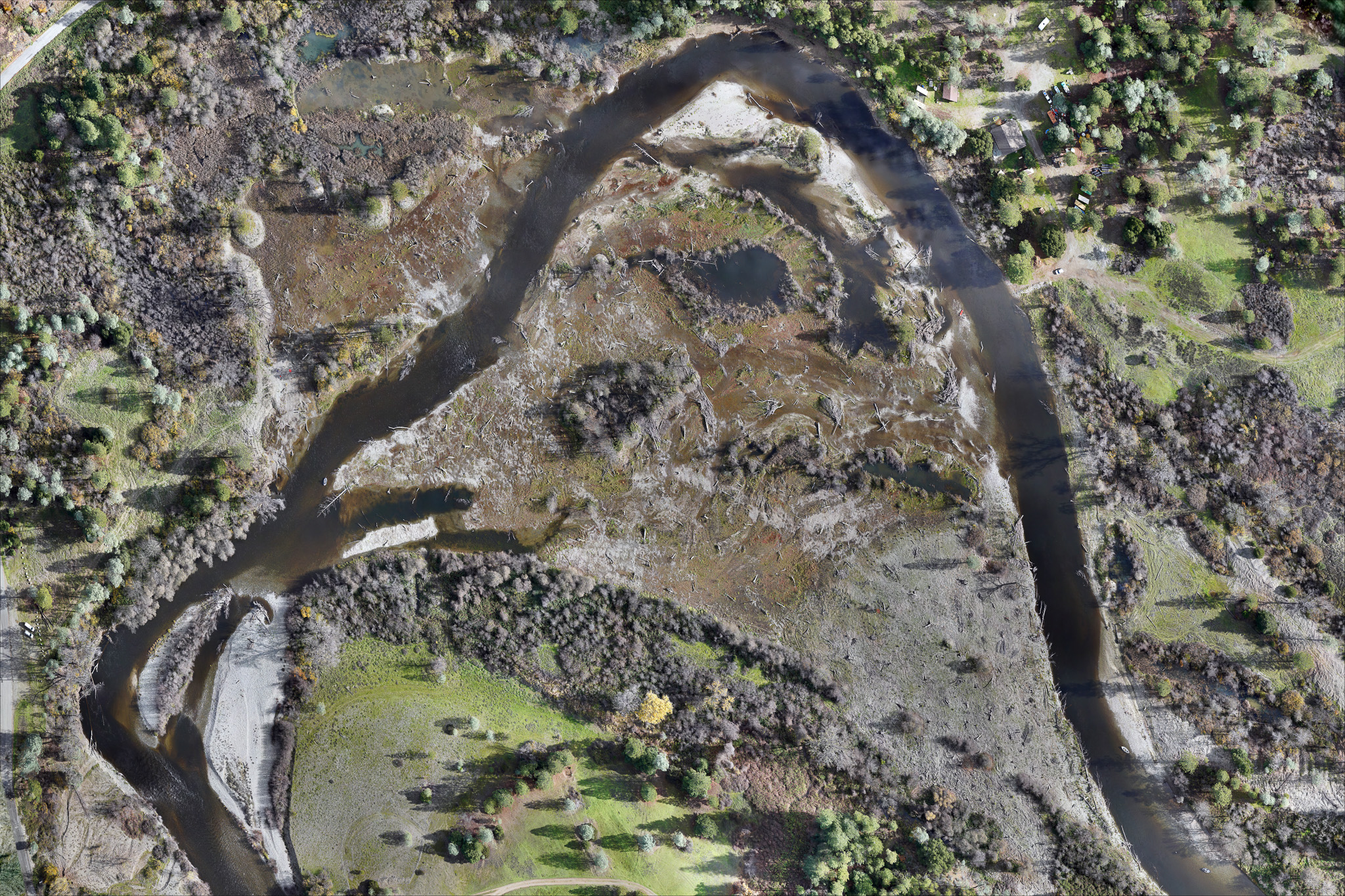
Recently deposited sediment and wood which were naturally recruited during winter storms along with channel rehabilitation (2024) and flow management on the Trinity River. [Aaron Martin, Yurok Tribal Fisheries Department]
Riparian habitats occupy a small fraction of the landscape, yet they are used by most wildlife species in the Trinity River watershed during some part of their life cycles. Without periodic disturbance, riparian vegetation is gradually replaced by upland species that are less valuable to wildlife. The river once maintained this vegetation naturally through regular high flow events. Today, with Trinity and Lewiston Dams reducing the timing and magnitude of floods, the natural disturbance regime has been significantly altered.
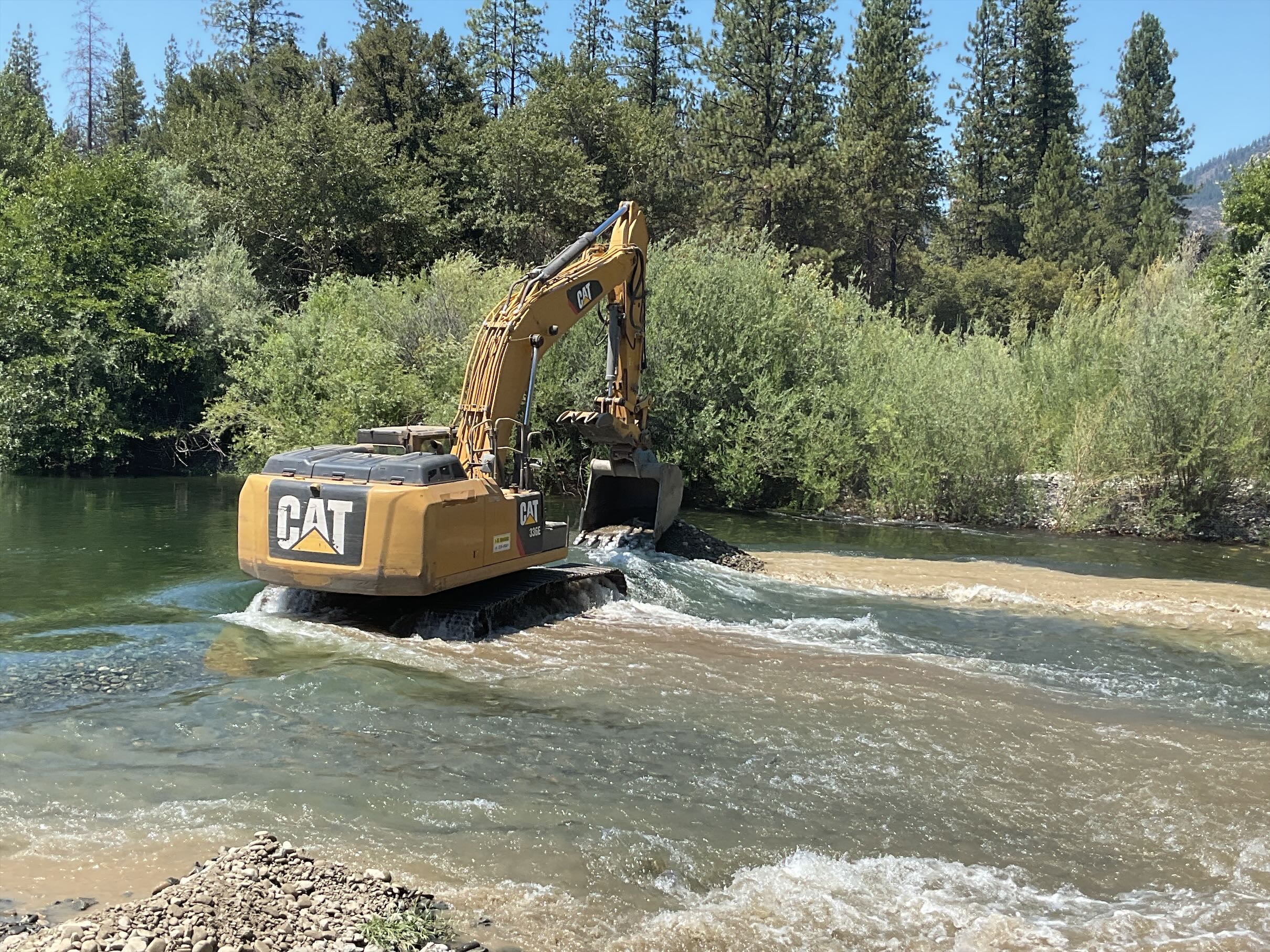
Because large, channel-shaping floods no longer occur downstream of the dams, channel rehabilitation and the use of big machines to lower floodplains has become an essential tool to reintroduce areas no longer available to the river for primary and secondary succession. Recently completed projects such as the Upper Connor Creek and Oregon Gulch Channel rehabilitation projects in Junction City, Ca. are two such examples. While the designs were unique to each location overall each project aimed to lower floodplain surfaces, reconnected the main stem Trinity with floodplain areas, increase channel complexity, and distribute large wood to mimic features historically formed by floods. Although mechanical disturbance differs in scale and timing from natural floods, it provides the ecological reset needed to restart successional processes.
Observed Wildlife Response
As new surfaces at Upper Connor Creek stabilized during and after construction, wildlife quickly responded.
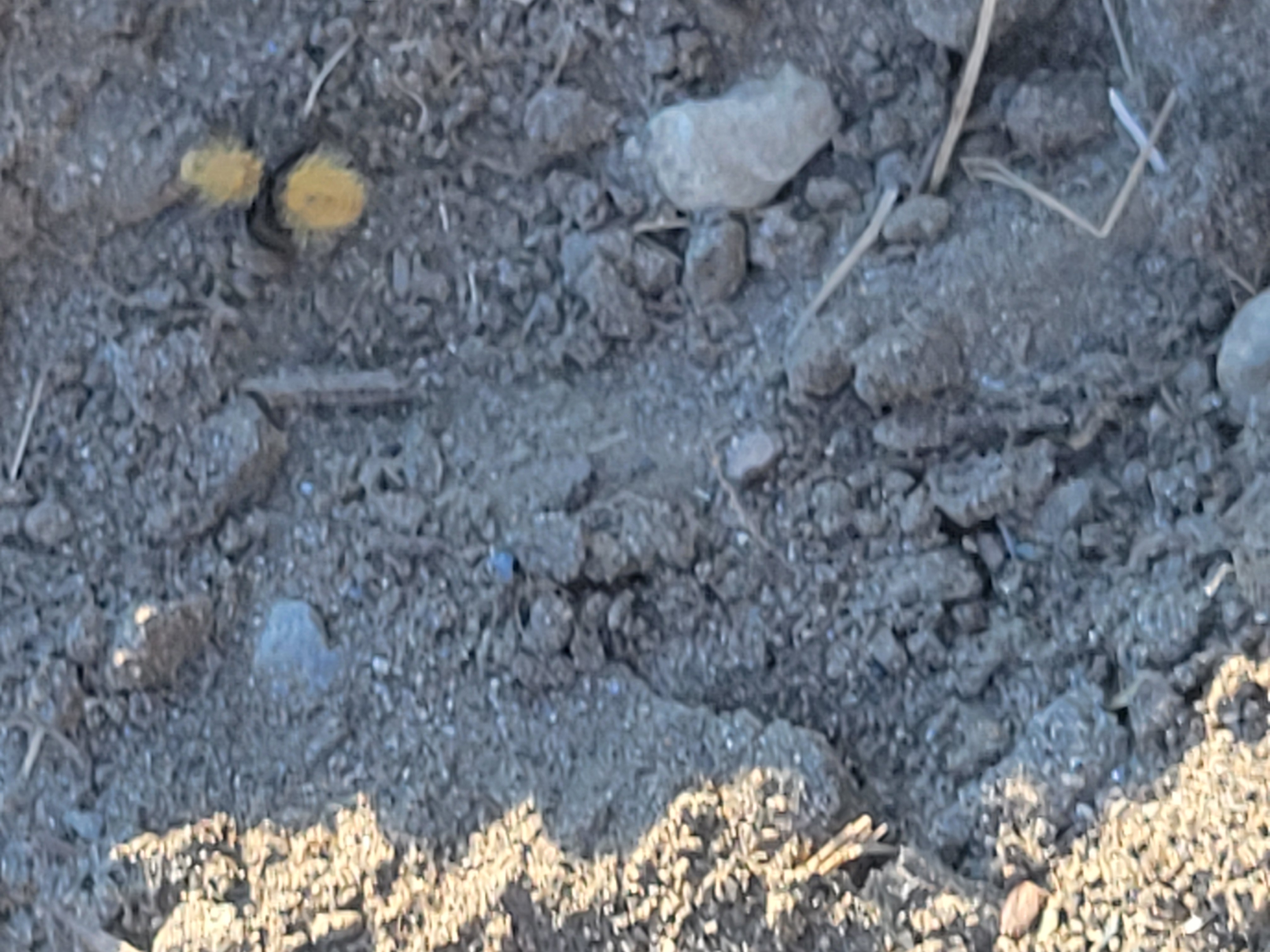
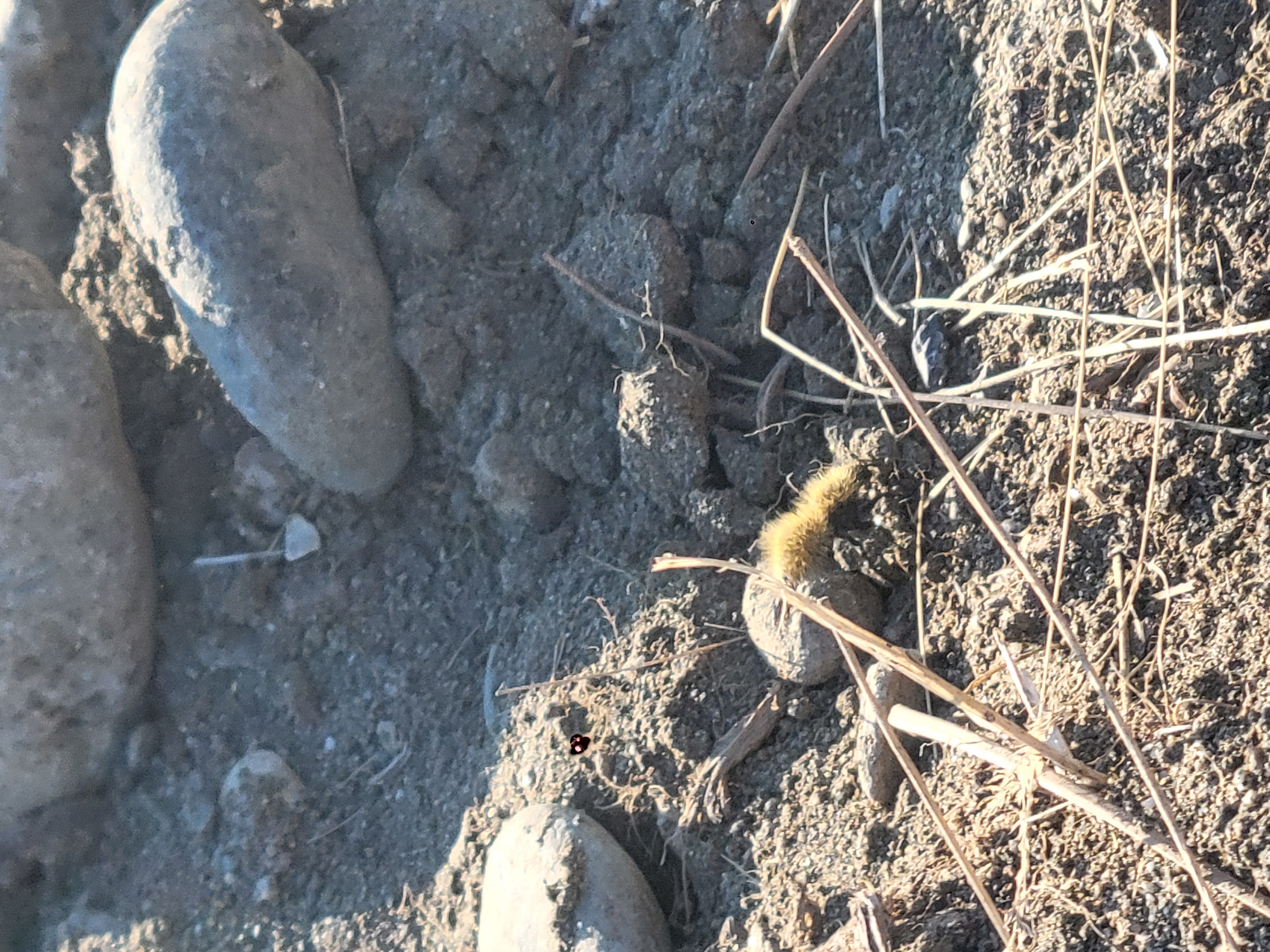
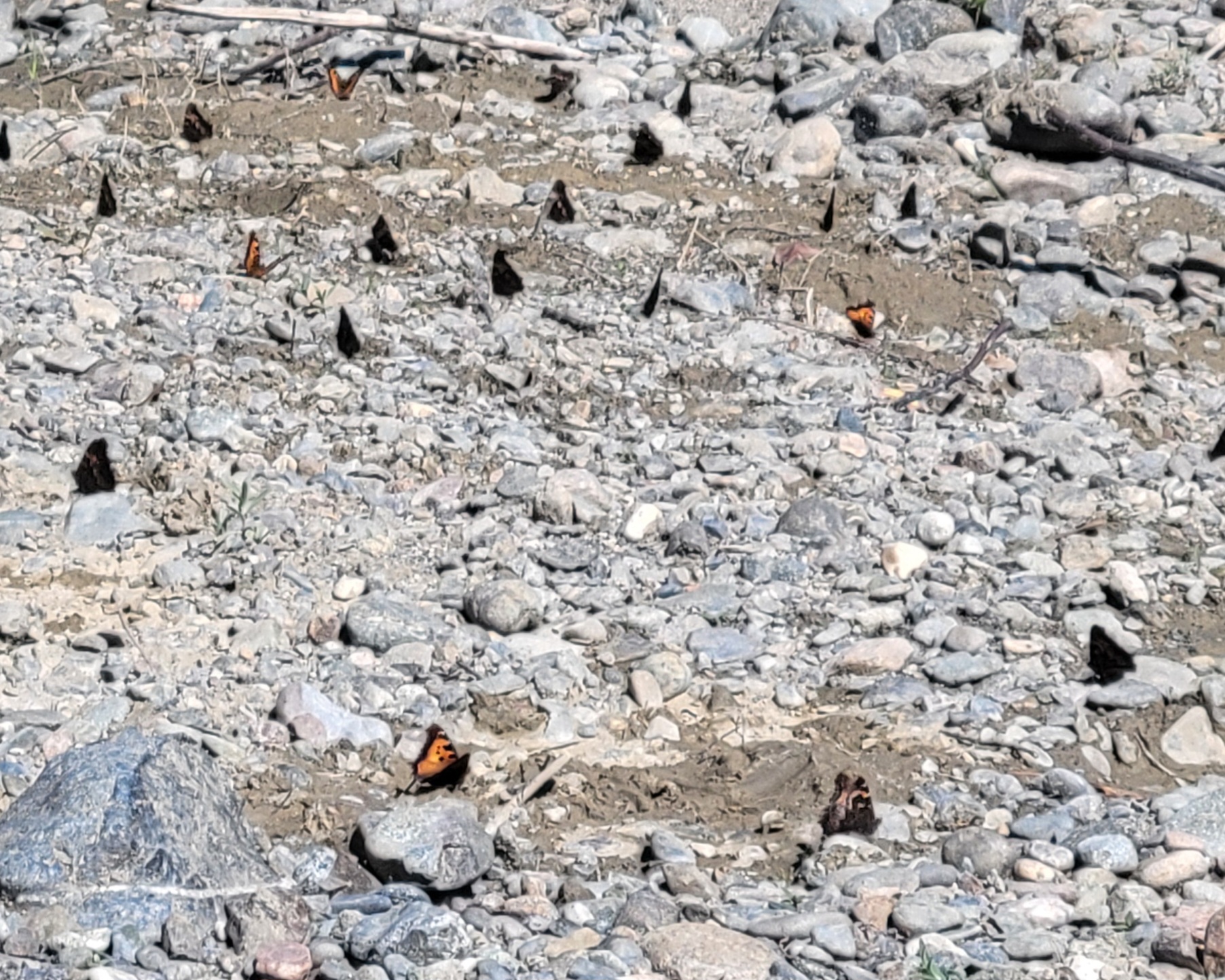
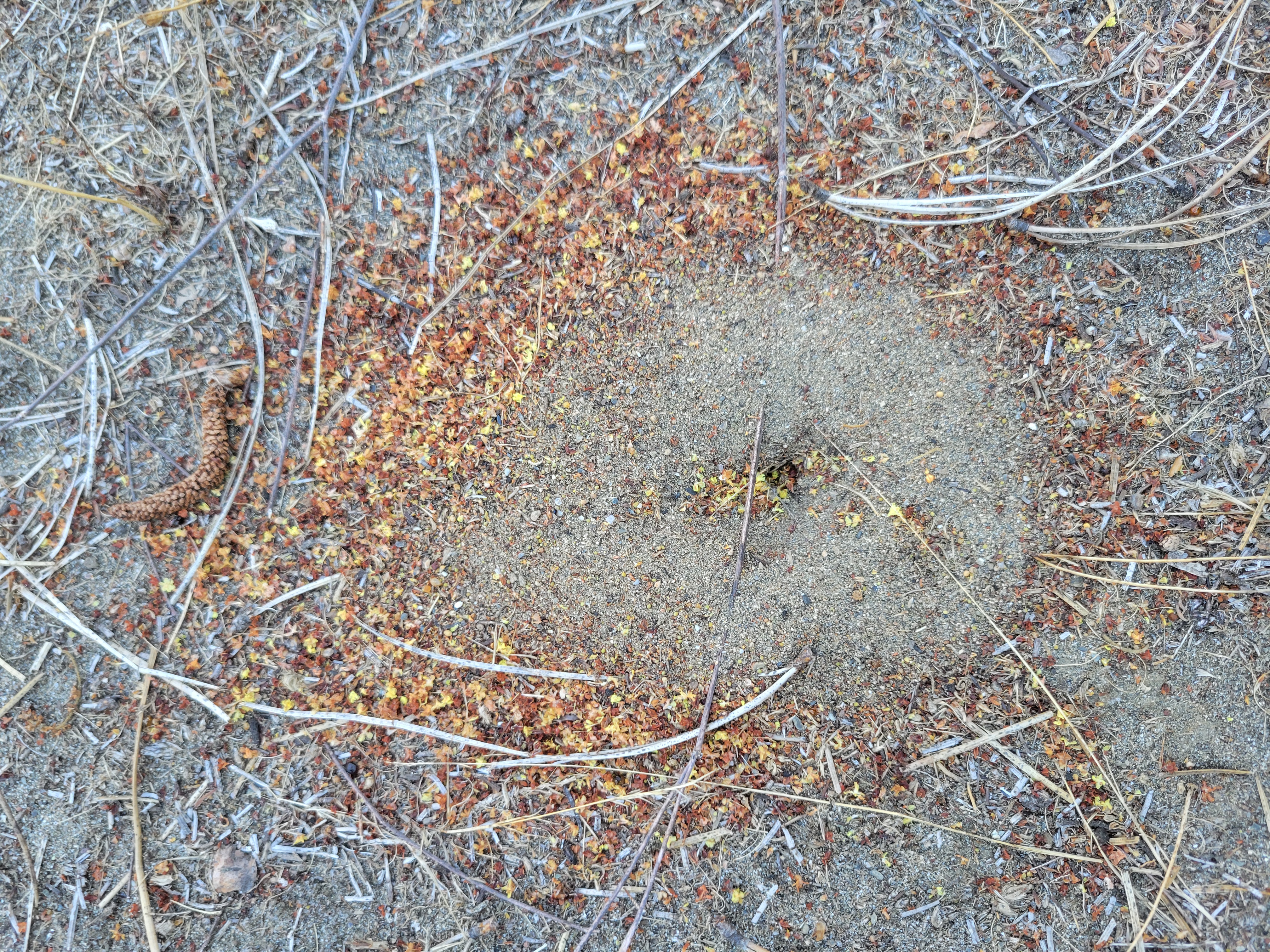
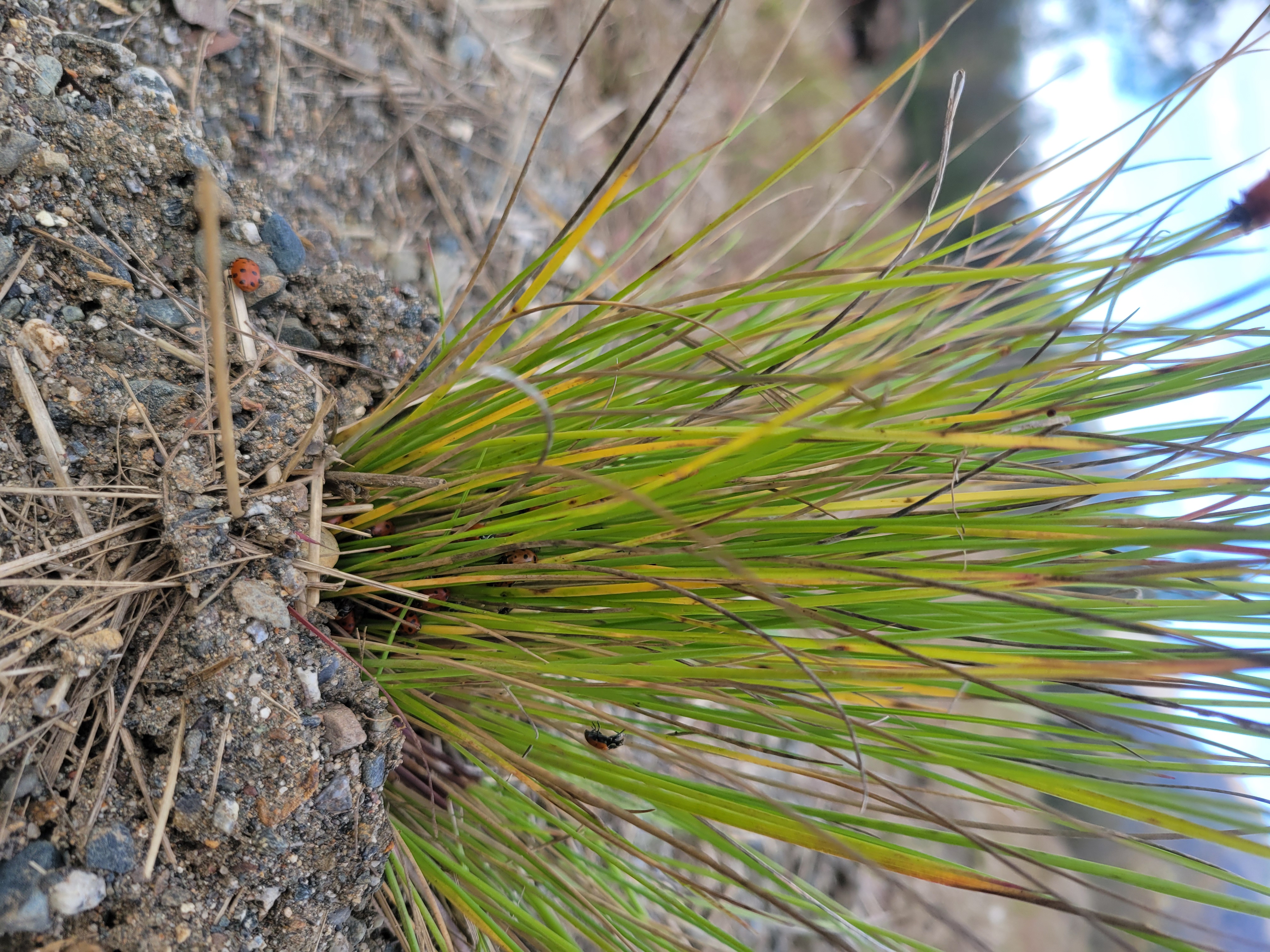
Insects were among the earliest arrivals. Butterflies and native bees collected salts on wet sediments, velvet ants moved rapidly across disturbed soils, and dragonflies patrolled the project perimeter. As winter approached, clusters of lady beetles gathered within the shelter of planted bunchgrasses.
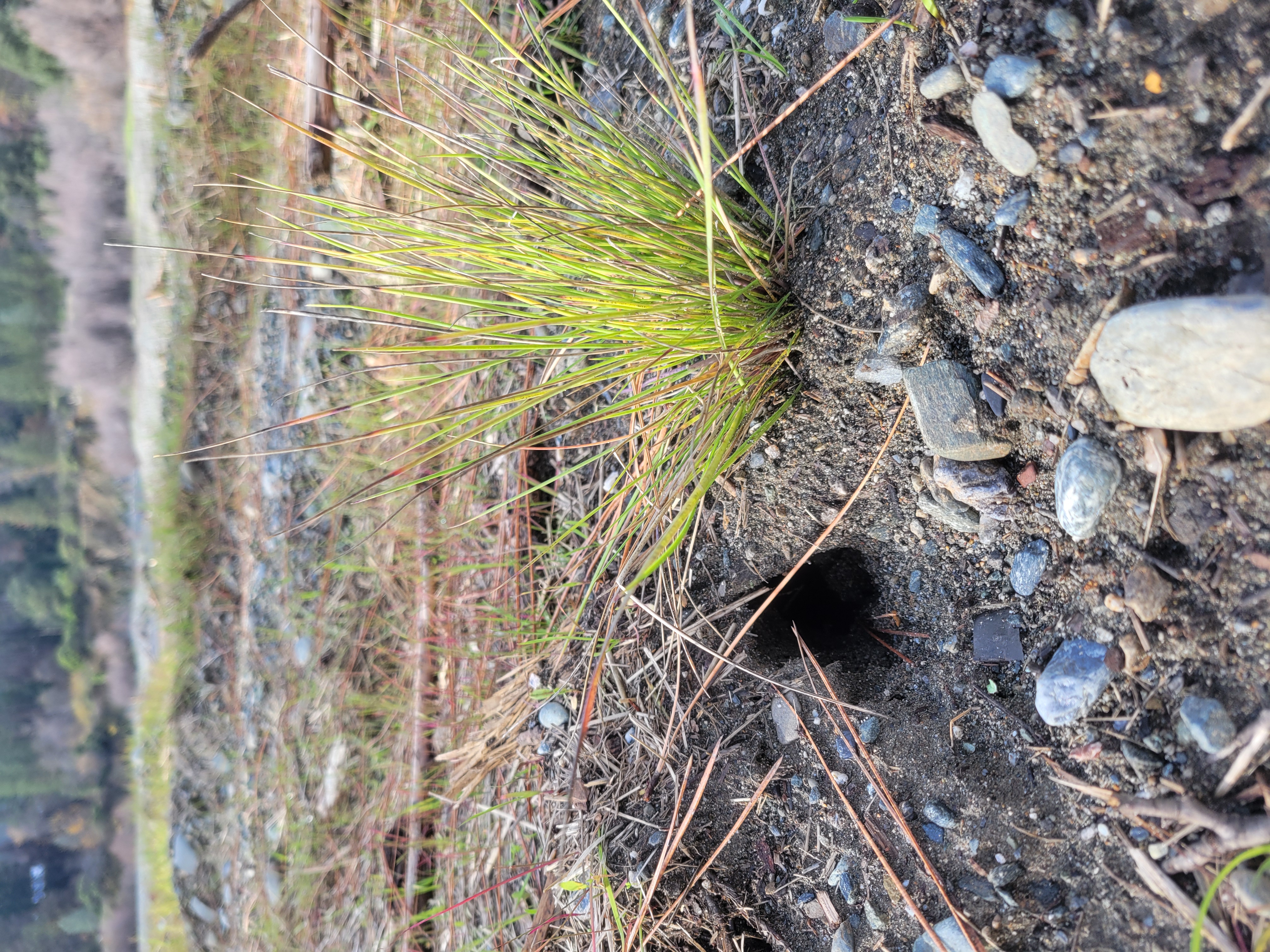
A velvet ant at Upper Conner Creek.Velvet ants are fast and hard to photograph!Butterflies enjoying salts from newly disturbed and wetted floodplain.An ant hill in sediments at Upper Conner CreekLady bugs hide in the stalks of newly planted grasses during the cold months.
Small mammals moving up the food chain, rodents moved in to the area soon after excavation stopped. Evidence of ground squirrels, and mice were found occupying large wood structures and burrows developed near newly planted bunch grasses.
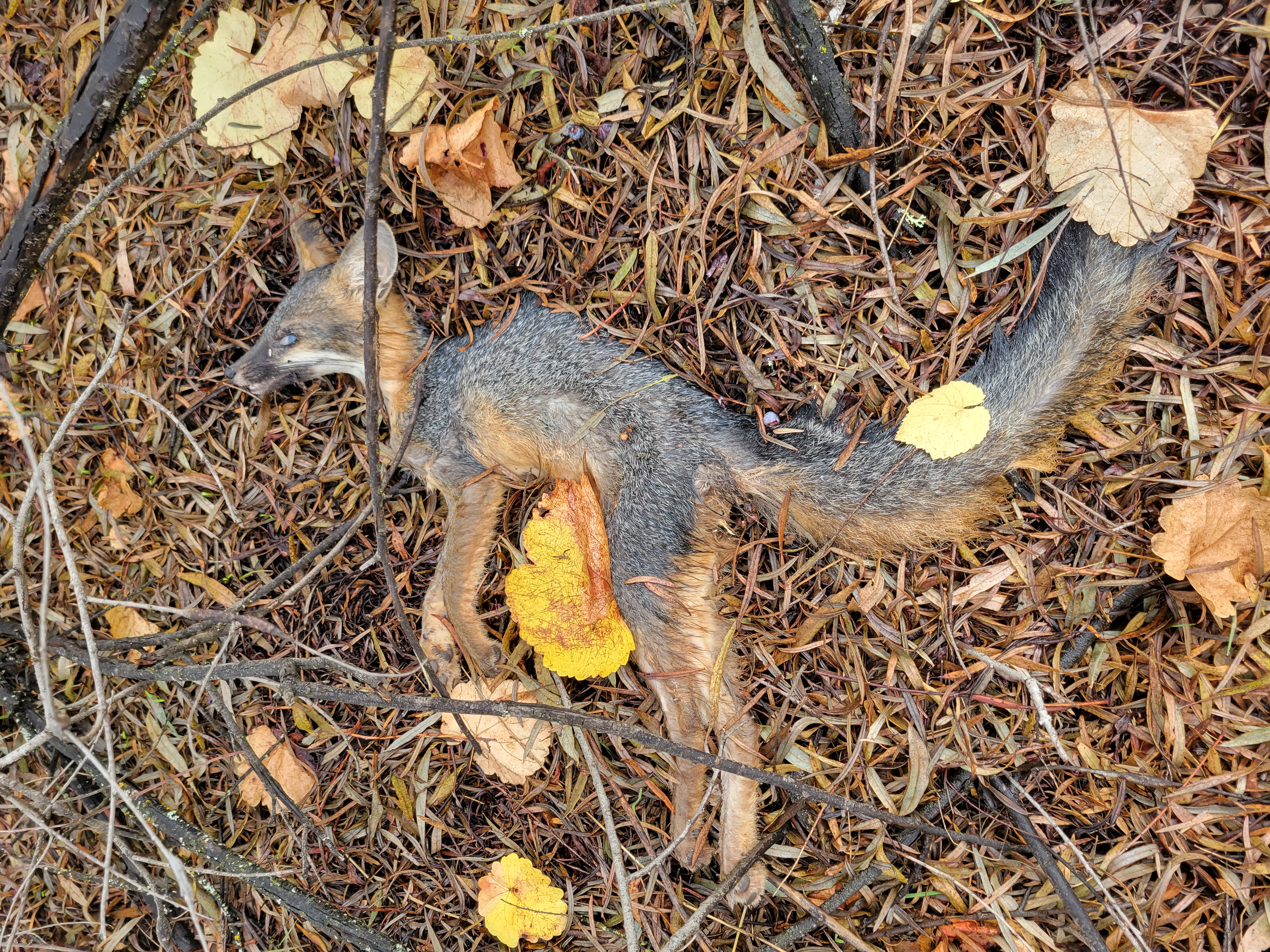
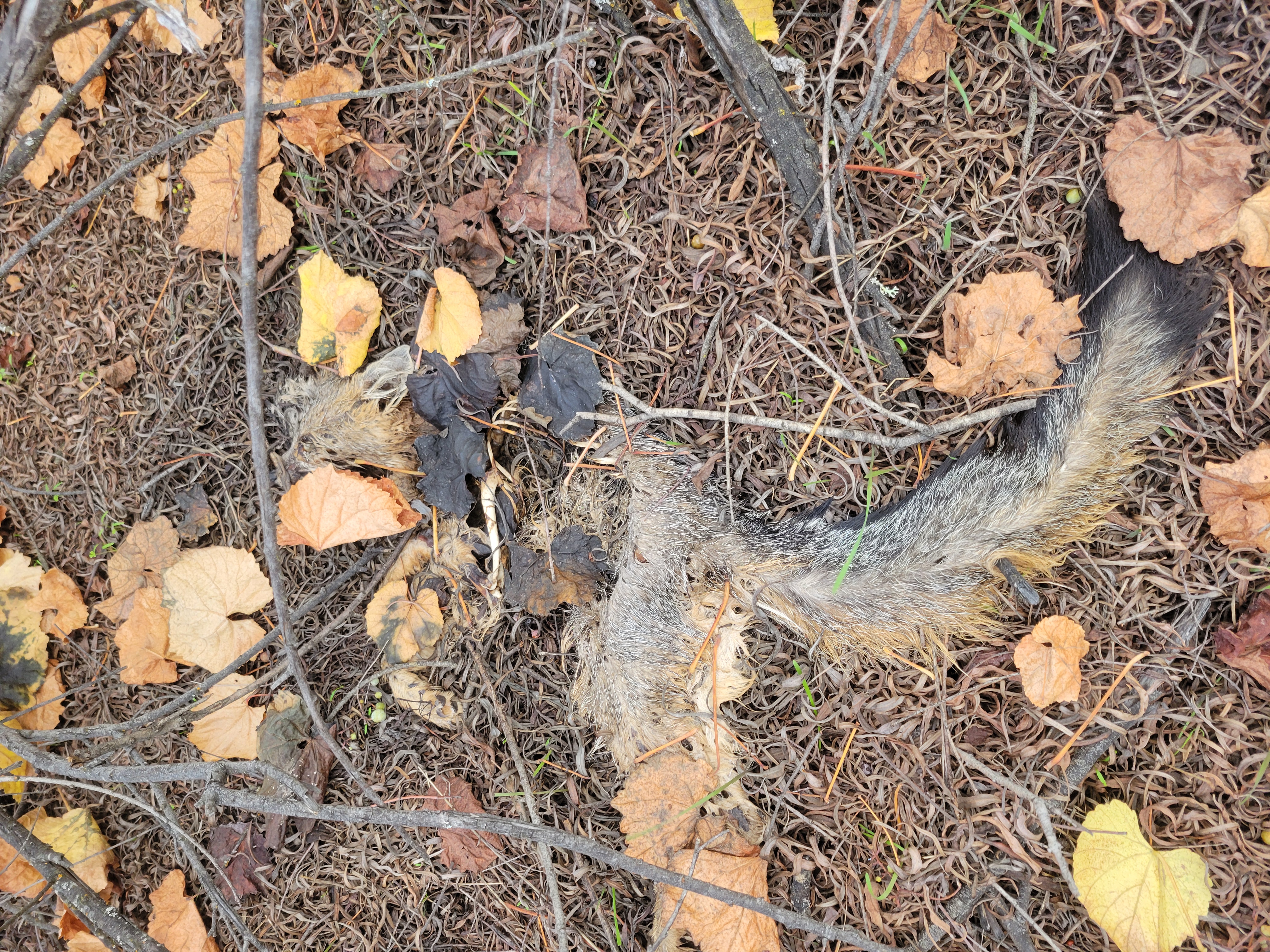
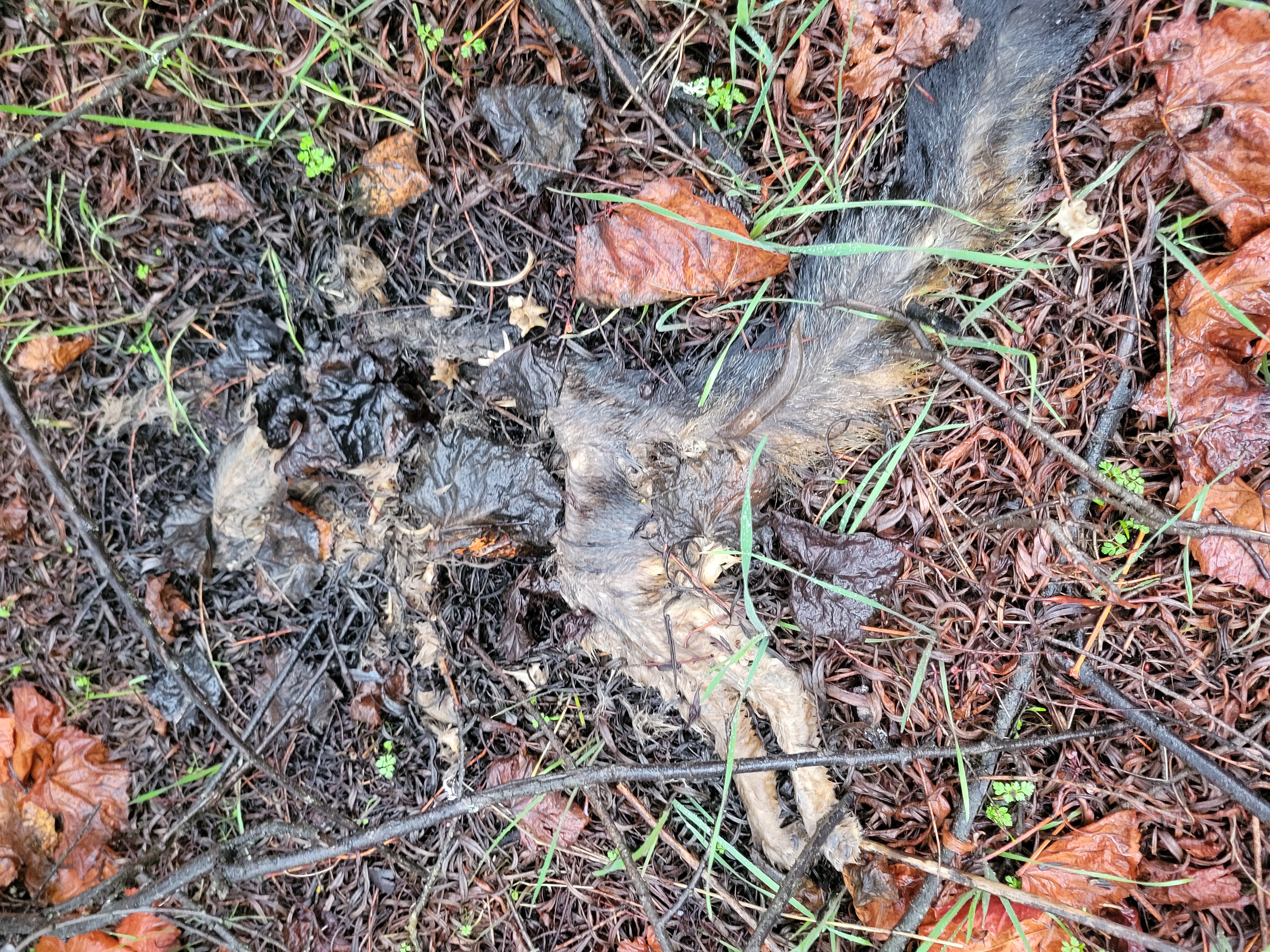
Gray fox activity increased the following spring, including a mother using the site to forage for rodents supported by the new habitat conditions. Although one fox pup later died on-site from what appeared to be disease, the presence of fox highlights their role as early participants in post-disturbance ecosystems.
A kit perished from disease.The same kit decomposing over time.The same kit decomposing over time.Fox scat at the project site.Fox scat at the project site.Fox scat at the project site.
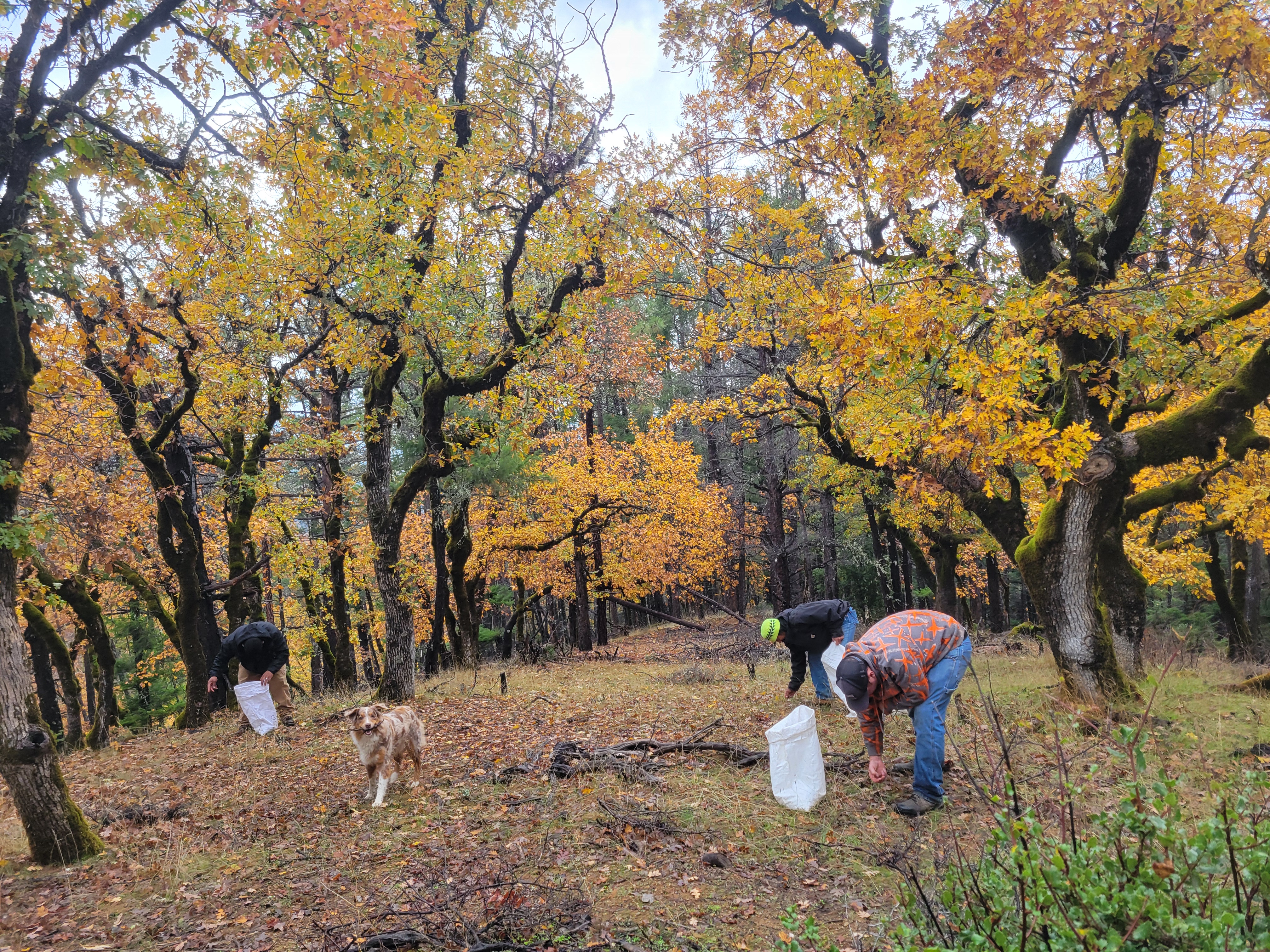
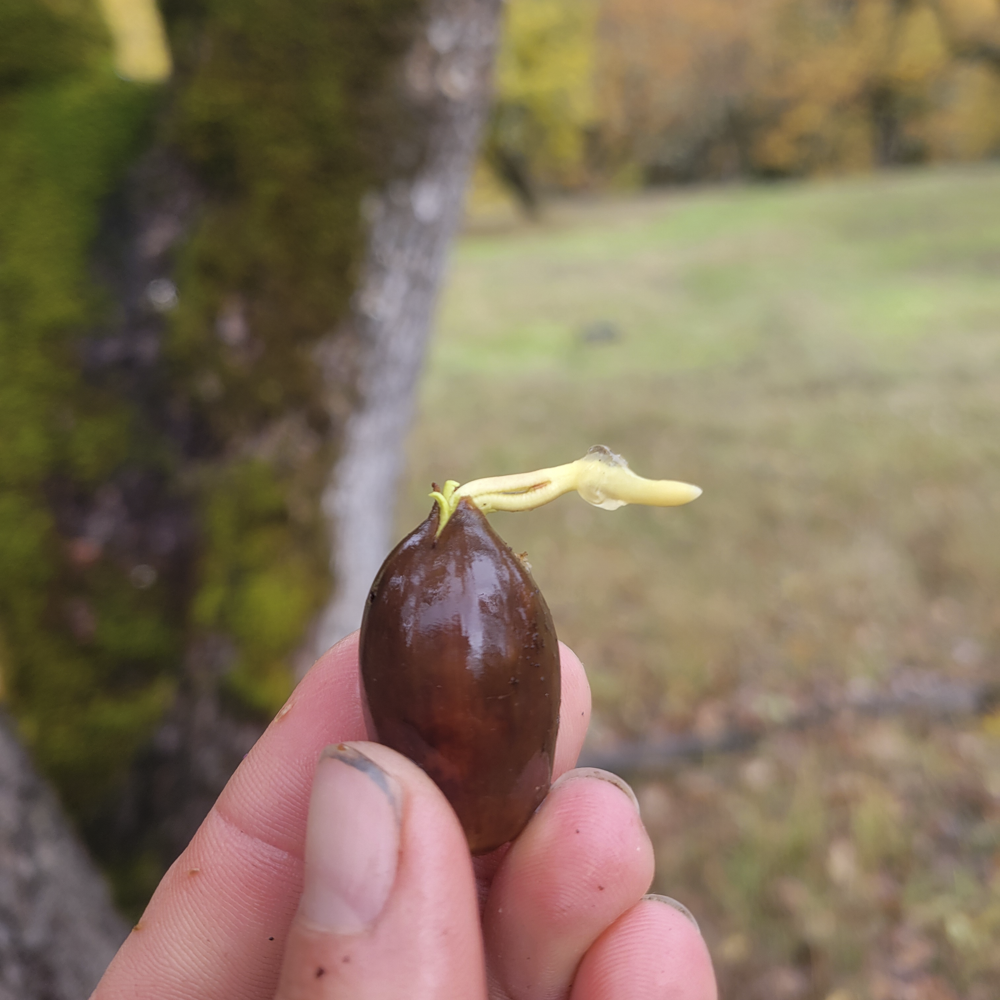
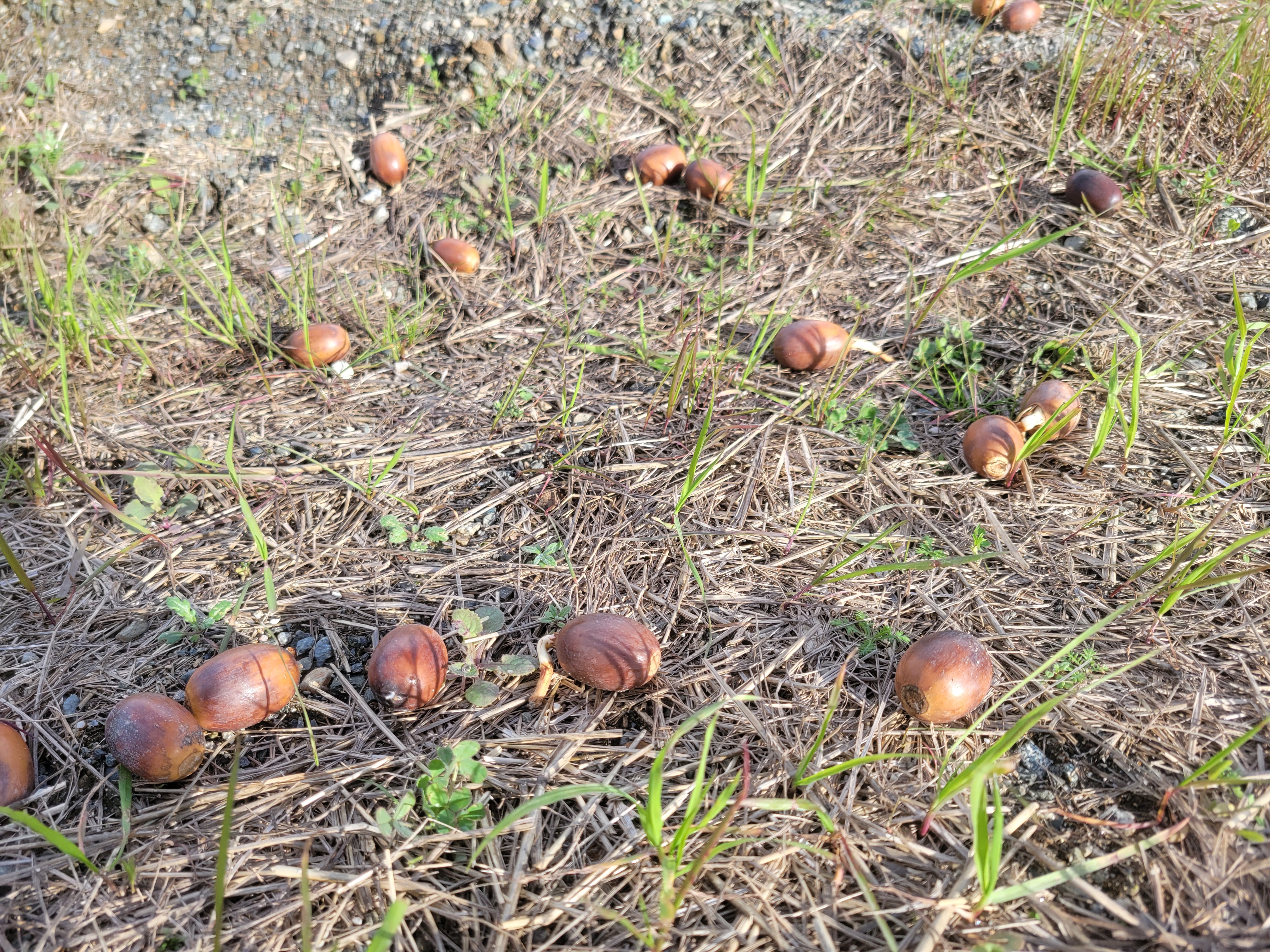
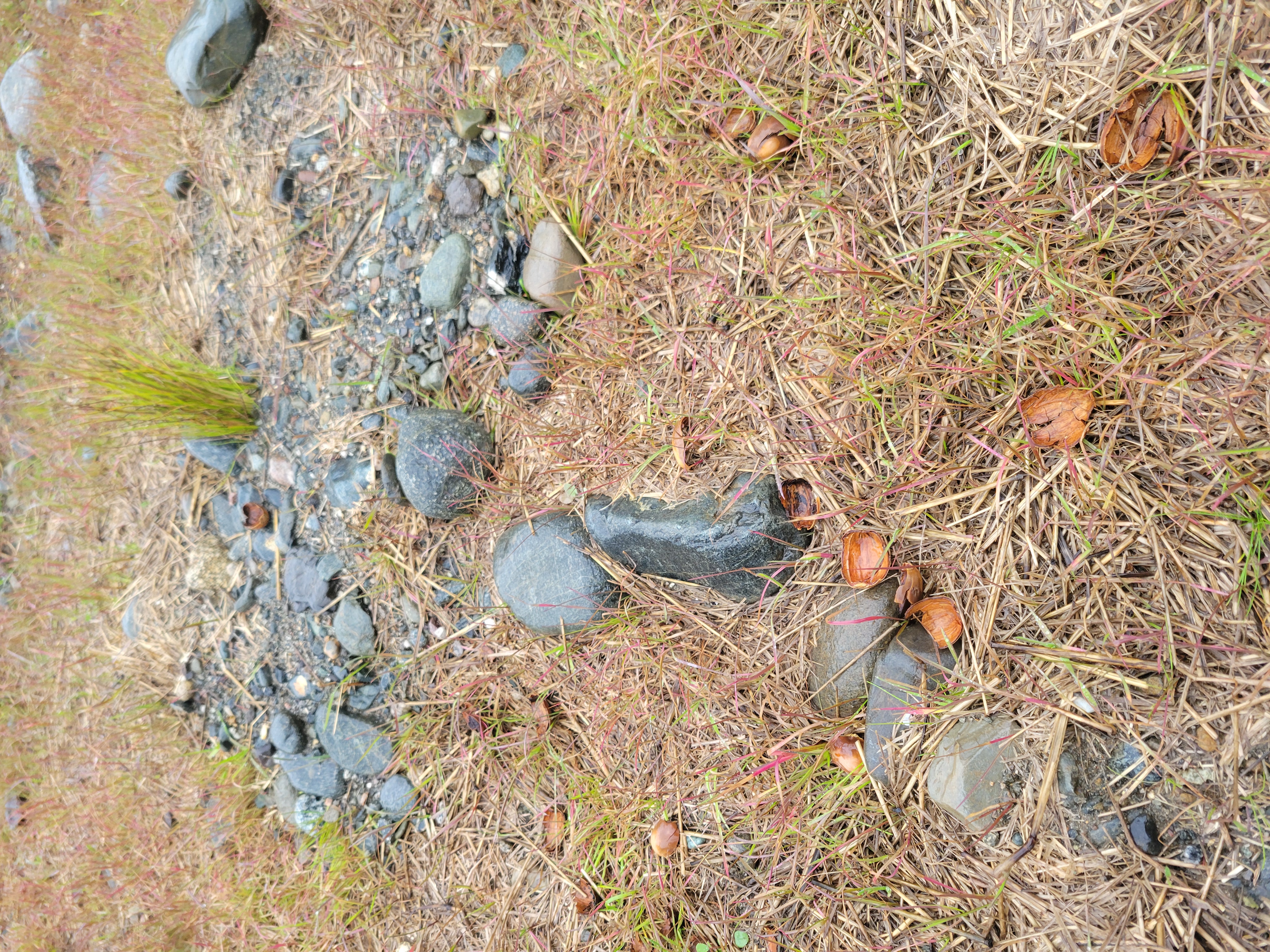
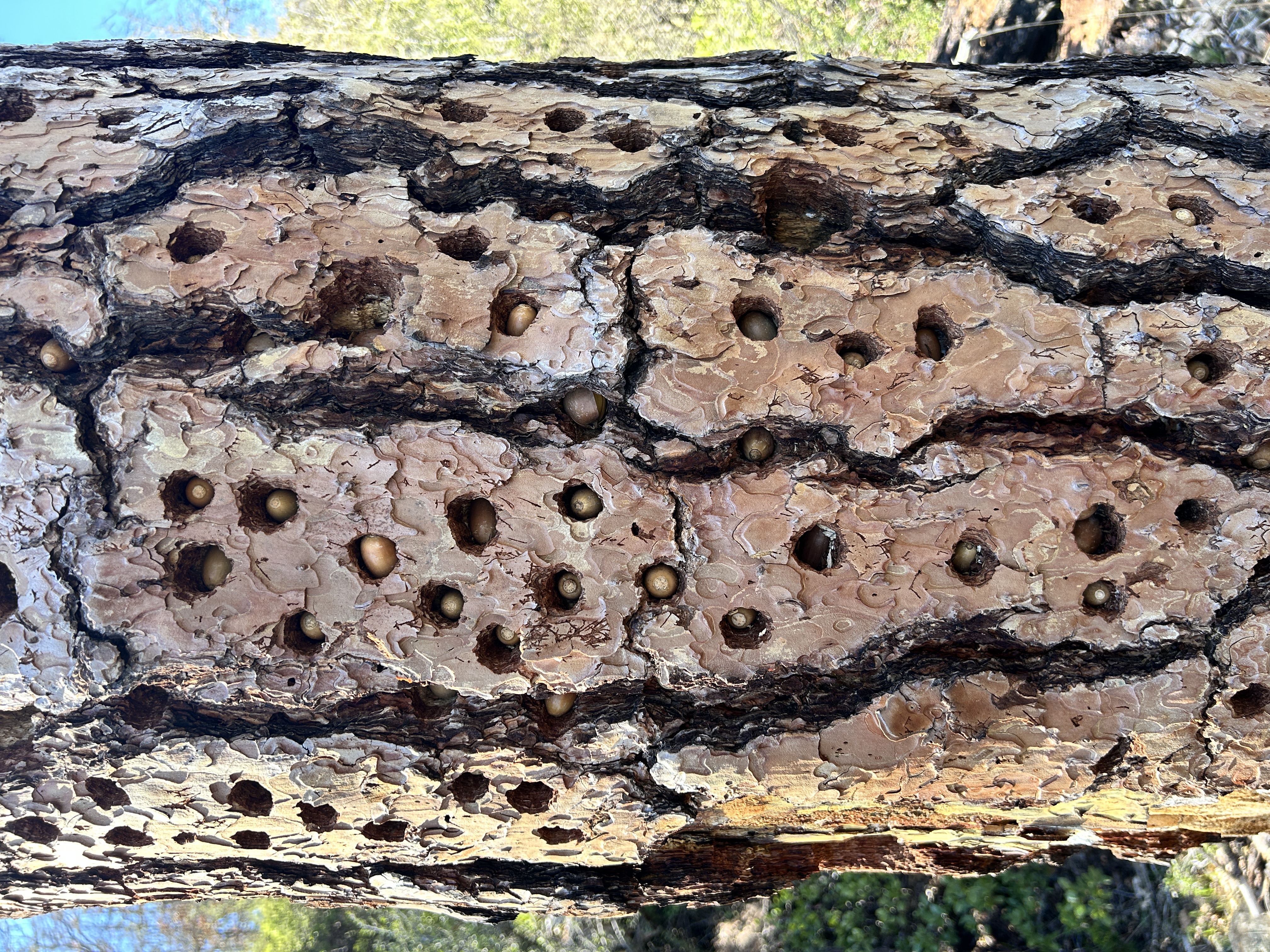
Acorn woodpeckers took advantage of acorns dispersed during revegetation efforts, caching them in nearby upland forests. While it is too early to evaluate long-term oak establishment, this interaction illustrates how wildlife intersects with restoration actions.
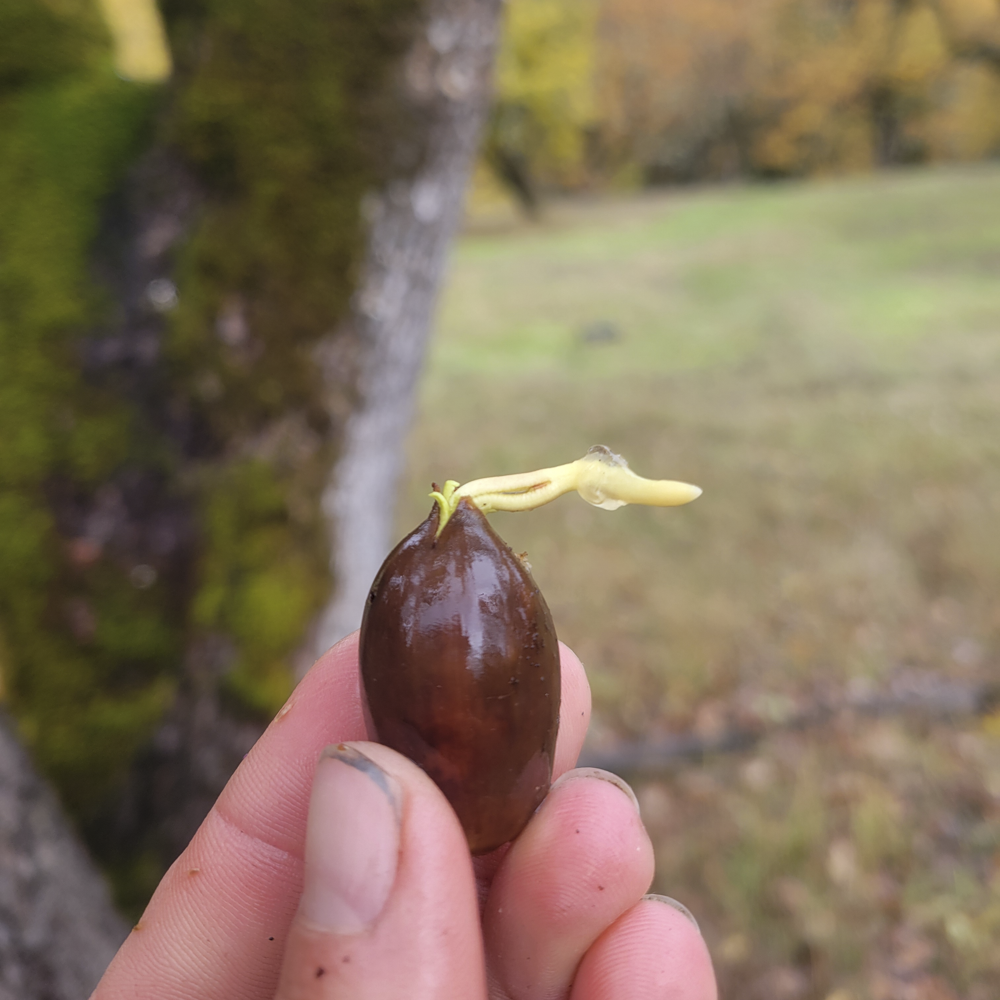
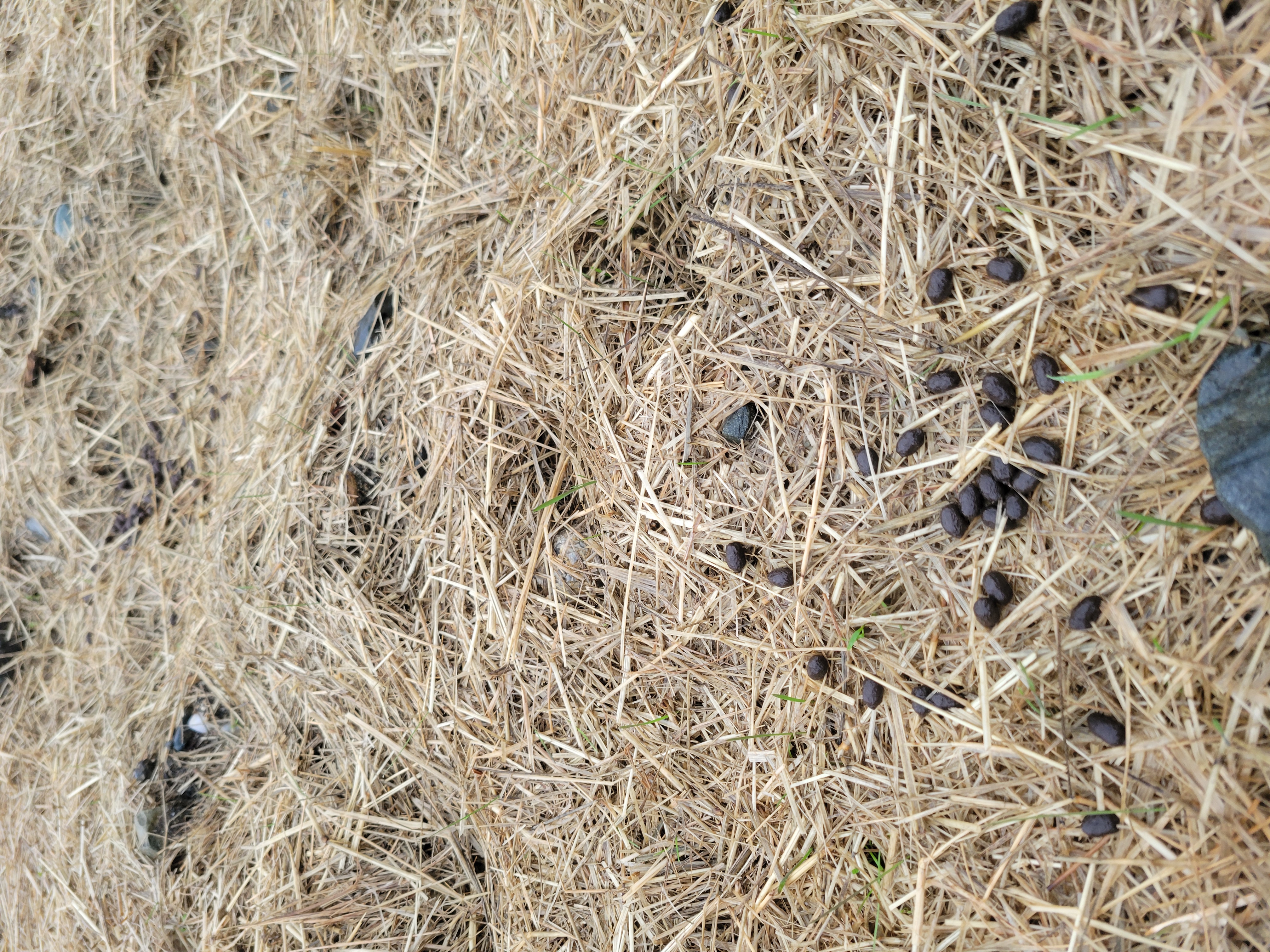
Crews harvested acorns from an oak woodland to be used at the project site.An acorn sprouting an oak tree.Acorns placed in upland areas at the Upper Conner Creek restoration site are sprouting alongside the grass seed. Evidence of acorn harvest.Deer scat in the seed dispersal area.An area acorn woodpecker has been very busy!
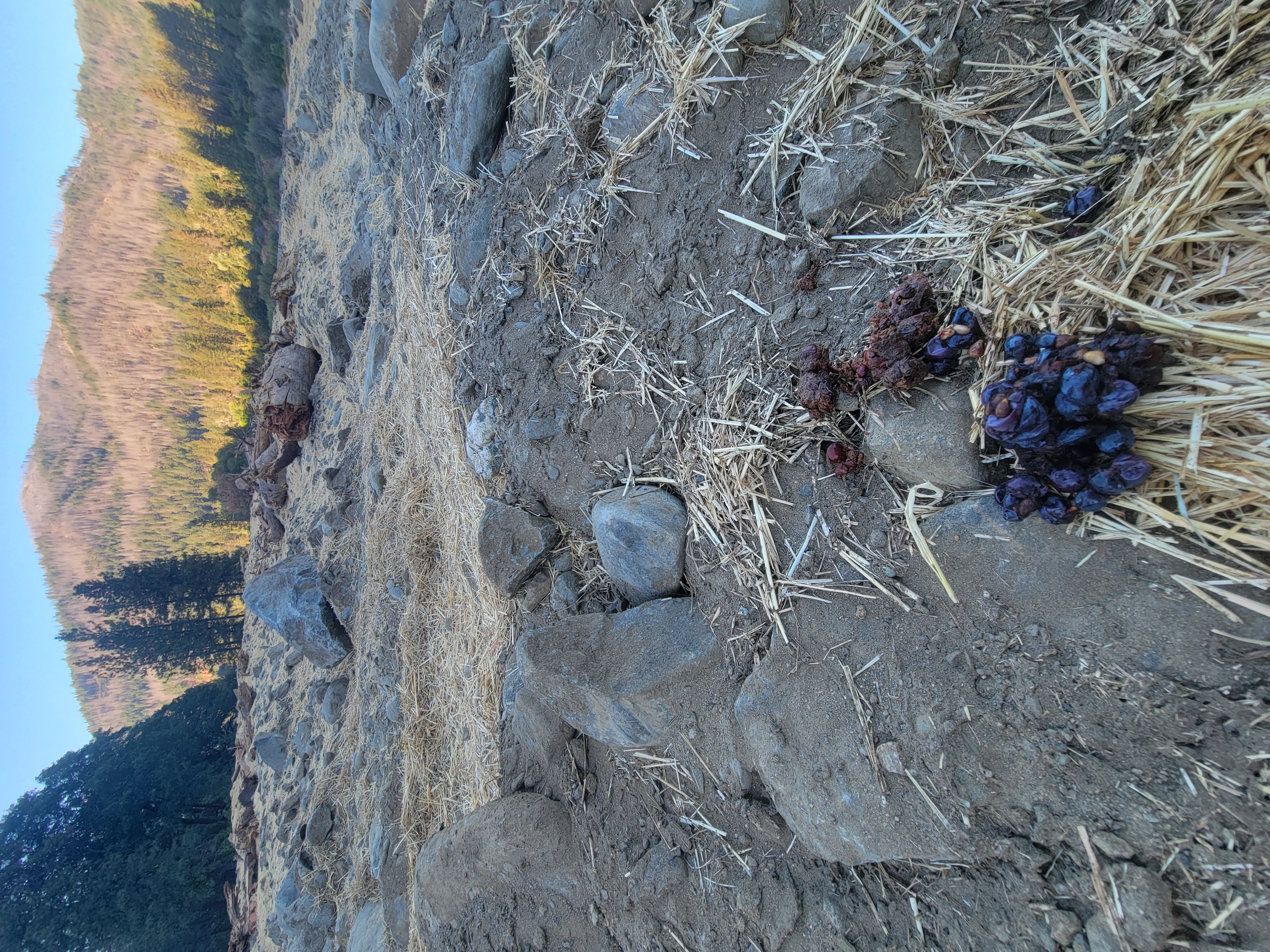
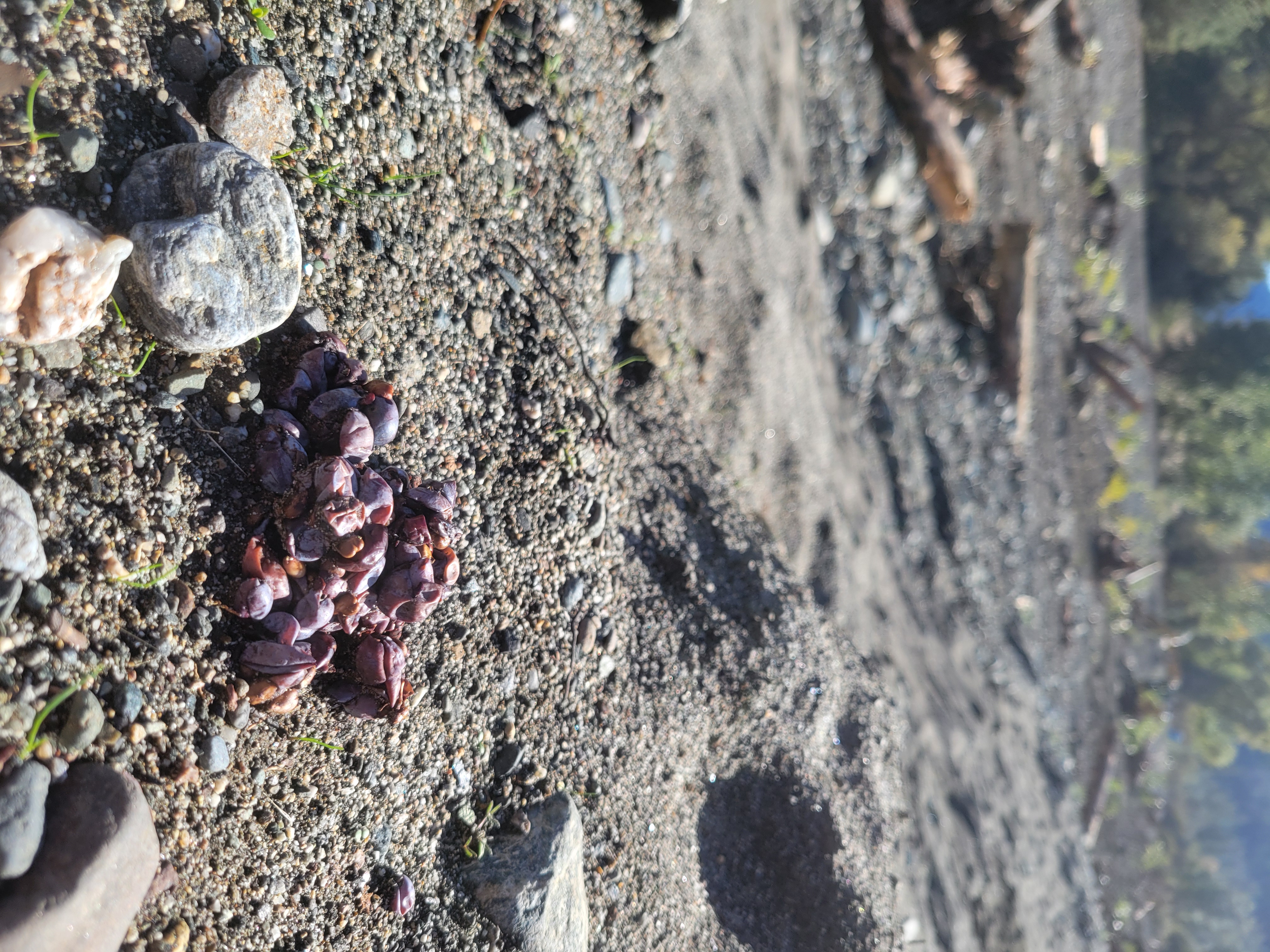
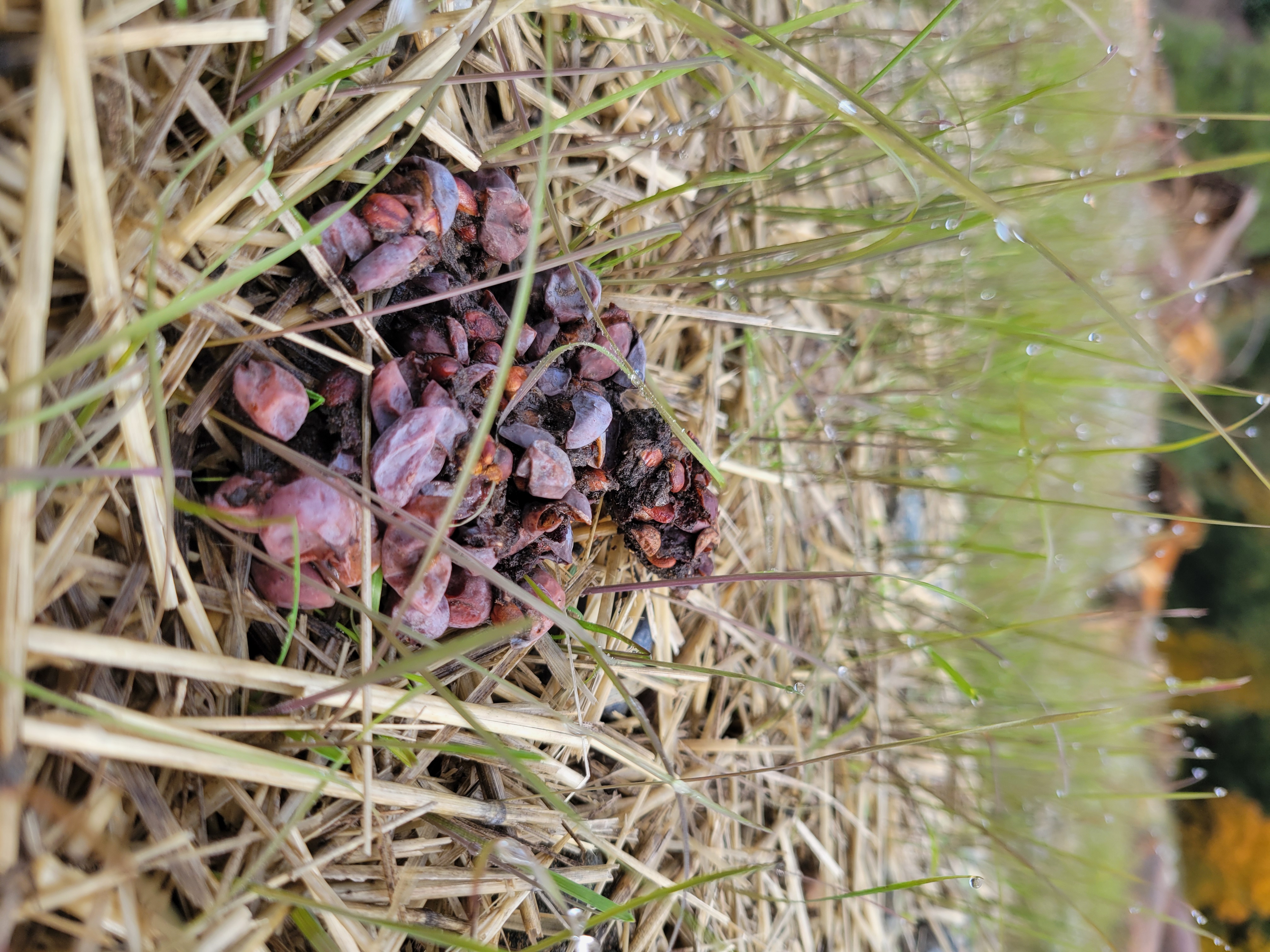
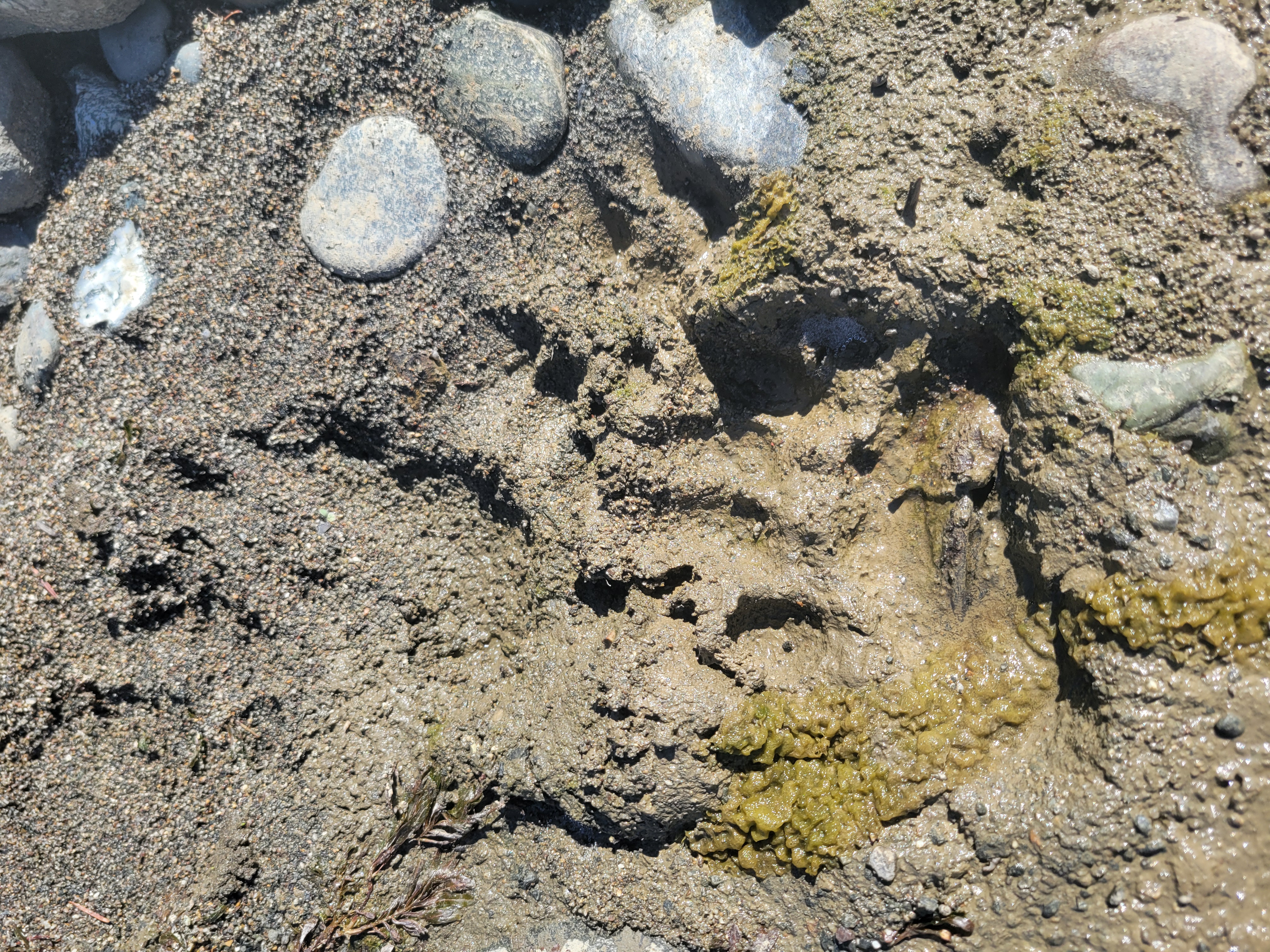
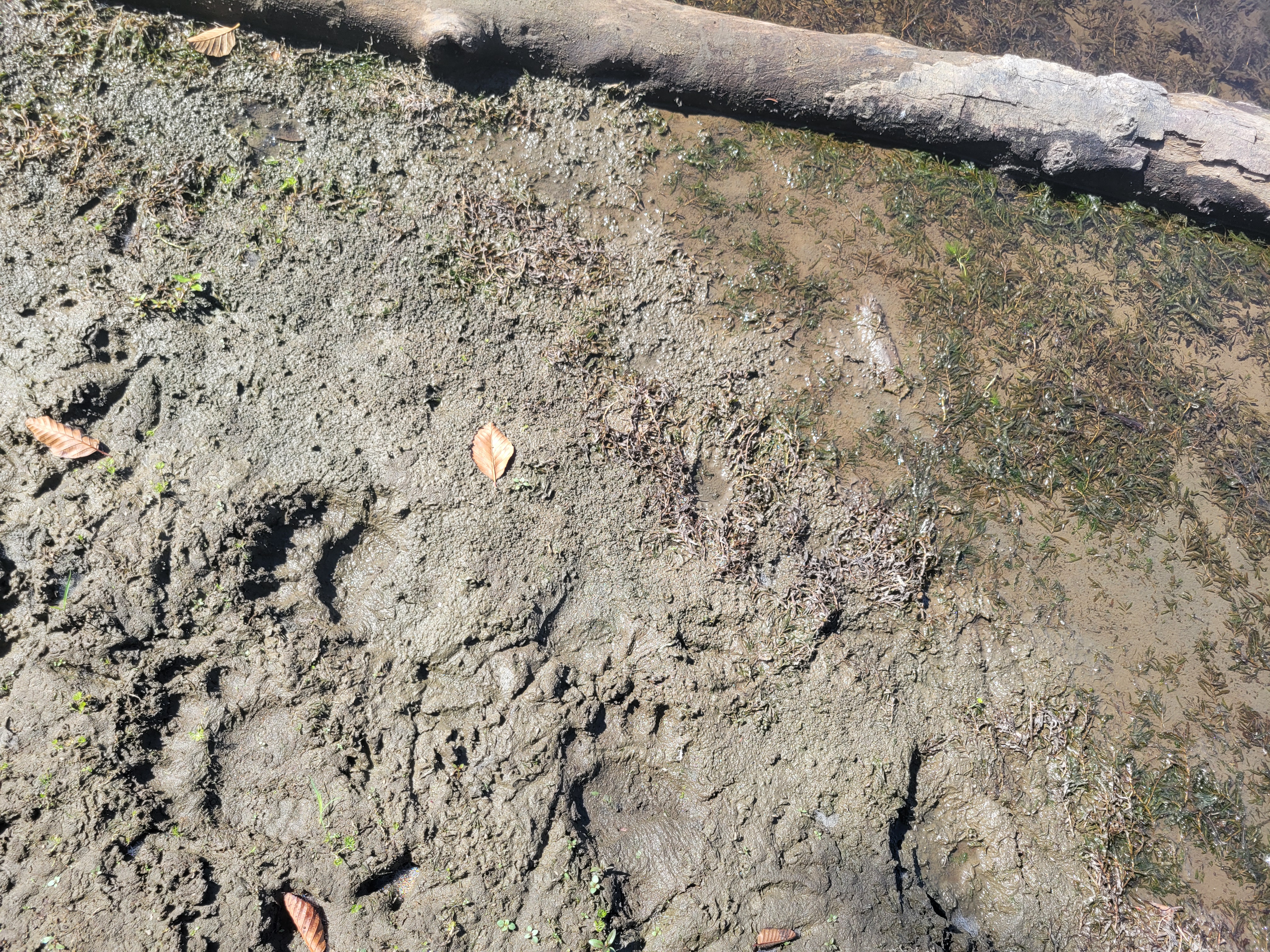
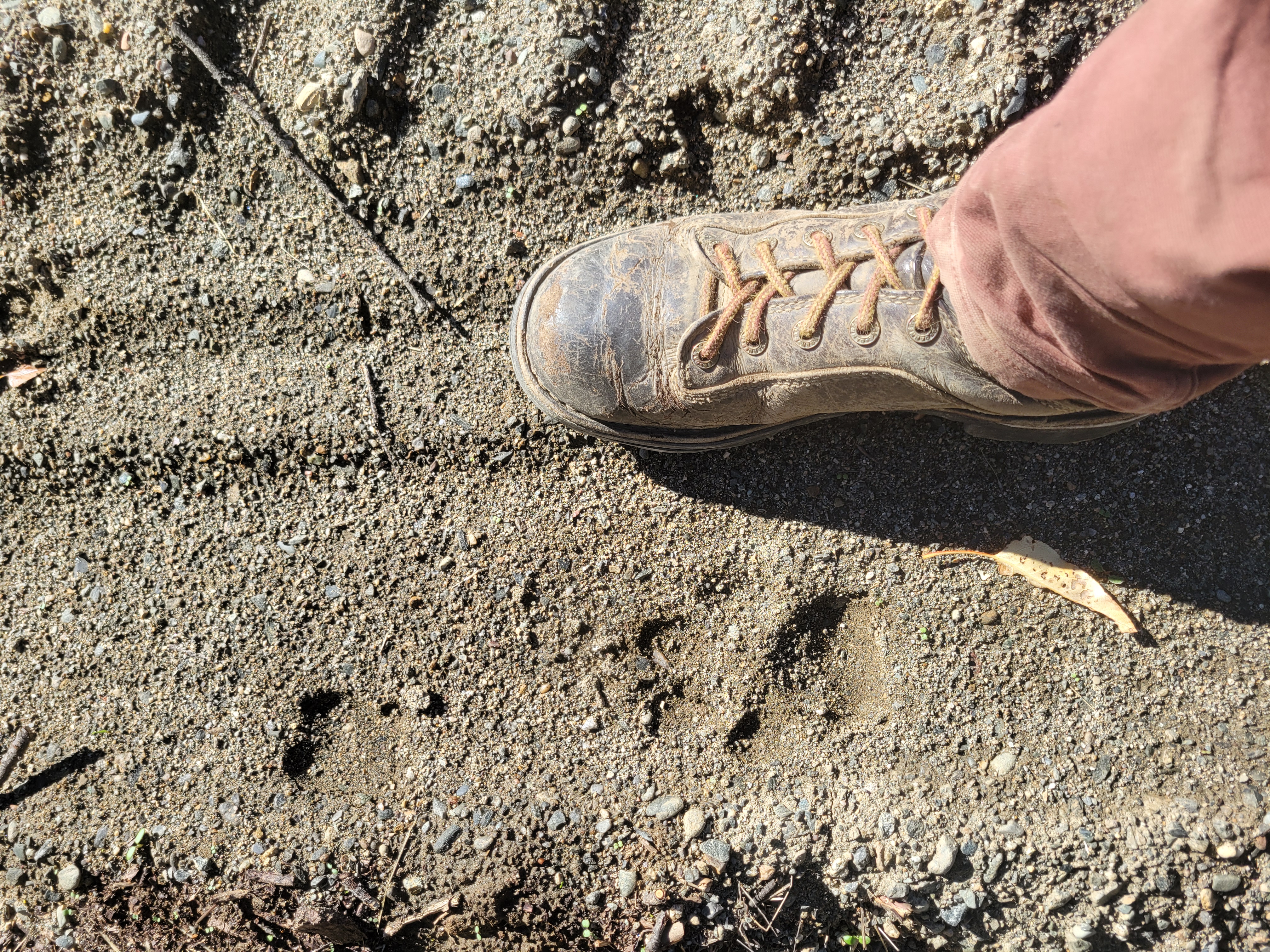
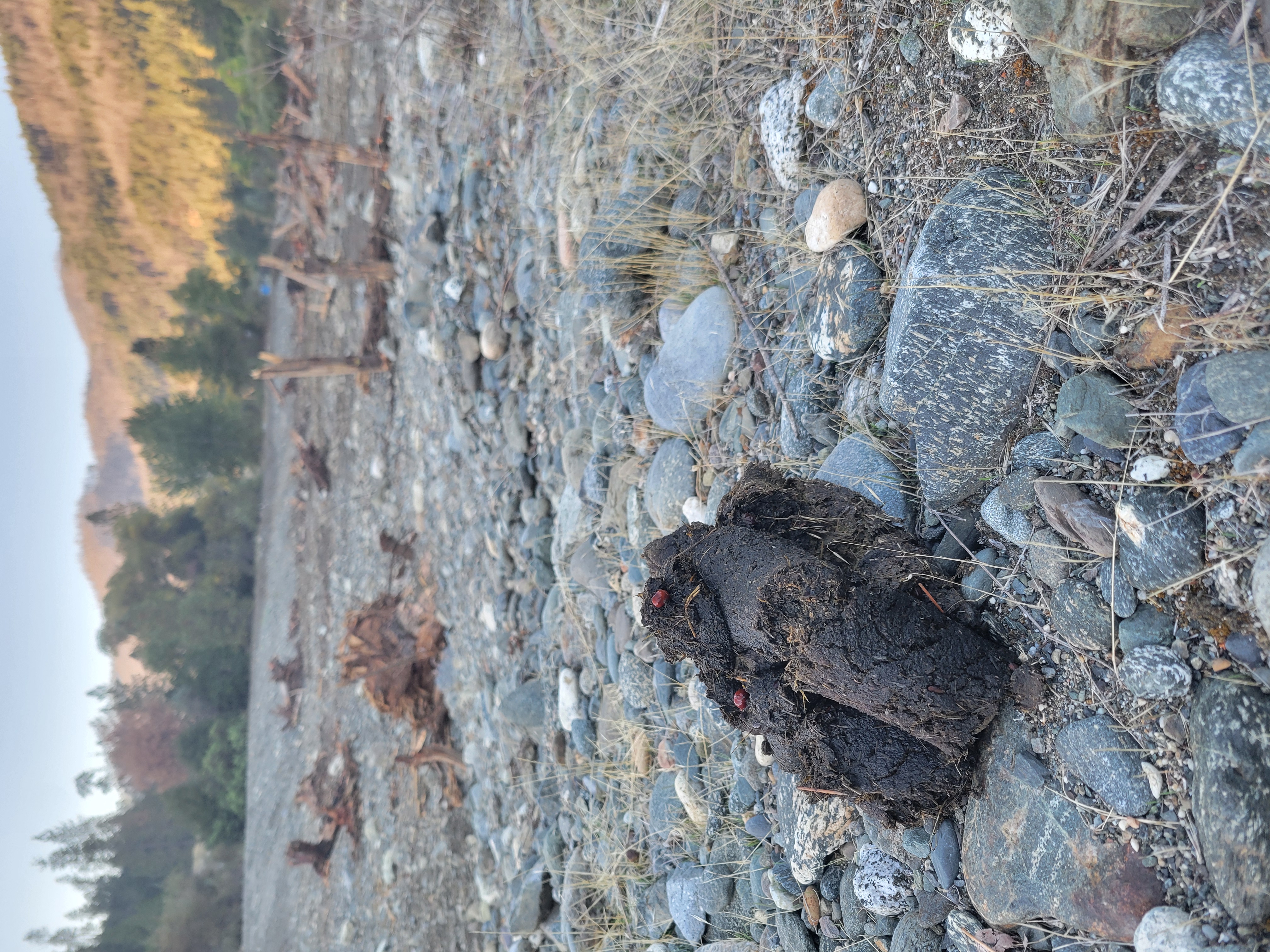
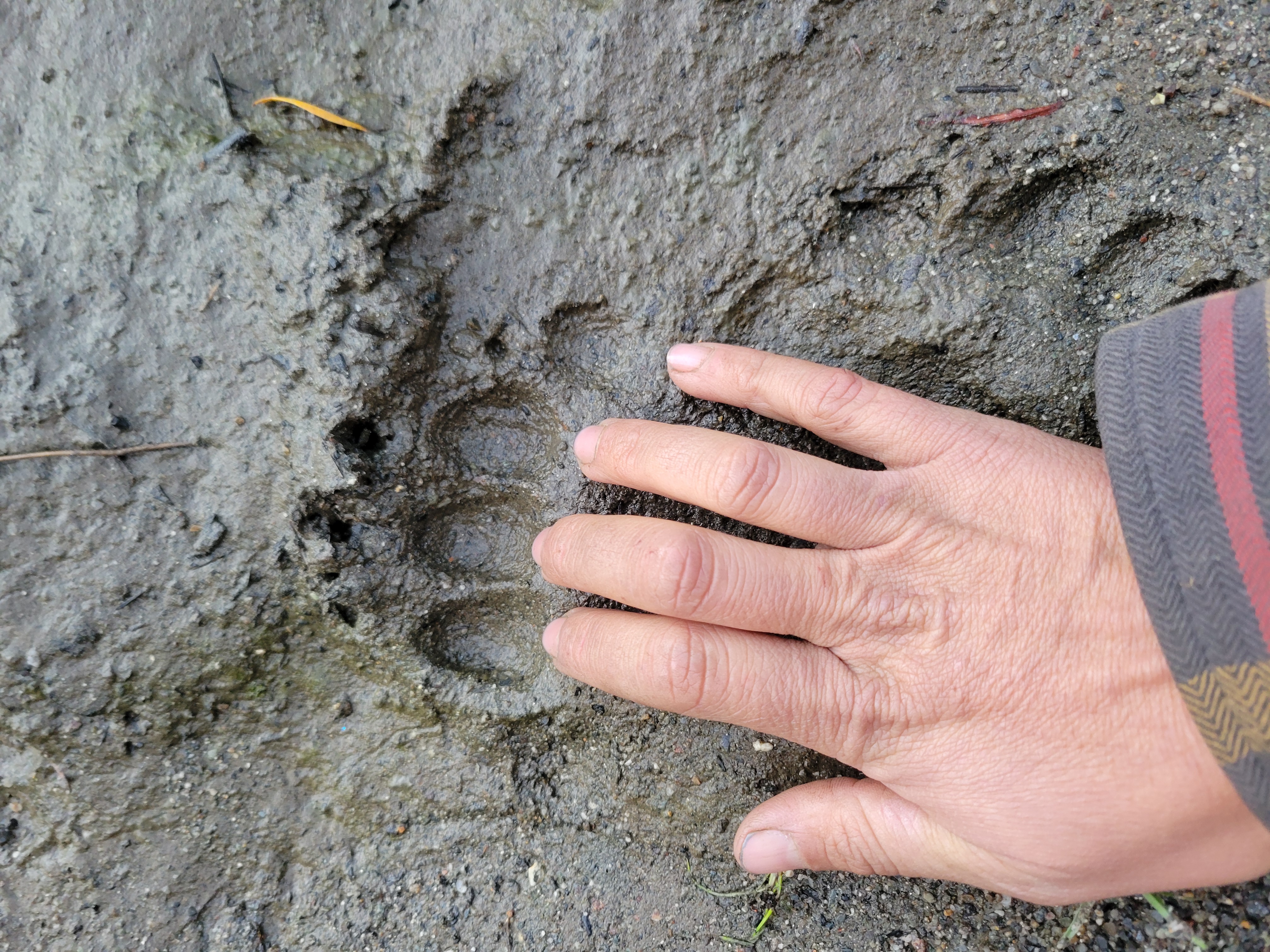
Bears frequently visited the site, leaving tracks and scat near preserved patches of California grape that were intentionally maintained during construction. Bears also contribute to revegetation by dispersing seeds from parent plants elsewhere along the river corridor.
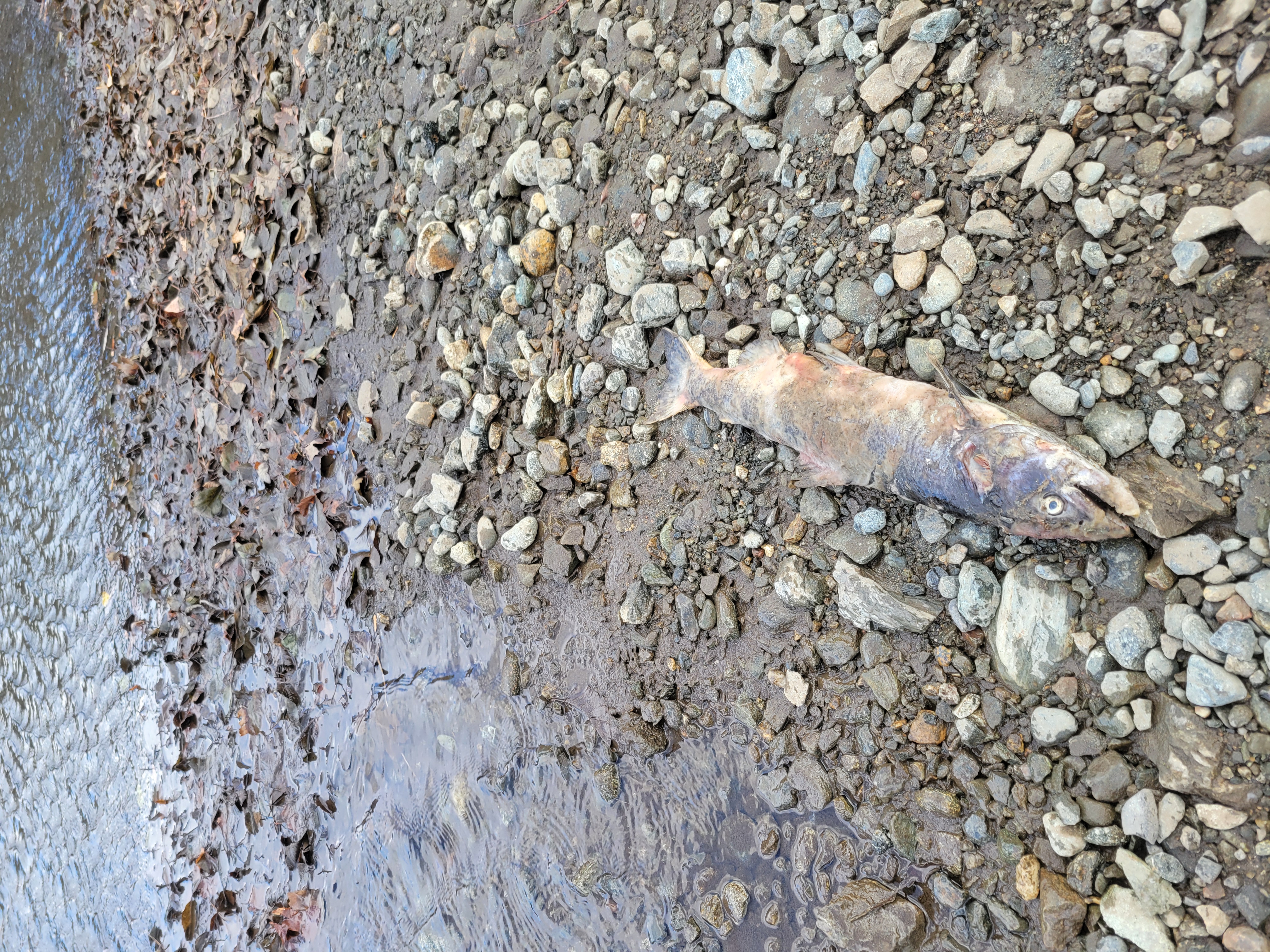
Likely a bear print in the mud.Bear prints at Upper Conner Creek.Maybe a cougar print?Bear scat on the project site.Bear prints in the mud.A salmon carcass.
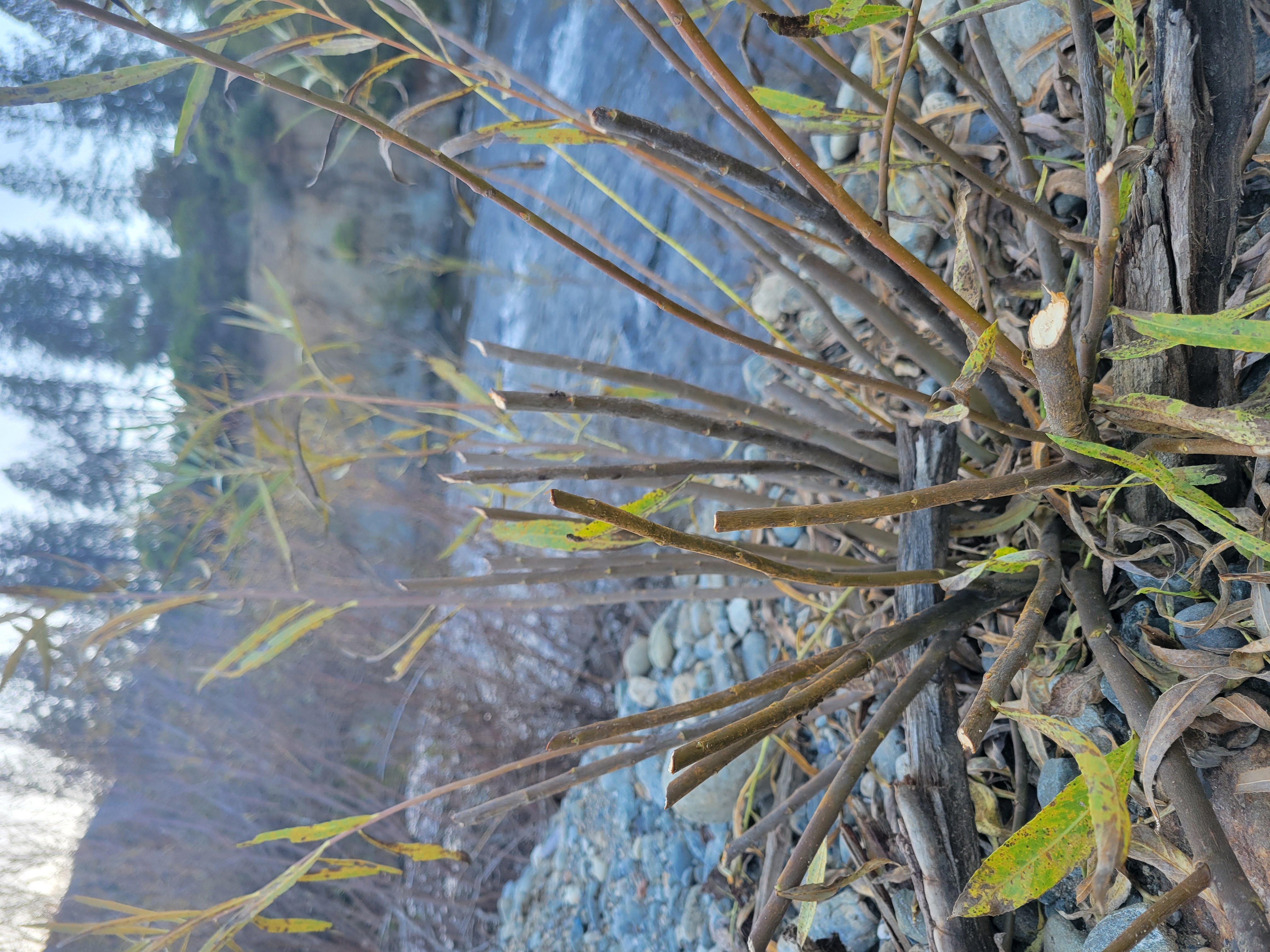
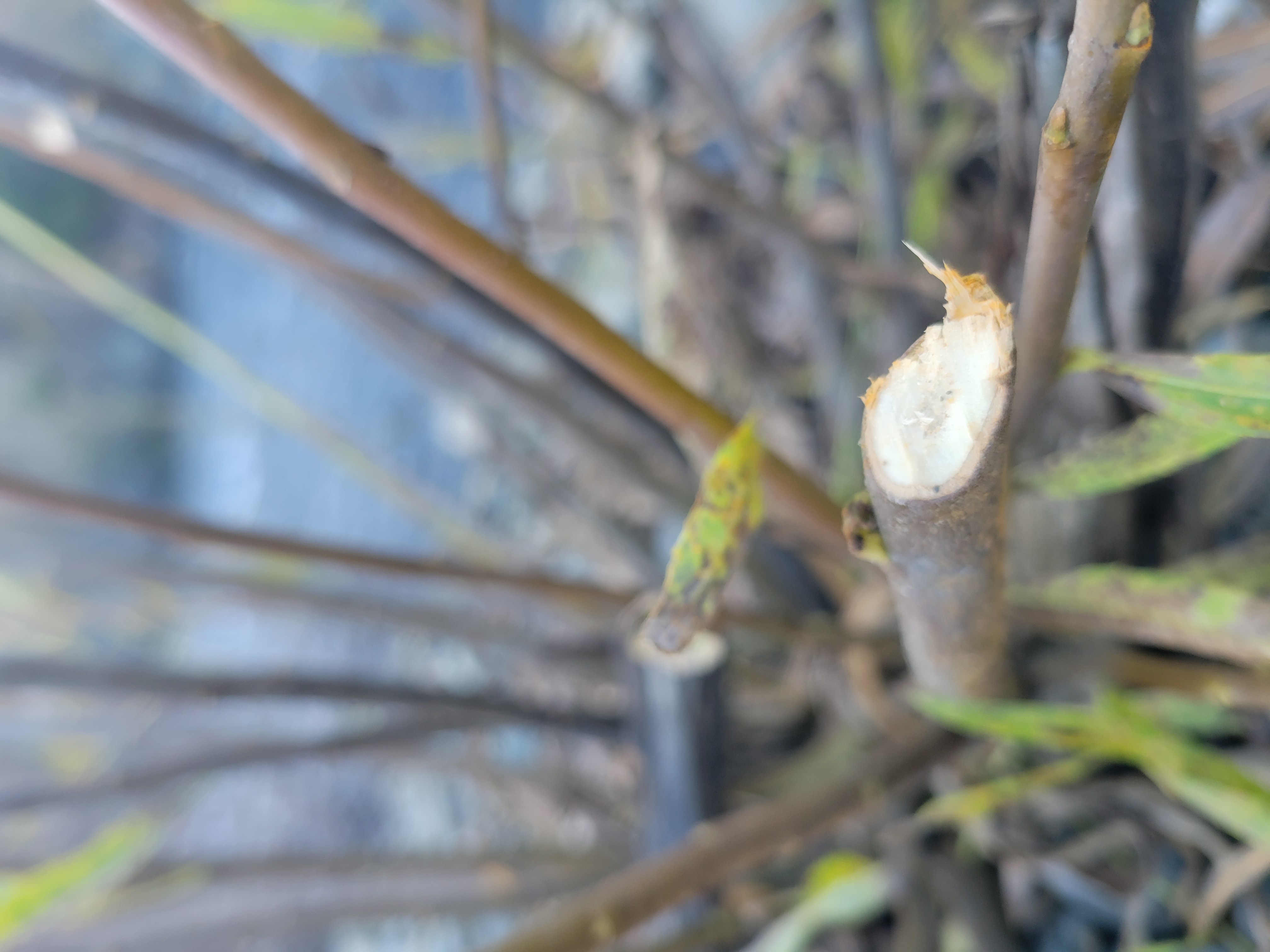
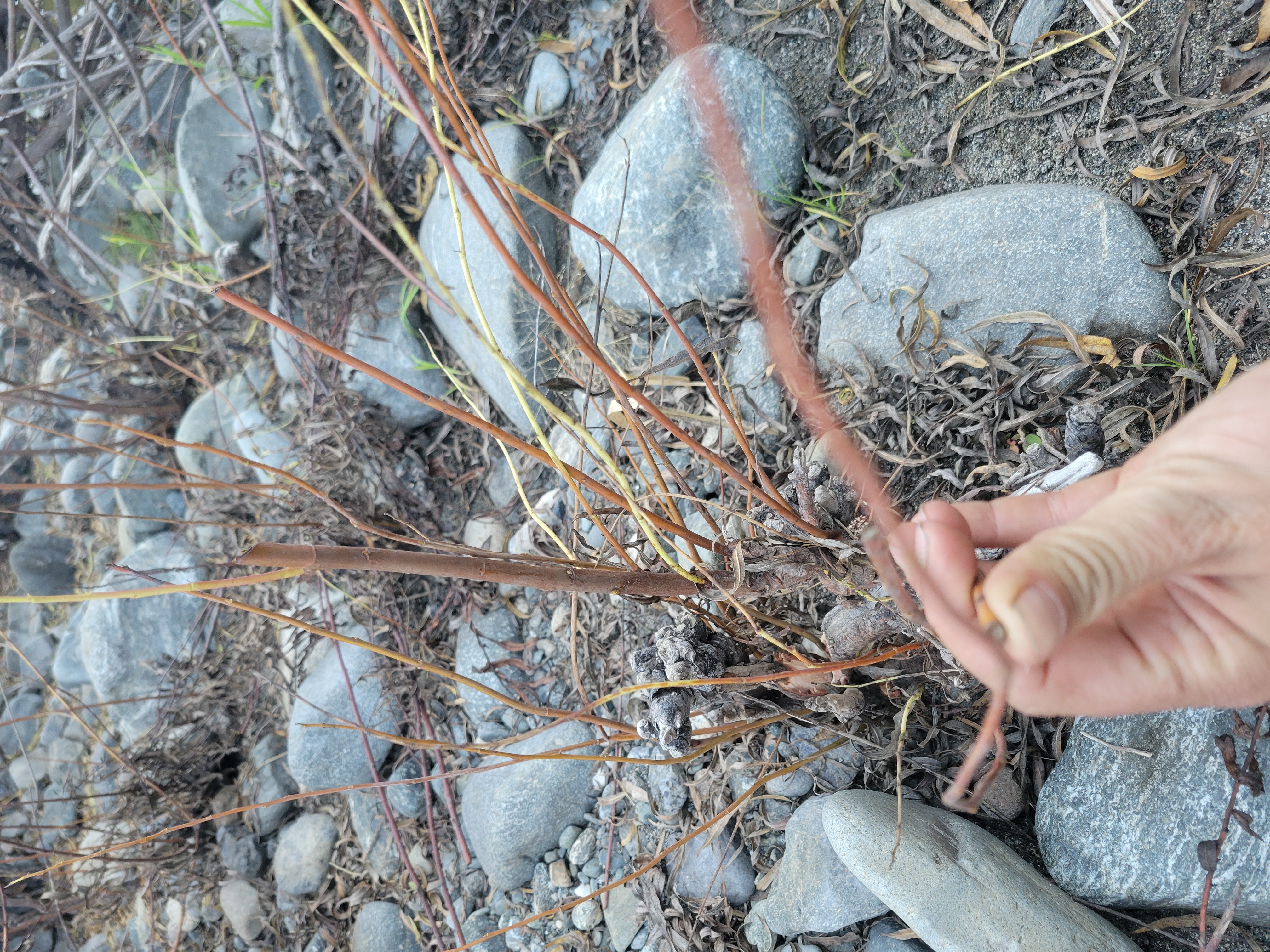
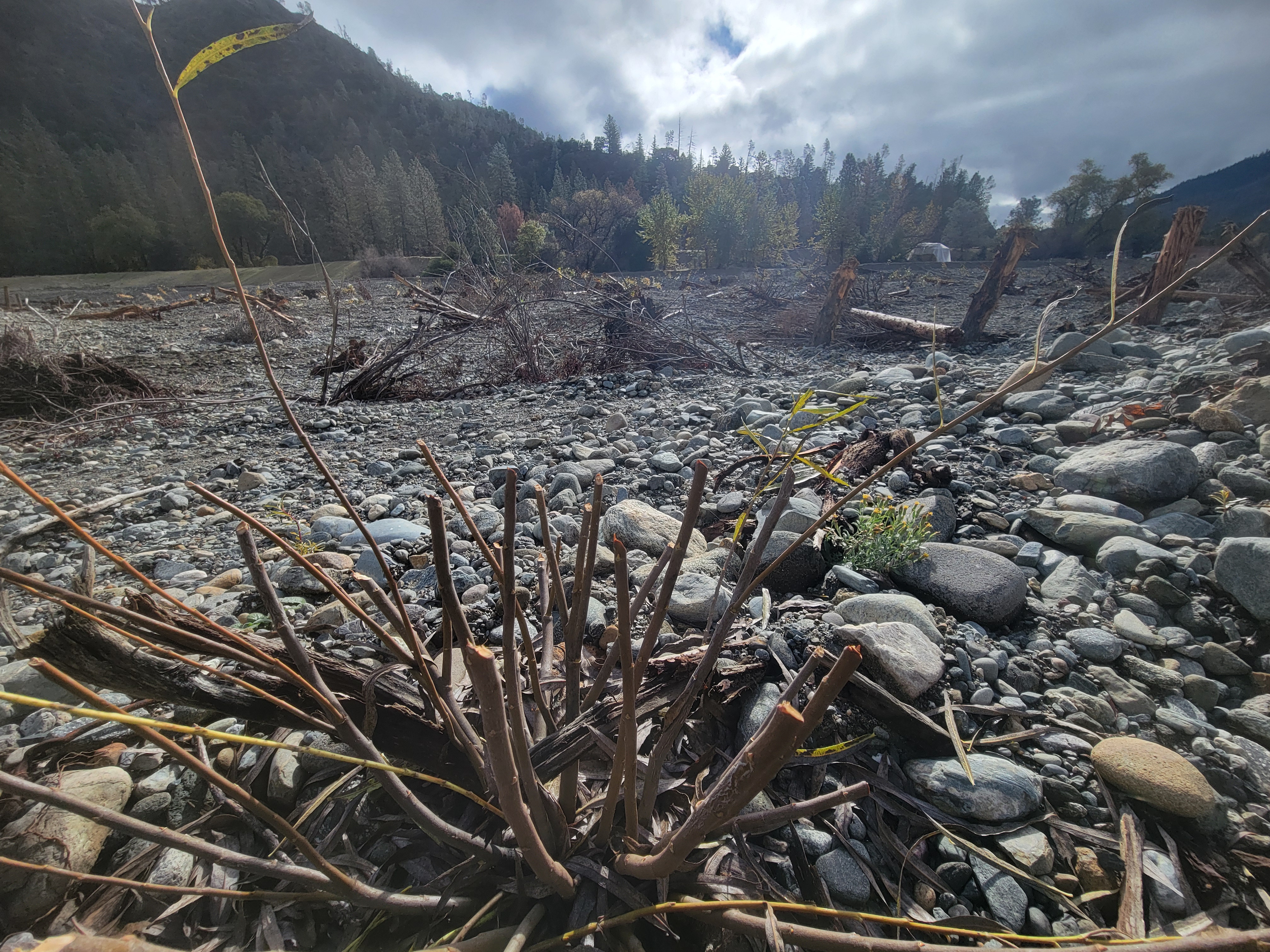
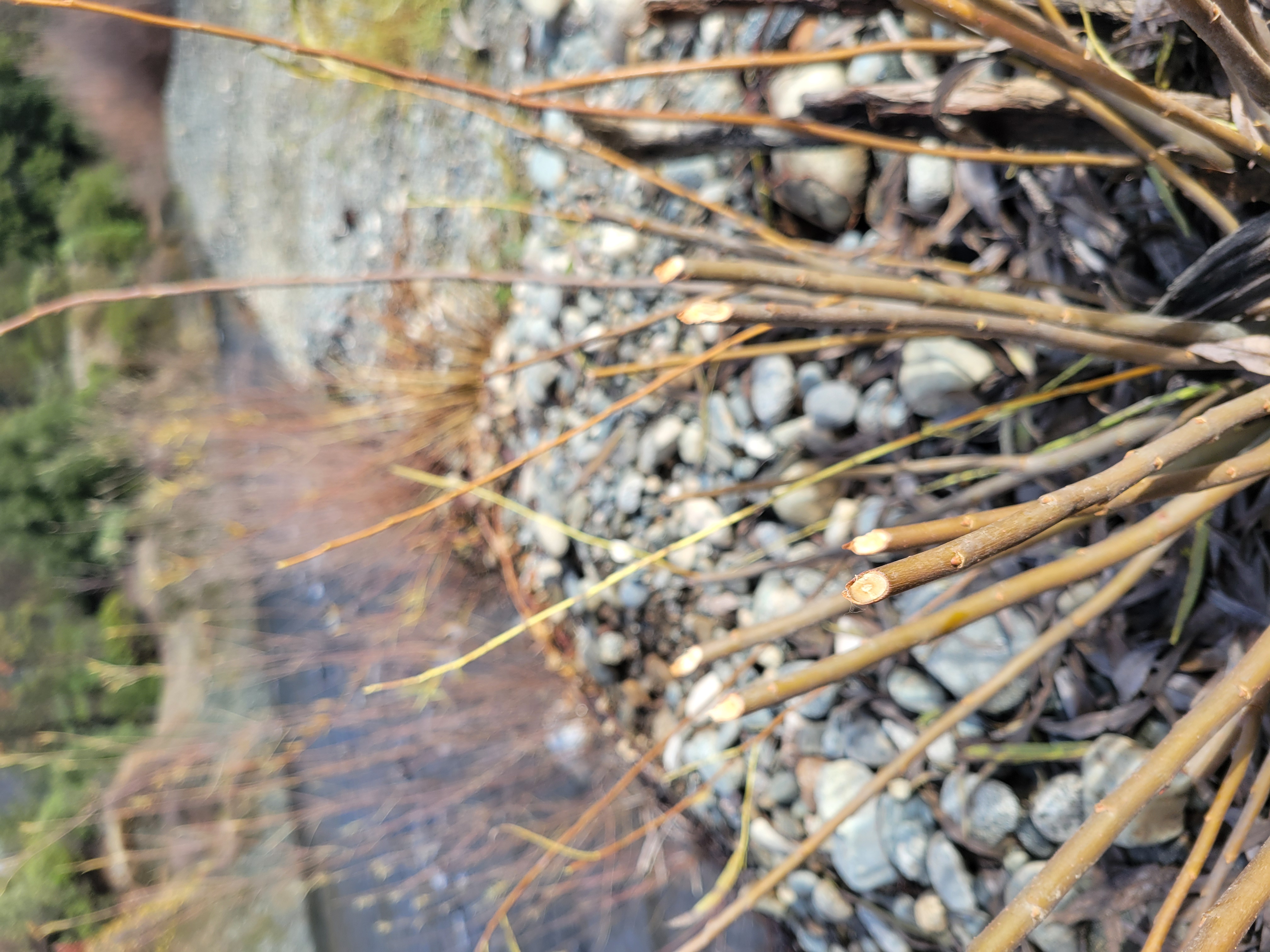
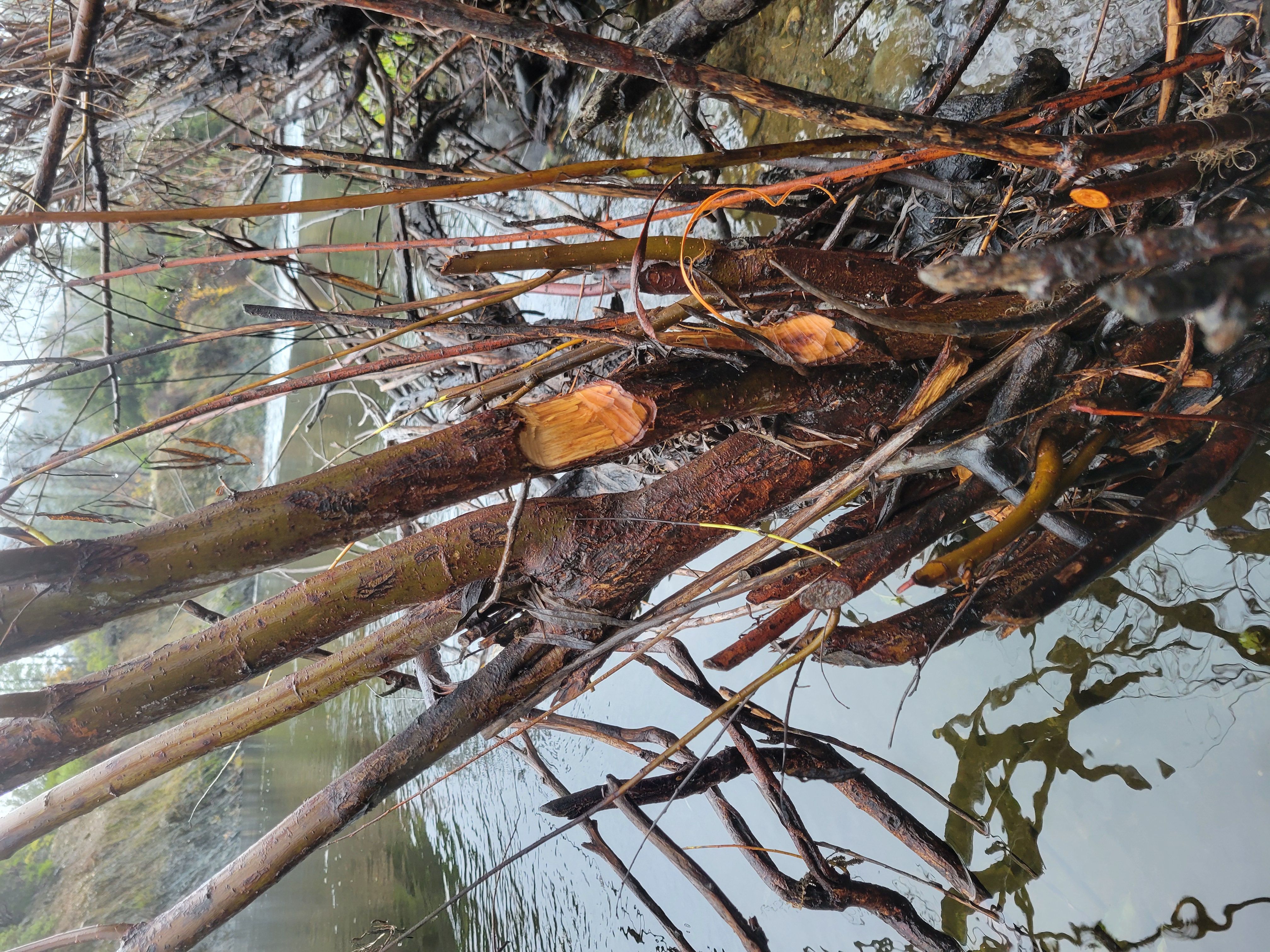
Beaver activity increased as willows became established. Although their role in thinning willow stands is not well documented, beavers strongly influence species composition by selectively cutting cottonwood and ash while leaving certain willow species. Many cut stems resprout vigorously, expanding the footprint of riparian vegetation.
Evidence of beaver browse at the site.The cuts look clean until you look close.Evidence of beaver browse.Evidence of beaver browse.Evidence of beaver browse.Evidence of beaver along the river corridor.
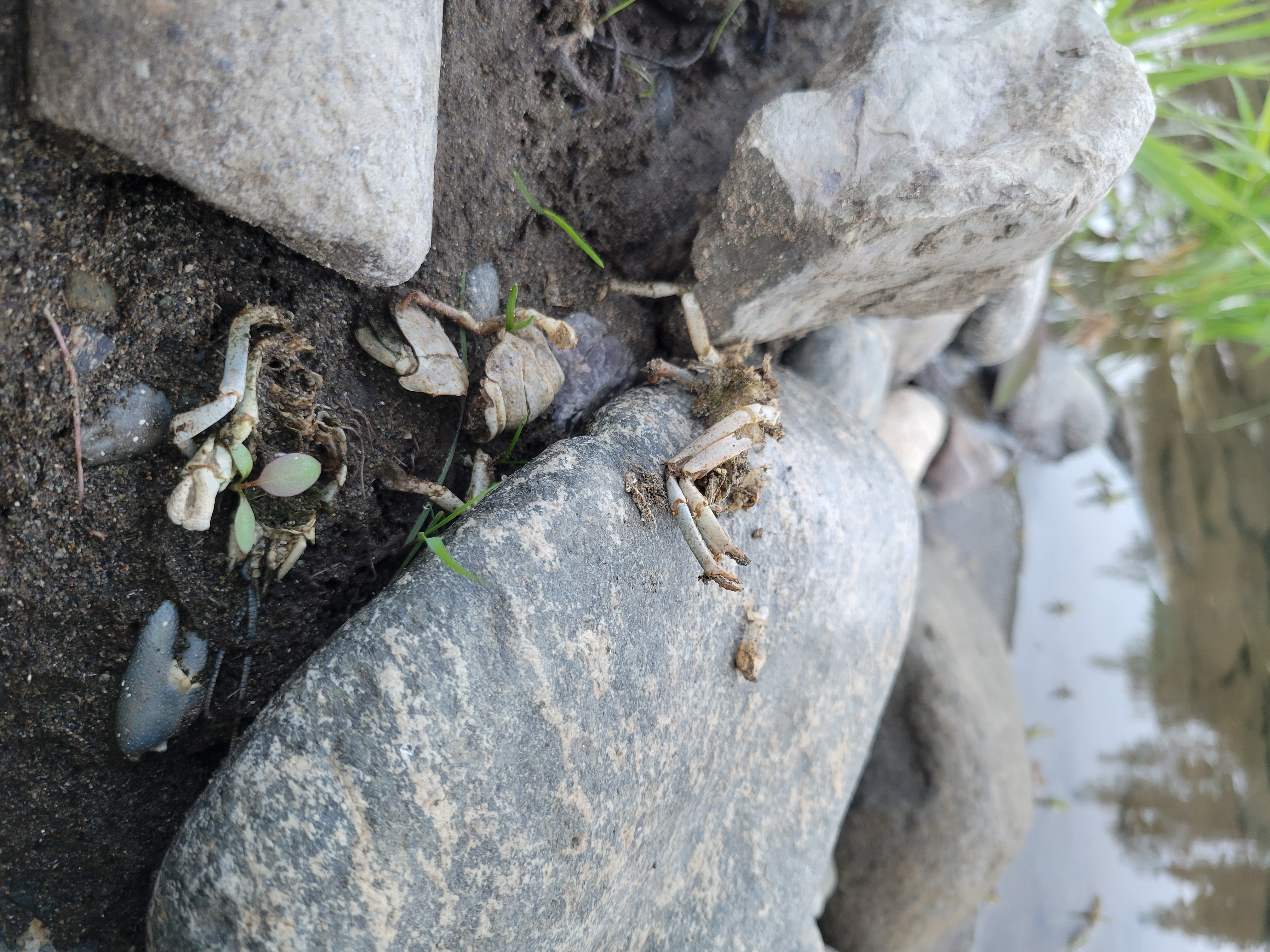
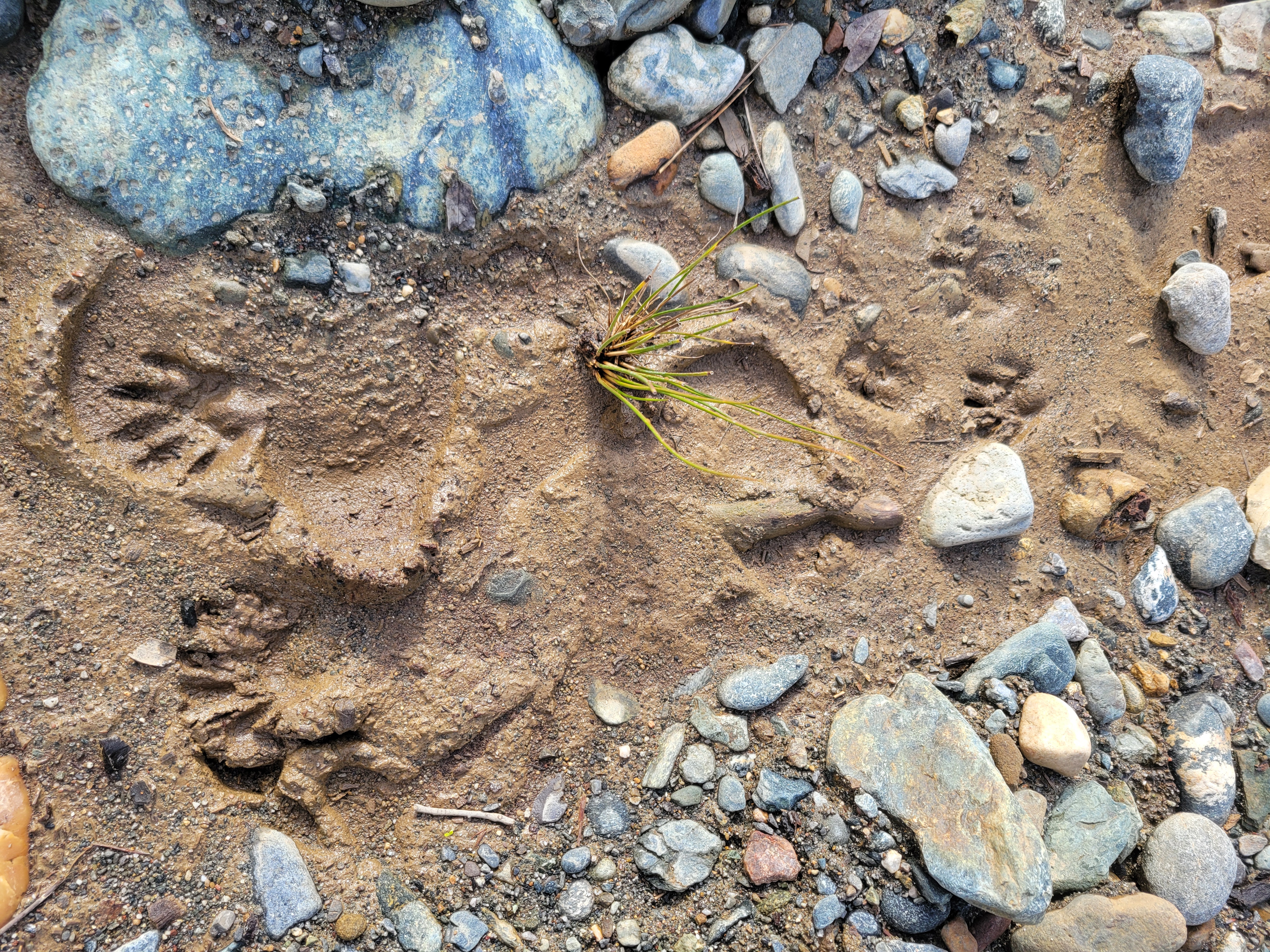
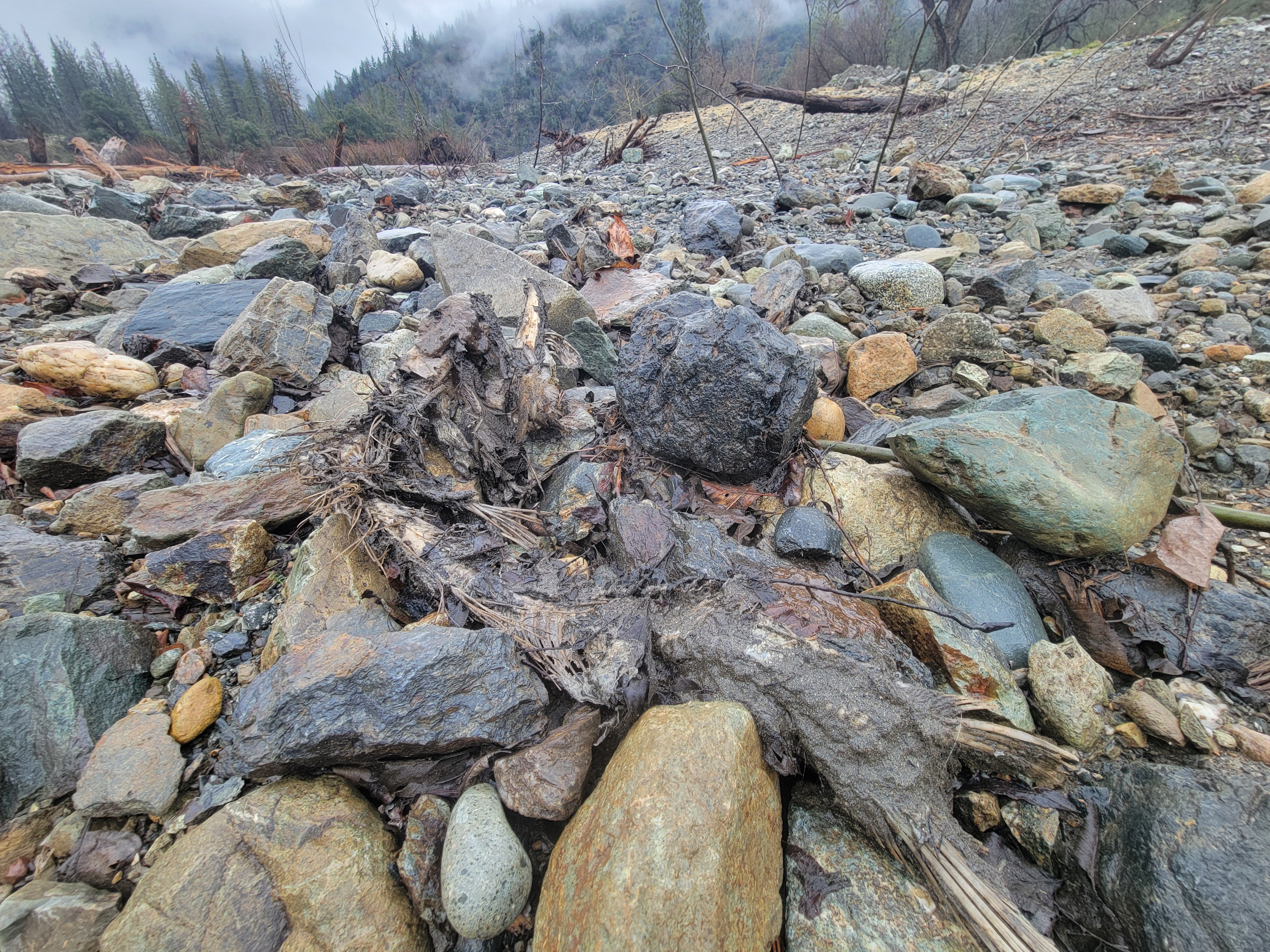
Predators like mink, racoon and river otter leave their mark with tracks and scat on newly deposited sediments and near planted vegetation. Their presence reflects the site’s increasing habitat complexity and improved food availability.
Crawdad consumed by a predator at Upper Connor Construction site.Tracks of an unidentified predator and it’s young in fresh sediment deposits around a planted plug of bunchgrass.This Chinook carcass was deposited with scat.
The Disturbance–Succession Loop in Action
The rapid and varied wildlife responses at Upper Connor Creek demonstrate the close link between disturbance and ecological renewal. While mechanical disturbance may seem disruptive during construction, it re-establishes the foundational conditions that riparian vegetation—and the wildlife depending on it—require. In a system constrained by dams, channel rehabilitation functions as a surrogate for natural forces that once shaped the Trinity River.
As the site continues to develop, ongoing observations will help refine how future projects balance engineering and ecology. With each restored floodplain, we gain a clearer understanding of how planned disturbance supports a dynamic and resilient river ecosystem.
Unless otherwise noted, all photos were provided by Simone Groves, Riparian Ecologist – Hoopa Valley Tribal Fisheries Department.
McKelvey, Kevin S. 2015. The effects of disturbance and succession on wildlife habitat and animal communities [Chapter 11]. In: Morrison, M. L.; Mathewson, H. A., editors. Wildlife Habitat Conservation: Concepts, Challenges, and Solutions. Baltimore, MD: Johns Hopkins University Press. p. 143-156. https://research.fs.usda.gov/treesearch/48033
Timothy J. Beechie, David A. Sear, Julian D. Olden, George R. Pess, John M. Buffington, Hamish Moir, Philip Roni, Michael M. Pollock, Process-based Principles for Restoring River Ecosystems, BioScience, Volume 60, Issue 3, March 2010, Pages 209–222, https://doi.org/10.1525/bio.2010.60.3.7
Hobbs, N. T., and R. A. Spowart. “Effects of Prescribed Fire on Nutrition of Mountain Sheep and Mule Deer during Winter and Spring.” The Journal of Wildlife Management, vol. 48, no. 2, 1984, pp. 551–60. JSTOR, https://doi.org/10.2307/3801188. Accessed 11 Feb. 2026. https://www.jstor.org/stable/3801188
Exploring Seasonal and Habitat Patterns of Trinity County Fungi
By: Kiana Abel, Trinity River Restoration Program. Article has been adapted from Kyle Sipes Science on Tap presentation, “Mushrooms of Trinity County: From the South Fork to the Scott Mountains“ January 28, 2026.
Trinity County, located in Northern California, provides a variety of habitats for wild mushrooms. Over 800 species of mushroom-forming fungi have been documented in Trinity County (iNaturalist). In January we welcomed Kyle Sipes, avid mushroom enthusiast, to present, “Mushrooms of Trinity County: From the South Fork to the Scott Mountains” at our Science on Tap event. If you missed his presentation and are interested in foraging for mushrooms, we hope to summarize the presentation here and share some of the tools for mushroom identification. Most notably, his presentation was structured around understanding preferred habitat, symbiotic relationships and key identifying features of individual mushroom types. In this article we hope to give an outline of mushroom hunting through forest types indicating seasonality, habitat details and identification tips. We will explore the life history of mushrooms to enhance understanding of their role within forest ecosystems.
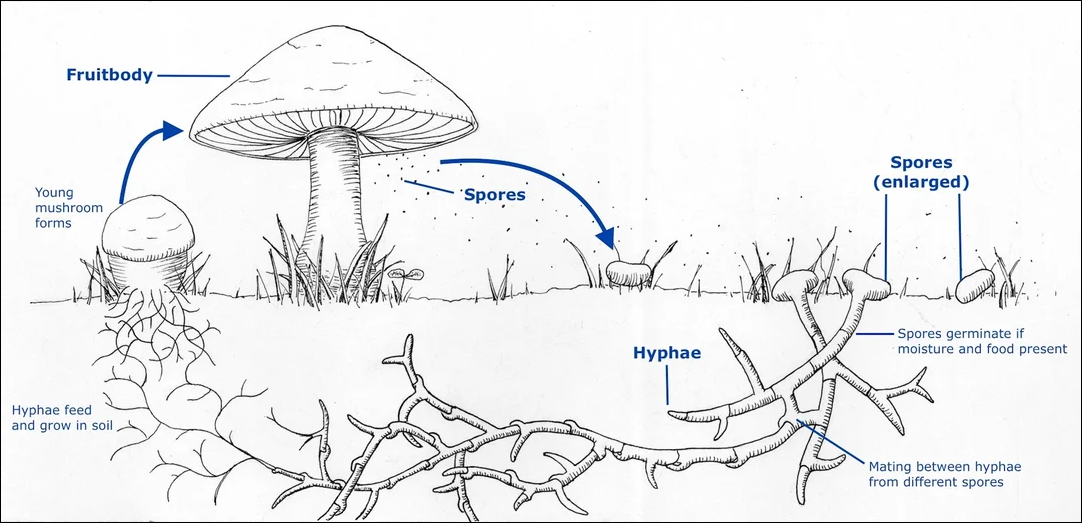
Mushrooms are the fruiting bodies of fungi, and their life history begins with microscopic spores released into the environment. When conditions are favorable; adequate moisture, temperature, and a suitable substrate, these spores germinate into thread-like structures called hyphae. Hyphae grow and branch underground to form a network known as mycelium, which is considered the main body of the fungus, not the fruiting part that we see above ground.
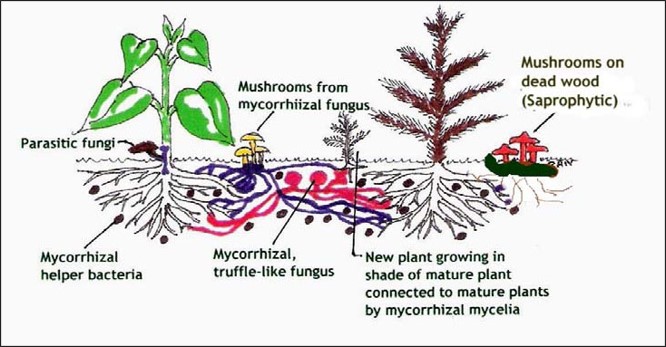
From there, fungi interact with their habitat either as a decomposer, in a symbiotic relationship, or as a pathogen or parasite to their host. While unique, each interaction reflects the adaptability of fungi and their importance in nutrient cycling, forest ecology, and plant health.
Gwinnett County Master Gardeners Association
Decomposers (Saprotrophic Fungi) Break down dead organic matter such as fallen leaves, wood, and plant debris, recycling nutrients back into the soil.
Decomposer fungi play a critical role in forest ecosystems by breaking down dead organic matter such as fallen leaves, logs, and plant debris. This process recycles nutrients back into the soil, enriching it for future plant growth. In Trinity County, several mushrooms act as decomposers. Lion’s mane (Hericium erinaceus), for example, grows on dead or dying hardwood logs and is known for its cascading white spines. Turkey tail (Trametes versicolor), another common decomposer, forms colorful, fan-shaped brackets on decaying wood and is widely recognized for its medicinal properties. These fungi accelerate the decomposition of lignin and cellulose, substances that are otherwise slow to break down, making them essential for maintaining soil health and supporting the forest’s nutrient cycle.
Symbiotic fungi (mycorrhizal)Form mutualistic partnerships with plant roots, exchanging water and minerals for sugars produced by photosynthesis; this relationship is critical for forest health.
A symbiotic relationship between trees and mushrooms is a mutualistic partnership where both organisms benefit. Most edible and forest mushrooms form mycorrhizal associations with tree roots. In this relationship, the mushroom’s underground network of filaments (mycelium) attaches to the tree’s root system. The tree provides the fungus with carbohydrates produced through photosynthesis, while the fungus helps the tree absorb water and essential minerals like phosphorus and nitrogen from the soil. This exchange strengthens tree health, improves soil structure, and supports the growth of the mushroom. These partnerships are species-specific as certain mushrooms only pair with particular trees, such as chanterelles with Douglas fir or boletes with pine and fir.
Pathogens or ParasitesInfect living plants or trees and sometimes cause disease—these are often referred to as fungal pathogens.
Unlike decomposers, pathogenic or parasitic fungi infect living plants or trees, often causing disease or structural damage. These fungi extract nutrients from their hosts, sometimes weakening or killing them. In Trinity County, an example is west coast reishi (Ganoderma oregonense), which causes white rot in living trees and can eventually lead to tree failure. While these fungi can be harmful to individual trees, they also play a role in forest dynamics by creating gaps in the canopy that allow new growth and biodiversity.
Common Mushrooms in Trinity County – By Forest Type
Finding mushrooms in Trinity County changes dramatically with the seasons. Knowing when and where to look is key for successful and safe foraging. Each season brings different species that thrive under specific forest conditions and tree associations. This guide outlines the most common mushrooms found in the county, their preferred habitats, and identification tips to help you distinguish between varieties.
Riparian Hardwood Forests
Photo curtesy of Kyle Sipes
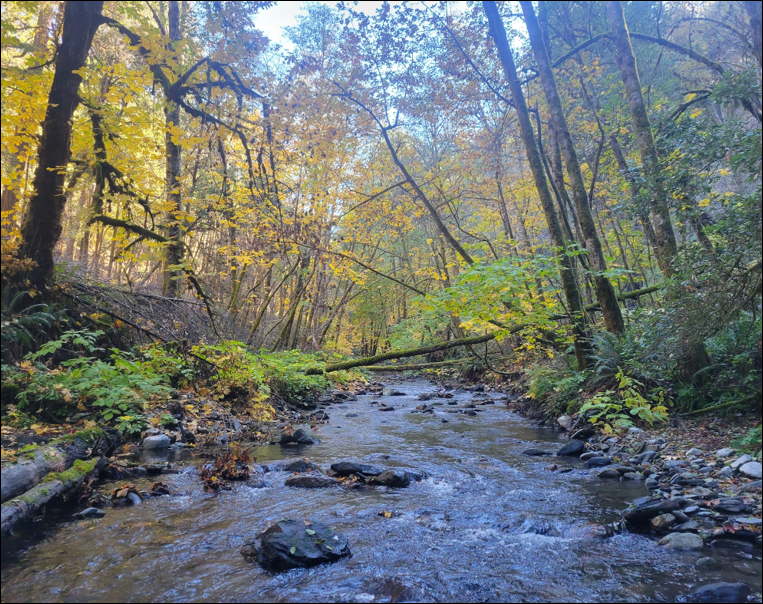
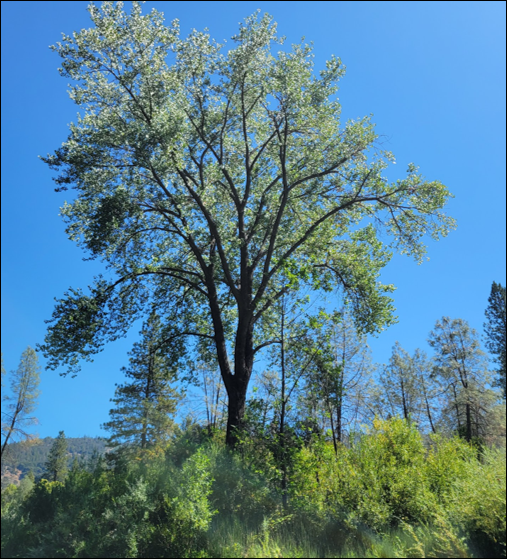
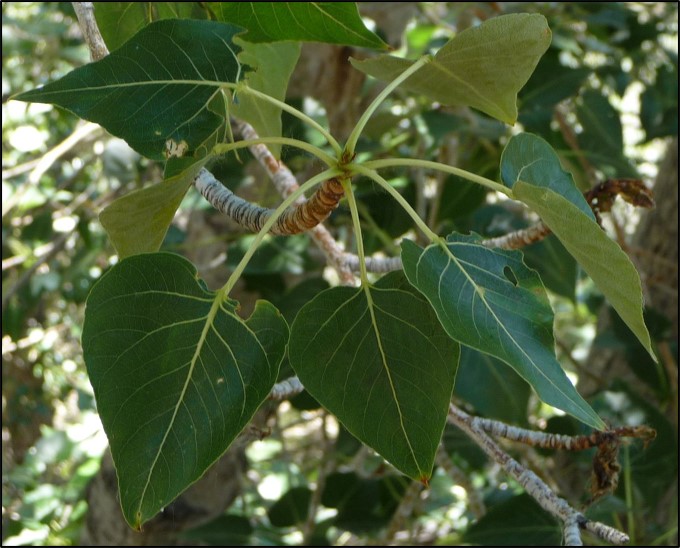
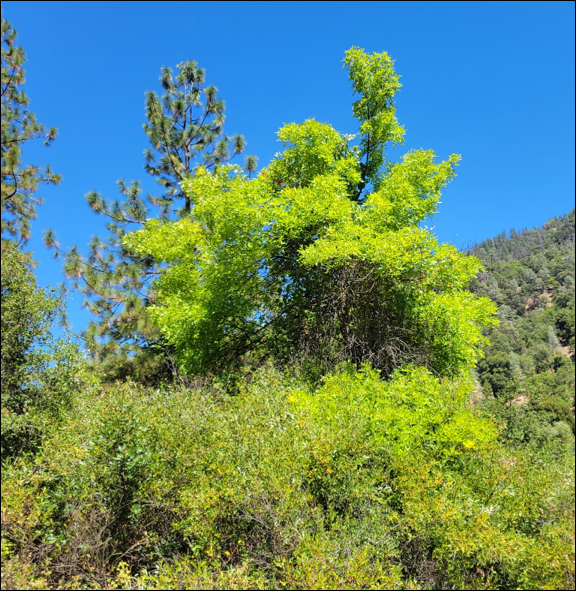
The Riparian Hardwood Forests are primarily situated alongside rivers or streams with varying degrees of proximity to the water’s edge. These ecosystems connect aquatic and upland areas through dynamic water flow. Various plant species thrive in different hydrologic zones based on their dependence on water. In Trinity County the streams and rivers that comprise riparian areas are the Trinity River, North Fork Trinity River, South Fork Trinity River, not to mention smaller creeks like Coffee Creek, Canyon Creek or Hayfork Creek. Hardwood tree species that are found in riparian river corridors are cottonwoods, like black and Fremont cottonwood, Oregon ash, white alder (the most common riparian tree) and tree willows like red and shiny willow. It is vitally important to understand and identify riparian trees when mushroom hunting.
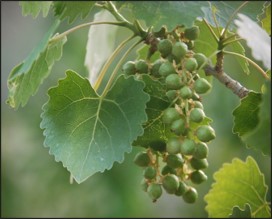
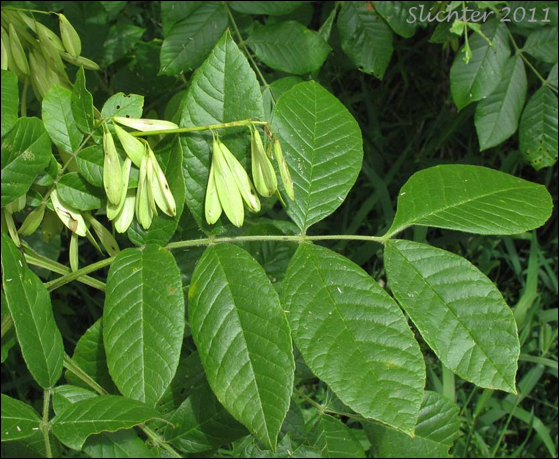
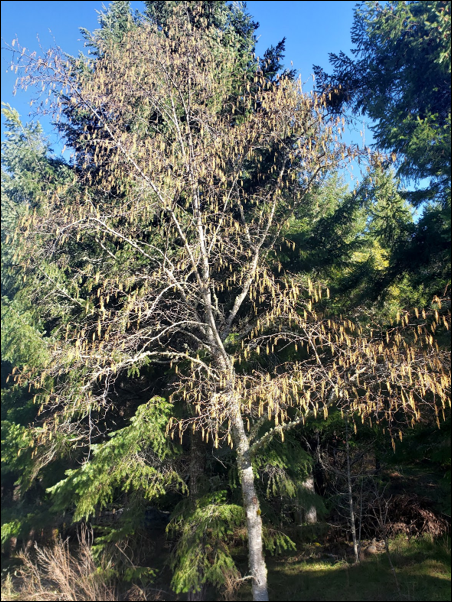
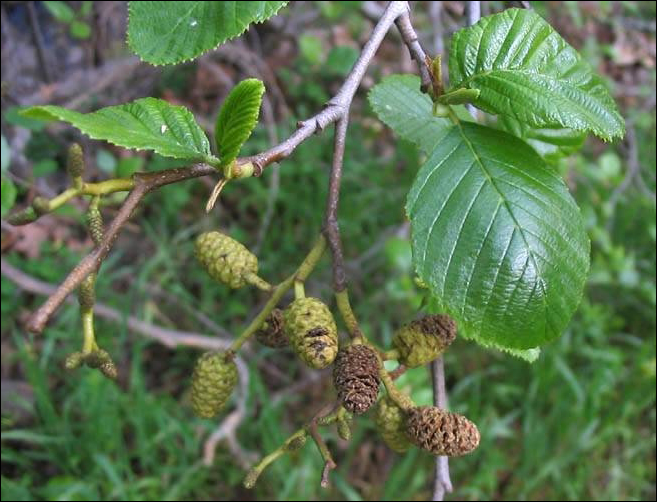
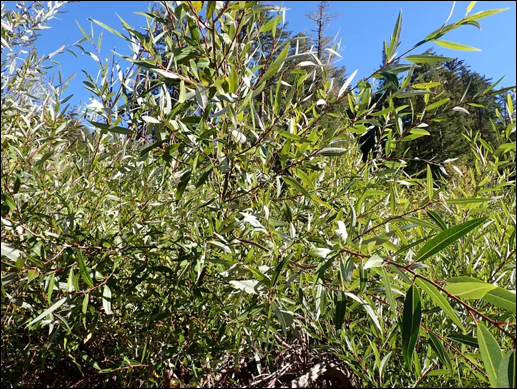
Cottonwoods (Populus spp.)Black CottonwoodFremont CottonwoodOregon Ash (Fraxinus latifolia)Oregon Ash (Fraxinus latifolia)White Alder (Alnus rhombifolia)White Alder (Alnus rhombifolia)Red WillowRiparian Hardwood Trees of Trinity County
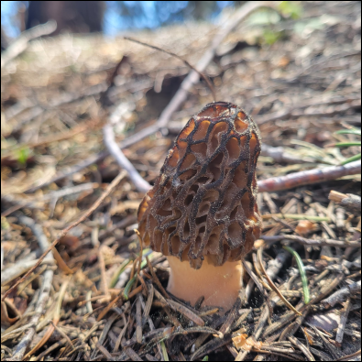
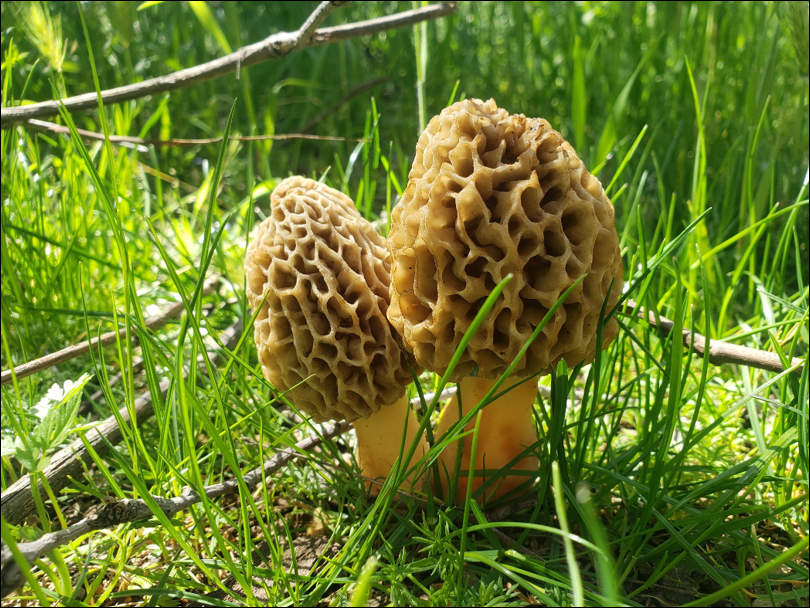
Riparian morels (Morchella species) emerge after the first warm rains, typically March through May. A prized edible that grow with cottonwood, Oregon ash and apple trees here in Trinity County. They are known to populate disturbance areas affected by flood, fire or fallen trees.
Identification Tips:
Honeycomb-like cap with pits and ridges.
Hollow stem and cap when sliced open – a key indicator of a true morel.
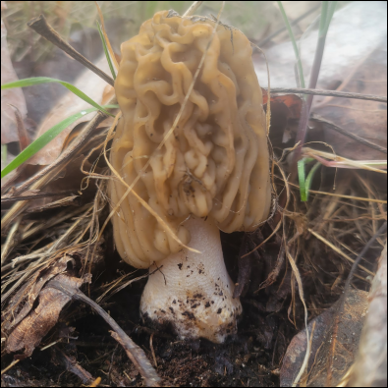
A related species to the morel that may indicate you are slightly early in your search for true yellow morels. Like the yellow morel, the thimble cap occurs with cottonwood species and is as thought to be as delicious as the yellow morel yet restricting consumption of this mushroom is advised (iNaturalist)
Identification Tips:
Wrinkled cap (versus honeycomb-like) with pits and ridges
Pithy filled stem that goes all the way to the cap when sliced open
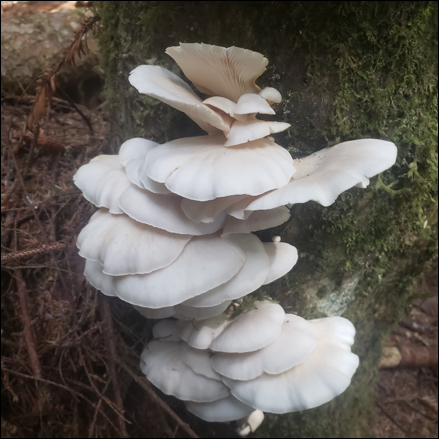
Oyster mushrooms, often seen in restaurant dishes, grow on riparian hardwoods like cottonwood, ash, willow, and alder. They are a safe choice for beginner foragers due to the lack of dangerous look-alikes.
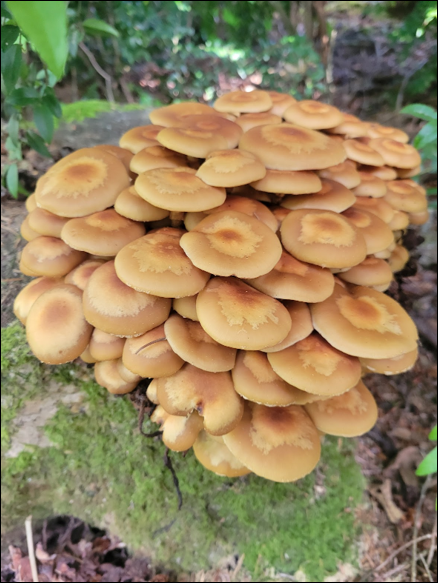
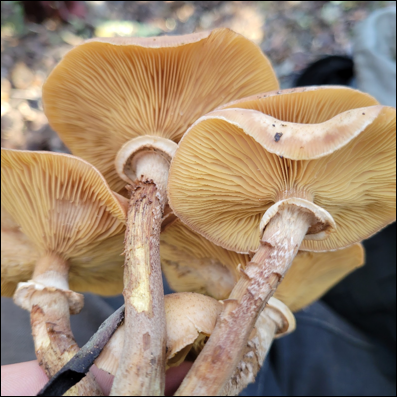
Honey mushrooms are a parasitic mushroom that infects their host as they feed from it. It is only edible if cooked significantly well, otherwise if undercooked it can make you sick.
Identification Tips:
It grows in big clusters at the base of the tree.
Gills run slightly down the stem.
Has a prominent skirt on the stem called an annulus
Honey Mushroom (Armillaria spp.)
Low Elevation Mixed Conifer-Hardwood Woodland
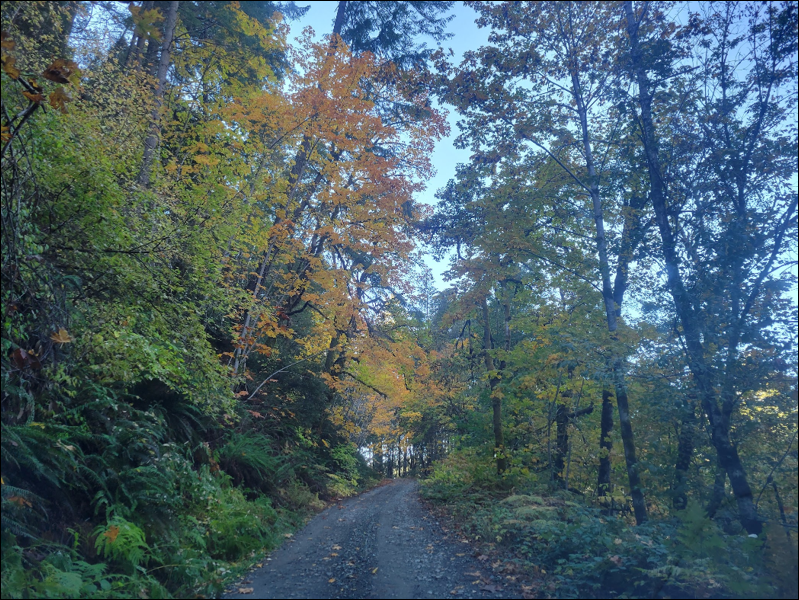
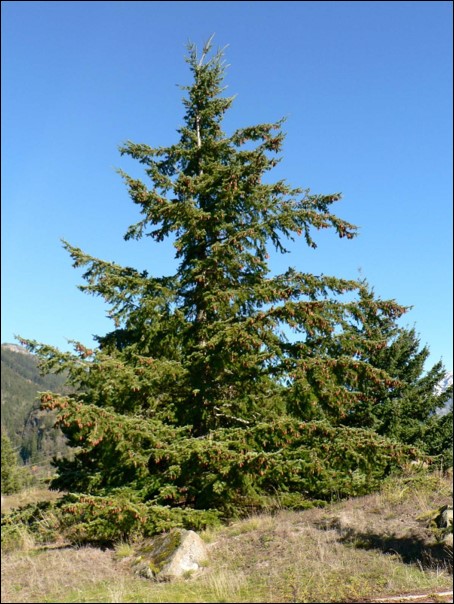
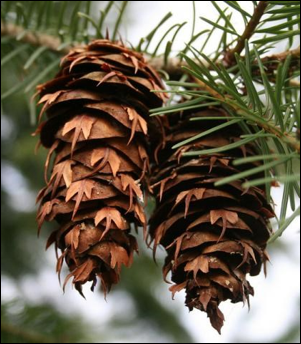
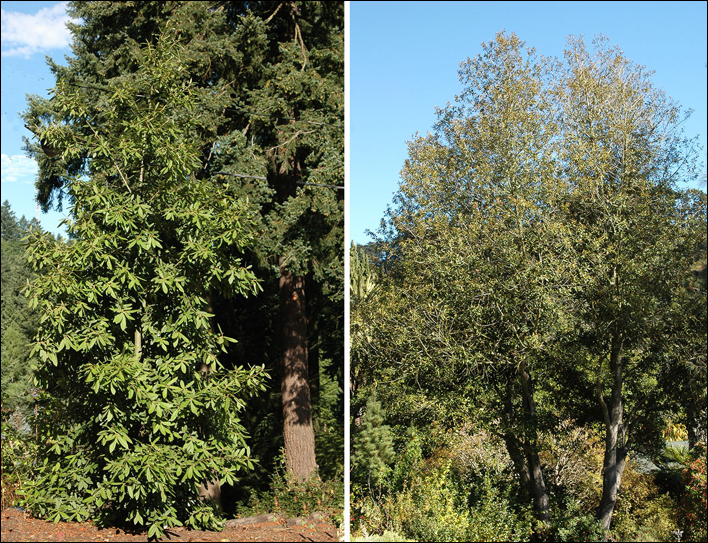
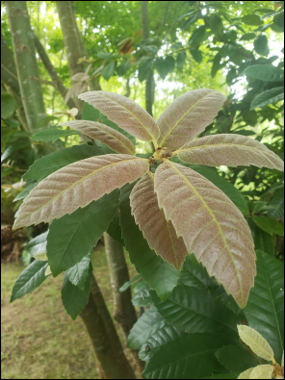
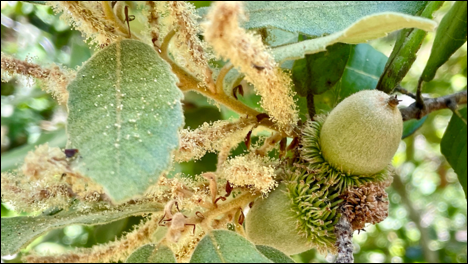
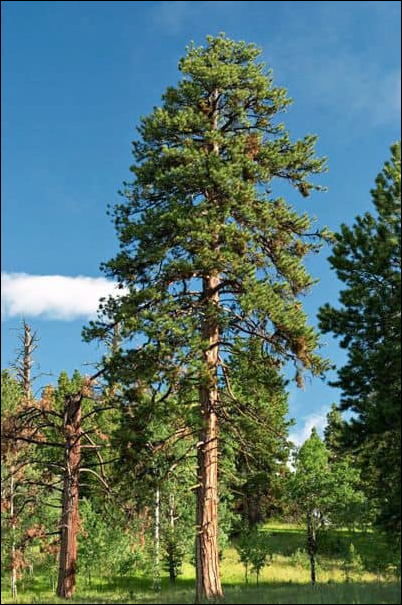
Moving away from the rivers and into the low elevation mixed woodlands look for Douglas fir (Psuedotsuga menziesii), Tanoak with populations in western Trinity and Coffee Creek, madrone and Ponderosa pine (Pinus ponderosa). Most mushrooms in this area will populate in the early fall with first rains and prior to frost or snow.
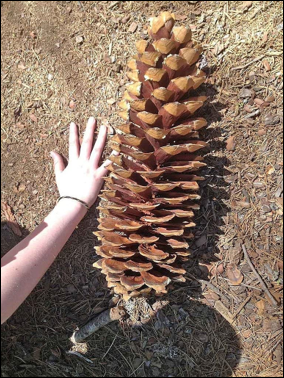
Douglas fir (Psuedotsuga menziesii)Douglas fir ConeTanoak (Notholithocarpus densiflorus)Tanoak (Notholithocarpus densiflorus)Tanoak (Notholithocarpus densiflorus)Ponderosa Pine (Pinus ponderosa)Low Elevation Mixed Conifer-Hardwoods of Trinity County
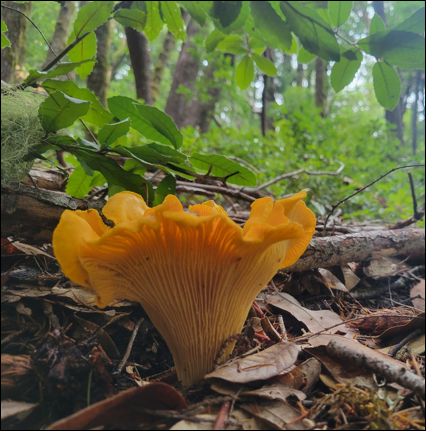
Chanterelles are a mycorrhizal associate with Douglas fir and true fir trees and if found make for a prized edible when found. Look for chanterelles in the fall after the first rains. The cascade chanterelle (Cantharellus cascadensis) does have poisonous look-alikes to watch out for, including the Jack O’ Lantern (Omphalatus olivescens) in Trinity County and others not yet found in Trinity such as the False Chanterelle (Hygrophoropsis aurantiaca).
Identification Tips:
Has ridges or false gills that run down the stem.
Grows with Douglas fir out of the ground (not from the wood)
When cut in half, the flesh is orange outside and white inside
Should not be confused with the Jack-o-Lantern mushroom or False Chanterelle.
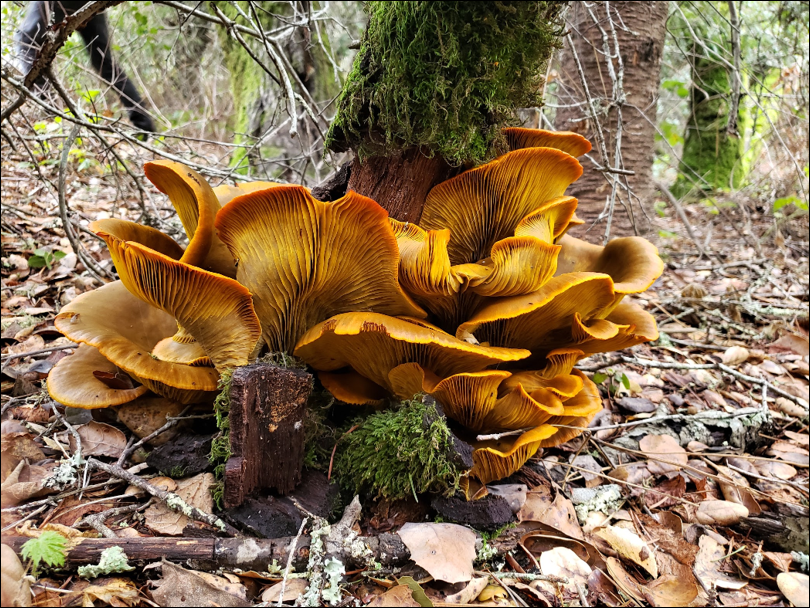
A showy beautiful mushroom that grows at the base of oak trees attached to the wood itself. The Jack O’ Lantern mushroom can make you very sick if ingested and can be confused with the cascade chanterelle.
Identification Tips:
True gills, bladelike structures.
When cut in half, the flesh is orange all the way through.
Grows from the wood of oak trees.
Should not be confused with the cascade chanterelle.
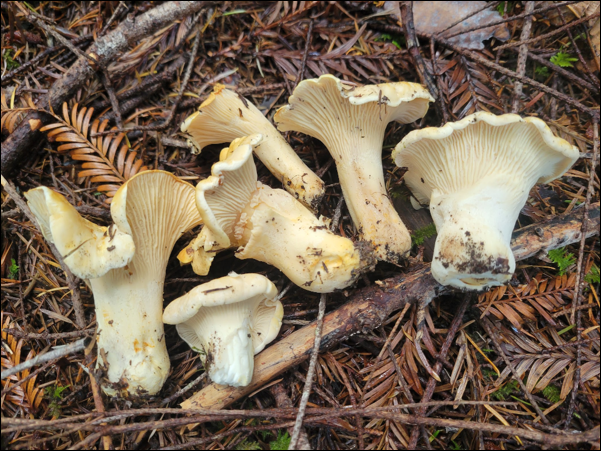
White chanterelles are symbiotic with Douglas fir and tanoak trees and like the orange chanterelle make for a prized edible when found. Look for white chanterelles in early fall after rains but prior to freezing.
Identification Tips:
Has ridges or false gills that run down the stem.
White to cream colored
Grows with Douglas fir & tanoak out of the ground (not from the wood)
Gets soggy with rain as time progresses through the fall.
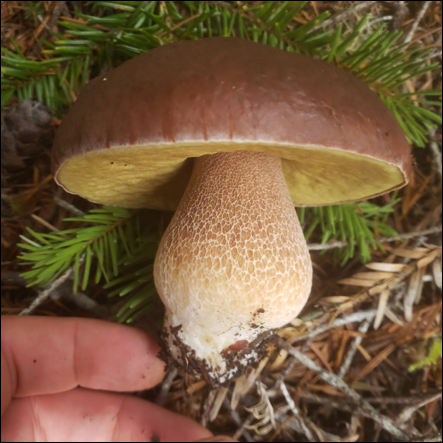
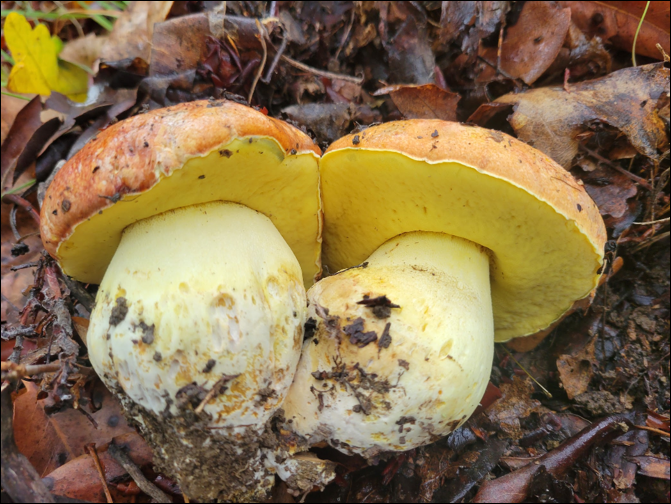
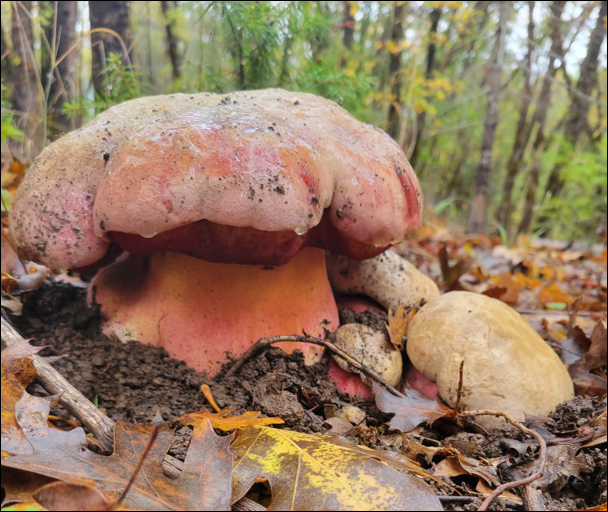
Royal boletes, including King and Queen varieties, are prized edibles from the porcini family. They thrive in early fall rains but do not persist through winter. Typically found near tanoak and true oak, these mushrooms form strong mycorrhizal bonds with roots, enhancing tree health and soil nutrient cycling.
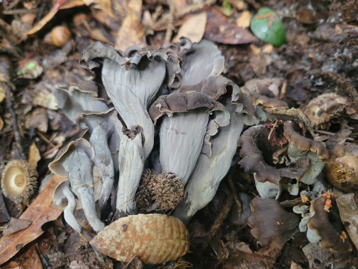
Black trumpets are more common in Western Trinity County than other areas due to the mushrooms relationship with tanoak. These saprotrophic mushrooms decompose dead organic matter, recycling nutrients into the soil and can also be found near black oak, and live oak. They grow in the winter months and can be recognized by their distinct color, shape, and smell.
Identification Tips:
Color is black, grey or sometimes dark brown
Look like trumpets with wavy edges rolled outwards.
Hollow from the base to the edge.
Does not have gills or pores.
Oak Woodlands
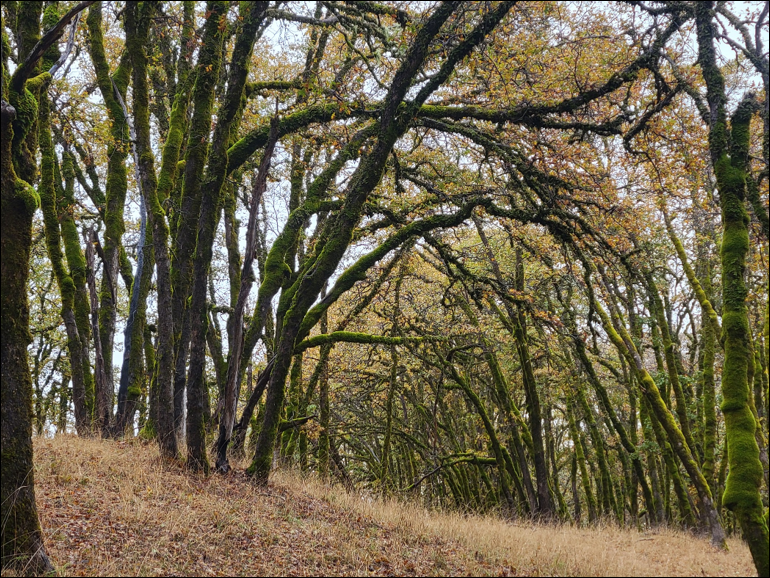
Trinity County Oak Woodland [Kyle Sipes]
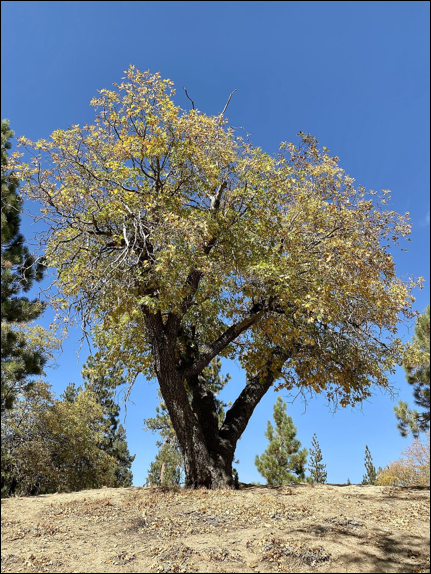
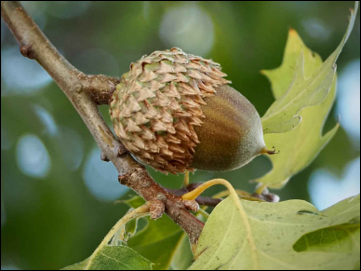
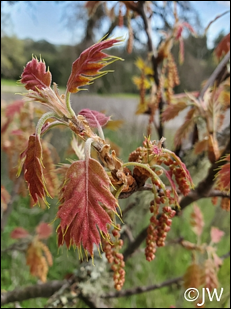
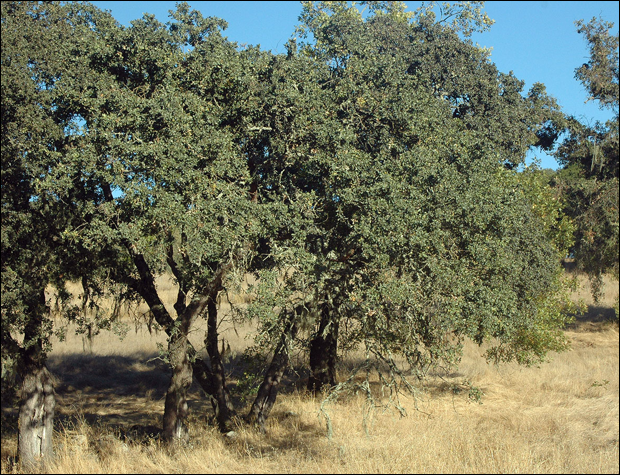
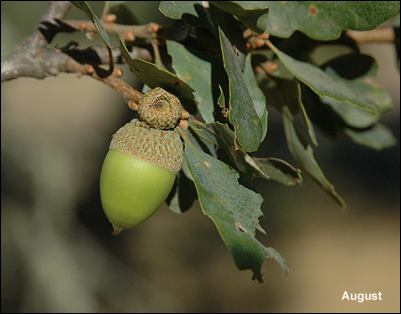
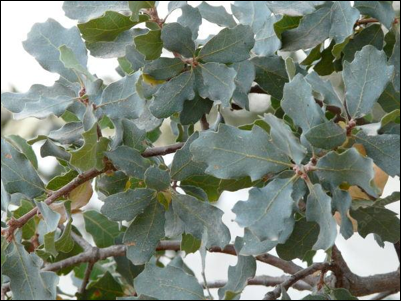
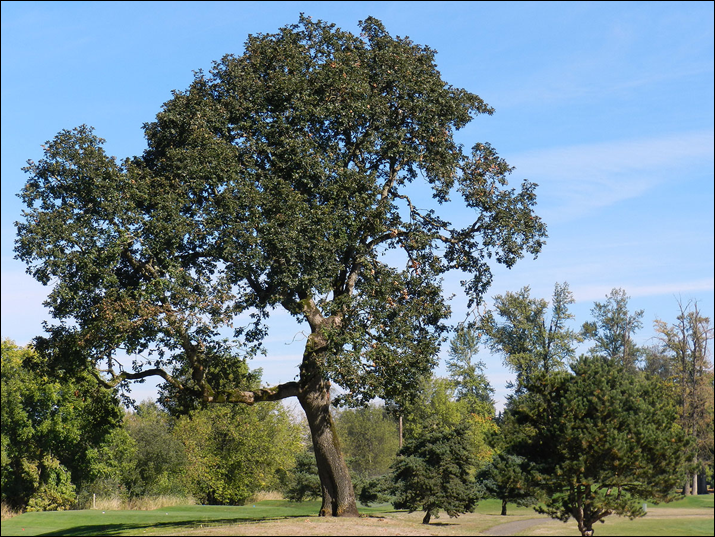
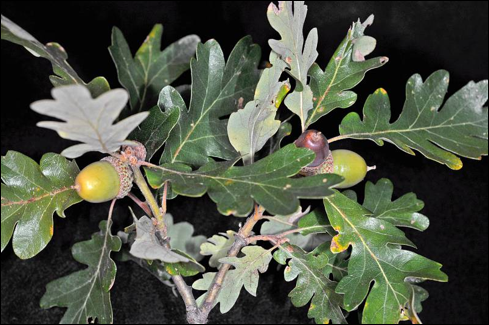
Oak woodlands are another lower elevation forest of Trinity County made up of trees such as white oak, black oak and blue oak. In these types of forests, most mushrooms in Trinity County grow with black oak, so learning to identify this tree is important when foraging!
Black Oak (Quercus kelloggii)Black Oak (Quercus kelloggii)Black Oak (Quercus kelloggii)Blue Oak (Quercus douglasii)Blue Oak (Quercus douglasii)Blue Oak (Quercus douglasii)White Oak (Quercus garryana)White Oak (Quercus garryana)Oak Woodland trees of Trinity County
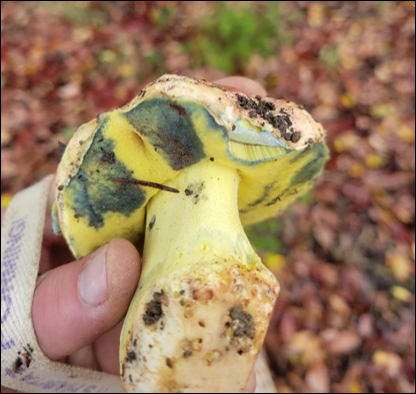
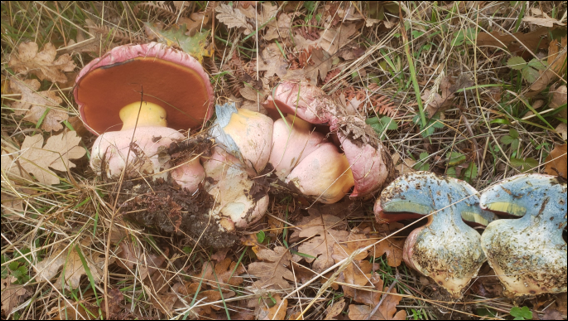
Beautiful yet very toxic mushroom that will fruit under oaks at the same time as butter boletes.
Red pores and cap
Bruises blue on the inside when bisected
Spongy underside and a bulbous stem
High Elevation Conifer Forests
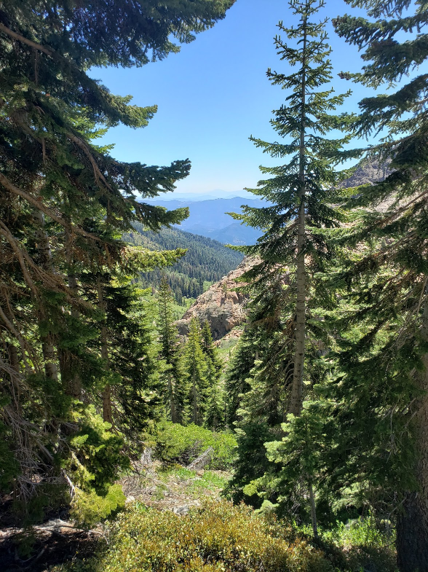
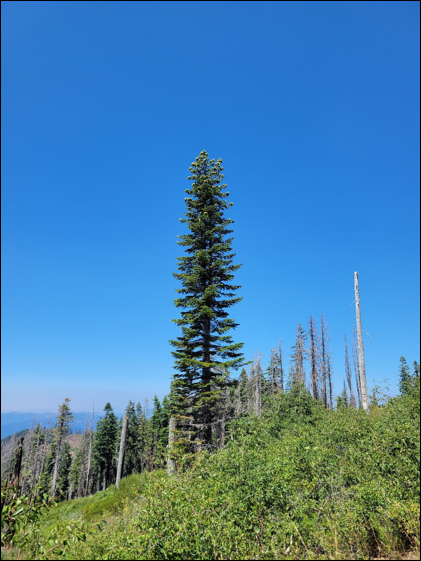
High elevation conifer forests are characterized by dense stands of evergreen trees, primarily conifers such as white fir, Shasta red fir and sugar pine. These forests typically occur at elevations above 3000 feet and are often found on steep, exposed slopes.
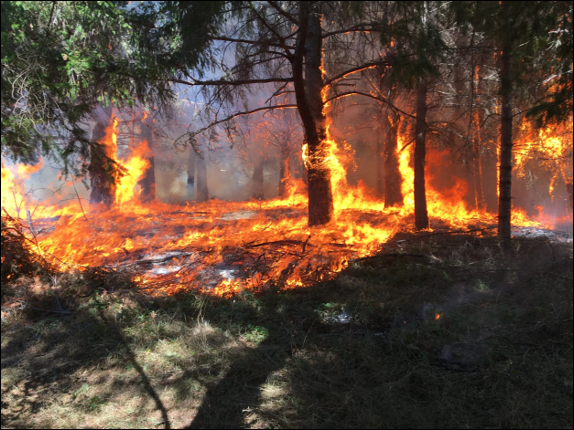
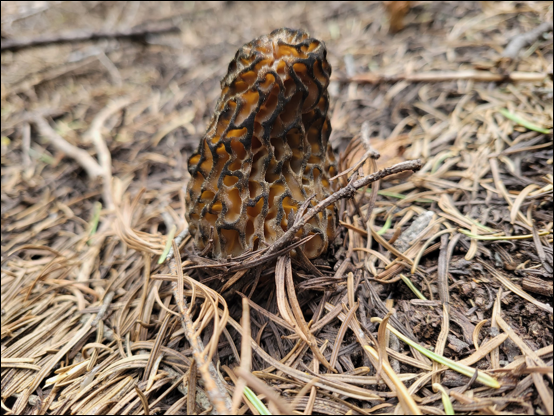
In the Trinity Alps, upland morels are the most commonly found edible mushroom. Some species of morels thrive in areas affected by wildfires. The nutrient-rich soil created by fires fosters morel growth, usually within one to two years after a burn but some species don’t appear until several years post-fire. Fires reduce competition and help spores germinate, forming helpful relationships with surviving trees. This makes recent burn sites ideal for spring foraging, resulting in plentiful morel harvests.
There are about 4 to 6 species of morels that adapt well to burn areas, and although they are hard to distinguish, different species appear in these fire-affected zones at various times.
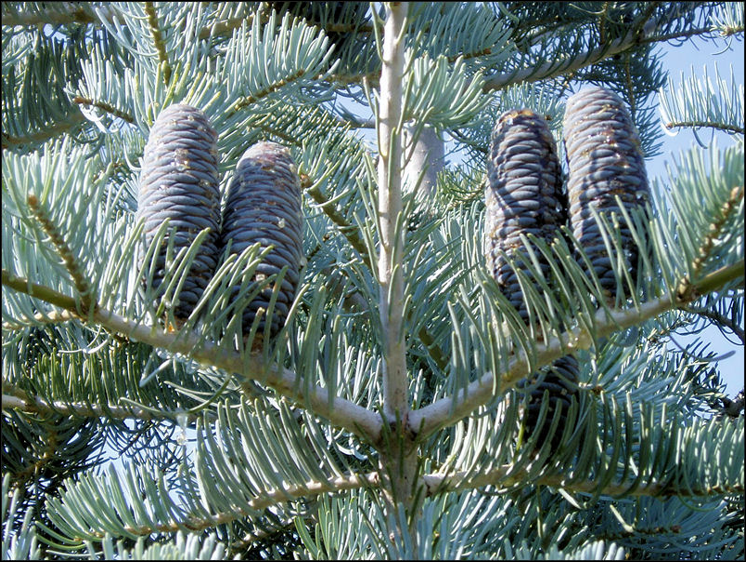
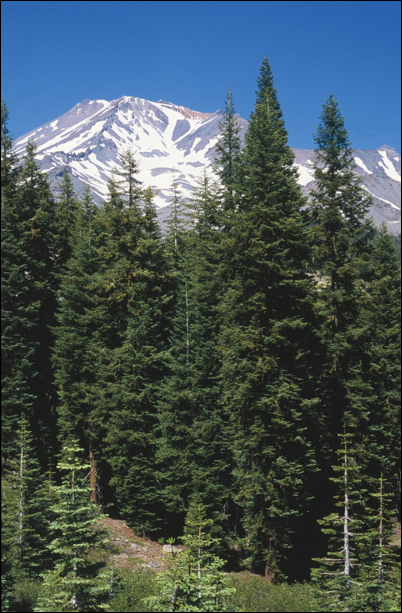
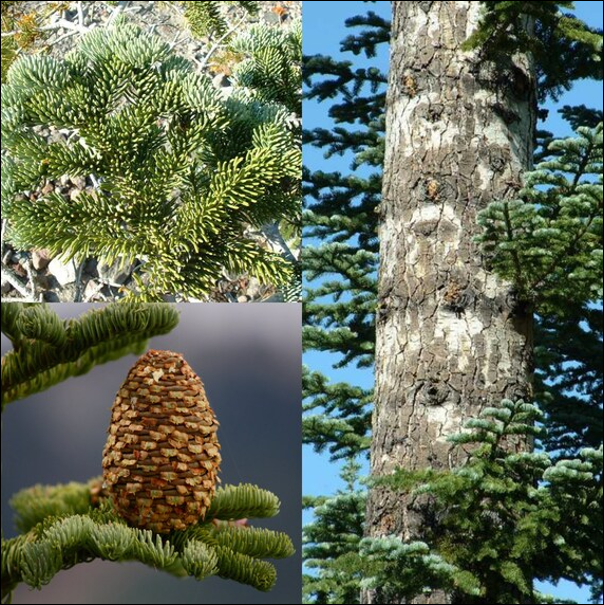
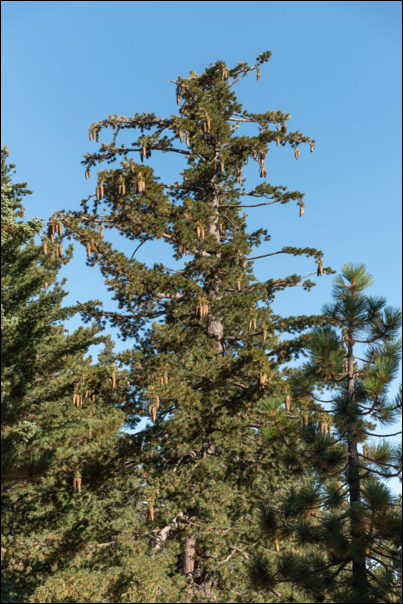
White fir (Abies concolor)White fir (Abies concolor)Shasta red fir (Abies magnifica)Shasta red fir (Abies magnifica)Sugar Pine (Pinus lambertiana)Sugar Pine (Pinus lambertiana)High Elevation Conifers of Trinity County
Besides the burn morels that occur 1-3 years after a burn, Morchella snyderi will be a mushroom to keep your eye out for. M. snyderi occurs in high elevation areas 3-4 years after a burn in undisturbed true fir forests, more commonly found near Mt. Shasta, but can be found in the Marbles and Trinities.
Look for morels a few weeks after the snow has receded.
Occurs in undisturbed true fir forests and several year old burns of the same forest type.
Occurs in the Trinities and very common around Mt. Shasta.
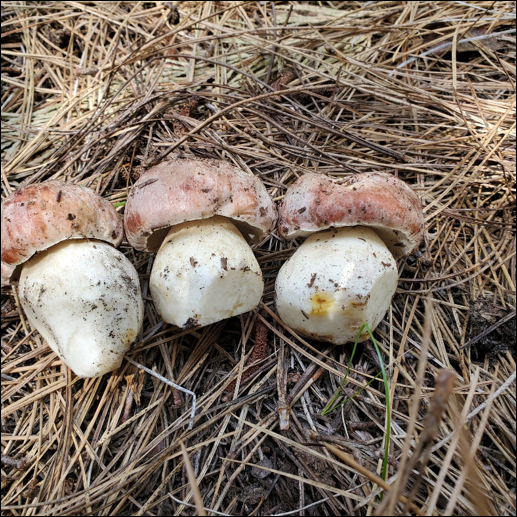
Also found in the high elevation conifer forests are the King Bolete. Look for these a few weeks after the fruiting of morels in true fir forests.
Pores instead of gills. Reticulation on stipe
Occurs with true firs approximately 2 weeks after the morel flush.
Often grows as shrumps.
Not as good as fall porcini but still an excellent edible
Photos provided by Kyle Sipes – unless otherwise noted on the image.
The January 28, Science on Tap event was recorded with the presenters permission. Once the video is edited to include the slides, we will post it here!
Kiana Abel, Public Affairs Specialist
As Public Affairs Specialist for the Trinity River Restoration Program, Kiana manages external communications, media relations, and stakeholder outreach. She acts as a liaison between program initiatives and the public, transforming technical findings into compelling narratives that promote understanding of restoration initiatives on the Trinity River. Kiana holds a Batchelor’s in Art History, has spent most of her career in marketing and is focused at the TRRP on bridging the gap between public awareness and resource restoration and management.
Water Year ’26 thus far has been a rain driven year for storage in Trinity Reservoir. Current storage is a product of early season rain plus elevated levels at beginning of the water year.
Trinity Reservoir September 29, 2025 [Kiana Abel, Trinity River Restoration Program]
In October, Trinity measured in at 70% full with 1.7 million acre feet. Seasonal storms pushed storage over 2 million acre feet (or 84%) in early January leading reservoir managers to implement reservoir management releases after a synchronized storm pulse flow was paired with a post-December 15 storm. By the end of January a lack of rain and snow returned releases to winter baseflow (300 cfs).
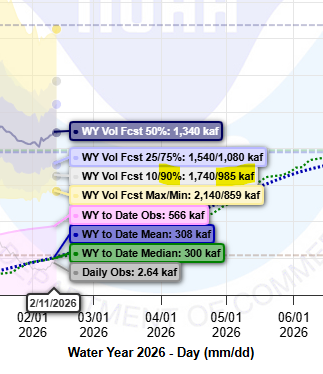
Feb. Forecast – California-Nevada River Forecast Center
February’s long range weather forecast is thus far looking a bit more wet than late January.
The volume of environmental flow releases for the Trinity River Restoration Program’s Wet-Season Baseflow Period (Feb. 15-Apr. 14) are determined by a conservative monthly inflow projection for Trinity Reservoir from the California Department of Water Resources (90% B120) in February, March with the final determination in April.
Prior to the official determination, which is published around the 10th of the month, water managers follow the California-Nevada River Forecast Center Median forecast for Trinity Lake inflow to stay abreast of the water year projections thus far.
The graph (shown in screen shot above) can be a little daunting to read, but when armed with the appropriate information is discernable for any viewer.
The Program’s Water-Year Volume Allocation as specified by the Record of Decision is outlined in the table below. The far left column is the threshold amount of state forecasted inflow in the Trinity Reservoir listed in acre feet which determines the center column, water year type. Then in the right column is listed the allocation to restoration for that water year, which includes baseflows.
Return now to an enlargement of the CNRFC forecast screenshot from Feb 13. Check out the light grey box “WY Vol Fcst 10/90%: 1,740/985 kaf” which reads longform as the following;
As of Feb. 11, the 10% of probability for Trinity Lake Inflow is predicted as 1,740,000 acre feet and the 90% of probability is 985,000 acre feet. Translated there is a 10% probability that the Trinity Allocation is predicted as “Wet” and a 90% probability as “Dry”.
As managers track the predicted inflow via CNRFC, the Program’s Flow Workgroup develops hydrograph scenarios to use when the final determination is published by the California Department of Water Resources. The two agencies use different methods when it comes to these prediction tools, the California Department of Water Resources uses data that has a weighted average to compute statewide Snow Water Equivalent (SWE) and is known as a more conservative forecast method when comparing the two.
Wet-Season Baseflow Period (Feb. 15 – Apr. 14)
The next period within the Trinity River Restoration Program environmental flow management is the Wet-Season Baseflow Period, which initiates Feb. 15. The California Department of Water Resources February 90% B120 declaration was published on Feb. 9 as “dry” with the 90% determination at 735,000 acre feet.
With a Feb. B120 determination of “Dry” or “Critically Dry” the Feb 15-Mar. 15 period will not increase releases to the Trinity River and Lewiston Dam flows will remain at 300 cfs (winter baseflow) until Mar. 15.
Prior to the next period (Apr. 15 – variable), the Program has a check-in on Mar. 15 to adjust flows based on the March 90% B120 declaration. In April, the Program implements a spring snow-melt and recession hydrograph following the final B120 water year determination by the Department of Water Resources.
By: Chris Laskodi M.S., Fisheries Ecologist, Yurok Tribal Fisheries Department
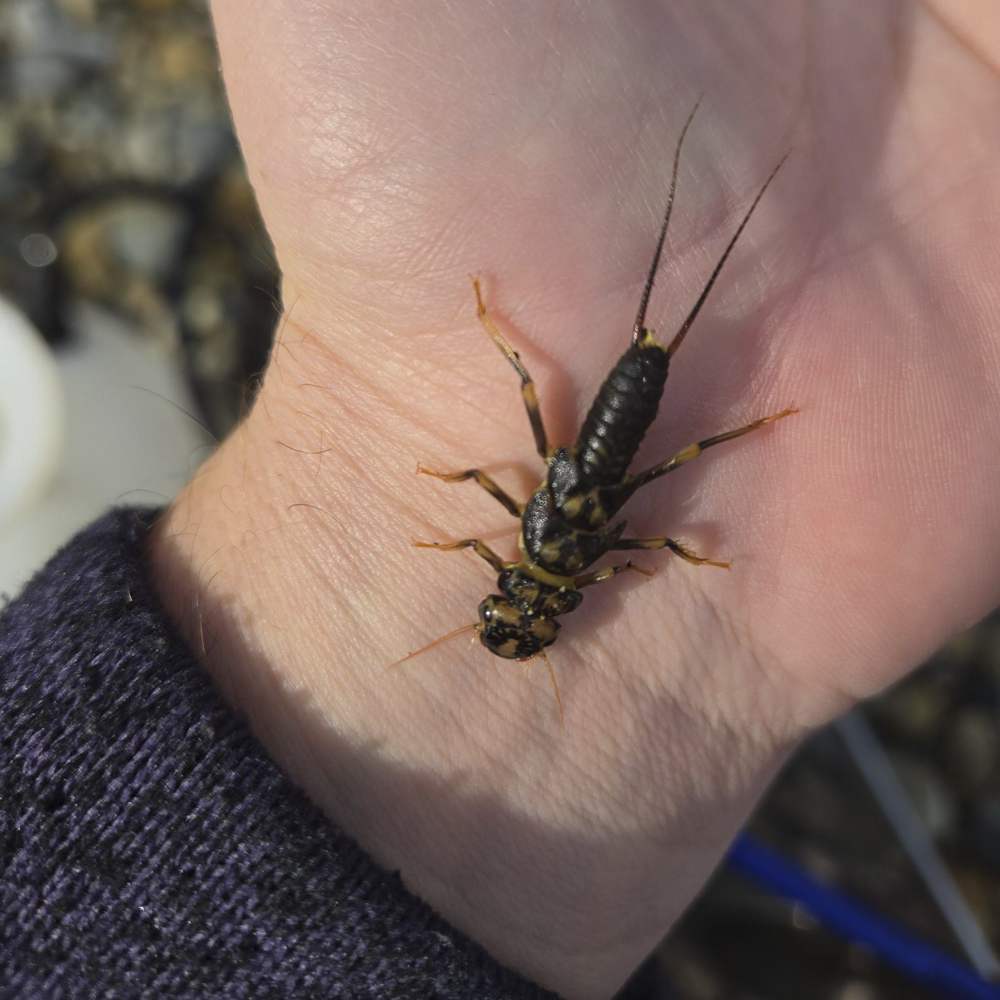
Stoneflies from the family Perlidae aka Golden Stones
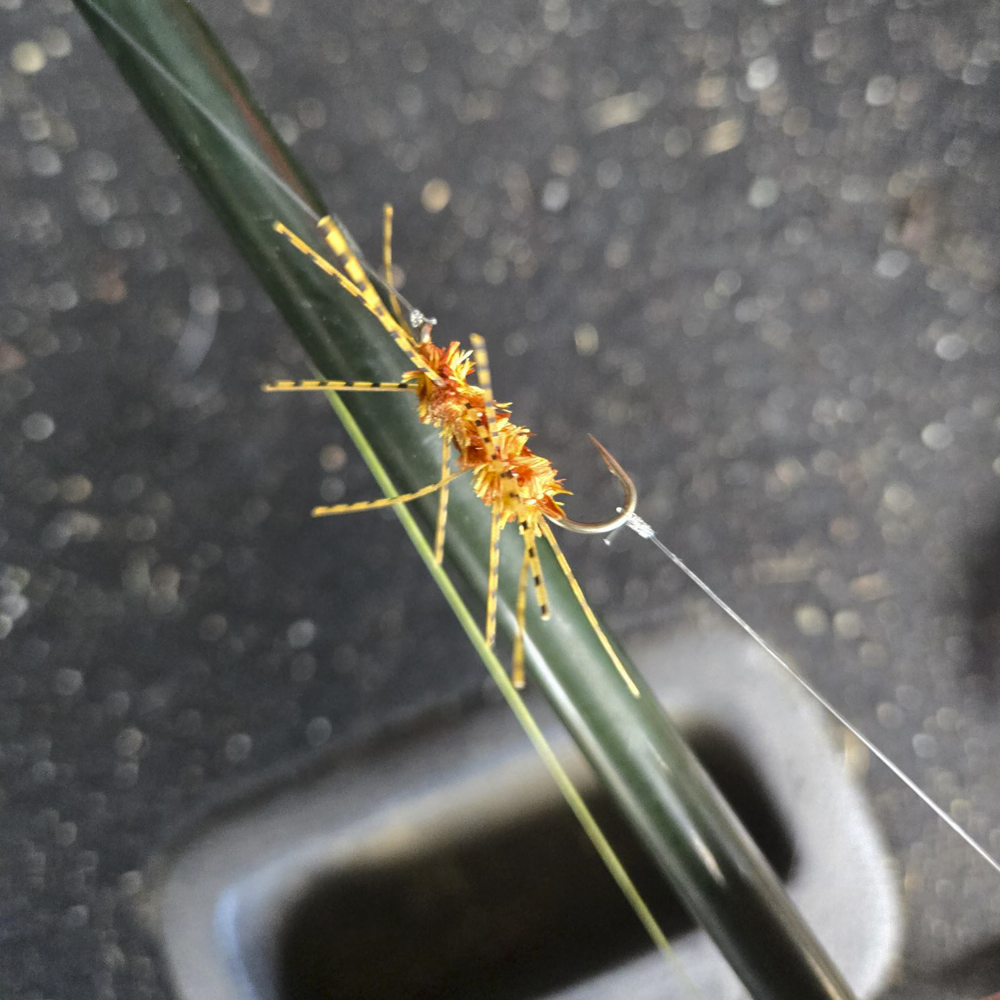
If you are a fly fisherman on the Trinity River, you know one of the top flies in the winter is a golden stone nymph. Unsurprisingly, these stoneflies are one of the most common benthic macroinvertebrates found on the Trinity River. They are especially prevalent in the winter and early spring as most of the other insects have already completed their lifecycle and are growing to emerge the following year.
Photo: A stone fly imitation designed to look like the real thing. [Chris Laskodi, Yurok Tribal Fisheries Department]
These stoneflies typically emerge in late spring so they are almost fully grown and are just packing on calories for the next stage of their life cycle. They are avid hunters and consume anything that can fit in their mouths (mostly Chironomids and Baetid larvae). This hunting activity makes them susceptible to entering the drift either voluntary or involuntary potentially providing a tasty morsel for salmonids that are large enough to eat them. TRRP scientists have noticed an uptick of these stoneflies in the last few months during their regular benthic macroinvertebrate surveys providing insight into the stonefly’s behavior.
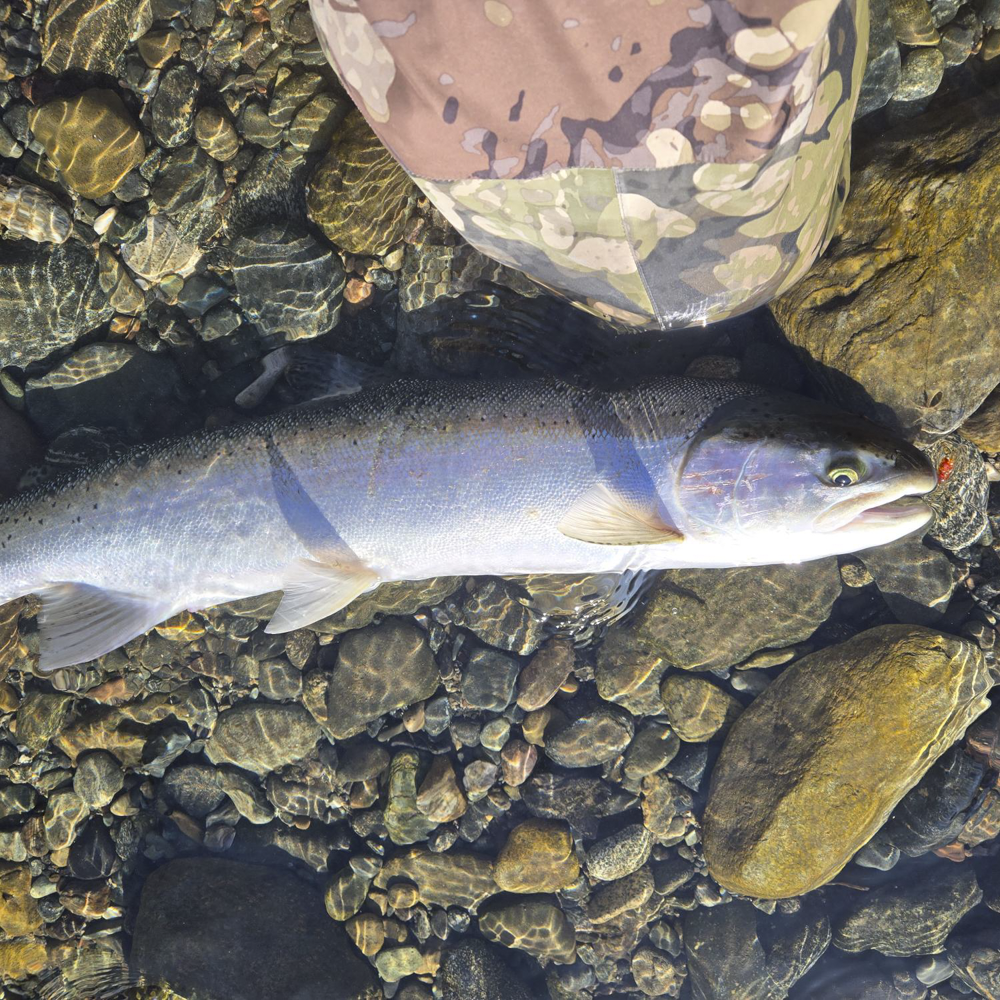
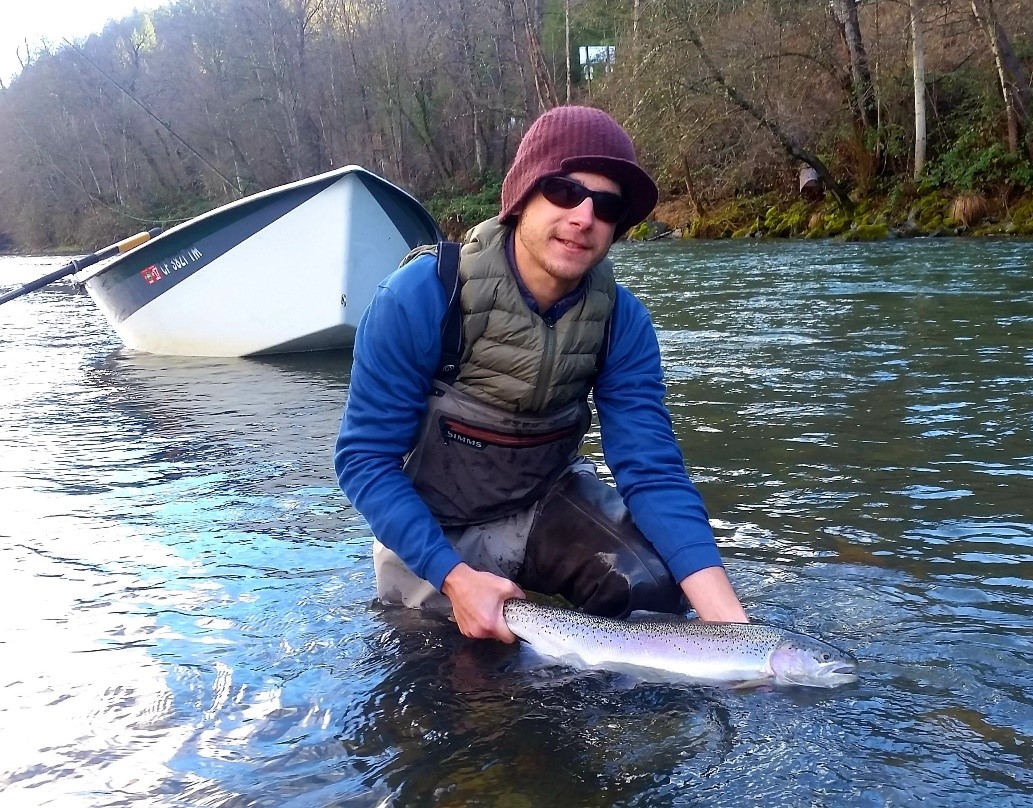
A stonefly from the family Perlidae captured in a recent benthic macroinvertebrate sample.A Steelhead caught by the author. Note the golden stone imitation in its jaw.
Photos provided by the author.
Chris Laskodi, M.S., Fish Ecologist – Yurok Tribal Fisheries Department
Chris serves as the fish biologist/ecologist for the TRRP in the program’s Science branch. Chris has worked on the Trinity River since 2015, previously serving as a fish biologist for the Yurok Tribe and a fisheries technician for the US Fish & Wildlife Service. Chris holds a B.S. in Wildlife, Fish and Conservation Biology from the University of California, Davis and a M.S. in Aquaculture/Fisheries from the University of Arkansas at Pine Bluff. In his free time, Chris enjoys taking friends and family fishing on one of the many watercraft available to him.
By: Kiana Abel (TRRP), Nick Van Vleet (CDFW) & Morgan Knechtle (CDFW)
Preliminary Results for 2025 Klamath Basin Natural-Origin Adult Escapement
Preliminary results from monitoring of natural-spawning fall-run Chinook salmon for the Klamath Basin (which includes the Trinity River Watershed) have estimated adult (age 3-5) returns slightly below the 40,700 target for maximum sustainable yield for 2025. These preliminary results place natural-spawner escapement well above pre-season expectations (<30,000).
The Trinity River accounted for much of this success, with natural-spawner estimates just shy of 24,500 above the Willow Creek Weir. About 14,000 adults are noted within that total. These results move the status of Klamath natural-spawning fall Chinook escapement from overfished to rebuilding status under the regulatory outlines set by NOAA Fisheries. The Klamath Basin has been in overfished status since 2018. The improvement in adult returns is likely due to several factors, including notably, the closure of both the in-river and commercial ocean fishery (with exception of a 2-day recreational ocean fishery last June) in 2025. Habitat enhancements for juvenile chinook and favorable hydrologic and temperature conditions during the rearing period are also likely contributing factors.
Coho Return Estimates Are a Different Story
With significant improvement to Chinook returns, coho returns told a different story. While Central California and Oregon coastal streams reported strong runs (some exceeding recovery targets) Trinity River coho returns remain low. Fish biologists surmise the discrepancy between regions could be due to challenges specific to the Trinity Basin during the rearing period for the 2025 escapement class. Challenges including severe drought, water temperatures during nesting phase, egg health issues like thiamine deficiency, and health of hatchery egg stock. Due to lack of pairs, hatchery operations will rear limited numbers of coho this winter, and no coho specific in-stream Remote Site Incubation projects are planned in the Trinity Watershed this winter.
Management of Klamath Basin Chinook Escapement and Harvest Quotas
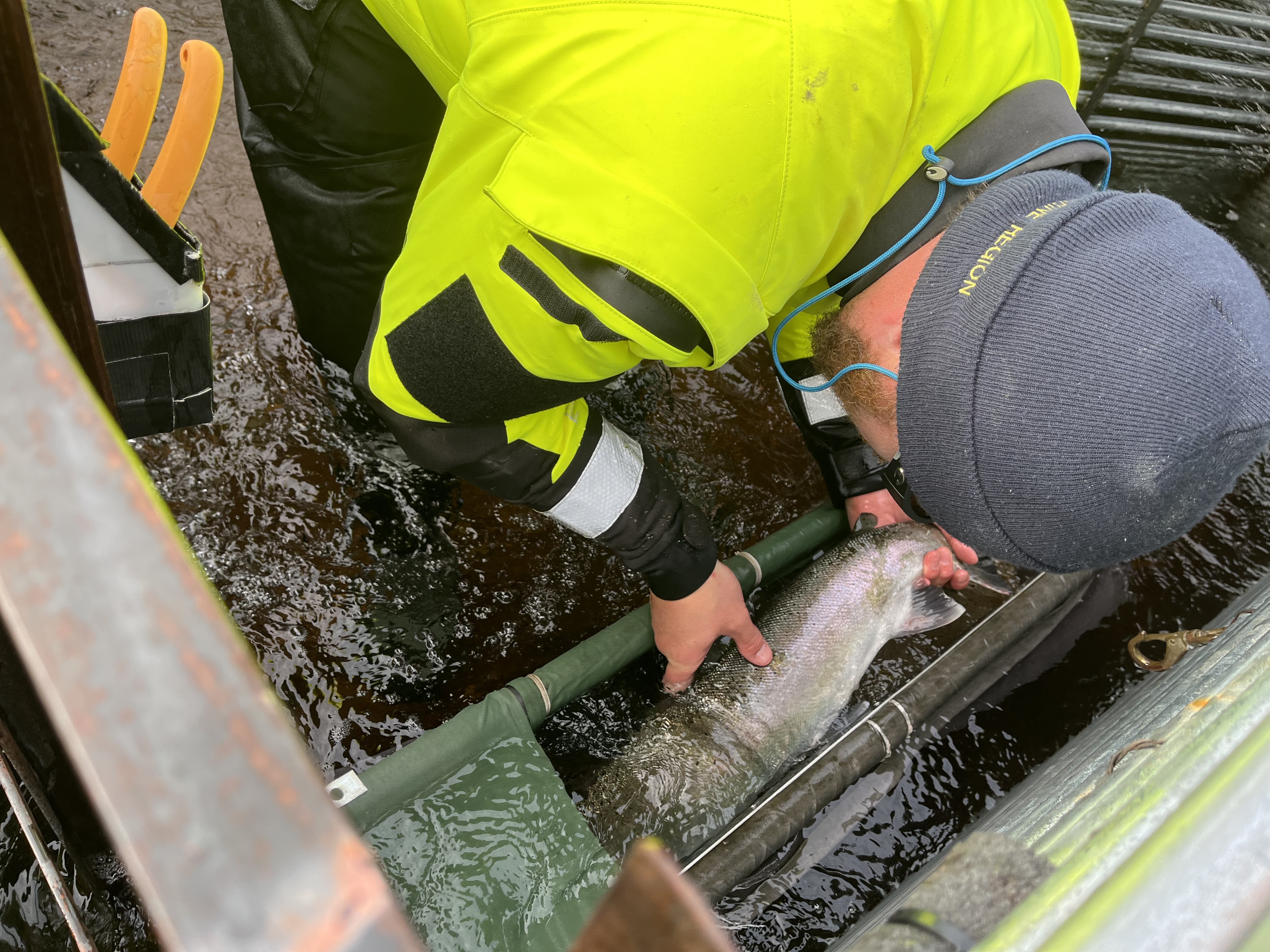
A CDFW technician collects salmonid data during the trapping season at the Willow Creek weir.
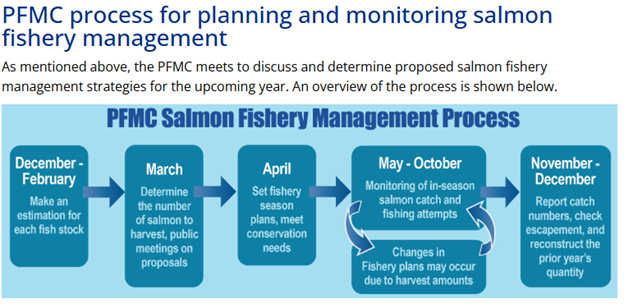
The Pacific Fishery Management Council (PFMC) adopts harvest plans for Klamath Basin Chinook under the Magnuson-Stevens Fishery Conservation and Management Act, ensuring sustainable harvest and stock rebuilding. Each year, PFMC develops Fishery Management Plans and harvest specifications using pre-season forecasts provided by in-river monitoring, stock assessments, and harvest control rules tied to conservation objectives. The process incorporates broad stakeholder input, including tribal, commercial, and recreational representatives, through public hearings and advisory panels. Scientific review by NOAA Fisheries and state biologists evaluates population dynamics, ocean conditions, and climate trends to model impacts of proposed harvest levels. After public comment and review, PFMC adopts final quotas and season structures, which NOAA Fisheries implement federally, and states align for inland waters. This transparent, science-based framework balances sustainability, equity, and ecosystem health while meeting escapement targets for the Klamath Basin.
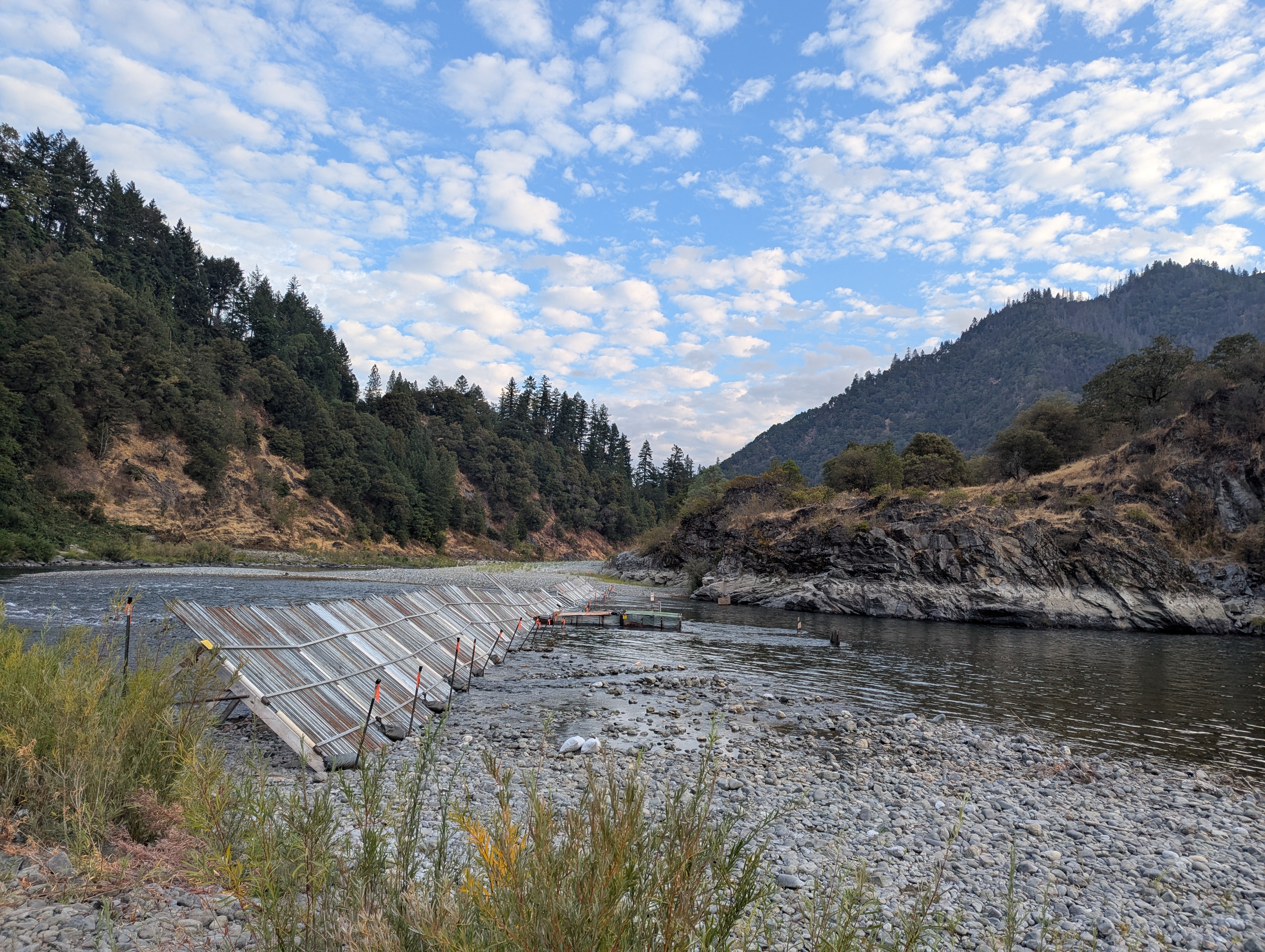
Trinity River salmonid escapement is monitored annually via three weir locations on the Trinity River at the Willow Creek Weir, Hoopa Harvest Weir and the Junction City Weir. Additionally, biologists from a collection of agencies annually track the population of spring Chinook salmon and summer steelhead via snorkel dives throughout the New River, Canyon Creek, and the North and South Forks of the Trinity River.
Annual adult monitoring efforts at the Junction City weir are implemented by the California Department of Fish and Wildlife with monitoring assistance from the Hoopa Valley and Yurok Tribes and are funded by the Bureau of Reclamation. The Willow Creek weir is operated by CDFW with assistance from the Yurok Tribe during the coho monitoring period. Trapping efforts typically range from late spring/early summer to mid-fall/early winter.
As Public Affairs Specialist for the Trinity River Restoration Program, Kiana manages external communications, media relations, and stakeholder outreach. She acts as a liaison between program initiatives and the public, transforming technical findings into compelling narratives that promote understanding of restoration initiatives on the Trinity River. Kiana holds a Batchelor’s in Art History, has spent most of her career in marketing and is focused at the TRRP on bridging the gap between public awareness and resource restoration and management.
By: Eric Peterson, Science Coordinator – Trinity River Restoration Program
Trinity River in Douglas City. [Kiana Abel, Trinity River Restoration Program]
For the year ahead the Program will continue with both short and long-term monitoring projects. Long-term monitoring projects include,
outmigrant monitoring (tracking the number and size of young fish heading out to sea)
adult escapement monitoring (tracking the number and size of adult fish returning from the sea).
Shorter duration studies to examine the flow changes include;
acoustic monitoring of rock movement,
and investigating the benthic macroinvertebrate (fish food) response to the flows.
Also, this year we will wrap up a review of our long-term monitoring and modeling efforts and bring recommendations forward on how to better measure our progress.
We will complete the adult Chinook Limiting Factors Analysis, which should give us insights regarding what factors are limiting the return of adult Chinook salmon along with gaming the associated scenarios to help us understand how to improve the use of our tools.
Lastly, we will continue to support the development of a new approach to long-term operations of the Trinity River Division, which should give us better protection of river temperatures in drought years and give us more flexibility with managing environmental flows.
Publications to look out for in 2026
Lindke, K. T., Video monitoring of fish passage at Willow Creek weir: feasibility of validating mark-recapture run size estimates.
Bridegum, J., D. Goodman, T. Daley, R. Smit, J. Boyce, O. Black, J. Alvarez, and K. De Juilio. The Effects of Restoration Actions on Juvenile Salmonid Rearing Habitat in the Trinity River Restoration Reach at an Index Streamflow, 2009 to 2017.
Martel, C. J. Alvare, Z. Reinstein, and K. T. Lindke, Fall Chinook Redd Environmental Conditions and Egg Survival to Emergence in the Trinity River.
Gaeuman, D., K. De Juilio, and C. Laskodi. Efficacy of two-dimensional modeling for assessing spatial variability in stream temperatures.
Eric grew up in Weaverville, hiking in the Trinity Alps and exploring East Weaver Creek. A natural biologist from an early age, he completed a B.S. in biology and botany at Humboldt State University in 1995, and a Ph.D. at Oregon State University in 2000 in plant ecology with a focus on lichens and forestry. Eric worked as the vegetation ecologist for State of Nevada’s Natural Heritage Program for about 8 years, covering all corners of the state and developing techniques for mapping invasive annual grasses with satellite imagery. Eric joined TRRP in 2009 to manage Trinity River data and coordinate its use across the many offices of our partnership, brought a focus on river ecology by conducting a study of algae growth in the river and tributaries, and is currently the TRRP Science Coordinator.
By: James Lee, Implementation Branch Chief – Trinity River Restoration Program
The Trinity River Restoration Program will work toward the completion of three Trinity River channel rehabilitation projects along with five watershed grantee projects all slated to be implemented in the next year.
In 2026, the Trinity River Restoration Program will be closing out our long-term gravel processing site (Sawmill) in Lewiston in tandem with implementing floodplain restoration and side channel maintenance work at the site. The project aims to significantly improve habitat conditions for aquatic and riparian wildlife in this important area close to Lewiston Dam.
Additionally, the Implementation Branch will be diving into the design phase for most of the remaining 47 sites identified in the 2000 ROD. Closest to implementation are the channel rehabilitation projects in Junction City at Evans Bar and Sky Ranch, and the Rush Creek Confluence in Lewiston, likely to enter work phases beginning in 2027. At Evan’s Bar, TRRP intends to enhance habitat availability for juvenile fish, along with maintaining access to private parcels in the area while improving access at the public boat launch. The remaining site designs, which include Sky Ranch, McIntyre Gulch, and middle Steiner Flat, will start to paint the picture of what the 40-mile restoration reach will look like as the program of work identified within the 2000 ROD nears “completion”.
Watershed Grantee Projects
Through our Watershed Grantee Program, the Implementation Branch will continue to collaborate on five projects to improve conditions in Trinity River tributaries in 2026.
Deadwood Creek Sediment Reduction Project – Northwest California Resource Conservation & Development Council (5Cs)
This project intends to improve sediment delivery in Deadwood Creek, the first major Trinity River tributary below Lewiston Dam. The project will remove legacy mine tailings from Mill Gulch, decommission Thorne Gulch Road, install and enhance 12 rolling or critical dips, remove abandoned vehicles and debris from stream channels and floodplains and build stream enhancement features in Thorne Gulch.
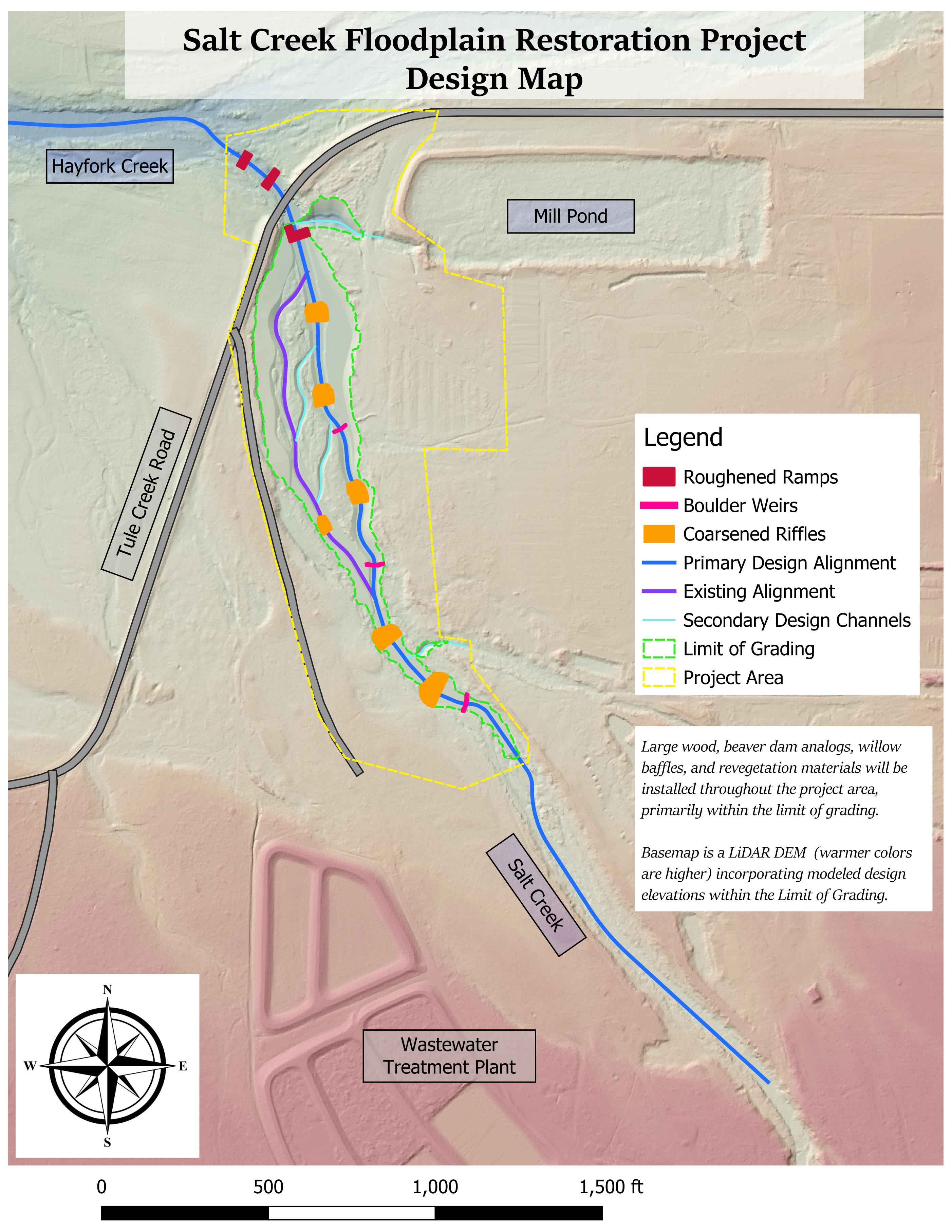
Salt Creek Floodplain Restoration – The Watershed Research and Training Center
This project aims to improve 2,000 feet of heavily degraded salmonid habitat along Salt Creek, a South Fork Trinity River tributary, by reconnecting the creek to its historic floodplain using engineered and process-based restoration techniques. The project will increase aquifer recharge and storage for slow release to temper a thermal barrier for salmonids, restore geomorphic functions that will improve salmonid spawning gravels, create pools for summer cool water refugia, increase habitat heterogeneity for winter flow high-velocity refugia, and improve native riparian flora, all of which will increase the resilience of aquatic species from the impacts of climate change. Implementation is scheduled for summer 2026.
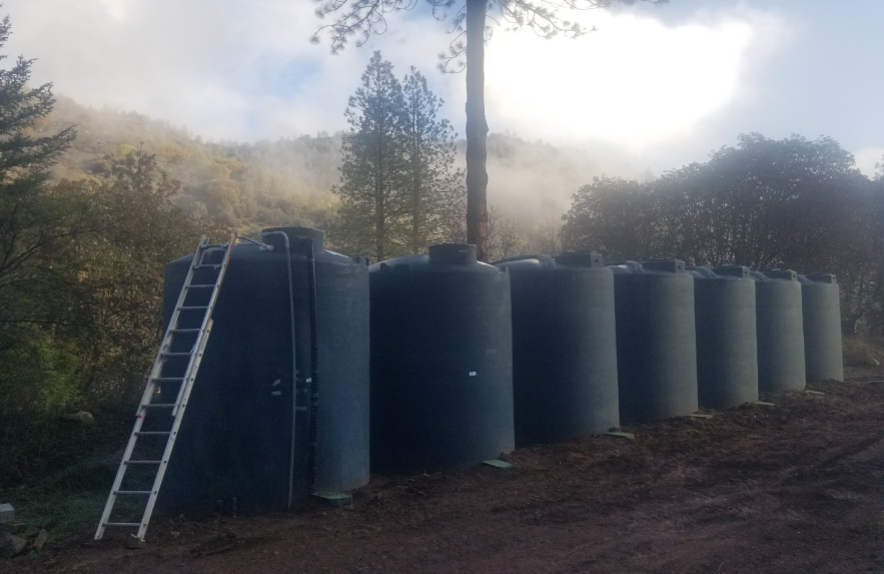
Water Resiliency in the Greater River Trinity Watershed for Aquatic Ecosystem and Human Domestic Needs – The Watershed Research and Training Center
The organization is tasked to plan and implement storage tank arrays and establish long-term forbearance agreements to reduce annual water withdrawals from key tributaries to the Trinity River during the summer low-flow period. The project will increase the quality and quantity of natural habitats crucial to the survival of anadromous fishes and aquatic organisms in the Trinity River Watershed. Implementation for two landowners along Brown’s Creek is scheduled for spring 2026.
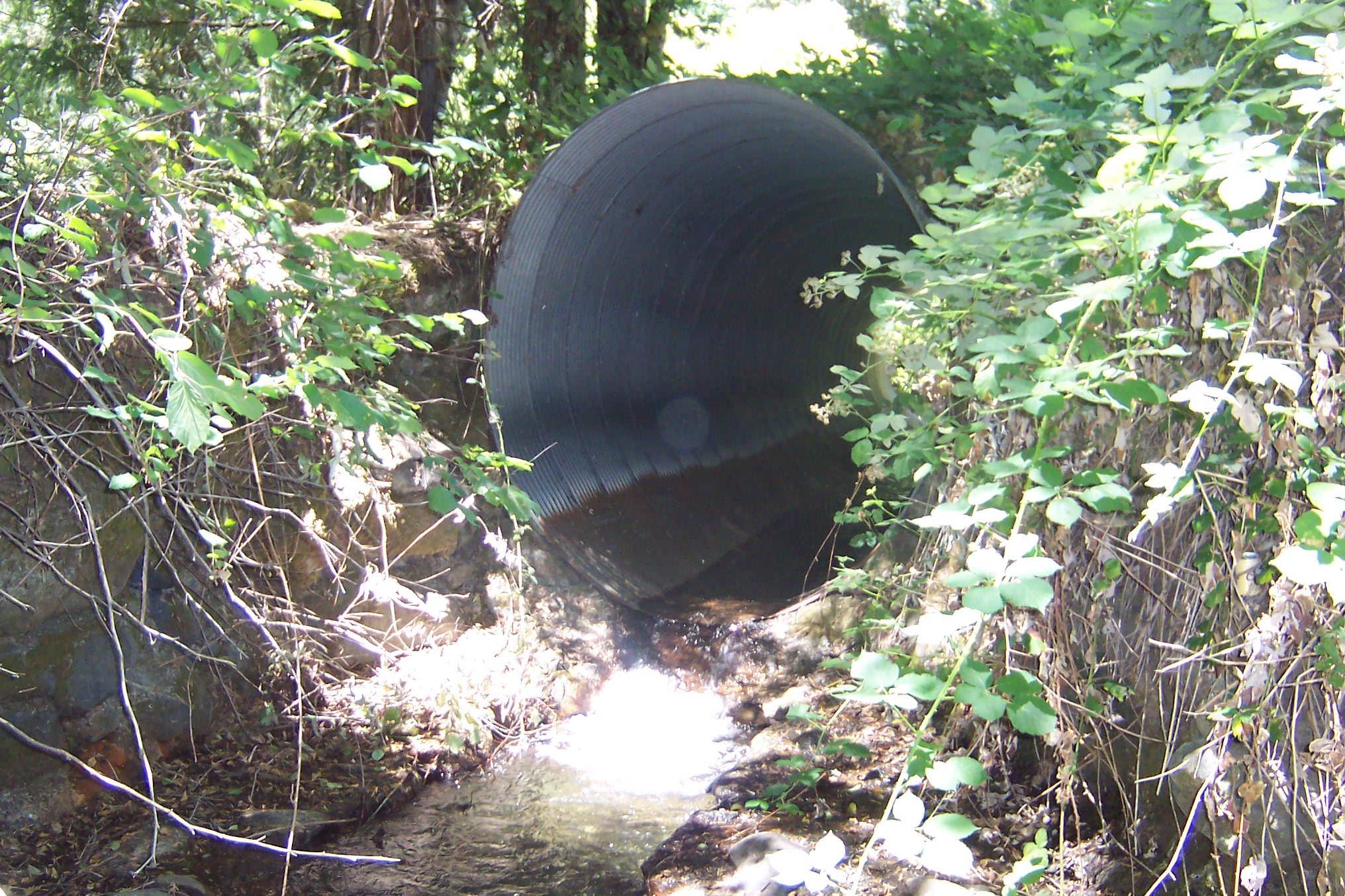
East Branch East Weaver Creek Migration Barrier Removal – Northwest California Resource Conservation & Development Council (5Cs)
This project will replace an aging culvert that has become a fish passage barrier on the East Branch of East Weaver Creek. The new infrastructure placement will open nearly 2 miles of habitat for anadromous species of the Trinity Watershed.
Weaver Creek Habitat Restoration Implementation – The Yurok Tribe Fisheries Department
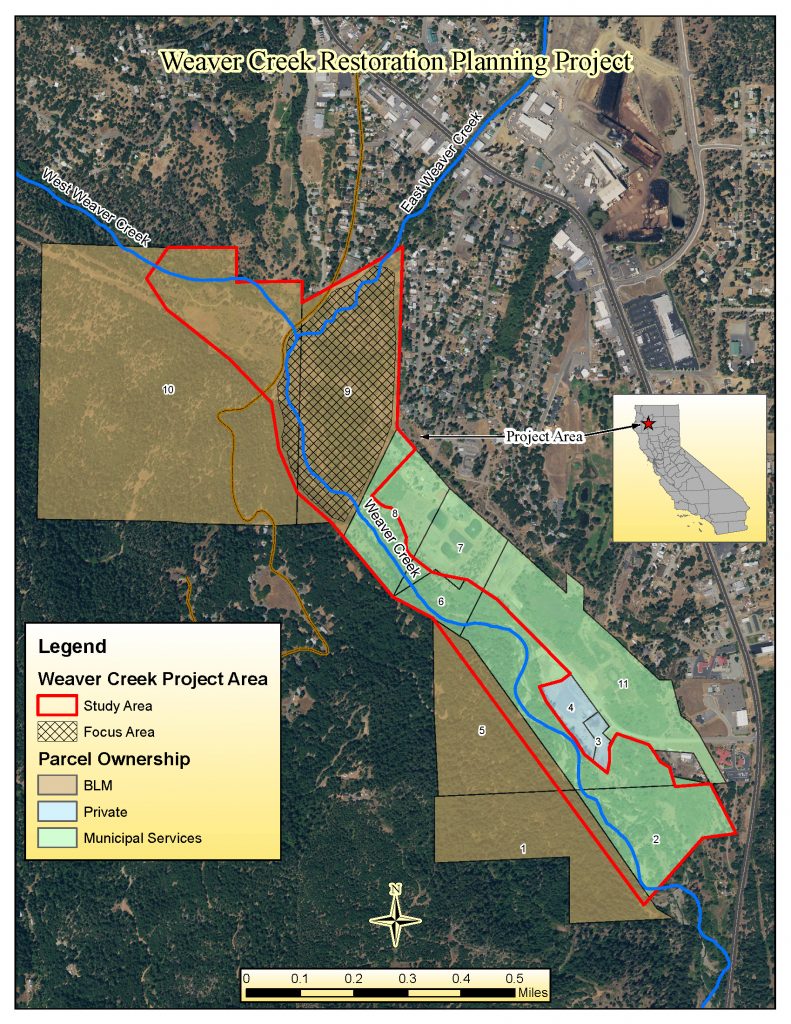
The Yurok Tribe Fisheries Department will complete the NEPA process and work towards rehabilitation along the upper section of Weaver Creek, a tributary to the Trinity River. The project will control the spread of invasive plant species, establish habitat connectivity during summertime baseflow conditions, and support populations of threatened Coho Salmon through enhanced floodplain an instream habitat conditions. The Yurok Tribe is collaborating with the Nor Rel Muk Wintu Nation, Federal land managers, the Weaverville Sanitary District, and adjacent landowners for this restoration project.
James Lee grew up near Redding, Ca, but his heart has always been in the Trinity’s, where he chased tadpoles, salmon, deer, and gold nuggets for much of his youth. This love of the outdoors turned into an interest in managing fish, wildlife, water, timber, and other natural resources.
By: Michael Dixon, Executive Director – Trinity River Restoration Program
Drone photo of the Oregon Gulch site in the summer of 2025. [Elliot Sarnacki, TRRP]
As we enter 2026, let us pause to reflect on this past year, which was the 25th year of the Trinity River Restoration Program. I’m sure that most will agree that 2025 felt decidedly tumultuous, but we managed to overcome a lot of hurdles and get important work done.
Although we said goodbye to an unprecedented number of TRRPers from across our partnership, the pace of our work did not slow down. While we cannot replace the friendships and personalities of our colleagues who no longer roam our meetings and hallways, those that remain have showed great resolve in their dedication to this program and its mission.
Last year, we completed the Watershed Restoration EA, an ambitious document that will dramatically streamline the environmental compliance process for not just the TRRP’s restoration work, but also for other partners in the watershed. The document was a collaboration with the Bureau of Land Management, the US Forest Service, and our office, and was a heavy lift by many dedicated individuals over several years. We are already seeing the benefits of their hard work with the 2026 construction season approaching.
We abruptly lost our long-term outreach grant with the Trinity County RCD late last spring, but our relationship with them endures. We are actively working on ways to share capacity and continue the work that we do together. Popular events like Science on Tap and youth outreach camps such as the Weaverville Summer Day Camp will continue into 2026.
The Upper Conner Creek restoration Project was completed in 2025. [Elliot Sarnacki, TRRP]
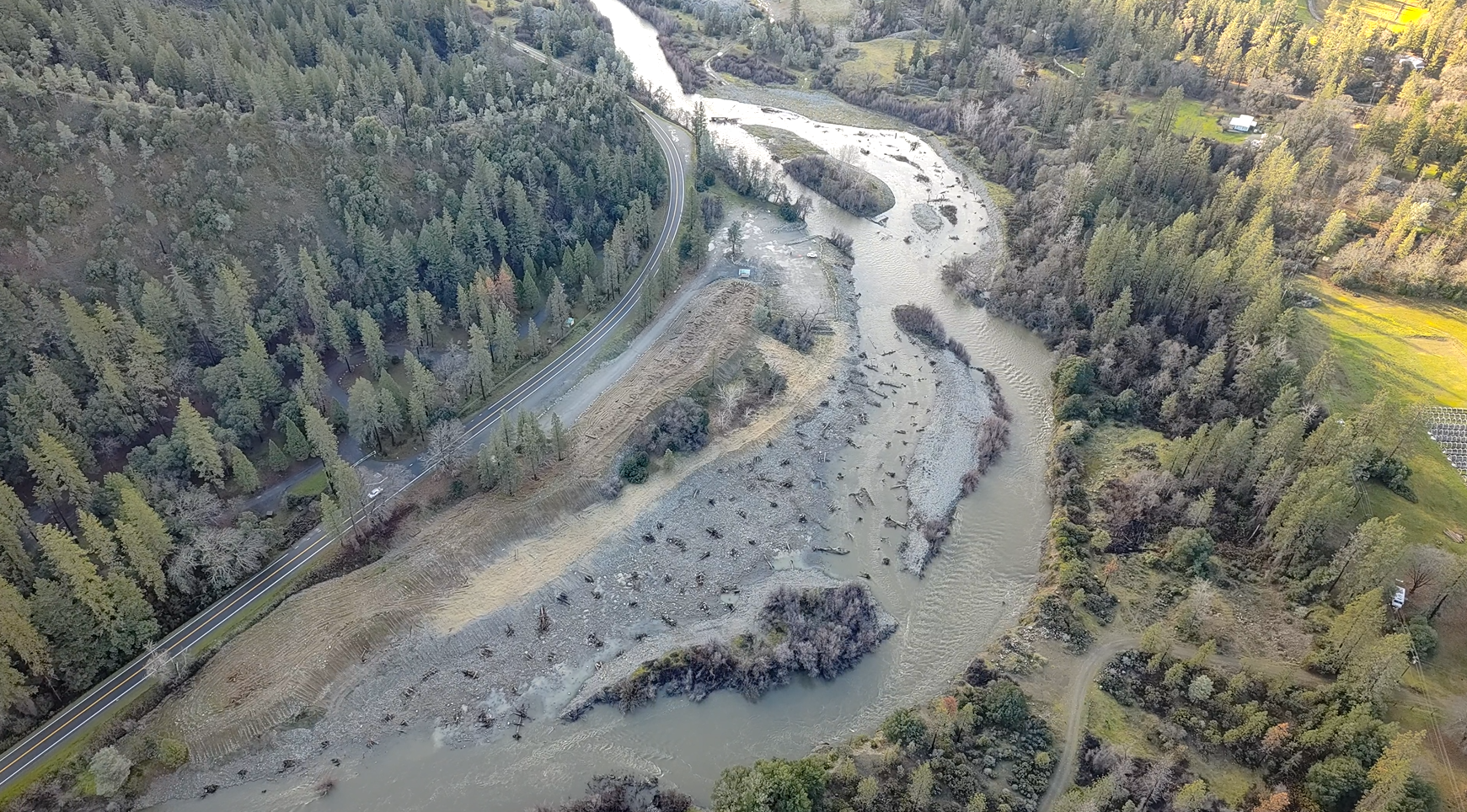
We completed the Upper Conner Creek restoration project. The project rehabilitated nearly 15 acres of floodplain habitat and filled a final puzzle piece of a patchwork of channel restoration projects both up and downstream of the area. The design was the third largest design we have ever implemented in terms of excavation volume. This project saw a significant amount of input from partnerships and stakeholders, leading to a project that met the needs of many while keeping the goal of habitat enhancement for fish and other wildlife at the center. Watching flows from these last several December storms spread out on all that new floodplain has been very exciting – the site looks great and we look forward to watching it evolve.
Speaking of flows, we are now in our second year of implementing the full winter flow project ruleset to better manage and study our environmental flows. For a second year in a row the atmosphere delivered a Christmas storm triggering a synchronized storm pulse. This flow gave the river a healthy scrub (especially up by Deadwood Creek) and set the stage for a vibrant food web to develop as salmon emerge from the gravel.
In the broader Klamath-Trinity watershed, we saw an incredible, unhoped-for number of adult salmon pass the former Klamath dam sites and make it into the upper watershed. Partners in the program were instrumental in making that happen, and there is little doubt the dam removals will pay dividends for the Trinity as well – a rising tide lifts all boats.
Mike Dixon is the Executive Director of the Trinity River Restoration Program and a northern California native. He fell in love with the Trinity River and Klamath Mountains while assigned to his first duty station at Coast Guard Air Station Humboldt Bay. He received a Ph.D. in Conservation Biology from the University of Minnesota, Twin Cities, where his dissertation focused on the landscape ecology and population genetics of bats. He lives on a small, perennial tributary of the Trinity River near Weaverville.