
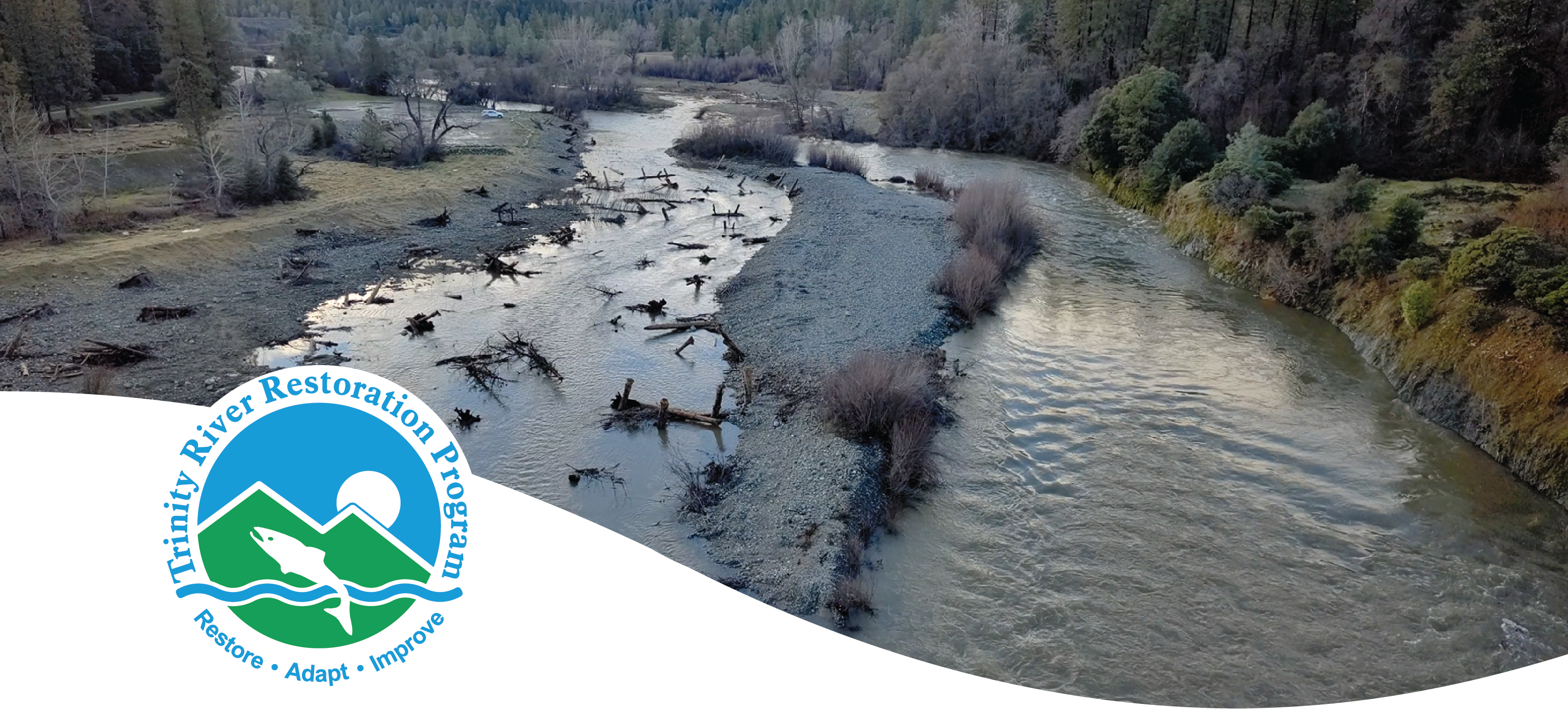
At the Upper Conner Creek Restoration Site, recently restored floodplain receives its first winter stormflows on Dec. 17, 2025, ~1800 cfs. [Elliot Sarnacki, Trinity River Restoration Program]
Contents
- Current Conditions
- Program Updates 2024 Annual Report Story Map
- Featured Article A Reflection on 2025
- The Year Ahead for our Implementation and Science Branches
- Upcoming Meetings and Events
- Reading, Listening & Watching
Current Conditions
Trinity River Flow
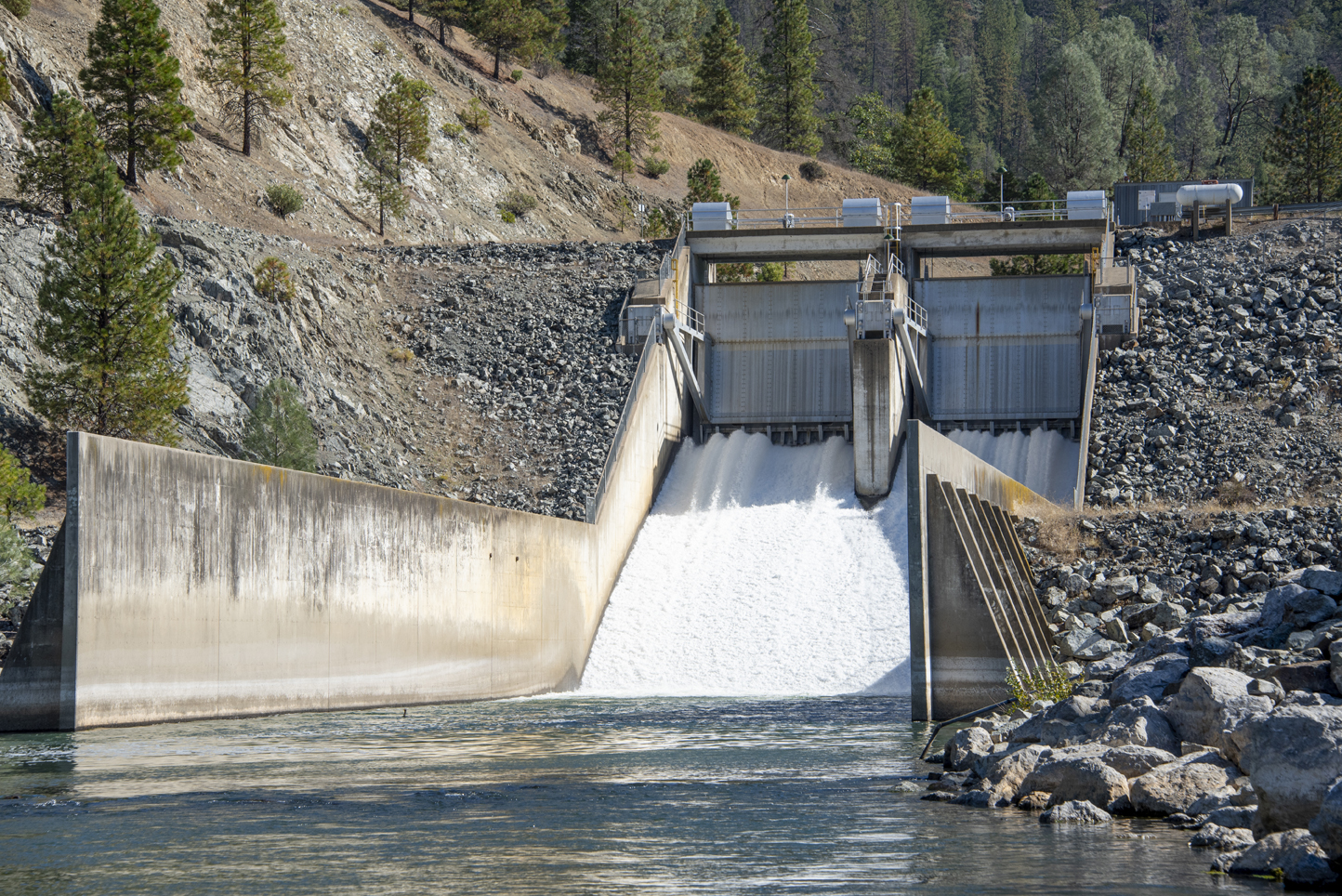
On Jan. 20 the Bureau of Reclamation’s Central Valley Operations office released a change order to ramp down reservoir management releases from 3000 cubic feet per second (cfs) to 800cfs on Sunday, Jan. 25.
View Trinity Reservoir Daily Data
Forecasts, inflow and storage in Trinity Reservoir will direct “as needed” action from Central Valley Operations. Change orders from Central Valley Operations are communicated via email, click here to join the Trinity_Releases Google Group.
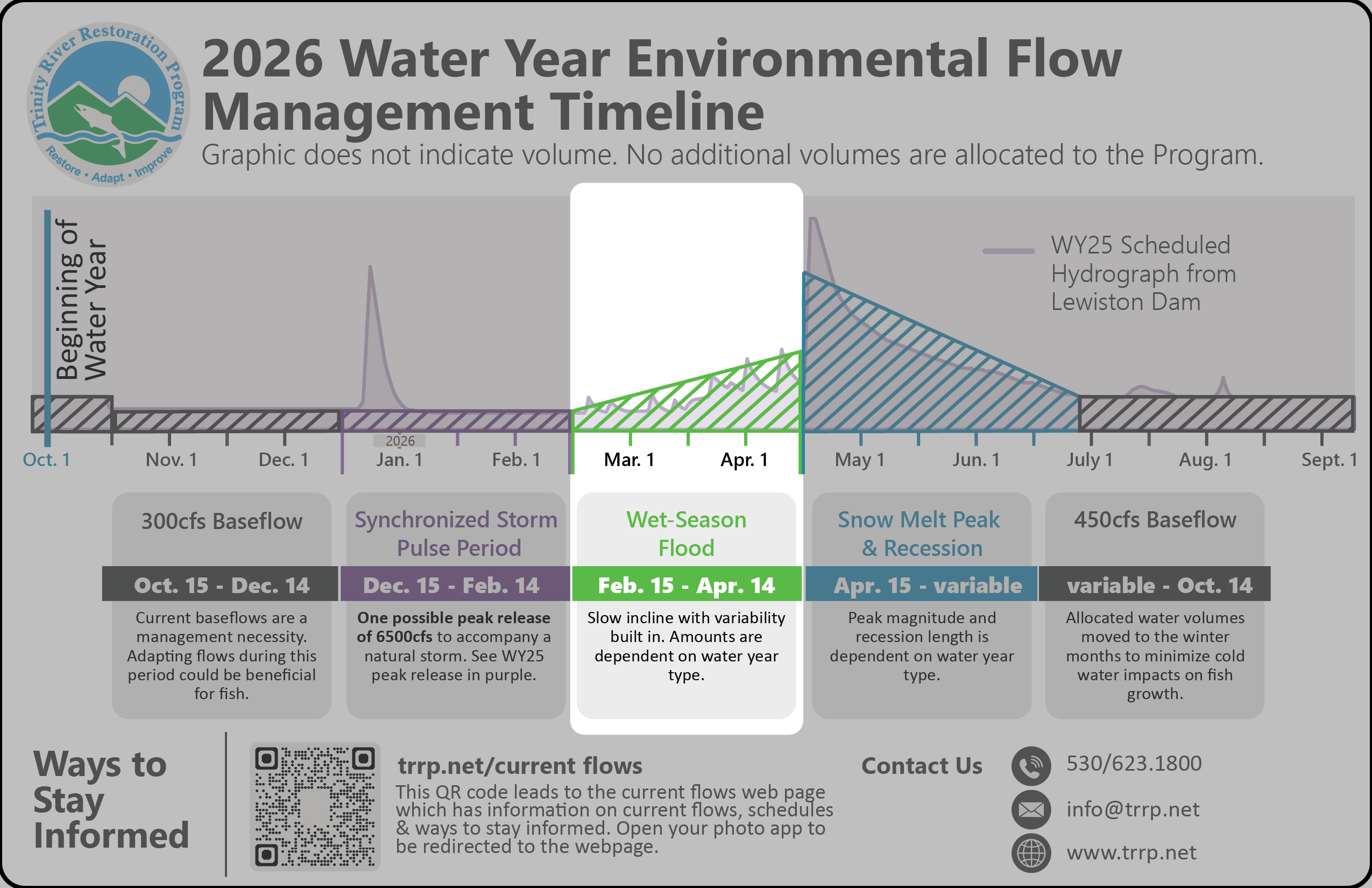
Wet-Season Baseflow Period (Feb. 15 – Apr. 14)
The next period within the Trinity River Restoration Program environmental flow management is the Wet-Season Baseflow Period, which begins Feb. 15. This period marks an increase to prescribed Record of Decision dam releases and are determined by a conservative monthly inflow projection for Trinity Reservoir from the California Department of Water Resources (90% February B120).
The purpose of adaptively managing river flows is to increase available food sources and habitat for juvenile salmonids while rearing (growing) in freshwater, prior to their migration to the ocean.
Releases for reservoir management may supersede any flow scheduling for environmental purposes.
Trinity River Adult Salmon Migration Monitoring
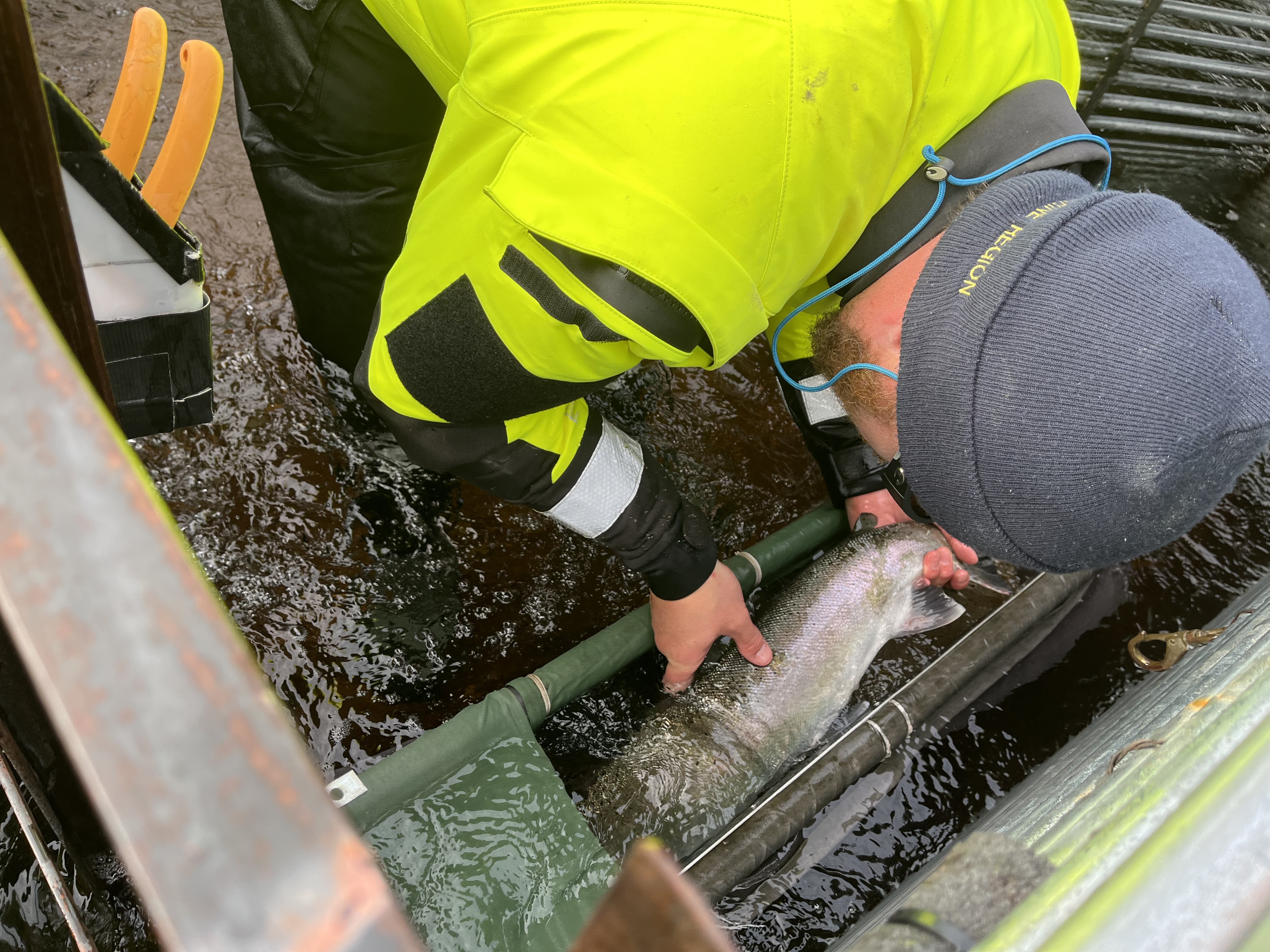
In mid-November, the Junction City and Willow Creek weir sites completed seasonal trapping efforts to count the Trinity River salmonid adult migration for the 2025 season. Yearly adult monitoring efforts are done in collaboration with the California Department of Fish and Wildlife, Hoopa Valley Tribe, the Yurok Tribe and are funded by the Bureau of Reclamation. Depending on flows, the Junction City Weir site will be re-installed in the latter spring/early summer for the 2026 season typically in June or July. The Willow Creek Weir is typically installed in mid to late August, also depending on flows.
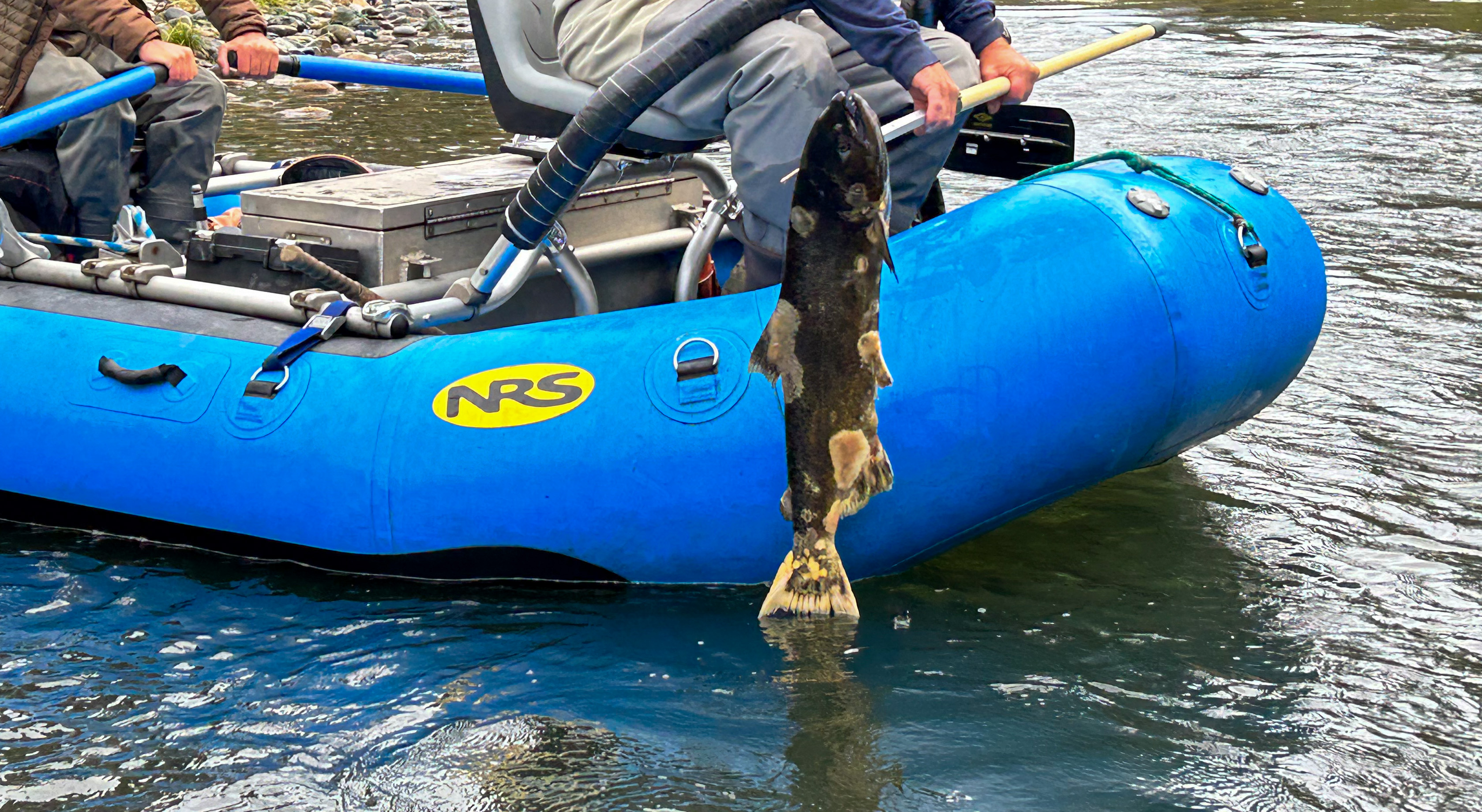
Redd and Carcass surveys are complete for the 2025 season. Preliminary data are showing counts trending lower than the 2002-2023 median and mean to date. As of Dec. 20, crews from the Hoopa Valley Tribe, US Fish and Wildlife Service, CDFW and the Yurok Tribe have counted 3,093 redds in the 14 reaches surveyed in the Trinity River.
Program Updates
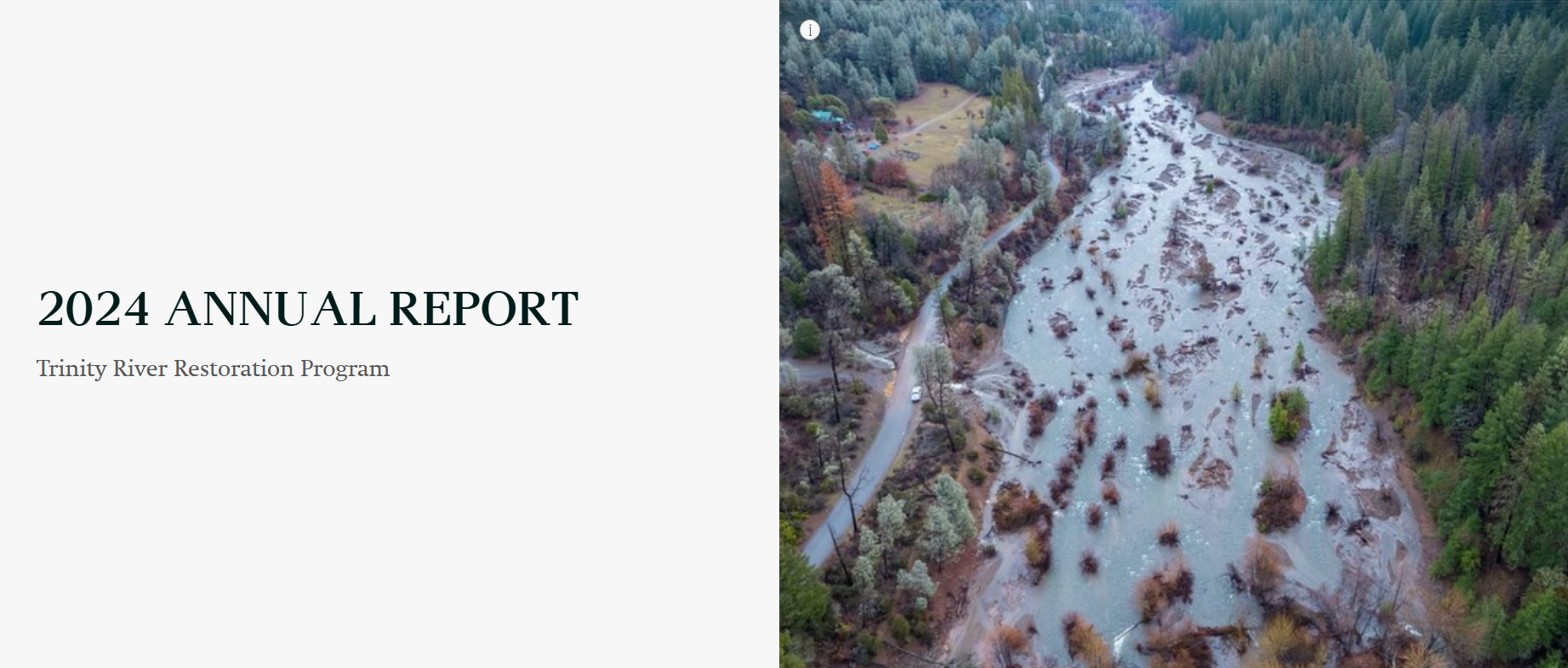
2024 Annual Report Story Map
This 2024 annual report highlights accomplishments achieved throughout the year as well as the extensive planning activities, environmental permitting, and monitoring efforts across disciplines.
Featured Article
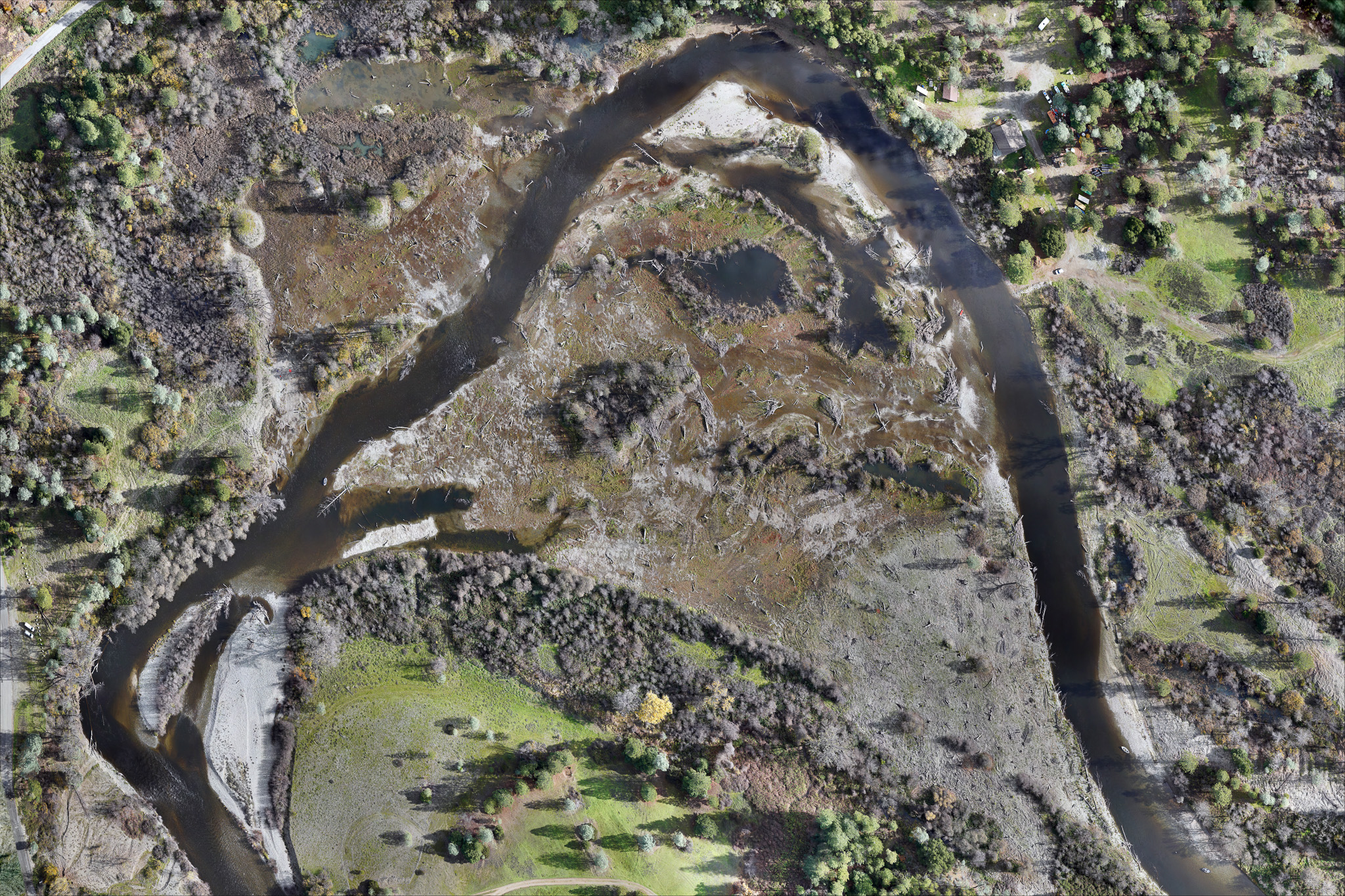
A reflection on 2025
2025 was a year of challenges, change, and quiet triumphs for the Trinity River Restoration Program. From completing a landmark Watershed Restoration EA to witnessing salmon return to newly opened habitats, our team navigated uncertainty with resilience and purpose. As partnerships evolved and ambitious projects reshaped the river’s future, one truth stood out: progress flows strongest when we work together. Join us as we look back on a year that tested and ultimately strengthened the mission we share.
The Year Ahead
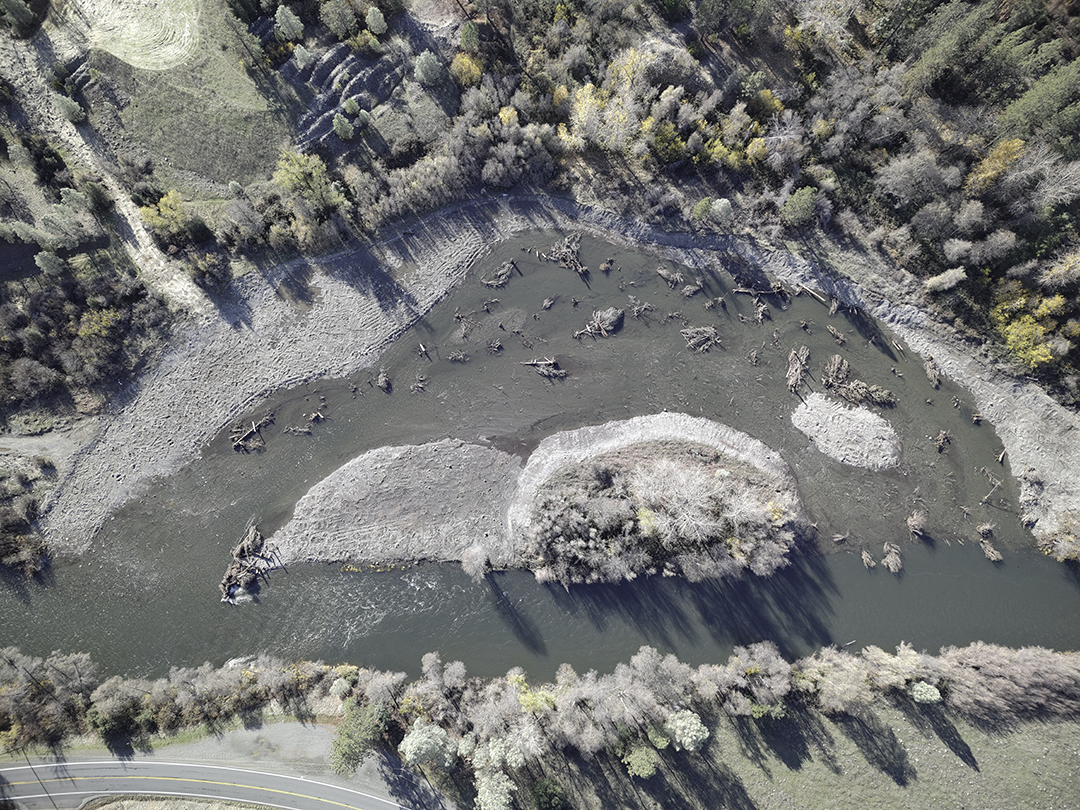
Implementation Branch
The Implementation Branch is set for a productive year, advancing three major channel rehabilitation projects and five watershed initiatives to restore critical habitats. Key efforts include closing the Sawmill gravel processing site, launching floodplain restoration on the Trinity River, and designing the remaining sites from the 2000 ROD. These actions will enhance fish habitats, improve public access, and shape the future of the 40-mile restoration reach.
Science Branch
The Science Branch will focus on monitoring and research to evaluate new flow management strategies and ecosystem responses. From long-term fish population tracking to short-term studies on macroinvertebrates, the team aims to refine restoration tools and inform adaptive management. This year also brings several analyses and publications that will guide future operations. Click below to read!
Upcoming Meetings and Events
For a full list of events, click to view the TRRP Calendar.
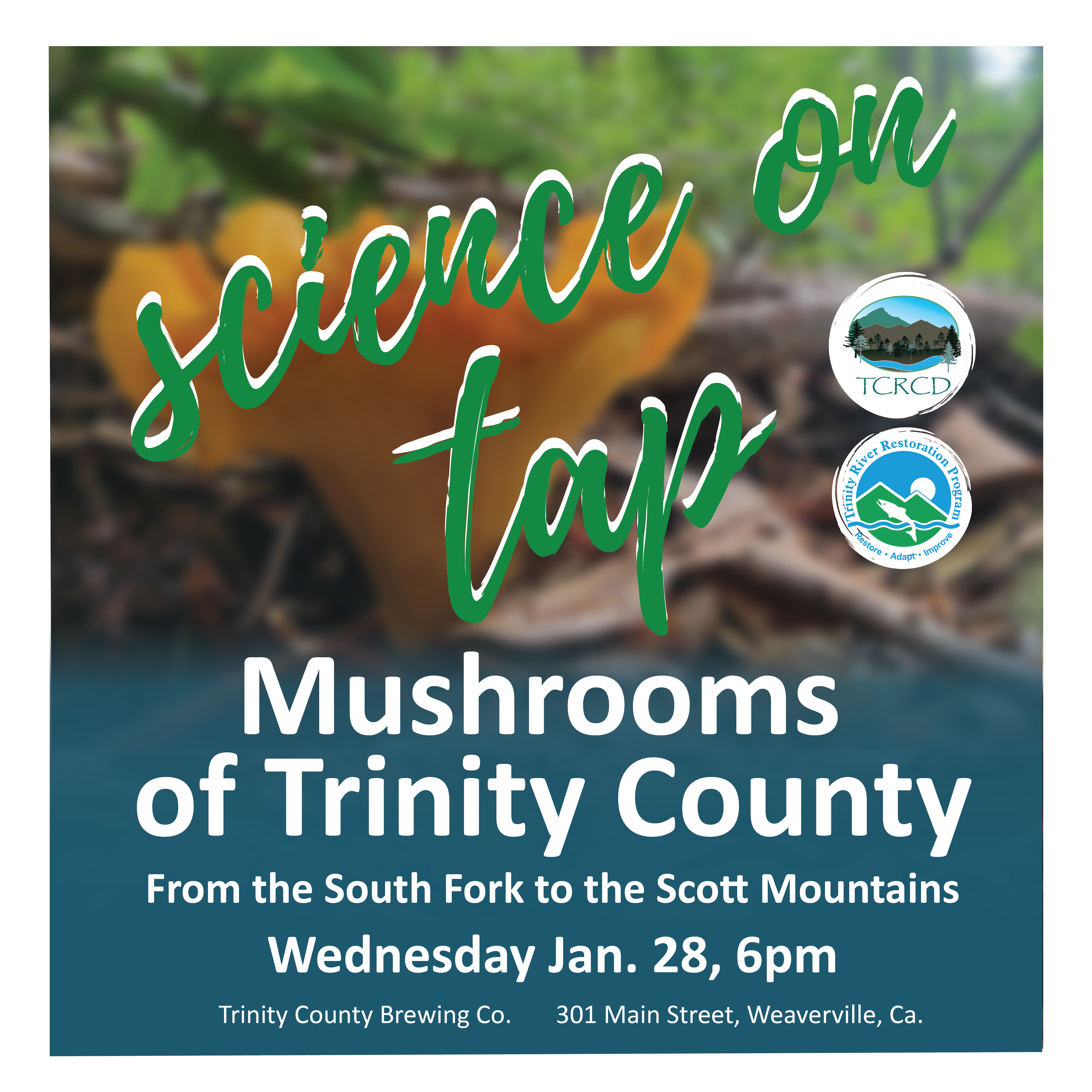
Jan. 28, 6pm – Science on Tap
Trinity County Brewing Co. – Weaverville
Join us for a presentation with Kyle Sipes, an avid mushroom enthusiast with over a decade of experience in the forests of Humboldt and Trinity Counties. Kyle will cover edible, poisonous, and other common mushrooms found across Trinity County’s diverse mushroom habitats. Kyle was part of the group that re-founded the Humboldt State Mycology Club, is a current member of the Humboldt Bay Mycological Society, and hosts the “Edible Mushroom” table at the annual Humboldt Mushroom Fair.
Join us as we explore local ecosystems, conservation, and the wonderful world of fungi. Event Details
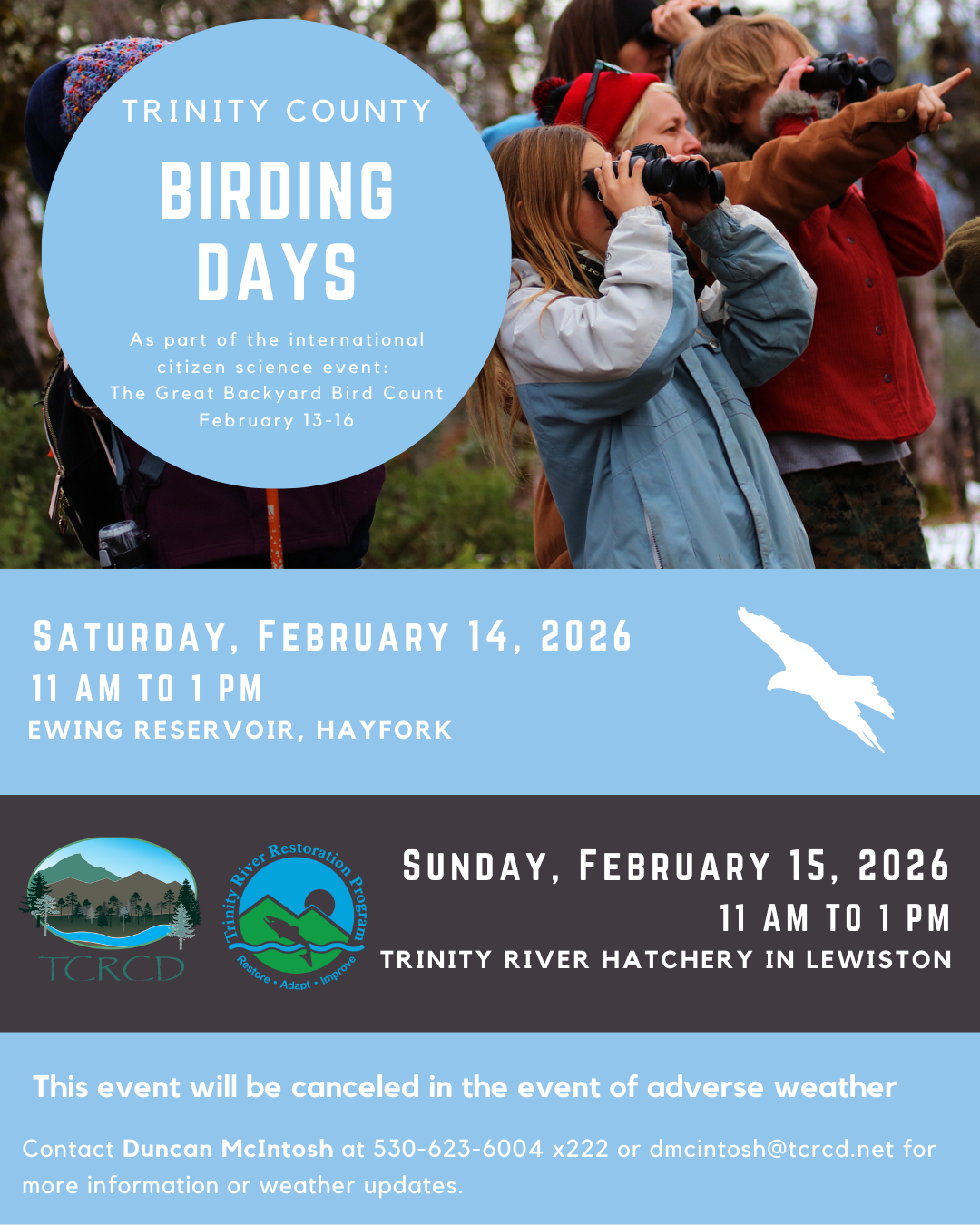
Feb. 14 & 15 – Birding Days
- Feb. 14 at the Ewing Reservoir, Hayfork
- Feb. 15 Trinity River Hatchery, Lewiston
Join the annual Great Backyard Bird Count (GBBC), a global citizen science event taking place February 13–16. Open to all ages and experience levels, the count helps scientists track bird populations, migration patterns, and long-term environmental changes. Observations from participants help researchers understand trends in local and global bird populations.
The events are free and open to the public. For more information or weather updates, contact Duncan McIntosh at 530-623-6004 ext. 222 or dmcintosh@tcrcd.net. To learn more about the Great Backyard Bird Count, visit www.birdcount.org
March 25 & 26 – All Day Quarterly TMC Meeting
In Person: Yurok Tribe Willow Creek Tribal Office
39171 CA-299, Willow Creek, CA 95573
Click here to join the meeting
Meeting ID: 279 462 878 014 93
Passcode: tS9Li229
Reading, Listening, Watching
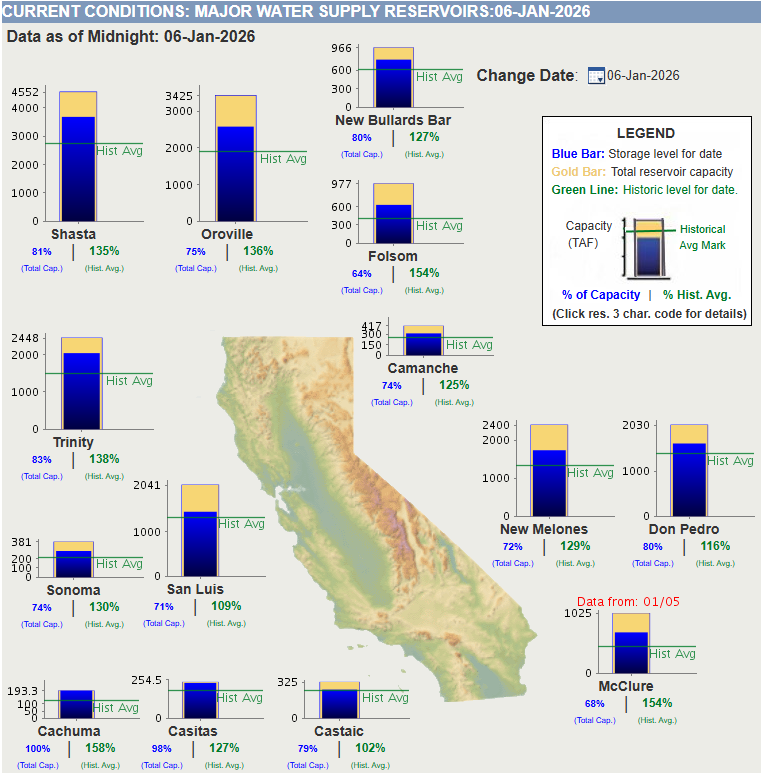
Atmospheric rivers push Lake Shasta water levels up 35 feet
Redding Record Searchlight | by Jessica Skropanic | Jan. 6 2026
The holiday storms also increased Trinity Reservoir storage leading water managers to increase releases into the Trinity River.
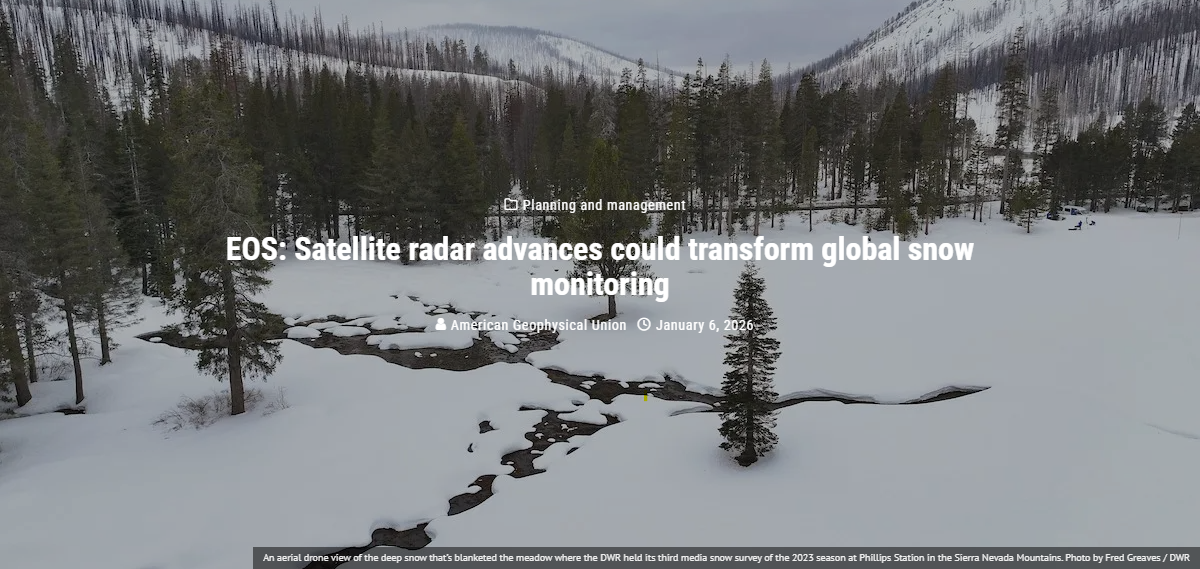
Satellite radar advances could transform global snow monitoring
American Geophysical Union | by Randall Bonnell, Jack Tarricone, Hans-Peter Marshall, Elias Deeb and Carrie Vuyovich, EOS | Jan. 6 2026
The recent SnowEx campaign and the new NISAR satellite mission are lighting the way to high-resolution snowpack monitoring and improved decision making in critical river basins around the world. Continue Reading
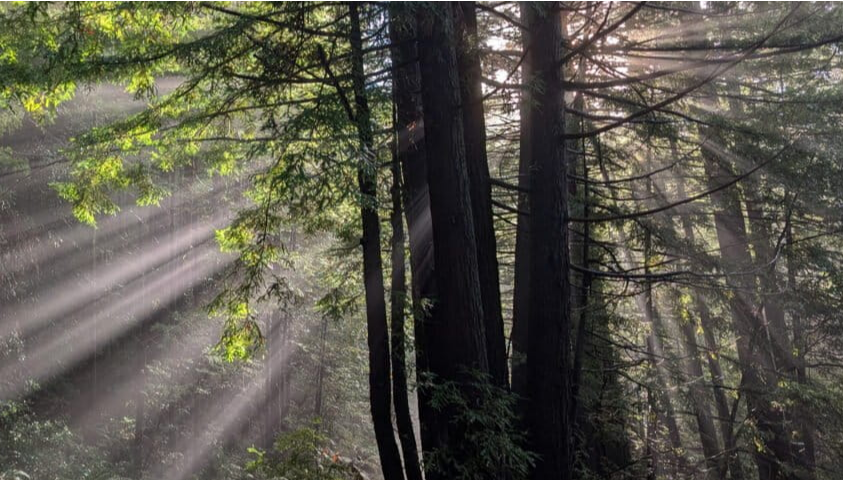
What we lost and what we gained in 2025
Mongabay | by Ret Ayers Butler | Jan. 1 2026
Extinction is rarely a moment. It is a process that unfolds offstage, marked by missed sightings, thinning records, and the slow reassignment of hope to footnotes. Discovery, too, is rarely a moment. It is a process of comparison, argument, and waiting—years spent persuading other experts that what you are seeing is, in fact, new. Continue Reading …
Contact Us
Call Us: 530-623-1800 Email Us: info@trrp.net